The best walks and hikes around Parco regionale urbano Monte Orlando
4.1
(250)
1,571
hikers
53
hikes
Hiking around Parco regionale urbano Monte Orlando offers diverse trails within an urban natural reserve in Gaeta, Italy. The region features Mediterranean vegetation, panoramic sea views, and significant geological formations. It combines natural beauty with historical attractions, providing varied terrain for outdoor activities.
Best hiking trails in Parco regionale urbano Monte Orlando
- The most popular hiking route is Monte Orlando Loop, a 4.5 miles (7.2 km) trail that takes 2 hours 11 minutes to complete. This moderate route explores historical sites, unique geological formations, and panoramic vistas of Gaeta.
- Another top favourite among local hikers is Montagna Spaccata of Gaeta – Turk's Cave loop from Gaeta, an easy 3.7 miles (6.0 km) path. This route features the remarkable Montagna Spaccata natural canyon and the historic Turk's Cave.
- Local hikers also love the Gallo Trail – Church of St. Francis, Gaeta loop from Gaeta, a 4.1 miles (6.7 km) trail leading through Mediterranean vegetation and offering panoramic views, often completed in about 2 hours 9 minutes.
- Hiking around Parco regionale urbano Monte Orlando is defined by Mediterranean vegetation, panoramic sea views, and historical sites. The network offers options for various ability levels, from easy strolls to more challenging treks.
- The routes in Parco regionale urbano Monte Orlando are highly rated by the komoot community with an average score of 4.3 stars from over 250 reviews. More than 1,400 hikers have used komoot to explore Parco regionale urbano Monte Orlando's varied terrain.
Last updated: November 22, 2026
4.5
(76)
288
hikers
7.21km
02:11
230m
230m
Moderate hike. Good fitness required. Easily walkable paths.
4.5
(17)
94
hikers
5.80km
01:46
190m
190m
Easy hike. Easily walkable paths.

3.0
(1)
10
hikers
2.72km
00:53
110m
110m
Easy hike. Easily walkable paths.
5.0
(1)
18
hikers
5.02km
01:32
170m
170m
Easy hike. Easily walkable paths.
6
hikers
1.74km
00:28
20m
20m
Easy hike. Easily walkable paths.
Get access to more routes and recommendations from other explorers.
Already have an account?
Our route recommendations are based on thousands of hikes, rides, and runs completed by other people on komoot.
Start today with a free account
Your next adventure awaits.
Tips from the Community

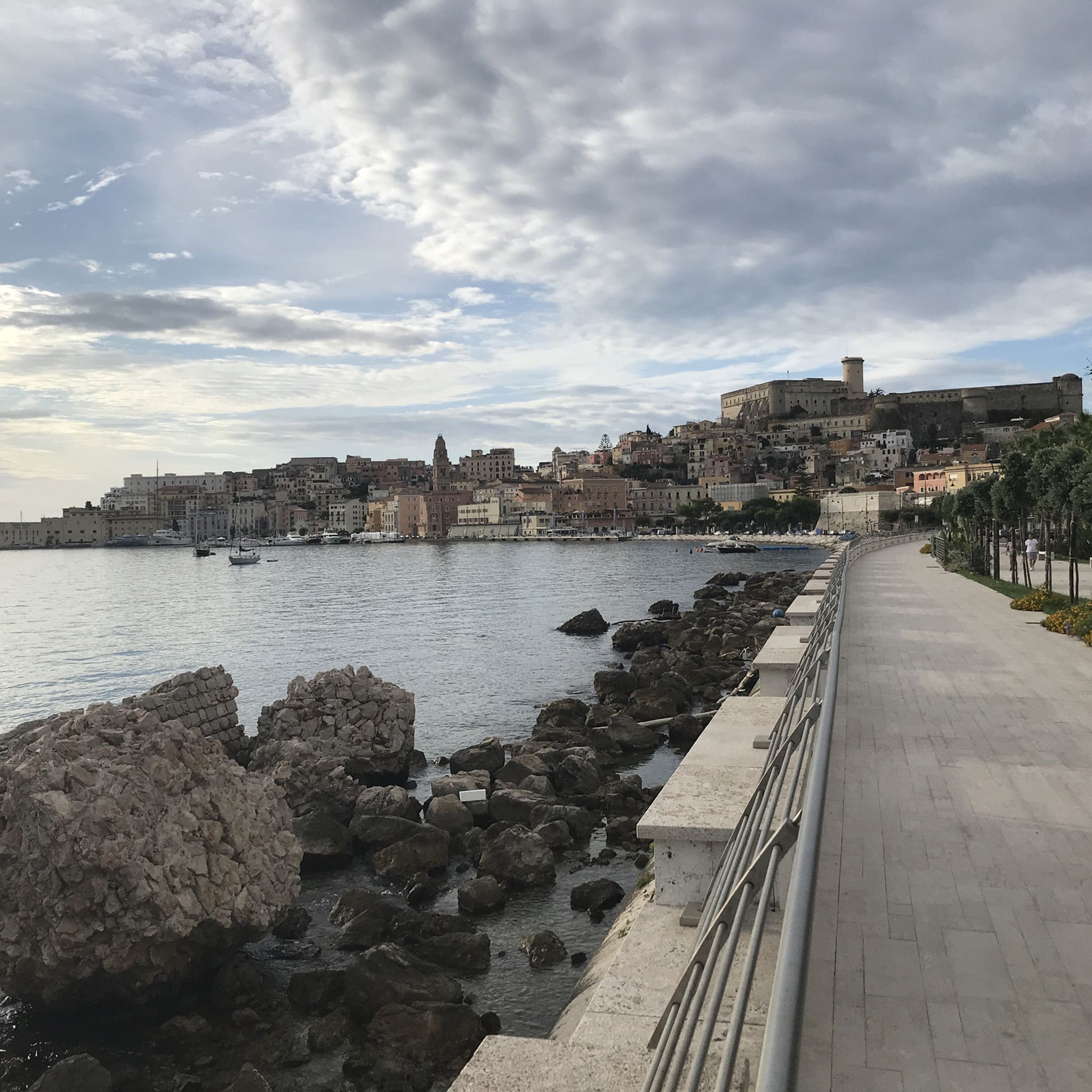
Riviera di Ulisse - Monte Orlando The rounded promontory of Monte Orlando juts out into the blue Gulf of Gaeta and ends in a spectacular cliff overlooking the sea. It represents the extreme seaward extension of the Monti Aurunci mountain range. Its position, extremely close to the sea, has determined and still determines today climatic characteristics that favour particular plant associations. This context, set within the flowering Mediterranean scrub that envelops the entire hill, offers numerous points of interest for a visit in every season of the year. From a geological point of view, rainwater and marine erosion have created caves, cavities, and crevices such as "Montagna Spaccata", "La Grotta del Turco", and the characteristic cliffs overlooking the sea. From a historical point of view, the territory of Gaeta was considered a safe refuge by Popes and Emperors in times of difficulty. Over the centuries, therefore, numerous military constructions were born, such as ramparts, powder magazines, ammunition depots, and firing platforms. Today, the testimony of these works is clearly visible within the park, as are the numerous archaeological remains from the Roman era, including the perfectly preserved Mausoleum of Lucius Munatius Plancus.
0
0
This famous archaeological site is the tomb of Lucius Munatius Planco, a Roman consul and founder of Lyon and Basel. The mausoleum is located on the summit of Monte Orlando, from where you can also admire the entire Gulf of Gaeta, the Aurunci mountain range, Monte Circeo, the Pontine Islands, and Vesuvius. Lucius Munatius Planco, a lover and admirer of these places, fascinated by their beauty but also attracted by the strategic position and natural fortifications of Gaeta, chose Monte Orlando, wanting once again to excel and ensure his protection. Unlike the mausoleum, which is in good condition today, so much so that it is considered one of the most important existing Roman funerary art artifacts, his sumptuous villa has almost completely disappeared. Few remains of it are left in the area of the Sanctuary of the SS Trinità. The construction dates back to 22 BC and is perfectly circular in shape with a tumulus covering. Inside, this monumental tomb consists of four cells accessible from a circular corridor (ambulatory) and arranged according to the 4 cardinal points. The cells house an antiquarium of artifacts from different historical eras found in the area of Gaeta, and in the main one at the entrance, a copy of the original statue of the consul can be admired, which is currently in Rome. The diameter of the structure is 29.54 meters, while the external circumference measures 93.10.
0
0
Stunning place with cliffs overlooking the sea....This structure represents an important testimony to the complex military fortification system of Gaeta dating back to the Aragonese and Bourbon periods. It was part of the stronghold's powder magazine triptych along with "Carolina" and "Ferdinando", and was originally used for storing gunpowder.
0
0
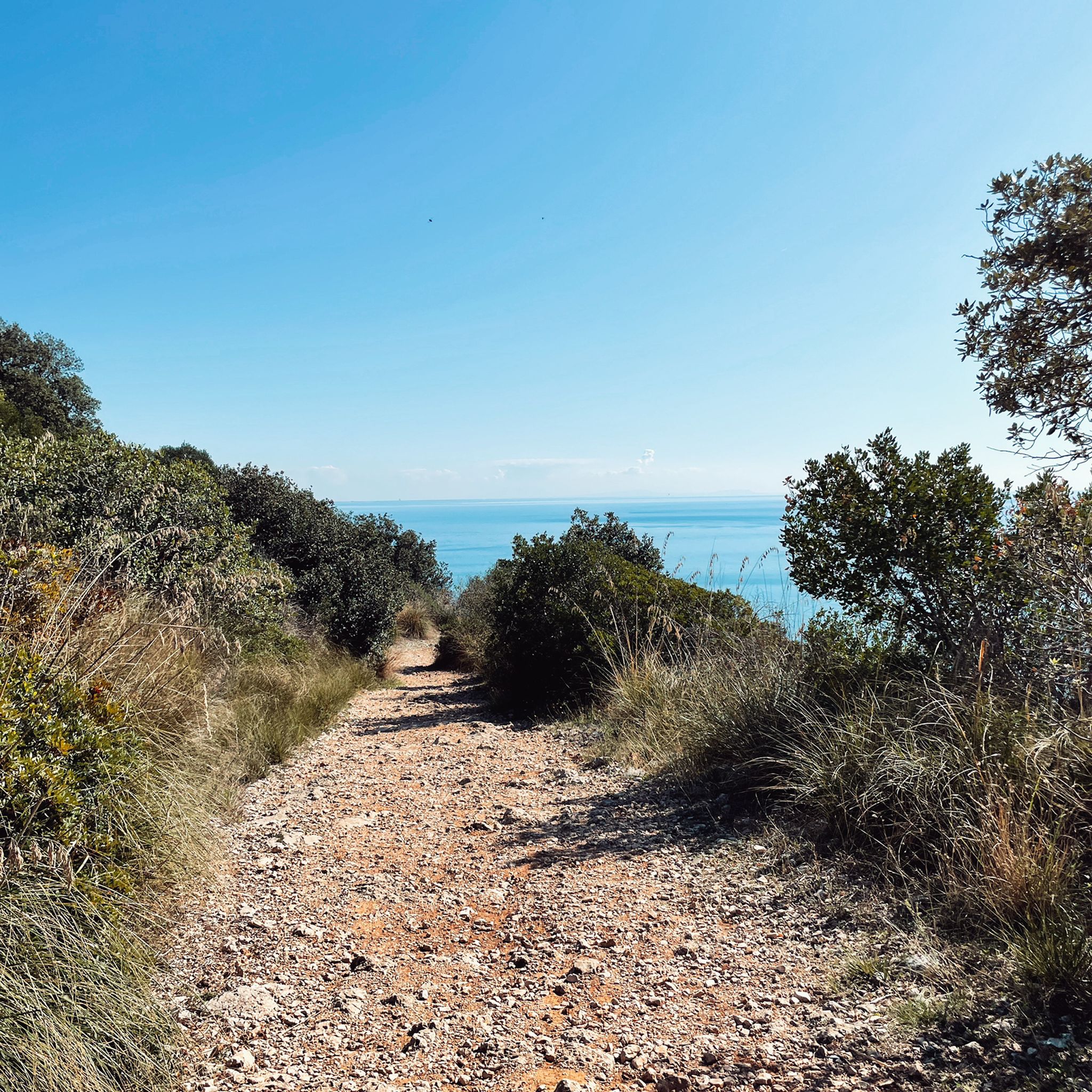
If you don't want to push the bike, you can go back and, as we did, take another trail, although we find other stairs there too, but there are fewer.
0
0
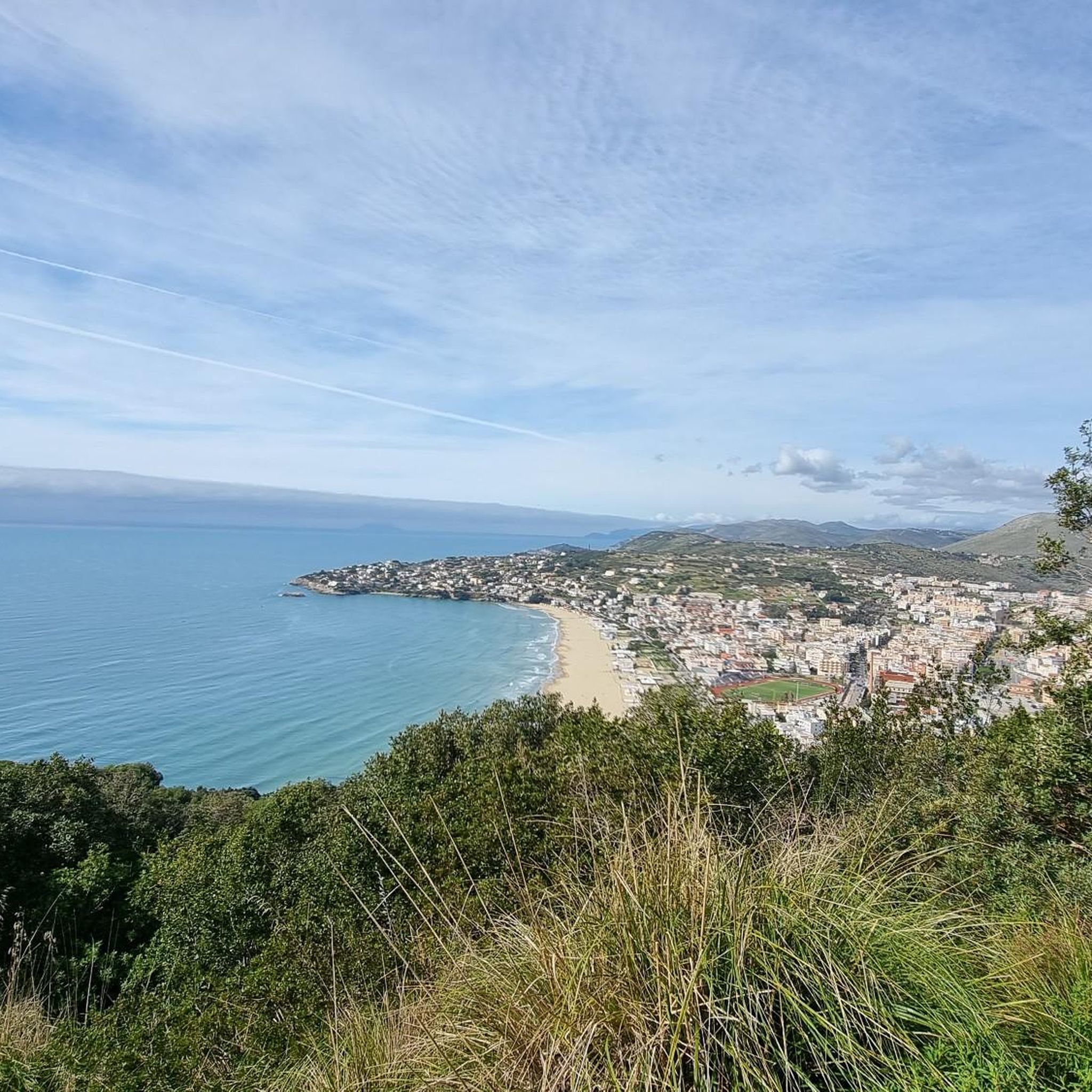
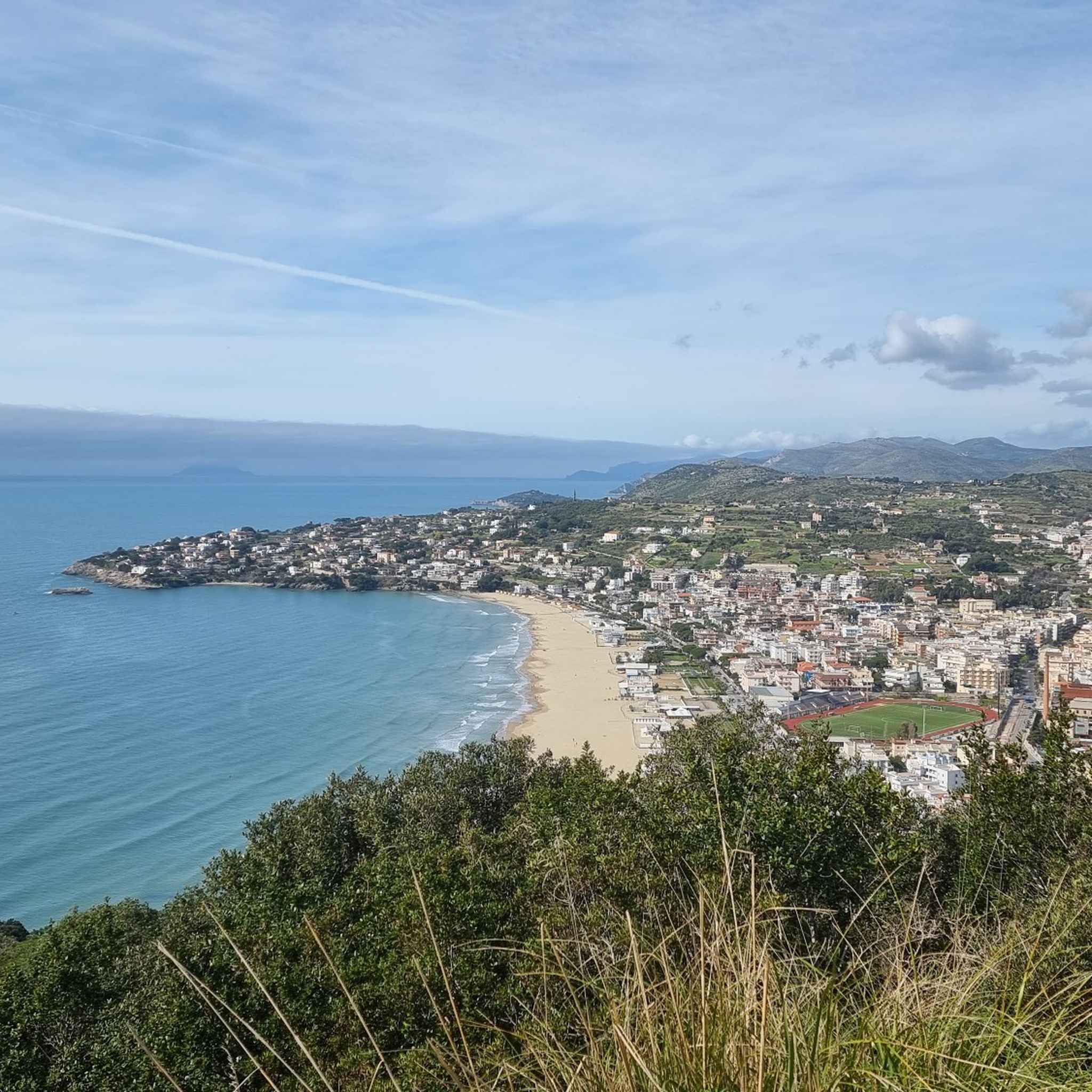
Splendid panorama of Serapo beach.
0
0
The powder magazines are an important historical testament to human presence and activity on Monte Orlando in past eras and are part of the complex of fortifications and military constructions dating back to the Aragonese and Bourbon periods (14th-18th centuries). Even in more recent times, as indeed already in Roman times, the extraordinary strategic position of Monte Orlando was appreciated. The powder magazines, enclosed within mighty walls, contain installations where war material (mainly gunpowder) was stored. Today, the Carolina, the Ferdinando, and the Trabacco are preserved in good condition and clearly visible. From here, you can also admire stunning views of cliffs overlooking the sea.
0
0
The powder magazines are an important historical testament to human presence and activity on Monte Orlando in past eras, and they are part of the complex of fortifications and military construction artifacts dating back to the Aragonese and Bourbon dominations (14th-18th centuries). Even in more recent times, as indeed already in Roman times, the extraordinary strategic position of Monte Orlando was appreciated. The powder magazines enclose, within mighty walls, installations where war material (mainly gunpowder) was stored. Today, the Carolina, the Ferdinando, and the Trabacco are preserved in good condition and clearly visible.
0
0
This famous archaeological site is the tomb of Lucius Munatius Planco, a Roman consul and founder of Lyon and Basel. The mausoleum is located on the summit of Monte Orlando, from where you can also admire the entire Gulf of Gaeta, the Aurunci mountain range, Monte Circeo, the Pontine Islands, and Vesuvius. An admirer and connoisseur of these places, fascinated by their beauty but also enticed by the strategic position and natural fortifications of Gaeta, Lucius Munatius Planco, by choosing Monte Orlando, wanted, once again, to excel and ensure his protection. Unlike the mausoleum, which is in good condition today, so much so that it is considered one of the most important existing Roman funerary art artifacts, his sumptuous villa has almost entirely disappeared. Few remains of it are left in the area of the Sanctuary of the SS. Trinità. The construction dates back to 22 BC and is perfectly circular in shape with a tumulus covering. Inside, this monumental tomb consists of four cells accessible from a circular corridor (ambulatory) and arranged according to the 4 cardinal points. The cells house an antiquarium of artifacts from different historical eras found in the area of Gaeta, and in the main one at the entrance, a copy of the original statue of the consul, currently in Rome, can be admired. The diameter of the structure is 29.54 meters, while the external circumference measures 93.10.
0
0
Frequently Asked Questions
How many hiking trails are available in Parco regionale urbano Monte Orlando?
There are over 50 hiking routes in Parco regionale urbano Monte Orlando, offering a diverse range of experiences. These include 30 easy trails, 18 moderate routes, and 3 more challenging treks, catering to various fitness levels.
What kind of views can I expect while hiking in Monte Orlando?
Hikers in Monte Orlando are treated to breathtaking panoramic sea views and stunning vistas of Gaeta town from various vantage points. The trails wind through beautiful Mediterranean vegetation, adding to the scenic appeal.
Are there any easy or family-friendly hiking options in the park?
Yes, Parco regionale urbano Monte Orlando offers many easy and family-friendly options. For instance, the Montagna Spaccata of Gaeta – Turk's Cave loop from Gaeta is an easy 3.7-mile path that takes you through remarkable natural features. Another accessible option is the Church of St. Francis, Gaeta – Monte Orlando loop from Gaeta, which is 3.7 miles long and also considered easy.
What historical or natural attractions can I see along the trails?
The park is rich in both historical and natural points of interest. You can explore the ancient Mausoleum of Lucius Munatius Plancus, a significant Roman site. Natural wonders include the remarkable Montagna Spaccata of Gaeta, a 92-meter natural canyon, and the mysterious Turk's Cave, a deep crevice accessible via a staircase.
Is Parco regionale urbano Monte Orlando suitable for circular walks?
Many routes in Parco regionale urbano Monte Orlando are designed as loops, making them ideal for circular walks. A popular choice is the Monte Orlando Loop, a moderate 4.5-mile trail that explores historical sites and offers panoramic views. Another option is the Gallo Trail – Church of St. Francis, Gaeta loop from Gaeta, which is 4.1 miles long.
What do other hikers say about their experience in Parco regionale urbano Monte Orlando?
The area is highly rated by the komoot community, with an average score of 4.3 stars from over 250 reviews. Hikers often praise the diverse trails, stunning panoramic views, and the unique combination of historical sites and natural beauty.
Are dogs allowed on the hiking trails in Monte Orlando?
While the guide data does not specify restrictions, generally, dogs are welcome on trails in Italian regional parks, often on a leash. It's always advisable to check local signage upon arrival for any specific rules regarding pets in certain areas or during specific seasons.
What is the best time of year to go hiking in Parco regionale urbano Monte Orlando?
The best time to hike in Parco regionale urbano Monte Orlando is typically during the spring (April-May) and autumn (September-October) when the weather is mild and pleasant. Summers can be hot, but early mornings or late afternoons are still enjoyable. Winters are generally mild, making hiking possible year-round, though some paths might be slippery after rain.
Is there parking available for hikers at Parco regionale urbano Monte Orlando?
Yes, as an urban natural reserve, there are typically parking facilities available near the main entrances and trailheads in Gaeta, which serves as the gateway to Monte Orlando. Specific parking areas may vary, so it's recommended to check local maps or signage upon arrival.
Can I reach Parco regionale urbano Monte Orlando using public transport?
Parco regionale urbano Monte Orlando is situated in Gaeta, Italy, which is well-connected by public transport. You can typically reach Gaeta by bus from nearby towns and cities. Once in Gaeta, the park is often accessible on foot or via local bus services, given its urban location.
Are there any trails that offer a good workout with significant elevation gain?
Yes, while many trails are easy or moderate, some routes in Monte Orlando can involve elevation gains of up to 1,000 feet for shorter hikes, or even over 3,000 feet for longer, more demanding treks, providing a good challenge for those seeking a more strenuous workout.
What kind of vegetation and wildlife can I expect to see?
The park is characterized by beautiful Mediterranean vegetation, including various shrubs, trees, and wildflowers. While not explicitly detailed, Mediterranean ecosystems often host diverse birdlife, small mammals, and reptiles. Keep an eye out for local flora and fauna as you explore the trails.
Most popular routes around Parco regionale urbano Monte Orlando
Most popular attractions around Parco regionale urbano Monte Orlando

Get inspired with the komoot mobile app


Explore more
Browse the best Hikes in other regions.
