The best cycling routes in Sierras Del Campanario Y Las Cabras
4.3
(13)
215
riders
17
rides
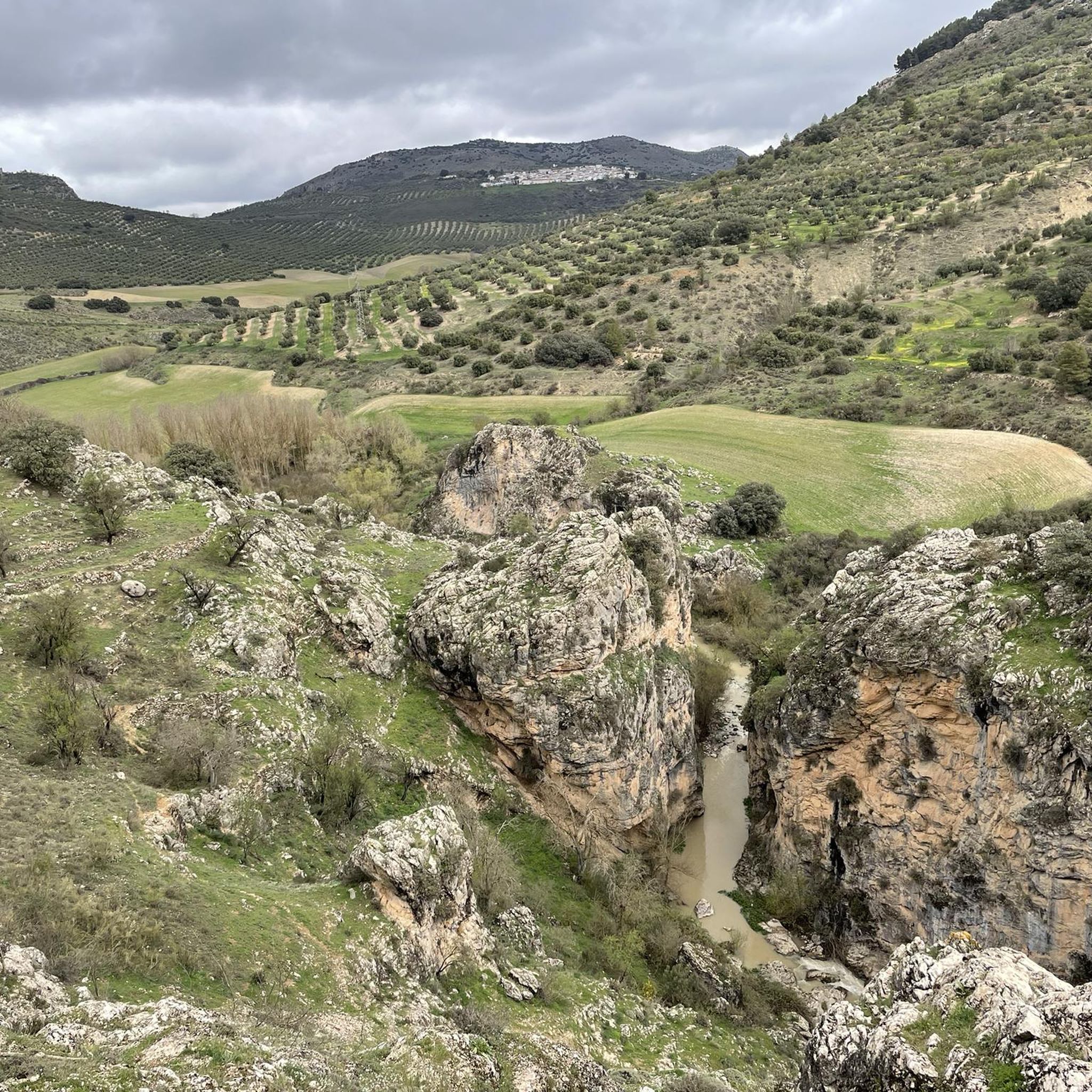
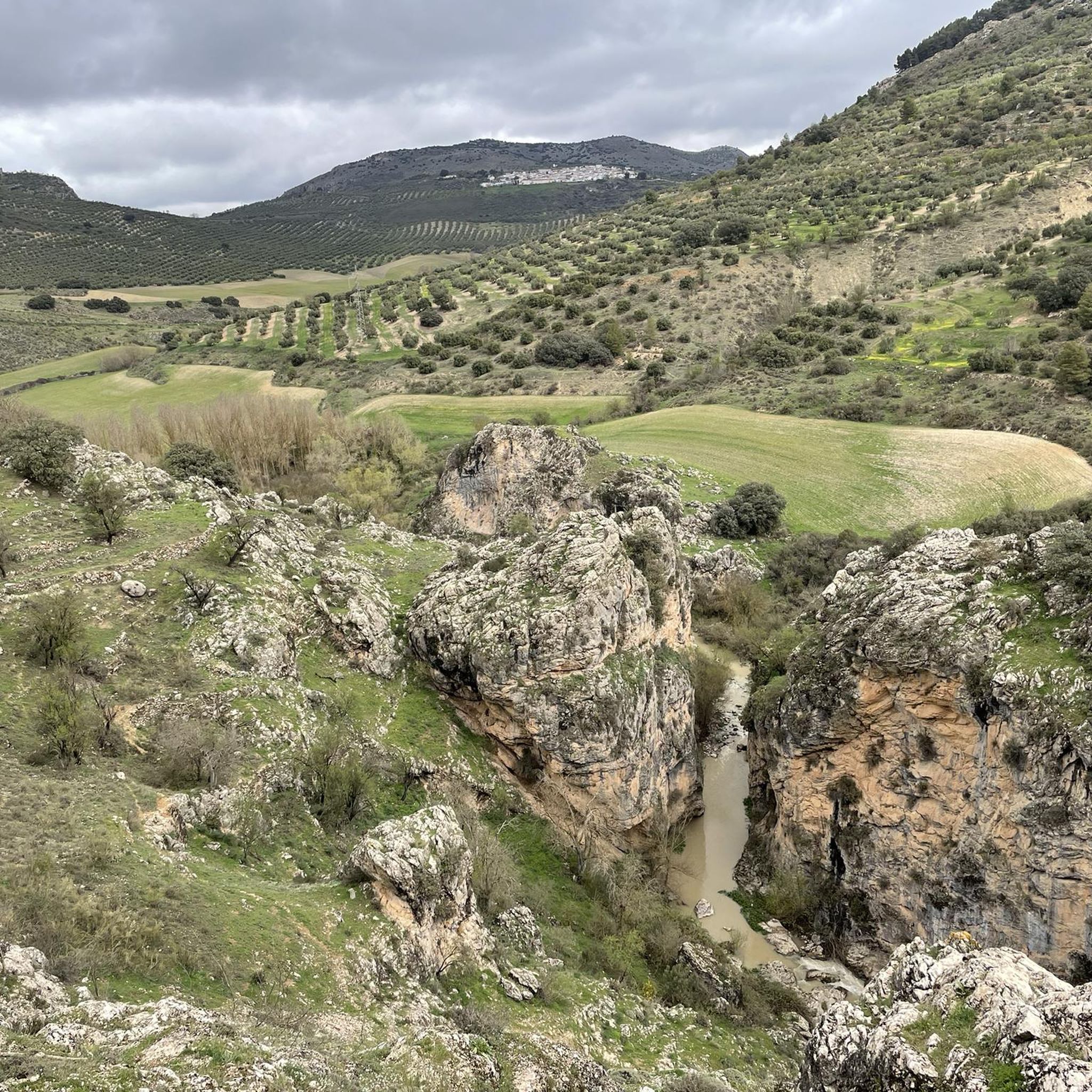
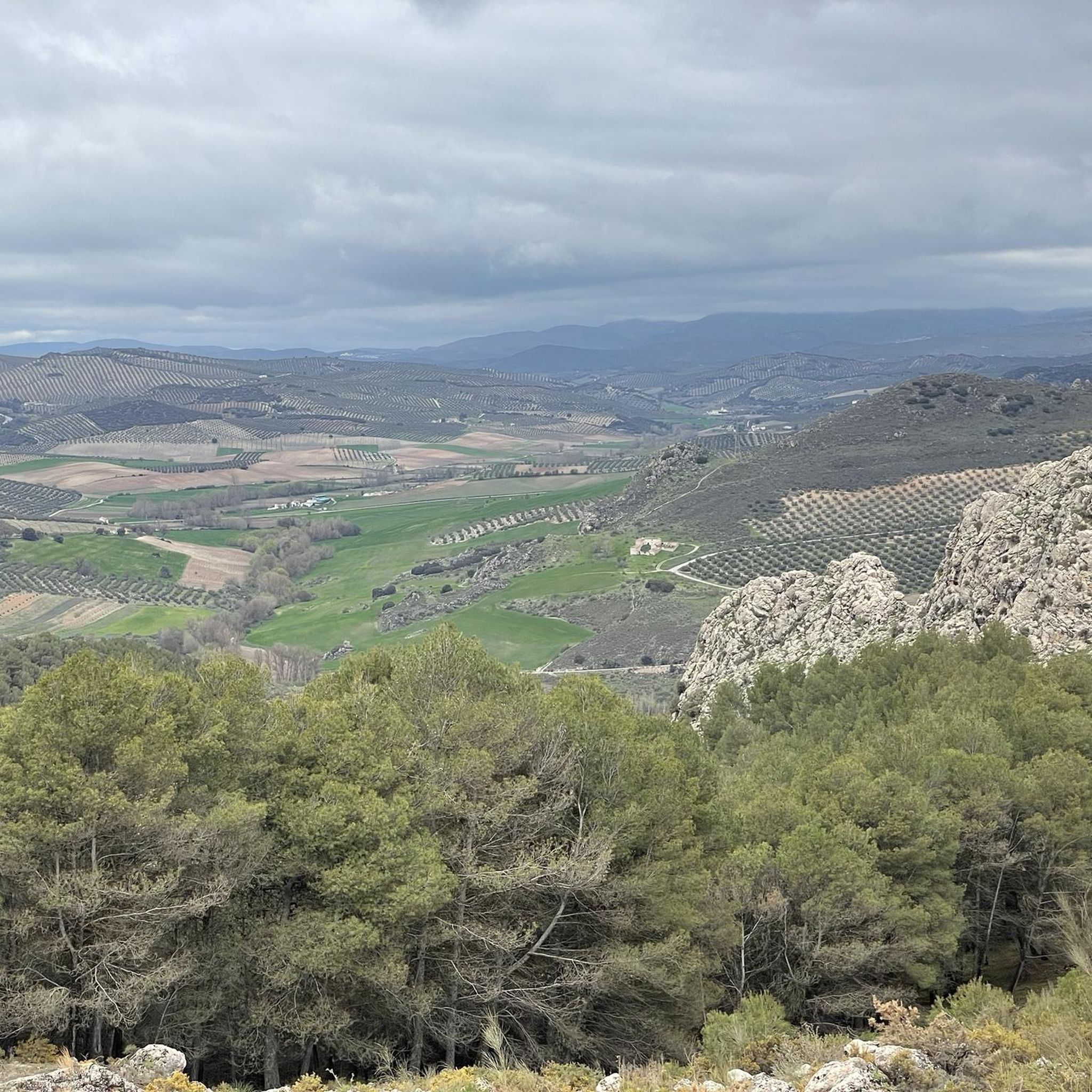
Touring cycling in Sierras Del Campanario Y Las Cabras offers routes through diverse landscapes in the Comarca de los Montes region north of Granada. The area features a series of small mountain ranges, with elevations reaching up to 1,509 meters. Predominant natural features include wild Mediterranean oak forests, calcareous rock walls, and fluvial ecosystems along rivers like the Frailes. Cyclists can experience varied terrain, from well-paved surfaces to more demanding segments.
Best touring cycling routes in Sierras Del Campanario Y…
Last updated: May 15, 2026
33.7km
02:33
800m
800m
Hard bike ride. Very good fitness required. Mostly paved surfaces. Suitable for all skill levels.
23.6km
01:49
550m
550m
Hard bike ride. Very good fitness required. Mostly paved surfaces. Suitable for all skill levels.

Sign up for free
6
riders
12.3km
01:15
200m
200m
Moderate bike ride. Good fitness required. Mostly paved surfaces. Suitable for all skill levels.
7
riders
72.7km
04:53
1,160m
1,160m
Hard bike ride. Very good fitness required. Mostly paved surfaces. Suitable for all skill levels.
4.3
(4)
67
riders
60.1km
03:38
450m
450m
Hard bike ride. Very good fitness required. Mostly paved surfaces. Suitable for all skill levels.
Get access to more routes and recommendations from other explorers.
Sign up for free
Already have an account?
Our route recommendations are based on thousands of hikes, rides, and runs completed by other people on komoot.
Start today with a free account
Your next adventure awaits.
Login or Signup
Tips from the Community

The view of Moclín Castle from Moriscos Street is considered one of the most picturesque in the town center. From this street, which runs through the lower part of the town, you get an upward perspective of the rocky outcrop where the castle stands, with its walls silhouetted against the sky and the white houses in the foreground.
2
0
It is located at the entrance to the village along Camino Nuevo, in a rural setting with views of the castle and the valley. It is a landmark on the routes that connect the historic center with trails leading to the Sierra de Moclín.
2
0
The Hermitage of San Antón in Moclín is a small, historic church located on the outskirts of the town, in the province of Granada. It is dedicated to Saint Anthony Abbot, patron saint of animals, who is highly venerated in the area. Its origins date back to the modern era (probably the 17th or 18th century), although it has undergone later renovations. Its architecture is simple: a rectangular floor plan, a gabled roof, and a whitewashed façade with a small bell gable.
2
0
Visiting Moclín is usually a highly recommended experience, especially if you enjoy destinations that combine history, nature, and tranquility. The best of Moclín: Impressive historical heritage: The Nasrid castle and church are true gems for lovers of medieval history. Spectacular natural surroundings: The Gollizno Route is ideal for hiking, with suspension bridges and viewpoints overlooking the valley. Charming villages: Cobblestone streets, whitewashed houses, and photogenic corners. Authentic experience: It's not a crowded destination, allowing you to enjoy it at a leisurely pace.
3
0
Located in Moclín, Granada, crowning a hill at approximately 1100 meters above sea level, the fortress stands atop a natural rocky outcrop, overlooking the town and the Granada plain. Also known as Hisn al-Muqlin (“Fortress of the Two Pupils”) during the Nasrid period. Built by the Nasrids in the mid-14th century, after the fall of fortresses such as Alcalá la Real, to reinforce the border with Castile; situated within the northwestern defensive system of the Kingdom of Granada. It suffered severe damage during the Spanish Civil War, was used as a cemetery, and was bombed; partial restorations began in 2010 and continued between 2012 and 2013, although signs of neglect are still evident.
3
0


Alcalá la Real is located at a strategic point between the Guadalquivir Valley and the plains of Granada, which has given it a significant role in Andalusian history. The city's origins date back to prehistoric times, as evidenced by finds from the Paleolithic and Bronze Ages. During the Roman era, the settlement of Sucaelo was probably located here. An impressive marble sculpture of Hercules also dates from this period. Today, Alcalá la Real is characterized by a diverse cultural heritage. The impressive La Mota fortress is just one of many historical buildings, which also include numerous churches and monasteries. The city is also known for its lively traditional festivals and diverse cuisine, which attracts numerous visitors.
0
0
The Cubillas Reservoir extends across the municipalities of Albolote and Atarfe. It was built in 1956 and is primarily used for water supply and agricultural irrigation. The reservoir has an area of 194 hectares and a maximum depth of approximately 20 meters. The reservoir's main tributary is the Cubillas River. The reservoir's surroundings are characterized by pine forests, oak trees, and Mediterranean vegetation, and the lake is an important habitat for many fish species. The Cubillas Reservoir also serves as a resting place for various bird species, including the Great Cormorant and the Dunnock. The reservoir offers numerous recreational opportunities, including sailing, windsurfing, canoeing, jet skiing, and water skiing. There is a large picnic area on the shore and a restaurant overlooking the lake.
2
1
Frequently Asked Questions
What is the typical terrain and difficulty level for touring cycling in Sierras Del Campanario Y Las Cabras?
The terrain in Sierras Del Campanario Y Las Cabras is characterized by small mountain ranges, Mediterranean oak forests, and river valleys. While many routes feature well-paved surfaces, some segments on more demanding routes might be unpaved or challenging. The majority of touring cycling routes here are rated as difficult, with 13 out of 17 routes falling into this category. There are also 4 moderate routes, but no easy ones, indicating that a good level of fitness is generally recommended.
What natural features and landmarks can I expect to see while cycling?
Cyclists can enjoy diverse natural features, including wild Mediterranean oak forests, calcareous rock walls, and fluvial ecosystems along rivers like the Frailes (Velillos). Impressive views of the broader Sierra Nevada mountains and the Vega de Granada are also common. Notable landmarks include the Gollizno Suspension Bridge and the Corcuela Spring Labyrinth. You might also encounter the Presa de la Luz, a river feature, and dramatic Rocky Trails Through Gorge and Olive Groves.
Are there many circular touring cycling routes available?
Yes, several touring cycling routes in Sierras Del Campanario Y Las Cabras are designed as loops, offering varied scenery without retracing your path. Examples include the popular Embalse de Colomera — circular by Tózar and Benalúa de las Villas, the Gollizno Route and Moclín Castle Loop, and the Cortijo del Marqués loop from Sistema Bético.
When is the best time of year to go touring cycling in this region?
The region experiences varied temperatures, especially when ascending into higher altitudes. While specific best times aren't detailed, the presence of wild Mediterranean oak forests and aromatic plants suggests pleasant conditions during spring and autumn. It's advisable to be prepared for changing weather, particularly on longer routes with significant elevation changes.
What kind of distances and elevation gains can I expect on these routes?
Touring cycling routes in Sierras Del Campanario Y Las Cabras vary significantly in length and elevation. You can find shorter routes like the Cortijo del Marqués loop from Sistema Bético, which is about 12.3 km with nearly 200 meters of elevation gain. Longer, more challenging routes, such as the Hermitage of Saint Anthony – Alcalá la Real loop from Moclín, can extend over 70 km with more than 1,100 meters of climbing, requiring very good fitness.
Are there any touring cycling routes suitable for families?
Given that 13 out of 17 touring cycling routes in Sierras Del Campanario Y Las Cabras are rated as difficult and the remaining 4 as moderate, routes here generally require a good level of fitness and experience. There are no routes specifically categorized as 'easy' in the guide data, suggesting that most trails might be too challenging for young children or beginner family cyclists. However, shorter moderate routes could be considered for families with older, experienced riders.
What do other touring cyclists enjoy the most about touring cycling in Sierras Del Campanario Y Las Cabras?
The area is highly rated by the komoot community, with an average score of 4.3 stars from over 10 reviews. Reviewers often praise the diverse landscapes, from wild Mediterranean oak forests to dramatic rock formations, and the challenging yet rewarding climbs. The opportunity to combine natural beauty with historical sites, such as those found on the Gollizno Route and Moclín Castle Loop, is also a significant draw.
Are there historical sites to visit along the cycling routes?
Yes, the region is rich in history. The Gollizno Route and Moclín Castle Loop, for instance, combines natural features of the Gollizno area with historical landmarks like Moclín Castle. The broader region also features historical hermitages, offering cultural points of interest alongside your ride.
Can I bring my dog on the touring cycling routes?
While the region is rich in natural beauty, specific regulations regarding dogs on touring cycling routes are not detailed in the provided information. It's generally advisable to check local signage or official park guidelines for any restrictions on pets, especially in Special Areas of Conservation like Sierras Del Campanario Y Las Cabras, to ensure compliance and respect for local wildlife.
Are there parking facilities available near the touring cycling routes?
The guide data does not explicitly detail parking facilities for each route. However, for routes that start or pass through municipalities like Colomera, Iznalloz, Albolote, Moclín, and Benalúa de las Villas, it is generally possible to find parking within or near these towns. It's recommended to check specific starting points for available parking options.
What are the main rivers or reservoirs I might encounter while cycling?
The western part of the ZEC is traversed by rivers like the Frailes (also known as Velillos) and Colomera. The Embalse de Colomera — circular by Tózar and Benalúa de las Villas route, for example, circles the Colomera reservoir, offering scenic views of this water body. You might also encounter the Presa de la Luz, a notable river feature.
How many touring cycling routes are available in Sierras Del Campanario Y Las Cabras?
There are 17 touring cycling routes documented in Sierras Del Campanario Y Las Cabras, offering a variety of options for cyclists. These routes range from moderate to difficult, providing ample opportunities to explore the region's diverse landscapes.
Most popular routes in Sierras Del Campanario Y Las Cabras
Most popular attractions in Sierras Del Campanario Y Las Cabras

Get inspired with the komoot mobile app


Explore more
Browse the best Cycling routes in other regions.
