The best road cycling routes in Sierra Blanca
4.4
(261)
9,366
riders
77
rides
Road cycling routes in Sierra Blanca are characterized by mountainous terrain and coastal views in the region of Andalusia, Spain. The area features significant elevation changes, with routes ascending through hills and offering panoramas of the Mediterranean coast. This landscape provides varied challenges for road cyclists, from moderate climbs to difficult ascents. The region's geology contributes to diverse road surfaces and scenic backdrops for cycling.
Best road cycling routes in Sierra Blanca
- The most popular road cycling route is Ojén Viewpoint – Puerto El Madroño (1065 m) loop from Ojén, a 55.1 miles (88.7 km) trail that takes 5 hours 3 minutes to complete. This difficult route features significant elevation gain, climbing over 6,190 feet (1888 meters).
- Another top favourite among local road cyclists is View of Fuengirola – Mijas loop from Ojén, a difficult 62.2 miles (100.1 km) path. This route offers extensive views and challenging ascents, with over 5,750 feet (1753 meters) of climbing.
- Local road cyclists also love the Monda – Ojén Pass loop from Ojén, a 20.9 miles (33.7 km) trail leading through mountainous landscapes, often completed in about 1 hour 56 minutes.
- Road cycling in Sierra Blanca is defined by mountainous passes, coastal vistas, and varied elevation profiles. The network offers options for different ability levels, from moderate loops to difficult, long-distance challenges.
- The routes in Sierra Blanca are highly rated by the komoot community with an average score of 4.1 stars from over 130 reviews. More than 6,000 road cyclists have used komoot to explore Sierra Blanca's varied terrain.
Last updated: August 25, 2026
56
riders
18.8km
01:07
480m
470m
Moderate road ride. Good fitness required. Mostly well-paved surfaces and easy to ride.
5.0
(1)
51
riders
Moderate road ride. Great for any fitness level. Some segments of this route may be unpaved and difficult to ride.

Sign up for free
21
riders
20.6km
01:19
550m
550m
Moderate road ride. Good fitness required. Some segments of this route may be unpaved and difficult to ride.
4.1
(46)
544
riders
62.8km
03:45
1,290m
1,290m
Hard road ride. Very good fitness required. Mostly well-paved surfaces and easy to ride.
4.2
(5)
442
riders
45.3km
02:42
1,160m
1,160m
Hard road ride. Very good fitness required. Mostly well-paved surfaces and easy to ride.
Get access to more routes and recommendations from other explorers.
Sign up for free
Already have an account?
Our route recommendations are based on thousands of hikes, rides, and runs completed by other people on komoot.
Start today with a free account
Your next adventure awaits.
Login or Signup

Tips from the Community

A lot of green trees. There is a 2 fountains. The history of this place dates back to the XVIII century.
1
0

The Church of the Incarnation (Iglesia de la Encarnación) is the most important and largest church in Marbella's old town and is considered one of the city's most significant historical buildings. Begun in the 16th century, it was expanded over several centuries, resulting in a blend of Gothic, Renaissance, and, most notably, Baroque styles. The 18th-century Baroque portal, crafted from fine limestone and framed by sculptural decoration and two columns, is particularly striking. The imposing bell tower, which dominates the cityscape, also dates from the 18th century. Inside, the church has a three-aisled basilica layout with tall columns and richly decorated chapels. A remarkable work of art is the monumental organ, installed in 1975, which is among the largest in Andalusia. Many elements of the interior furnishings were acquired from older chapels or stately homes after the Christian reconquest of the region. The church stands on the site of the former main Muslim mosque, the remains of which were discovered during archaeological investigations – a testament to Marbella's long cultural and historical development. Today, the Iglesia de la Encarnación is the city's religious center and the focal point of many traditional processions, festivals, and religious celebrations, especially during Semana Santa (Holy Week).
2
0
The bust depicts Don Jaime de Mora y Aragón in classic bronze, mounted on a stone pedestal. It is located in the Plaza de la Victoria in Marbella, very close to the famous "Fuente de las Ranas" (Fountain of the Frogs). The monument commemorates his importance to the city, as Jaime de Mora y Aragón, an aristocrat, actor, and flamboyant jet-set figure, was one of Marbella's most prominent ambassadors in the second half of the 20th century. The bust was erected as a memorial to honor his influence on the city's social and cultural life and to highlight his long-standing connection to Marbella.
0
0
Parque de la Alameda in Marbella is one of the city's oldest and most beautiful parks. Centrally located between the Old Town (Casco Antiguo) and Avenida del Mar, it forms a green oasis amidst the urban bustle. Dating back to the 18th century, the park is renowned for its shady paths, lush tropical vegetation, and intricately decorated ceramic benches adorned with colorful azulejos (tiles) depicting scenes from Marbella's history. At its heart lies a large, ornamental fountain surrounded by palm trees and bougainvillea. Thanks to its location and atmosphere, Parque de la Alameda serves as a popular meeting place and haven of tranquility for both locals and visitors, harmoniously blending nature, art, and Andalusian tradition.
3
0


With a choppy end/beginning, typical of the area Good tarmac, but a 20 m rough gravel ramp at the northern, lower end. The old road was rolled over and the new expressway probably cannot have an entrance. 99% of Spaniards drive very civilized, but the short break from the heavy traffic was worth it to me. From Ojén to Monda it is fairly straightforward, in the other direction (uphill) it is problematic, as the entrance is difficult to see and you have to change sides of the road, which can be dangerous in heavy traffic!! Whatch yourself!!
0
0
The town is beautiful and the small pass towards Monda is the most beautiful and quietest stretch of road I found in a week (end of February 25). There might be more traffic in the summer?
0
0

Frequently Asked Questions
How many road cycling routes are available in Sierra Blanca?
There are over 60 road cycling routes in Sierra Blanca, offering a wide range of options for different skill levels. You'll find approximately 14 easy routes, 30 moderate routes, and 24 difficult routes to explore.
What kind of terrain can I expect when road cycling in Sierra Blanca?
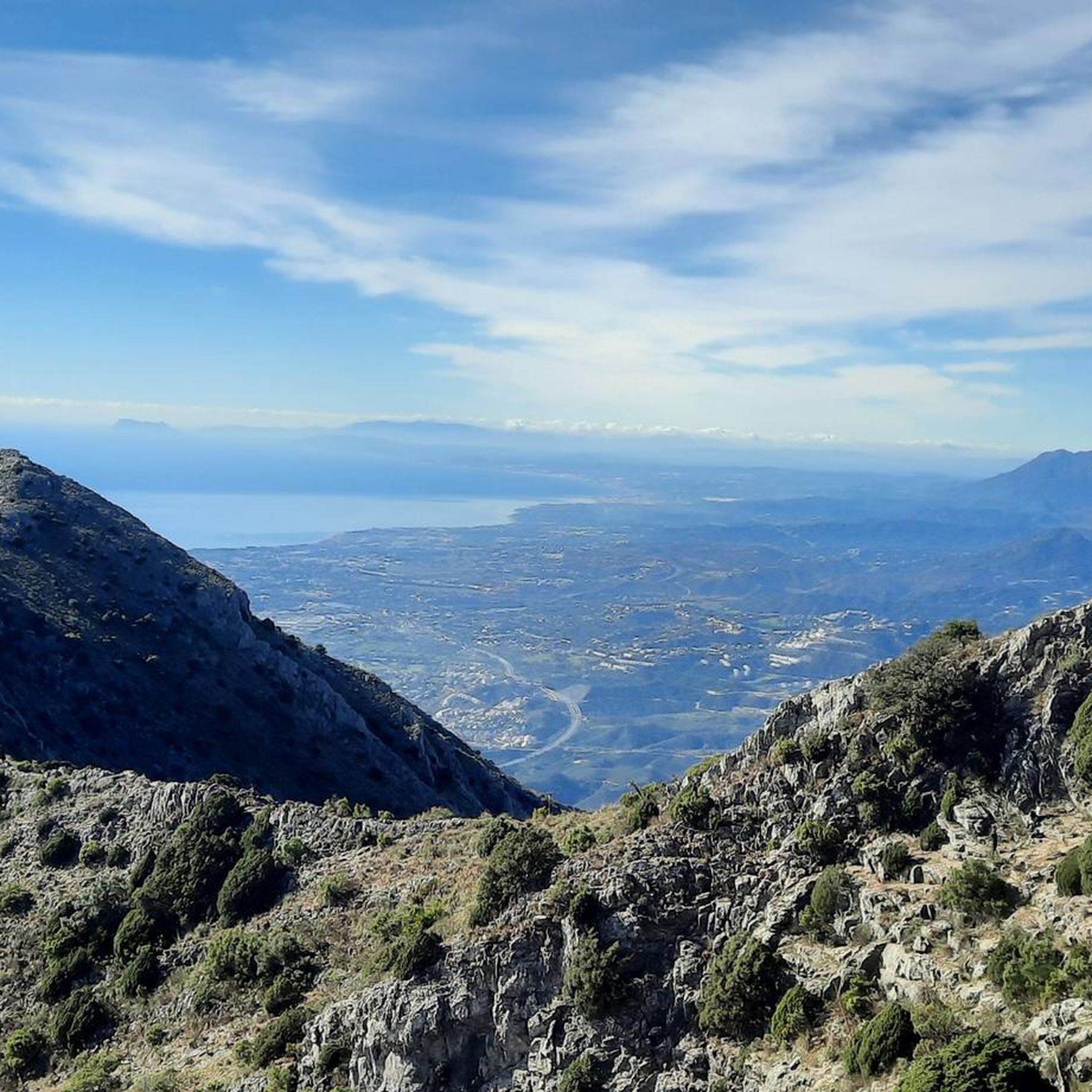
Road cycling in Sierra Blanca is characterized by mountainous terrain with significant elevation changes. Routes often ascend through hills, providing panoramic views of the Mediterranean coast. The region's geology contributes to diverse road surfaces, offering varied challenges for cyclists.
Are there any challenging road cycling routes for experienced riders?
Yes, Sierra Blanca offers several challenging routes. For instance, the Ojén Viewpoint – Puerto El Madroño (1065 m) loop from Ojén is a difficult 55.1-mile trail with over 6,190 feet of climbing. Another demanding option is the View of Fuengirola – Mijas loop from Ojén, a 62.2-mile path featuring extensive views and over 5,750 feet of ascent.
Are there any easier or moderate road cycling routes suitable for beginners or casual riders?
Yes, Sierra Blanca has options for less experienced riders. You can find around 14 easy and 30 moderate routes. A good moderate choice is the Monda – Ojén Pass loop from Ojén, a 20.9-mile trail through mountainous landscapes. The Views of Ojén – Cuevas de Ojén loop from Ojén is another moderate option, covering about 18.25 km with a 441-meter climb.
What are some notable landmarks or viewpoints I can see along the road cycling routes?
Many routes offer stunning views and pass by interesting landmarks. You might encounter highlights such as La Concha Peak, Corzo Viewpoint, and Salto del Lobo Viewpoint, all offering spectacular panoramas of the region and the coast. The Los Gitanos Viewpoint is also a popular spot.
Are there any historical sites or natural features to explore near the cycling paths?
Yes, beyond the cycling itself, you can explore sites like the Ruins of the Monks' Hermitage, which offers a glimpse into the region's history. For natural features, the Source of the Río Molinos is a beautiful spot to visit.
What do other road cyclists think about the routes in Sierra Blanca?
The road cycling routes in Sierra Blanca are highly regarded by the komoot community, holding an average rating of 4.1 stars from over 130 reviews. Cyclists frequently praise the challenging ascents, the rewarding coastal vistas, and the diverse mountainous landscapes.
Are there any loop routes available for road cycling?
Yes, many of the routes in Sierra Blanca are designed as loops, allowing you to start and end in the same location. Examples include the Ojén Viewpoint – Puerto El Madroño (1065 m) loop from Ojén and the Monda – Ojén Pass loop from Ojén.
What is the best time of year to go road cycling in Sierra Blanca?
Given the region's mountainous terrain and coastal influence, spring and autumn generally offer the most pleasant conditions for road cycling, with milder temperatures. Summers can be hot, especially at lower elevations, while winters might bring cooler temperatures to higher passes.
What are the typical elevation gains on road cycling routes in Sierra Blanca?
Routes in Sierra Blanca feature significant elevation gains, reflecting the mountainous landscape. Difficult routes can involve climbs of over 6,000 feet, such as the Ojén Viewpoint – Puerto El Madroño (1065 m) loop from Ojén with 6,190 feet of ascent. Moderate routes typically have gains ranging from 1,400 to 2,600 feet.
Are there any routes that offer extensive coastal views?
Absolutely. Many routes in Sierra Blanca are renowned for their coastal vistas. The View of Fuengirola – Mijas loop from Ojén is specifically highlighted for its extensive views, often encompassing the Mediterranean coast.
Most popular routes in Sierra Blanca
Most popular attractions in Sierra Blanca

Get inspired with the komoot mobile app


Explore more
Browse the best Road cycling routes in other regions.
