Attractions and Places To See around Bagnara Calabra - Top 20
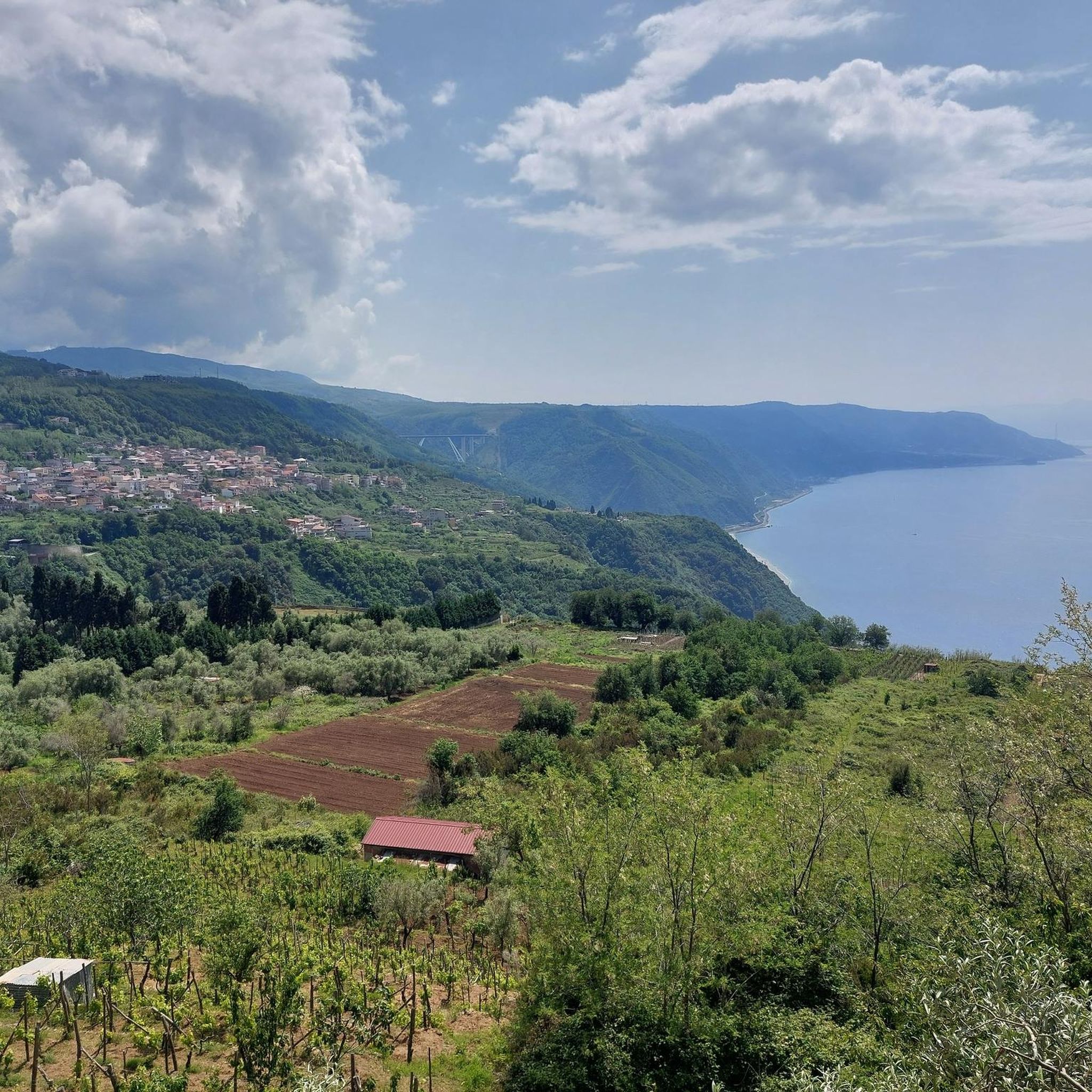
Attractions and places to see around Bagnara Calabra offer a rich blend of historical landmarks, natural beauty, and cultural insights. Situated along the Costa Viola, known for its dramatic cliffs and clear waters, the town is nestled between the Tyrrhenian Sea and the Aspromonte mountains. This region provides a captivating experience for visitors, from exploring ancient defensive structures to enjoying the unique swordfish fishing traditions.
Best attractions and places to see around Bagnara Calabra
- The most popular attractions is Scilla, a settlement famous for its picturesque fishing village, Chianalea, and its scenic promontory. It offers views of the Strait of Messina and is known for its mythological connections.
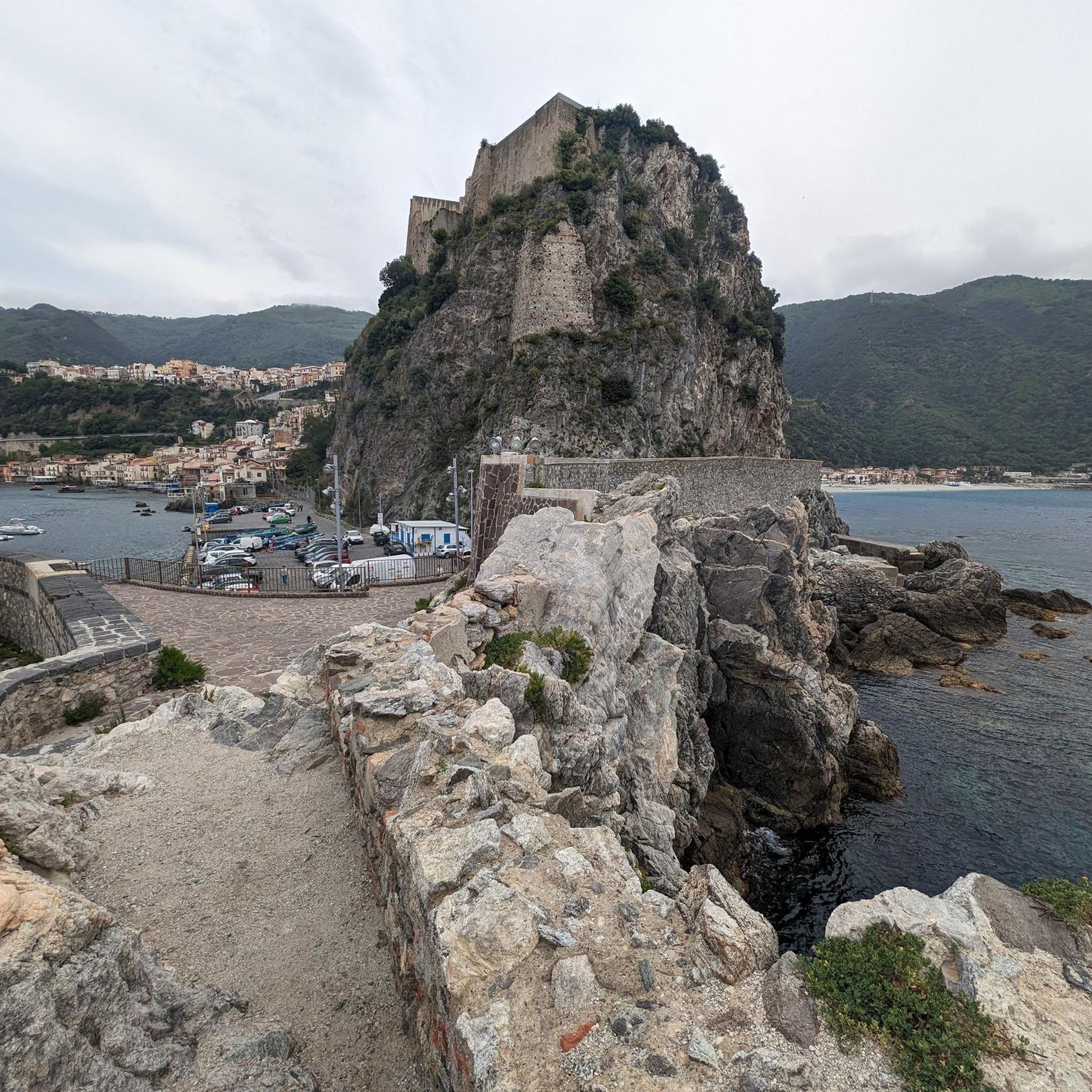
- Another must-see spot is Ruffo Castle of Scilla, a castle with a history dating back to Magna Graecia. Perched on a tongue of land, it offers incomparable views of the sea and coast, and has been adapted and renovated across centuries.
- Visitors also love Aspromonte National Park, a vast forest area with green and coniferous forests, deep river canyons, and hidden waterfalls. It provides a stark contrast to the coastal heat and offers trails for hiking.
- Bagnara Calabra is known for its historical sites, natural features, and cultural traditions. Visitors can explore ancient castles, enjoy scenic coastal views, and learn about the local swordfish fishing heritage.
- The attractions around Bagnara Calabra are appreciated by the komoot community, with 50 upvotes and 61 photos shared by visitors.
Last updated: July 20, 2026
Church of the Most Holy Immaculate Conception, Scilla
Highlight • Religious Site
The mother church of the Santissima Immacolata di Scilla is also called the church "Mesa" or half because it is located at the crossroads of the streets that lead to the three main districts of the country: Marina Grande, Chianalea and San Giorgio. The current building was built on a pre-existing church dedicated to Santa Maria Cattolica and part of the ancient Basilian monastery of San Pancrazio. In the sixteenth century it was badly damaged by earthquakes, so much so that it had to undergo extensive renovations, which also led to an expansion of the structure. The church also suffered the same fate in the eighteenth century, with an earthquake that collapsed the entire central vault, and in 1908, when the rear and the interior of the colonnade on the west side were demolished.
Text / Source: Italia Virtual Tour is a project by Comunicando Leader
italiavirtualtour.it/dettaglio.php?id=95990
Translated by Google •
Tip by

Scilla
Highlight • Settlement
Translated by Google •
Tip by

Sign up now to discover places like this
Get recommendations on the best single tracks, peaks, & plenty of other exciting outdoor places.
Sign up for free
Scilla and Castello Ruffo
Highlight • Castle
Showing Translation
Tip by

Ruffo Castle of Scilla
Highlight • Castle
Its history dates back to the time of Magna Graecia. She is said to have been created by the tyrant Anaxillas, who died in 476 BC. BC, to protect against pirate attacks. Built as an outpost of the city of Rhegion, the fortress was snatched from the city by Dionysius I of Syracuse and after about 50 years came back under the control of the city of Rhegion under Timoleon.
Also under the Romans it served to defend Reggio. In the Middle Ages it fell under Byzantine control and was used by the Basilians as a monastery dedicated to Saint Pancras. In the 11th century the building came into the possession of the Norman ruler and Duke of Apulia and Calabria Robert Guiskard. In 1255 the complex was expanded on behalf of the Hohenstaufen Manfred of Sicily. In the 13th century it fell to Charles I of the House of Anjou.
Under the Aragonese, during the 15th century, as firearms became more widespread, the medieval castle was adapted and transformed into a Renaissance fortress. In 1469 it changed hands again, falling into the hands of Gutierre De Nava, a Castilian knight of alleged German descent. In 1533 the Ruffos acquired the Renaissance fortress and established their residence there in 1620. At the same time, a dungeon was housed in the basement, which was notorious for its torture. At the beginning of the 18th century it completely lost its military importance. In 1713, during the War of the Spanish Succession, it was occupied by Habsburg troops. After the Peace of Vienna in 1738, it fell to the Bourbon Kingdom of the Two Sicilies.[4] From 1770 to 1772, the first modern fortification work took place.
The Castello Ruffo di Scilla was also affected by the Calabria earthquake in 1783 and as a result the dungeon was closed. After the end of the Parthenopean Republic in 1799, the complex was occupied by Napoleonic troops. At the beginning of the 19th century, the French and English changed hands several times during the coalition wars. After the temporary French occupation in 1806 under General Louis de Partouneaux, the French were able to take possession of the fortress again in February 1808. After the building suffered considerable damage from artillery fire during the previous sieges, renovation work took place between 1811 and 1813, which characterizes the current appearance of the fortress. In particular, after a lightning strike on the powder store in 1812, which severely damaged the building and killed two officers, the original structure of the facility was significantly altered. At the end of the Napoleonic era, little was left of the previous building.
During the “Course of a Thousand” in 1860, the complex was handed over to the volunteers of Giuseppe Garibaldi without resistance. Allegedly, after the handover, Garibaldi himself hoisted the tricolor on the fortress.
During the Messina earthquake in 1908, the older parts of the building that still existed were largely destroyed, so that nothing remains of the Ruffo's former residence.[4] In 1913, a small lighthouse was erected on the northern edge of the ledge, which is still operated by the Italian Navy. Until the Second World War, the fortress was used, among other things, by the Italian coastal artillery. At the end of the 20th century, a youth hostel was housed in the former fortifications. After extensive restoration work, it has since been used for exhibitions and conferences, among other things.
Text/Source: Wikipedia
de.wikipedia.org/wiki/Castello_Ruffo_di_Scilla
Translated by Google •
Tip by
Sea monster Scylla
Highlight • Monument
A song like you've never heard it before, infinitely beautiful! And suddenly everything happens very quickly: tentacles from the depths! They drag the sailors into their wet grave. This horror story of the sea monster Scylla is 3000 years old and was told and written by the Greek poet Homer. In fact, the monster gave its name to the town of Scilla in Calabria, because it is said to have ambushed seafarers here on the Strait of Messina.
Translated by Google •
Tip by

Sign up for free to discover even more attractions around Bagnara Calabra.
Sign up for free
Already have an account?
Start today with a free account
Your next adventure awaits.
Login or Signup


Tips from the Community

In Greek mythology, Scylla is a terrifying man-eating sea monster that resides in a cave within a cliff in the Strait of Messina, on the Calabrian side, exactly opposite the destructive whirlpool of Charybdis. Her name derives from the Greek Skýlla, linked to the root for "bitch" or "shark", evoking the sinister sound of waves crashing against the rocks.
1
0
Scilla, defined as the "Pearl of the Violet Coast", is one of the most fascinating and myth-rich villages in all of Calabria, dominated by the majestic Ruffo Castle which stands on an imposing rocky promontory overlooking the Strait of Messina. This rocky spur divides the coastline into the two souls of the town: the splendid beach of Marina Grande on one side and the ancient fishing village of Chianalea on the other.
0
0
Scilla is one of the most beautiful and fascinating villages in Italy, located on the Costa Viola in the province of Reggio Calabria, right in front of the Strait of Messina. Known for its deep connection with Homeric mythology (the monster Scilla), this pearl of the Mediterranean is divided into three main areas connected by the majestic fortified rock.
0
0
The Church of Maria Santissima Immacolata (also known as Chiesa Matrice) is the main religious building in Scilla, located in an exceptional panoramic position in Piazza Castello, right below Ruffo Castle and with a direct view of the Calabrian sea.
0
0

Beautiful church
5
0

Fantastically beautiful, very well organized and very well maintained and clean.
2
0
Frequently Asked Questions
What natural features can I explore around Bagnara Calabra?
Bagnara Calabra is situated along the beautiful Costa Viola, known for the purple hues the water takes on at sunset. You can explore dramatic cliffs, hidden coves, and clear waters perfect for swimming and snorkeling. Notable natural caves include Grotta del Monaco and Grotta delle Rondini, both popular for boat tours. Inland, Bagnara serves as a gateway to Aspromonte National Park, offering dense forests, deep river canyons, and waterfalls like Mundu and Galasìa.
What historical landmarks are there to visit in Bagnara Calabra?
The region boasts several historical landmarks. You can visit Torre Ruggiero (Aragonese Tower), a 16th-century defensive structure offering panoramic views. The Palazzo Ducale Ruffo, though modified over centuries, remains a symbol of the town's strategic importance. Other sites include the Fortino di Marturano, the monumental Bridge of Caravilla, and the Bourbon Fountain at Passo Solano.
Are there hiking opportunities near Bagnara Calabra's attractions?
Yes, there are several hiking opportunities. The Tracciolino Trail offers spectacular coastal views between the Tyrrhenian Sea and Aspromonte National Park. For more extensive hiking, Aspromonte National Park provides numerous trails through forests and canyons. You can find more detailed routes and guides for the area on the Hiking around Bagnara Calabra page.
What cultural insights can I gain in Bagnara Calabra?
Bagnara Calabra is deeply rooted in its traditions. The town is famous for its centuries-old swordfish fishing tradition, which you can learn about at the Museo della Pesca e dell'Arte Marinara. The historic center features various Saracen Towers and churches like the Church of Maria Santissima del Rosario and the Church of Maria Santissima del Carmine, showcasing religious architecture. Don't miss the monument dedicated to famous Italian singer Mia Martini, a native of Bagnara.
Are there family-friendly attractions around Bagnara Calabra?
Many attractions cater to families. The picturesque settlement of Scilla, with its fishing village Chianalea and beach, is a popular choice. The Lungomare di Bagnara (promenade) is vibrant with cafes and gelaterias, especially in summer. Exploring the natural caves like Grotta del Monaco by boat can also be an exciting family activity.
What are some recommended day trips from Bagnara Calabra?
A highly recommended day trip is to Scilla, famous for its mythological connections, the picturesque Chianalea district, and the Ruffo Castle. Another option is Reggio Calabria, home to the National Archaeological Museum where you can see the famous Riace Bronzes.
What is the best time to visit Bagnara Calabra for coastal activities or hiking?
For coastal activities like swimming and enjoying the beaches, the summer months are ideal. However, for hiking, it's often recommended to visit during the cooler periods of spring or autumn. The Tracciolino Trail, for example, can be very sunny, making cooler seasons more comfortable for exploration.
Where can I find cycling routes near Bagnara Calabra?
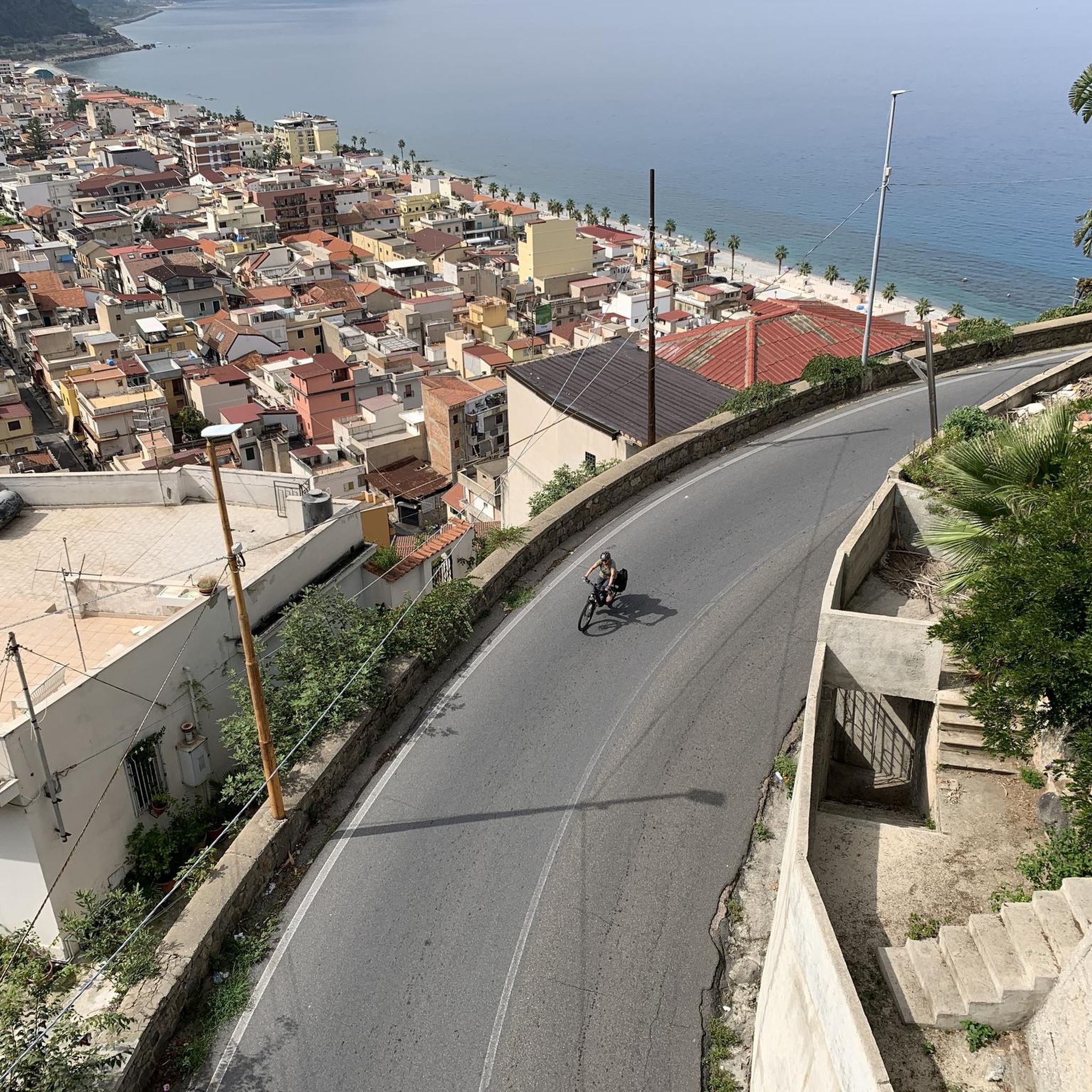
Bagnara Calabra offers several cycling routes, ranging from moderate to difficult. You can find options like the 'Break in Bagnara – View of the Strait of Messina loop' or the 'View of the Coast of Scilla – Break in Bagnara loop'. For a comprehensive list and details, refer to the Cycling around Bagnara Calabra guide page.
What do visitors enjoy most about the attractions around Bagnara Calabra?
Visitors particularly enjoy the stunning panoramic views from historical sites like Ruffo Castle of Scilla and the Aragonese Tower. The picturesque fishing village of Chianalea in Scilla is also highly appreciated. Many are captivated by the contrast between the coastal beauty of the Costa Viola and the wild nature of Aspromonte National Park.
Are there any religious sites of interest in the area?
Yes, the area has significant religious architecture. The Church of Maria Santissima del Rosario is noted for its stunning statues and intricate wooden carvings. The Church of Maria Santissima del Carmine is an important example of Baroque architecture in the historic center. Slightly outside town, the Abbazia di Santa Maria di Acquaviva, founded by Basilian monks, showcases Byzantine influence.
Can I find traditional local products or cuisine in Bagnara Calabra?
Absolutely. Bagnara Calabra is renowned for its traditional sweets, especially the prized Nougat of Bagnara IGP. Given its strong swordfish fishing tradition, you'll also find excellent local swordfish cuisine. The annual Swordfish Gala in August is a testament to this culinary heritage.
What is the significance of the Costa Viola?
The Costa Viola, or 'Violet Coast,' is named for the unique purple hues the sea takes on, particularly at sunset. This natural phenomenon is due to the specific geological composition of the seabed and the way light reflects off the water. It's a defining natural feature of the region, characterized by dramatic cliffs, clear waters, and hidden coves.
Most popular routes around Bagnara Calabra
Most popular attractions around Bagnara Calabra

Get inspired with the komoot mobile app


Explore more
Still not found the Highlight you’re looking for? See guides of the top attractions in other regions:
