Attractions and Places To See around Salandra - Top 20
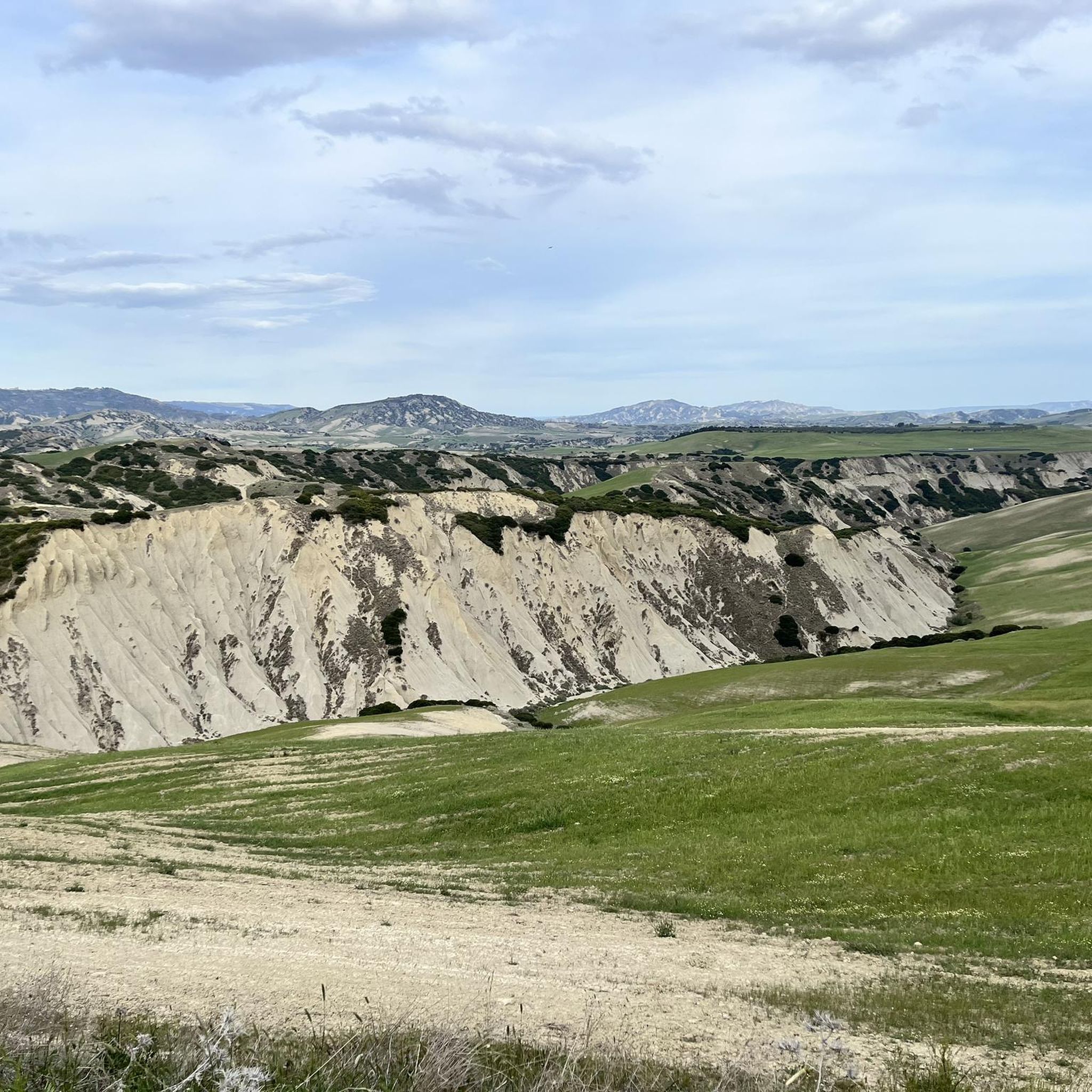
Best attractions and places to see around Salandra are found in a region rich in history and natural beauty, nestled in Italy's Basento Valley. The town's panoramic position overlooks the Salandrella Torrent, offering scenic views. Salandra features remnants of a 12th-century Norman Castle and ancient origins dating back to the Iron Age. Visitors can explore historical sites, cultural landmarks, and natural features like the Calanchi Park.
Best attractions and places to see around Salandra
- The most popular attractions is Petre…
Last updated: May 9, 2026
Petre de la Mola
Highlight • Natural Monument
Translated by Google •
Tip by

Historic Center of Grottole
Highlight • Historical Site
Translated by Google •
Tip by

Sign up now to discover places like this
Get recommendations on the best single tracks, peaks, & plenty of other exciting outdoor places.
Sign up for free
Garaguso Village
Highlight • Settlement
Translated by Google •
Tip by

San Mauro Forte
Highlight • Settlement
Translated by Google •
Tip by

Ferrandina
Highlight • Settlement
Translated by Google •
Tip by

Sign up for free to discover even more attractions around Salandra.
Sign up for free
Already have an account?
Start today with a free account
Your next adventure awaits.
Login or Signup
Popular around Salandra
Tips from the Community

Grottole presents itself as a village divided into two distinct parts: the ancient part, full of cobbled streets and historic buildings that narrate the history of the community, and the modern part, more functional and contemporary. While the old Grottole enchants with its timeless charm and its authenticity rooted in history, the new Grottole offers a vision of the growth and evolution of the city. The contrast between the two parts adds a unique element to the experience of visiting Grottole, highlighting the diversity and coexistence of past and present.
1
0

Beautiful city, here is some info and a link where you can find even more information. Absolutely worth a visit! "Founded in the fifteenth century by Federico and Isabella of Aragon, it stands out for its white houses leaning against each other almost like horror vacui which create a unique and easily recognizable panorama. " Reference link https://www.basilicataturistica.it/territori/ferrandina/
2
0
A beautiful village to visit absolutely, especially the Tower of San Muro. I found interesting information at this link https://www.borghiauutenticiditalia.it/borgo/san-mauro-forte
1
0

Small town, perched at an altitude of 500 metres, at the gates of the park of the Piccole Dolomiti Lucane. All around, a dense forest and the majestic profile of Mount La Croccia.
1
0
Village located between the Basento and Bradano rivers included, in part, in the San Giuliano regional reserve. The city is famous for a clay working.
1
1

The town is an agricultural center on the edge of the Lucanian Apennines located in the upper valley of the Cavone river in the northwestern part of the province of Matera. Its territory borders on the "park of Gallipoli Cognato and the Piccole Dolomiti Lucane". The small inhabited center, perched on a rocky hill, at 492 m a.s.l., is surrounded by the spectacular profile of Mount La Croccia and the Impiso mountains (on average about 1200 meters above sea level) cloaked in dark forests and included in the aforementioned park. : ridges that separate the two Lucanian provinces in this area. To the south rises, beyond the bed of the Salandrella stream, on the border with San Mauro Forte, the steep and imposing relief of Serra Boscone (790 m), which, together with the contiguous Serra Cavallo and the Serra Antica to the west, territory of Oliveto Lucano, constitute a picturesque and suggestive wooded backdrop immediately behind the town. The Garaguso wood is very dense and impervious, consisting of large specimens of oak and Turkey oaks, with a thick undergrowth of holm oaks, alaterni and other evergreens in the lower altitudes; hornbeam, maple, dogwood, ash everywhere. Rich in springs, one of which also supplied the town, the "Boscone" of Garaguso was once populated by a fauna typical of uncontaminated and wild areas (squirrels, roe deer, wolves, as indicated by some microtoponyms of the area), to the point that the area was favored for hunting by the Revertera Dukes, as stated in the plaque of the eighteenth-century ducal palace in the center of the town. The cliff on which the town stands is very steep and surrounded by deep gorges, one of which is crossed by the picturesque "devil's bridge". It borders to the north with the municipality of Grassano (17 km), to the east with Salandra (11 km), to the south with San Mauro Forte (15 km), and to the west with Oliveto Lucano (7 km) and Calciano (7 km). It is part of the Medio Basento mountain community.
0
1
Grottole has remote origins so as to be one of the oldest centers in the region. The finds of prehistoric, Greek and Roman settlements are a precise testimony in this sense. The toponym could derive from the Greek Kruptai, hidden places, and from the Latin cryptulae or small caves, rooms used for working clay, an art for which Grottole has remained famous over the centuries. In the Magna Graecia period, Grottole was part of the VII Metapontine region, colonized by the Greeks starting from the VIII century BC. It was fortified by the Longobards, from whom it managed to escape around the year 1000. In 1061, in the Norman era, the feud of Grottole passed under the dominion of Guglielmo Braccio di Ferro, and subsequently passed to Roberto il Guiscardo and then to the counts Loffredo di Matera. Over the centuries the fiefdom of Grottole was disputed by various lordships. Carlo I D'Angiò assigned it to Ruggero di Lauro, count of Tricarico, who had supported the Angevin conquest, and from these it passed to the Monteforte and Orsini Del Balzo families. At the beginning of the sixteenth century it was a possession of the Gaetani Dell'Aquila d'Aragona family. In 1534 it passed under the dominion of the Marquises Sanchez De Luna of Aragon, the treasurers of the Kingdom of Naples, while in the following century the Caracciolos and Spinellis of San Giorgio followed one another, until 1738 when it passed to the Sanseverinos of Bisignano by marriage. After 1806, with the subversive law of feudalism, the assets were divided between the descendants of the Sanseverinos and D. Rosa Miracco, a natural daughter of Luigi Sanseverino 13th Prince of Bisignano [8], who had always been closely linked to the feud of Grottole. Only in 1874 did Grottole get rid of the last feudatory Prince Sanseverino. The municipal territory (the ancient universitas as the municipalities were once called) was divided into districts.
0
2
Ferrandina (Frannínë in local dialect) is an Italian municipality of 8,337 inhabitants[1] in the province of Matera in Basilicata. The town stands on a hill at 482 m above sea level. in Val Basento, on the western bank of the Basento river of the same name, in the central-northern part of the province. The municipal house is located at an altitude of 497 m above sea level, however in the suburbs the altitude varies from 43 to 583 m above sea level[4] Due to its altitude, Ferrandina is part of the medium Matera hills. The territory of the municipality has an extension of 215.55 km2, the fourth largest in all of Basilicata. The towns neighboring the Municipality of Ferrandina are: Pomarico and Miglionico (17 km), Salandra (18 km), Pisticci (22 km), Grottole (26 km), San Mauro Forte (31 km) and Craco (33 km). It is 35 km from Matera and 77 km from the regional capital Potenza. Ferrandina's roots lie in Magna Graecia, around 1000 BC. Its name was Troilia, while its acropolis-fortress was called Obelanon (Uggiano). Troilia was built to remember and honor the destroyed city of Asia Minor, Troy. During the Roman era Troilia and Obelanon were important centers of Hellenic culture and acquired more and more prestige in the Byzantine era. With the fall of Greek rule, the Lombards and Normans took possession of the city. The name Ferrandina is due to Frederick of Aragon who in 1494 baptized it in honor of his father, King Ferrante (or Ferrando). In 1507 Ferdinand the Catholic gave it the title of "civitas". The municipal coat of arms bears six Fs: the meaning is: Fridericus Ferranti Filius Ferrandinam Fabbricare Fecit. It was once known for the production of wool fabrics, including ferlandina or felandina, much appreciated and requested in the Kingdom of Naples and by the Dominicans, who settled in Ferrandina and created a very organized agricultural and urban centre, so much so that they built, in 1546, the dome of the Monastery of San Domenico as a symbol of power. Ferrandina took part in the uprisings of 1820-21 and 1860. Here in March 1862 Carmine Crocco, leader of the brigands, faced and destroyed a company of the 30th Rgt. Ftr. of the Piedmontese army. In 1921 Ferrandina was the scene of squad violence: the socialist mayor and provincial councilor Nicola Montefinese was killed. In September 1943 Ferrandina rose up against the fascist hierarchs. The spirit of rebellion did not subside until 2 August 1945, when the farmers started a revolt to demand the removal of the fascist landowners and the assignment of the uncultivated lands. During the riots, Vincenzo Caputi was murdered, believed to be the instigator of the killing of Montefinese. For fear that the protest would spread, the town remained isolated, with electricity and telephone lines cut. Order was re-established with the dispatch, by the provisional government of anti-fascist units, of 100 carabinieri from Naples, 250 Alpine troops from the Garibaldi division and the arrival in Ferrandina, on 4 August, of minister Scelba. In November 2003 the Ferrandino community, by organizing protests and road blocks, actively participated in the protest against the Berlusconi government's decision to build the single nuclear waste repository in Scanzano Jonico. On 16 July 1895, Maria Barbella from Ferrandino, imprisoned in Sing-Sing prison for killing her partner, was the second woman sentenced to the electric chair in the United States of America. The sentence, however, was not carried out as she was declared incompetent at the time of the murder. For this reason, since November 2005, Ferrandina has been included among the "Cities for life - Cities against the death penalty", an awareness campaign promoted by the Community of Sant'Egidio.
2
1
Frequently Asked Questions
What historical sites can I explore in and around Salandra?
Salandra boasts a rich history. You can visit the remnants of the 12th-century Norman Castle, which highlights the town's past as a defensive stronghold. The town itself dates back to the Norman era. Other significant historical sites include the Historic Center of Grottole, known for its ancient origins and cobbled streets, and San Mauro Forte, featuring 18th-century buildings and a 35-meter Norman tower. The town of Ferrandina also has deep roots in Magna Graecia.
Are there any natural attractions or unique geological formations near Salandra?
Yes, the region offers distinctive natural beauty. A must-see is Petre de la Mola, a natural limestone rock formation within the Gallipoli Cognato Piccole Dolomiti Lucane Regional Park. This complex of rocks is believed to have been modified in the Bronze Age to serve as a "stone calendar." Additionally, the Calanchi Park features characteristic eroded badlands formations, offering unique landscapes. Salandra's location in the Basento Valley, overlooking the Salandrella Torrent, also provides scenic views.
What cultural and religious landmarks are there in Salandra?
Salandra has several notable cultural and religious sites. The Convent of San Francesco, originally built in 1573, now serves as the town hall and once housed a seminary. Significant churches include the Santissima Trinità Church, founded in the 10th century, and the 16th-century Sant'Antonio of Padua Church, known for its 17th-century polyptych and frescoes. Other churches like the Riformati Church, Annunziata Church, Madonna Del Monte Church, and S. Maria Chapel also contribute to the town's rich religious heritage.
What kind of outdoor activities can I do near Salandra's attractions?
The area around Salandra is excellent for outdoor enthusiasts. You can find various routes for mountain biking, road cycling, and touring. For example, there are challenging MTB trails like the 'Splitaria Trail loop from Salandra' and scenic road cycling tours such as 'Garaguso, Campomaggiore and Tricarico – loop tour in the Parco regionale di Gallipoli Cognato Piccole Dolomiti Lucane'. Explore more options on the MTB Trails around Salandra, Cycling around Salandra, and Road Cycling Routes around Salandra guide pages.
Are there any villages or settlements worth visiting near Salandra?
Absolutely. Besides Salandra itself, you can visit the Historic Center of Grottole, a village with ancient origins divided into charming old and modern parts. San Mauro Forte is another historical settlement known for its art and architecture, including a Norman tower. The Garaguso Village, perched at 500 meters, offers stunning viewpoints and is surrounded by dense forests. Ferrandina, founded in the 15th century, is also a beautiful city with white houses creating a unique panorama.
What is the best time of year to visit Salandra and its attractions?
Salandra, located in southern Italy, generally enjoys a Mediterranean climate. Spring (April-June) and autumn (September-October) are often considered the best times to visit, offering pleasant temperatures ideal for exploring historical sites and engaging in outdoor activities without the intense heat of summer. The natural landscapes, like the Calanchi Park, are particularly beautiful during these seasons.
What are some notable architectural features in Salandra?
Beyond the Norman Castle remains, Salandra features several noble palaces such as Palazzo Motta and Palazzo Spaziante, which offer a glimpse into the town's aristocratic past. The Convent of San Francesco, now the town hall, is another significant architectural piece dating back to 1573. In nearby San Mauro Forte, you can admire 18th-century square-plan buildings and a prominent Norman tower.
Are there any ancient discoveries or archaeological points of interest in the area?
Yes, Salandra has ancient roots. Evidence of habitation dating back to the Iron Age has been found in the S. Vitale locality. The discovery of the Tavole di Heraclea (Heraclea Tablets) in the Salandrella Torrent gravel bed in 1732 suggests a foundation during the Magna-Greek Era. Additionally, Petre de la Mola is believed to have been modified by humans in the Bronze Age.
What do visitors enjoy most about the attractions around Salandra?
Visitors appreciate the rich blend of history and natural beauty. The unique geological formations like Petre de la Mola and the historical depth of places like the Historic Center of Grottole are highly valued. The charm of villages such as San Mauro Forte, with its historical architecture, also receives positive feedback. The komoot community has shared 25 photos and given 11 upvotes, indicating a strong appreciation for the region's diverse offerings.
Are there any viewpoints offering panoramic vistas of the region?
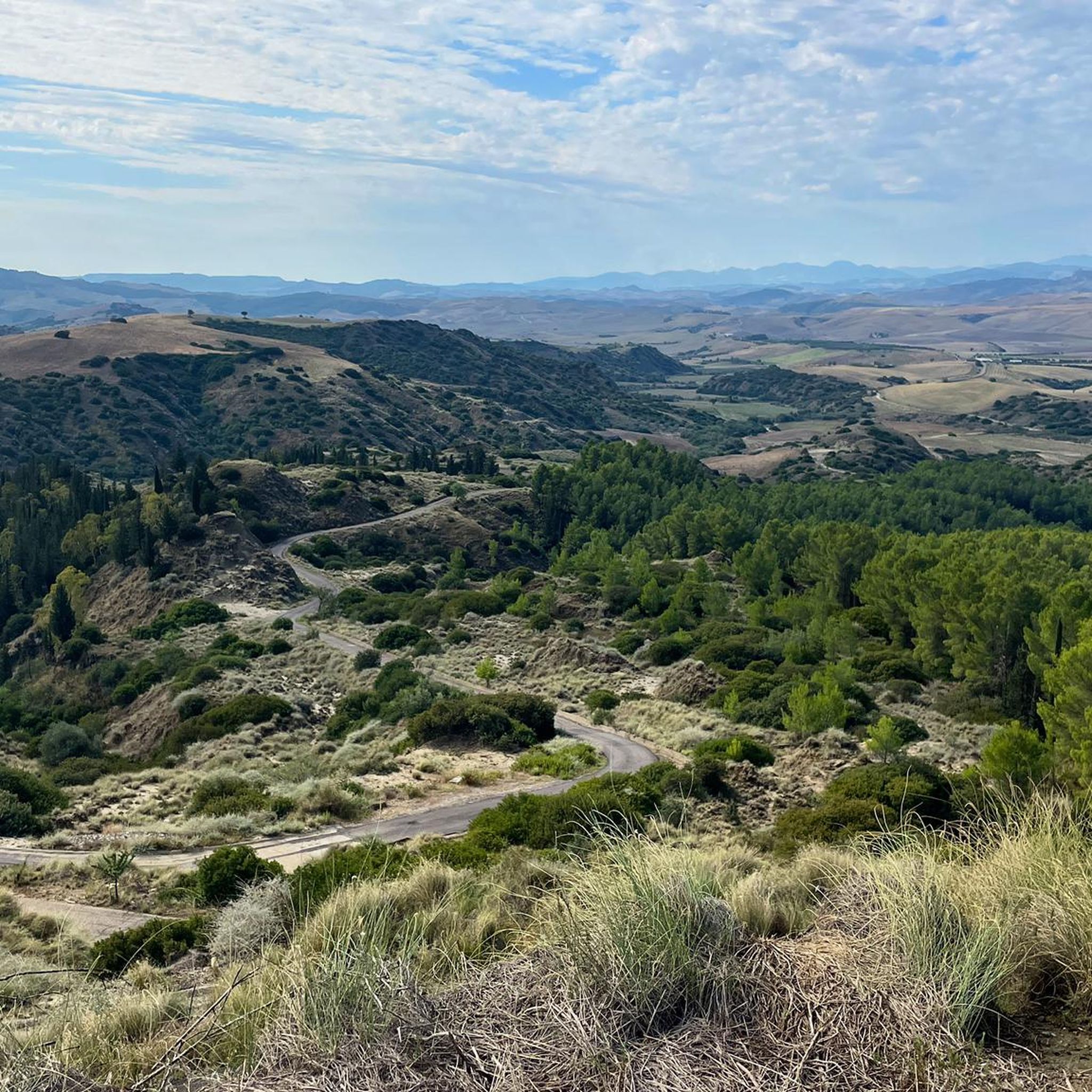
Salandra itself is known for its panoramic position overlooking the Salandrella Torrent, providing scenic views of the Basento Valley. The Garaguso Village, perched at an altitude of 500 meters, also offers excellent viewpoints, with the majestic profile of Mount La Croccia and the Impiso mountains in the background, cloaked in dark forests.
What is the significance of the Basento Valley and Salandrella Torrent to Salandra?
Salandra is nestled within the Basento Valley, and its panoramic position directly overlooks the Salandrella Torrent. This geographical setting is fundamental to the town's charm, providing scenic views and a natural backdrop. Historically, the Salandrella Torrent was also the site where the ancient Tavole di Heraclea were discovered, linking the area to the Magna-Greek Era.
Most popular attractions around Salandra

Get inspired with the komoot mobile app


Explore more
Still not found the Highlight you’re looking for? See guides of the top attractions in other regions:
