The best walks and hikes around Gravina In Puglia
4.3
(243)
1,086
hikers
65
hikes
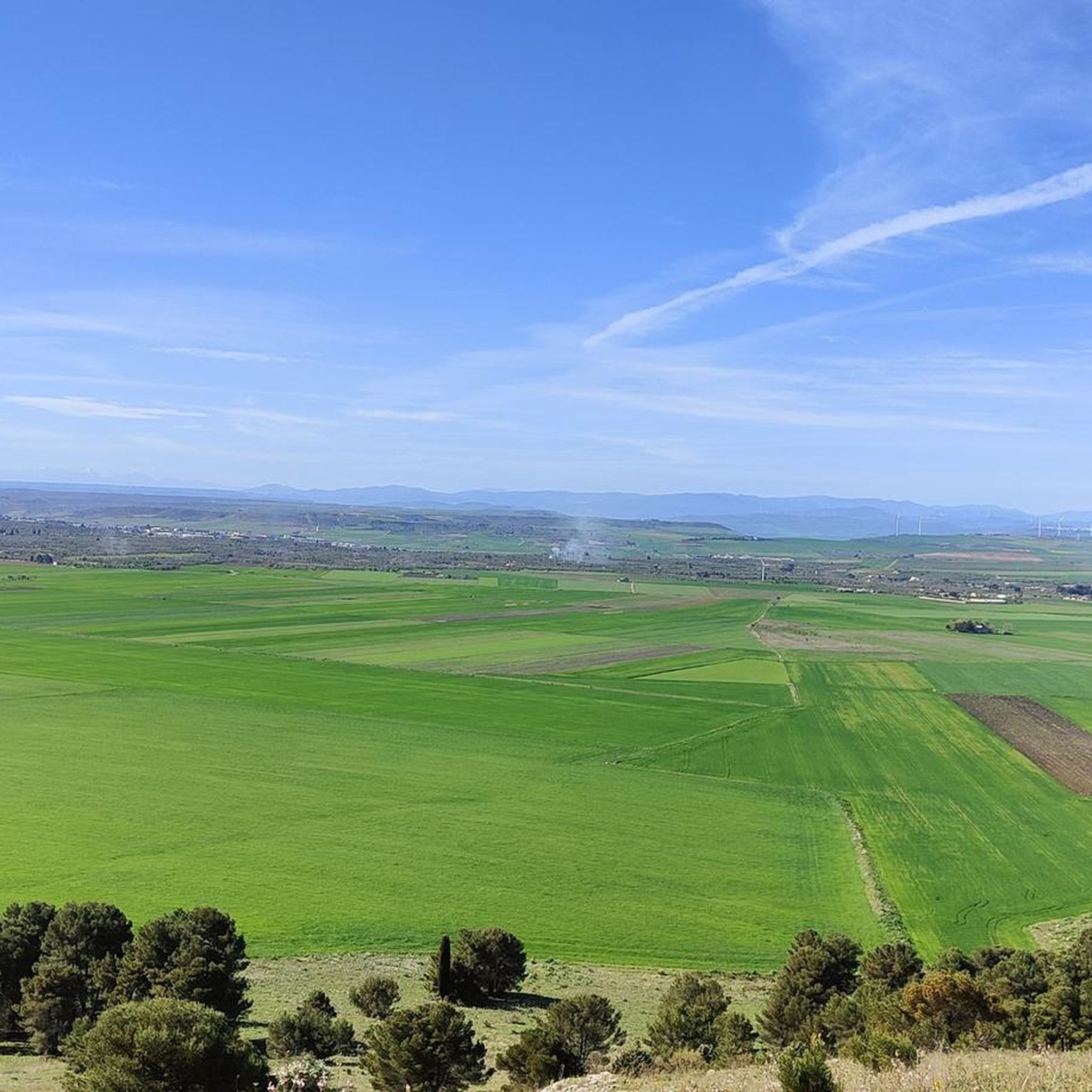
Hiking around Gravina In Puglia offers exploration through dramatic landscapes characterized by deep, canyon-like ravines known as "gravine." The region is situated within the Murgia National Park, featuring diverse ecosystems and a blend of natural and historical attractions. Trails often lead through protected areas like Bosco Difesa Grande, offering routes amidst oaks and Mediterranean flora. The terrain includes varied elevations, from the depths of the gravine to plateaus offering expansive views.
Best hiking trails around Gravina In Puglia
- The most popular hiking route is Gravina in Puglia: trails to travel through time – loop tour, a 6.2 miles (10.0 km) trail that takes 2 hours 42 minutes to complete. This moderate route explores the historical and natural features of the area.
- Another top favourite among local hikers is Piazza Benedetto XIII – Gravina Aqueduct Bridge loop from Gravina (FAL), an easy 3.3 miles (5.4 km) path. This trail offers views of the Gravina Aqueduct Bridge and the surrounding landscape.
- Local hikers also love the View of Gravina in Puglia – Gravina Aqueduct Bridge loop from Gravina in Puglia, a 5.3 miles (8.5 km) trail leading through varied terrain with views of the Gravina Aqueduct Bridge, often completed in about 2 hours 26 minutes.
- Hiking around Gravina In Puglia is defined by deep ravines, protected natural areas, and historical sites like the Gravina Aqueduct Bridge. The network of trails offers options for various ability levels, from easy walks to more challenging hikes.
- The routes in Gravina In Puglia are highly rated by the komoot community with an average score of 4.5 stars from over 200 reviews. More than 900 hikers have used komoot to explore Gravina In Puglia's varied terrain.
Last updated: September 28, 2026
3.5
(2)
5
hikers
10.0km
02:42
130m
130m
Moderate hike. Good fitness required. Easily-accessible paths. Suitable for all skill levels.
4.5
(4)
49
hikers
Easy hike. Great for any fitness level. Easily-accessible paths. Suitable for all skill levels.

3.8
(5)
14
hikers
Moderate hike. Good fitness required. Easily-accessible paths. Suitable for all skill levels.
5.0
(1)
15
hikers
17.7km
04:55
300m
300m
Moderate hike. Good fitness required. Easily-accessible paths. Suitable for all skill levels.
5.0
(3)
14
hikers
Moderate hike. Good fitness required. Easily-accessible paths. Suitable for all skill levels.
Get access to more routes and recommendations from other explorers.
Already have an account?
Our route recommendations are based on thousands of hikes, rides, and runs completed by other people on komoot.
Start today with a free account
Your next adventure awaits.

Other adventures around Gravina In Puglia

Tips from the Community

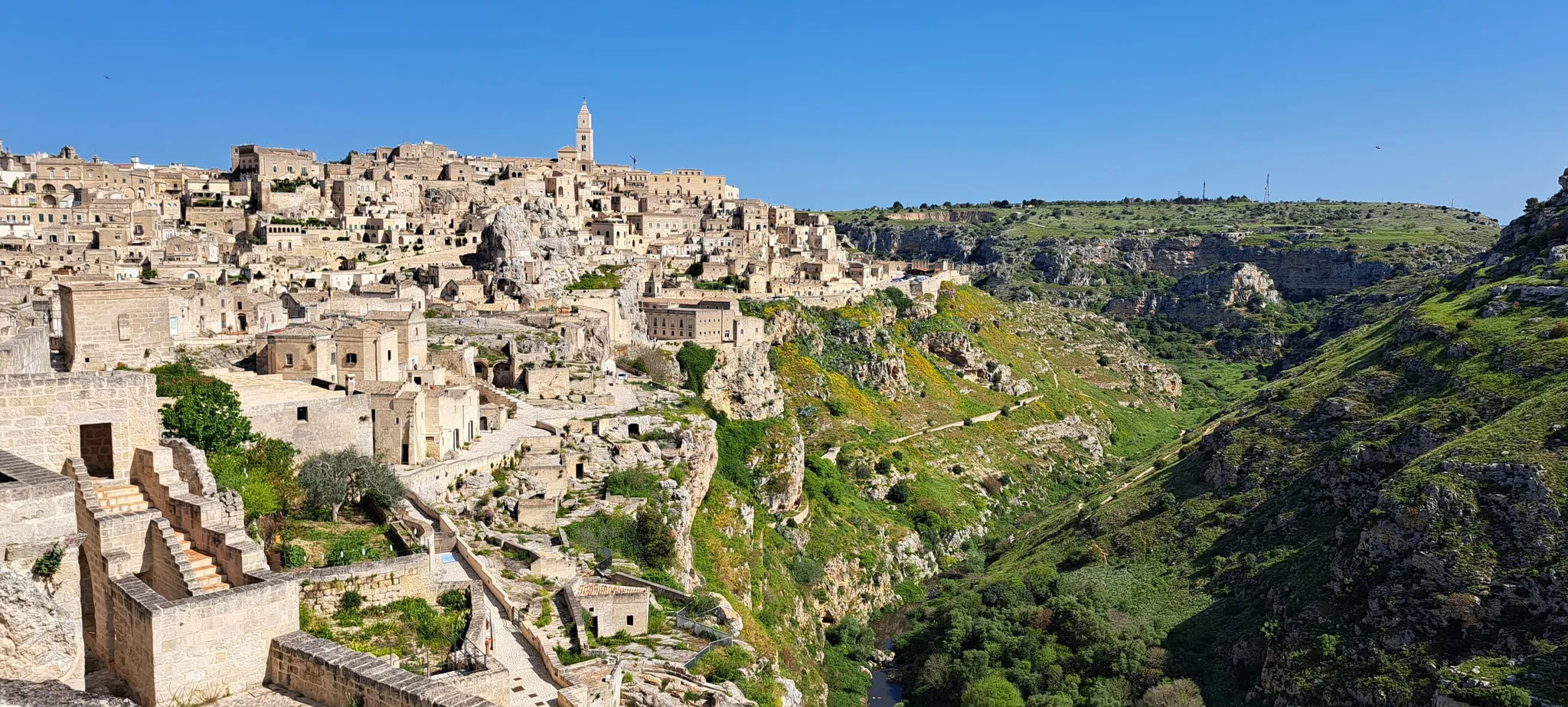
From here, the view opens onto a picturesque landscape: on one side, you can admire the imposing Ponte della Gravina, an 18th-century engineering feat that connects the two banks of the canyon, and on the other, the deep ravine with its natural landscape. In the distance, you can make out the outline of the historic center, perched on the hill.
0
0

Really? Groundbreaking new highlight? It already exists x-times...
0
0
Honestly? It's stupid to constantly create new highlights that already exist in one form or another. Why do you do that?
0
0
There are already several highlights where this photo could have been added. An overabundance of highlights is not useful. One "view" or, in case of doubt, the tenth "view" is not a useful highlight.
0
0

The Basilica Cathedral Santa Maria Assunta is the main church of the town and can be easily reached by visiting Gravina on foot. What characterizes the church is its unusual mix of different styles. This is closely related to the history of the church that was built in 1092 in Romanesque style. The church then went destroyed and was completely rebuilt only in 1508 with a more Renaissance style. Finally, it underwent numerous restorations in Baroque style between the 17th and 18th centuries. Externally, the church is divided into three naves and has a wonderful Romanesque rose window that has been preserved since the first construction. Internally, instead, the church consists of three naves from which you can access the side chapels and is decorated with a wonderful golden carved wooden ceiling. Under the church, then, it is possible to visit a second church dating back to 1500 known as "soccorpo della cattedrale" (cathedral's body) inside which it is possible to admire an altar and some frescoes dated between 1500 and 1600.
0
0
The Ducal Church of Santa Maria del Suffragio, known as the Church of Purgatory , was a place of worship dating back to the mid- 17th century located in the city of Gravina in Puglia at the entrance to the Cathedral Square for those arriving from Porta San Michele. The Church is called ducal because its construction, begun in 1649, took place thanks to the generosity and religiosity of the Dukes of Gravina, Ferdinando III Orsini and his wife Giovanna Francipane della Tolfa, parents of Pope Benedict XIII. It was dedicated to Santa Maria del Suffragio for the celebration of masses in suffrage for the souls in Purgatory . The Church of Purgatory is a pearl of religious architecture, it belongs to a specific category of Catholic places of worship, that of the Monti del Suffragio, which can be found in many other cities in Puglia . These are Churches dedicated to the cult of the dead: prayers and Holy Masses are aimed at the salvation of the souls of the deceased, assigning to the Monte del Suffragio a mediating function between the devotion of the living faithful and the conquest of the Celestial Kingdom by those who have passed on to a better life. On the facade of the Church you can read two inscriptions that clearly refer to the memento mori : “Quod tu es ego fui” I was what you are, “Tu eris quod ego sum” You will be what I am.
0
0
From a place of penance to a great church The church was known by the name of Santa Maria la Nuova and was a place for Augustinian nuns of Accom, penitents who came here from Palestine. From the end of 1400 until 1695 it remained abandoned until Monsignor del Ryos Culminares reopened it for worship with its current name which might be Chiesa Convento di Sant' Agostino or Chiesa di San Giovanni in Sant'Agostino. The church has a Latin cross plan with three naves defined by quadrilobate pillars, zoomorphic, anthropomorphic and phytomorphic capitals with large cross vaults. It was built in the classic local brown stone and inside it houses a statue of St. John the Baptist and numerous frescoes depicting various saints.
0
0
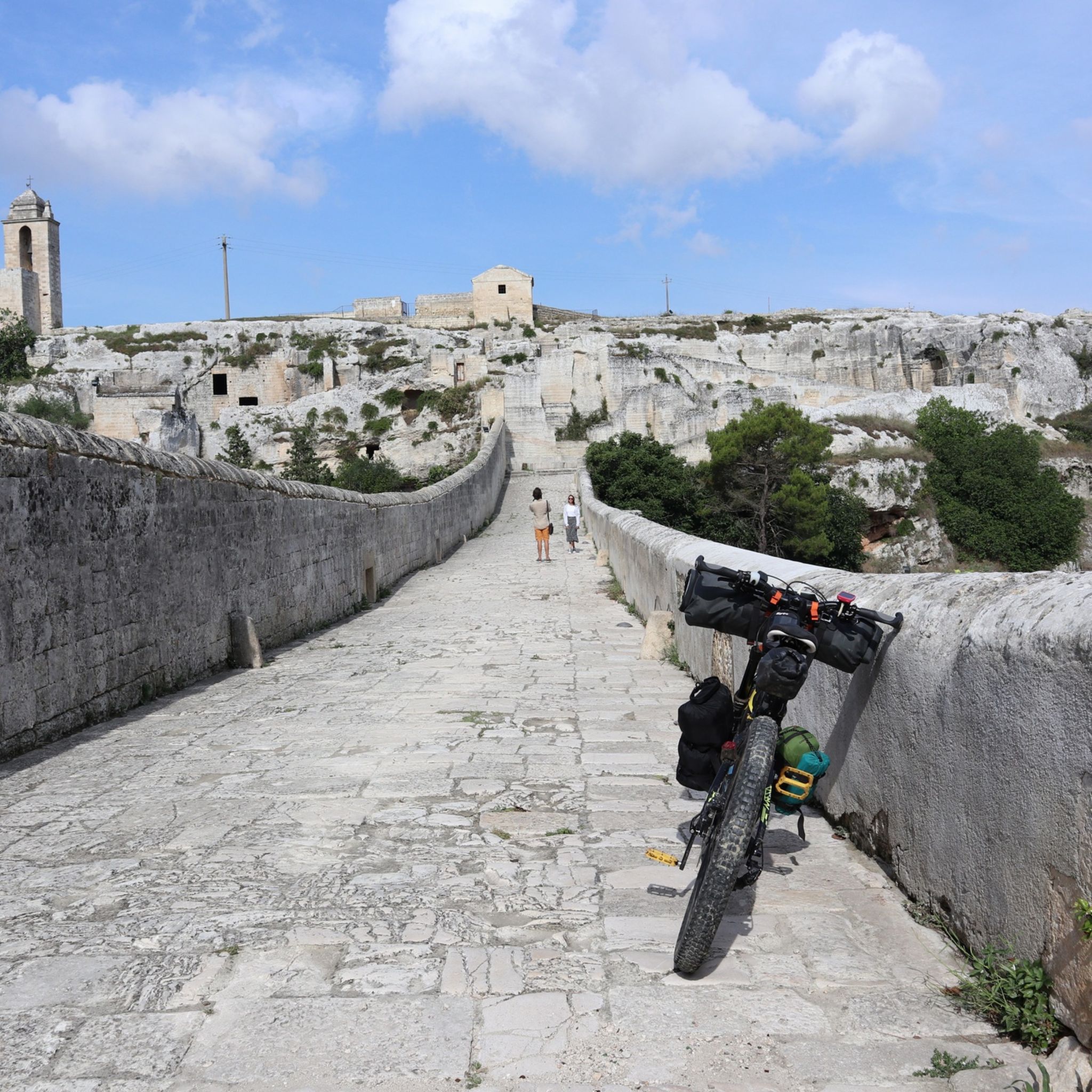
The bridge over the Gravina Gorge is a fascinating architectural monument
0
0
Frequently Asked Questions
How many hiking trails are available in Gravina In Puglia?
Gravina in Puglia offers a wide variety of hiking opportunities, with over 50 trails available. These routes cater to different preferences, ranging from easy walks to more challenging excursions through the region's unique landscapes.
What kind of terrain can I expect on hikes around Gravina in Puglia?
The terrain around Gravina in Puglia is characterized by dramatic 'gravine' – deep, canyon-like ravines – and the expansive Murgia National Park. You'll encounter varied elevations, from the depths of the canyons to plateaus offering panoramic views. Trails often wind through protected natural areas like Bosco Difesa Grande, featuring oaks, shrubs, and Mediterranean flora.
Are there options for different hiking skill levels in Gravina in Puglia?
Yes, Gravina in Puglia offers trails for all skill levels. There are approximately 25 easy routes perfect for a leisurely stroll, around 30 moderate trails for those seeking a bit more challenge, and a few more difficult options for experienced hikers looking for a strenuous adventure.
What natural features or landmarks can I see while hiking in Gravina in Puglia?
Hikers can explore a wealth of natural and historical landmarks. The dramatic Gravina Gorge itself is a central feature. You might encounter the historic Aqueduct Bridge of Gravina in Puglia, which offers stunning views. Other notable natural monuments include the Bauxite Mines of Spinazzola and the Pulicchio di Gravina, a karst depression.
Are there any historical sites or points of interest along the trails?
Absolutely. Gravina in Puglia is rich in history. Many trails offer glimpses of ancient cave churches, such as those found in the Fondovico district. The Aqueduct Bridge of Gravina in Puglia is a prominent historical landmark often integrated into hiking loops. You can also find ancient monuments and churches carved from rock within the Botromagno Archeological Park.
What do other hikers enjoy most about the trails in Gravina in Puglia?
The trails in Gravina in Puglia are highly rated by the komoot community, with an average score of 4.5 stars from over 200 reviews. Hikers often praise the unique blend of dramatic natural landscapes, such as the gravine, and the rich historical elements found along the routes. The variety of trails catering to different abilities is also frequently highlighted.
Are there any family-friendly hiking routes in Gravina in Puglia?
Yes, there are many family-friendly options. With approximately 25 easy routes, you'll find plenty of gentle paths suitable for families. An example of an easy route that offers scenic views is the Piazza Benedetto XIII – Gravina Aqueduct Bridge loop from Gravina (FAL), which is just over 3 miles long.
Are there circular hiking routes available in Gravina in Puglia?
Yes, many of the hiking routes in Gravina in Puglia are designed as circular loops, allowing you to start and end at the same point. For instance, the View of Gravina in Puglia – Gravina Aqueduct Bridge loop from Gravina in Puglia is a popular moderate circular trail offering diverse views.
What is the best time of year to go hiking in Gravina in Puglia?
Spring and autumn are generally the best times for hiking in Gravina in Puglia. The weather is milder, and the natural landscapes are vibrant. Spring brings blooming wildflowers, while autumn offers pleasant temperatures and beautiful foliage. Summers can be quite hot, making early mornings or late afternoons preferable for hiking.
Where can I find parking for hiking trails in Gravina in Puglia?
Parking is generally available in and around the town of Gravina in Puglia, especially near popular starting points for trails. For routes that venture further into natural parks like Bosco Difesa Grande, designated parking areas are usually provided at trailheads or visitor centers.
Is it possible to reach hiking trails using public transport?
Yes, some trails are accessible via public transport. The town of Gravina in Puglia is served by the FAL (Ferrovie Appulo Lucane) railway, and routes like the Piazza Benedetto XIII – Gravina Aqueduct Bridge loop from Gravina (FAL) start conveniently from the train station area, making them accessible without a car.
What kind of wildlife might I encounter while hiking?
The unique microclimate of the gravine and the Murgia National Park supports diverse wildlife. You might spot various bird species, including golden eagles and kestrels. Mammals like wild boars and foxes also inhabit the area. The region is also known for its rare Mediterranean flora, including wild orchids.
Most popular routes around Gravina In Puglia
Most popular attractions around Gravina In Puglia

Get inspired with the komoot mobile app


Explore more
Browse the best Hikes in other regions.
