Attractions and Places To See around Adelfia - Top 20
Best attractions and places to see around Adelfia include a blend of historical, cultural, and natural sites. Located on the Murge plateau, the region features green hills, vineyards, olive groves, and almond trees. Adelfia's unique character stems from the merger of two ancient towns, Montrone and Canneto, each with distinct historic centers and architectural styles. This area offers a rich historical and artistic heritage for exploration.
Best attractions and places to see around Adelfia
- The most popular attractions is All…
Last updated: August 17, 2026
All Saints Church of Cuti
Highlight • Religious Site
Translated by Google •
Tip by

Clock Tower of Cellamare
Highlight • Monument
Translated by Google •
Tip by
Sign up now to discover places like this
Get recommendations on the best single tracks, peaks, & plenty of other exciting outdoor places.
Sign up for free
Modugno Lake
Highlight • Lake
Translated by Google •
Tip by

Mirko Variato Oasis
Highlight • Natural
Translated by Google •
Tip by
Tower of the Marquis Arcamone
Highlight • Historical Site
Translated by Google •
Tip by
Sign up for free to discover even more attractions around Adelfia.
Sign up for free
Already have an account?
Start today with a free account
Your next adventure awaits.
Login or Signup

Tips from the Community

The "Torre del marchese Arcamone" is a fortified two-storey farmhouse whose last phase is certainly from the modern age, which has on the ground floor rooms for stables, warehouses and an oil mill. But what is its history and why is the district called this way? In 1399 the king of Naples, Louis, ceded the barony of Bitetto together with the fief of Ceglie and Bari, for having fought bravely in a war near Taranto, to Marcello Arcamone. Since 1382, during the reign of Charles III, he had come to Puglia with his brother Lionello, who had been given the Lordship of Ceglie. The Arcamone family lived in Bitetto for a long time. In 1407 Pope Martin V transferred Bishop the son of Marcello, Carlo Arcamone, from his seat in Venafro to Bitetto. The farm had many changes of ownership and in 1806, already belonging to the Noja family of Mola, it was confiscated for the abolition of the feudal regime.
0
0

The Torre del Marchese is an ancient farmhouse with an ancient history. Even today it represents one of the most important oil mills where the niches with the press for pressing the olives are still visible.
2
0

It's a beautiful place, thank you very much for those who dedicate most of their time to give us a show of our land.
0
0

The square-plan tower rises on four levels, each with different architectural and decorative features. The ground floor is delimited by rounded columns at the corners and on its facade there is a sundial indicating the value of the latitude of the city (40°42'18''). The first floor follows, contained by a pair of pilasters with a small balcony in the center with a broken and curved tympanum with plant decorations.
2
0
The Arcamones lived for a long time in Bitetto. In 1407 Pope Martin V transferred Bishop Carlo Arcamone to Bitetto from the seat of Venafro. Son of Marcello, former lord of Bitetto, Msgr. CARLO was a prelate of great zeal and Christian piety. During his stay in Bittese he obtained from Pope Eugene IV that a community of Franciscans be established here who erected a convent not far from the town, in a place called Gallicella.
2
0
the farm had many changes of ownership and in 1806, already belonging to the Noja di Mola family, it was confiscated for the abolition of the feudal regime.
6
0

The Oasis Mirko Variato is a private area, access is not granted. It is not possible to take refreshments
0
0

Try to go during the week or in the afternoon, the security / owners since they did not show up, occasionally sees you and stops you, but does nothing.
0
0
Frequently Asked Questions
What historical sites can I explore in Adelfia?
Adelfia offers a rich historical heritage. You can visit the impressive Castello Marchesale, dating back to 1390, or explore the ancient Norman Towers. Other significant sites include the Tower of the Marquis Arcamone, an ancient farmhouse with visible olive oil presses, and the Clock Tower of Cellamare, a prominent local landmark. Don't miss the All Saints Church of Cuti, an 11th-century monastic building considered one of the most important religious structures in the province.
What is unique about Adelfia's historical centers?
Adelfia is distinctive because it was formed in 1927 from the merger of two older towns, Montrone and Canneto. This means you can explore two distinct historic centers, each developed independently around the year 1000, with their own noble palaces, administrative centers, religious traditions, and churches. The stele on Corso Vittorio Veneto marks their ancient boundary.
Where can I learn about the local history and culture of Adelfia?
For local history and culture, consider visiting the Museum of Popular Pietà, located within the Basilica of Our Lady of the Martyrs, which houses statues, antique prints, and a collection of nativity scenes. While a short distance away in Bari, the Civic Historical Museum of Bari also offers insights into the broader local history with ancient paintings, postcards, and historical books.
What natural attractions are there around Adelfia?
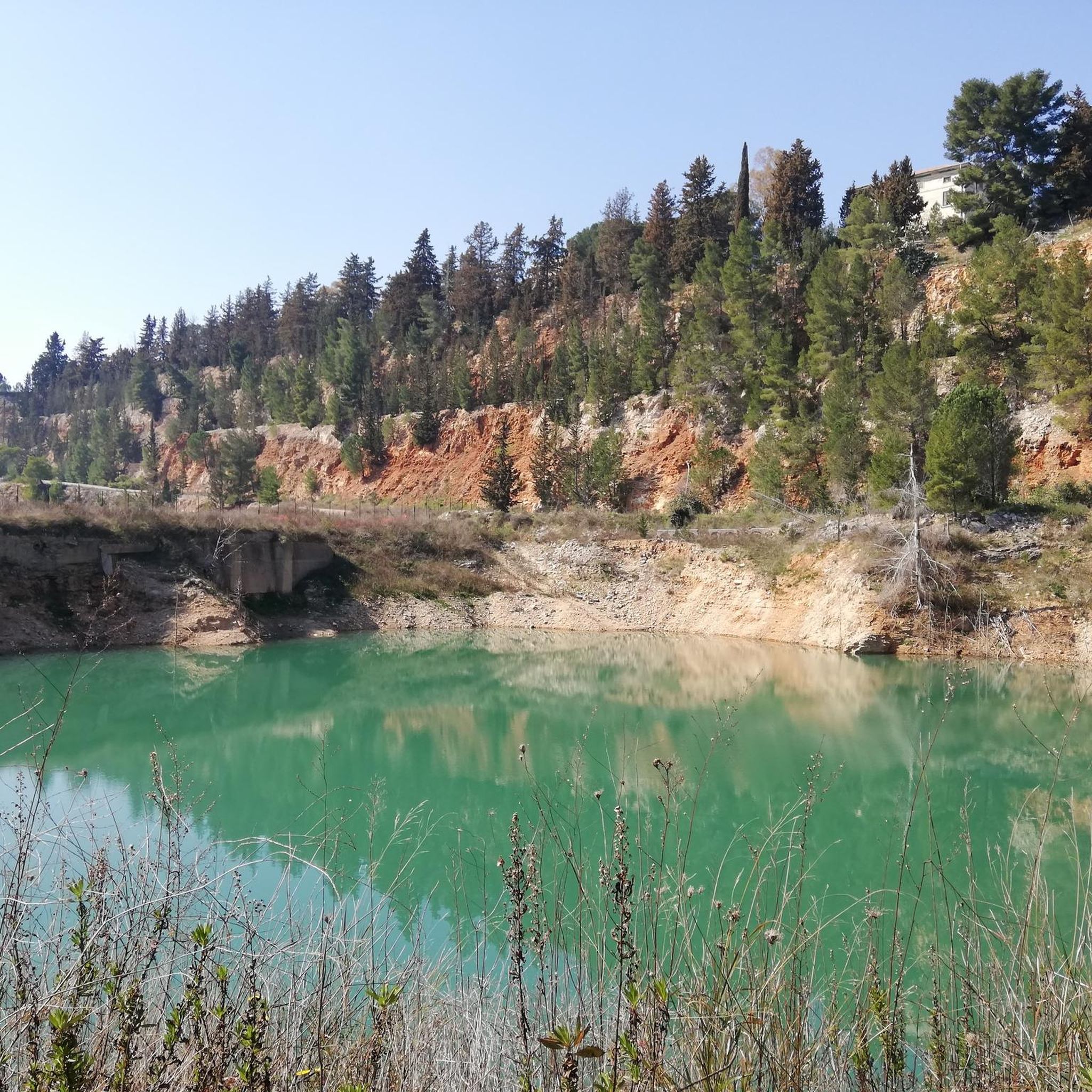
The landscape around Adelfia is characterized by vineyards, olive groves, and almond trees, with downy oaks in some areas. You can also visit the Modugno Lake, an emerald green body of water in a former quarry, or the Mirko Variato Oasis, a private green area within the "Lama San Giorgio e Giotta" Regional Park, regenerated with native plant species.
Are there opportunities for outdoor activities like hiking or cycling near Adelfia?
Yes, Adelfia is located on the Murge plateau, offering green hills and unspoiled landscapes ideal for outdoor excursions. For running, you can find routes like the 8.3 km "Sotterranei loop from Adelfia" or the 13.3 km "Adelfia Historic Center loop from Valenzano." Mountain biking enthusiasts can explore trails such as the 43.3 km "Lama Baronale Aqueduct – Church of Madonna della Torre loop from Adelfia." For gravel biking, options include the 39.8 km "Annunziata Trail – Annunziata Route loop from Valenzano Lamie." You can find more details on these and other routes in the running trails, MTB trails, and gravel biking guides for the area.
What is the best time to visit Adelfia for outdoor activities?
Adelfia's location on the Murge plateau makes it suitable for outdoor activities. While specific seasonal weather details are not provided, the region generally enjoys a Mediterranean climate. Spring and autumn typically offer pleasant temperatures for exploring the vineyards, olive groves, and historical sites, as well as for hiking and cycling.
Are there any family-friendly attractions in Adelfia?
Many of Adelfia's historical sites and natural areas are suitable for families. The All Saints Church of Cuti and the Clock Tower of Cellamare are accessible and offer cultural insights. The Mirko Variato Oasis is a green area that can be enjoyed by families, offering a regenerated natural space.
What unique cultural events or experiences does Adelfia offer?
Adelfia is particularly famous for its spectacular winter Festival of San Trifone, usually held in November. This event is a "festival of lights" featuring illuminated decorations, religious processions through the winding streets, and impressive fireworks displays that can last for hours, making it one of Italy's most remarkable religious processions. The town also boasts an enviable food culture with local delicacies and traditional Apulian dishes.
Is Adelfia considered an 'open-air museum'?
Yes, Adelfia is sometimes referred to as an "open-air museum" due to its rich history and well-preserved architecture. The distinct historical centers of Montrone and Canneto, along with numerous ancient buildings and landmarks, contribute to this character, allowing visitors to experience centuries of history simply by walking through the town.
What kind of local architecture can I expect to see in Adelfia?
The town is characterized by classic Apulian architecture. You'll find pale stone houses and churches set in sand-colored piazzas, reflecting the region's traditional building styles. Exploring the historic centers of Montrone and Canneto will give you a good sense of this unique architectural heritage.
What do visitors enjoy most about the attractions around Adelfia?
Visitors appreciate the blend of historical, cultural, and natural sites. The All Saints Church of Cuti is highly regarded as an important religious building, while the Clock Tower of Cellamare is noted for its simple yet elegant structure. The Tower of the Marquis Arcamone offers a glimpse into ancient agricultural practices. The komoot community has contributed 20 photos and 104 upvotes across the highlights, indicating a strong appreciation for the area's rich heritage and landscape.
Most popular routes around Adelfia
Most popular attractions around Adelfia

Get inspired with the komoot mobile app


Explore more
Still not found the Highlight you’re looking for? See guides of the top attractions in other regions:
