Attractions and Places To See around Tufillo - Top 7
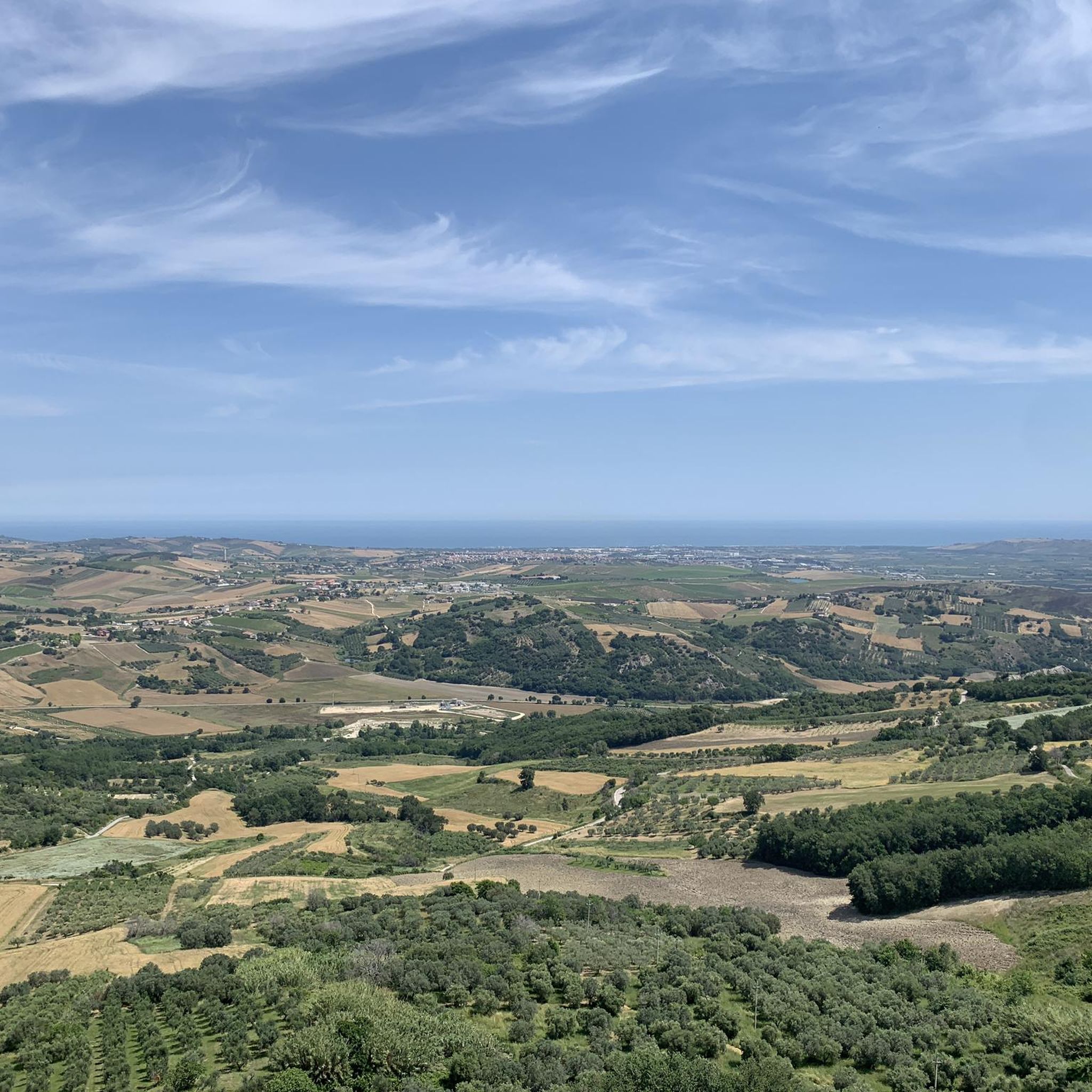
Best attractions and places to see around Tufillo include a blend of historical landmarks and natural surroundings. This medieval village is situated on a rocky spur, offering panoramic views of the Trigno Valley and the Adriatic Sea. The area features ancient origins with evidence of Italic settlements and is set amidst fragrant woods and wide pastures.
Best attractions and places to see around Tufillo
- The most popular attractions is Recently paved road with scenic views, a scenic route that…
Last updated: July 2, 2026
Torre della Fara
Highlight • Historical Site
Translated by Google •
Tip by

San Michele Arcangelo Cave in Liscia
Highlight • Cave
Translated by Google •
Tip by

Sign up now to discover places like this
Get recommendations on the best single tracks, peaks, & plenty of other exciting outdoor places.
Sign up for free
Roccavivara Town Center
Highlight • Settlement
Translated by Google •
Tip by

Recently paved road with scenic views
Highlight (Segment) • Cycleway
Translated by Google •
Tip by

Sanctuary of Santa Maria del Canneto
Highlight • Religious Site
Translated by Google •
Tip by
Sign up for free to discover even more attractions around Tufillo.
Sign up for free
Already have an account?
Start today with a free account
Your next adventure awaits.
Login or Signup


Tips from the Community

The Torre della Fara is located in Torre della Fara in the municipality of Celenza sul Trigno in the province of Chieti. The tower is located near the Trigno river and the Ateleta-Biferno sheep track and was in visual connection with neighboring towns and with the monastery of Santa Maria del Canneto of Roccavivara (Molise). (Source Wikipedia.)
1
0

The church that has survived today dates back to the 11th-12th centuries, has a Latin cross plan, with three apses. The facade has no relevant decorative elements, except for a bas-relief on the lunette of the portal. In the external walls of the church are inserted tombstones and various inscriptions from the Roman and medieval times, while, on the right, stands a mighty bell tower, completed in 1329 by the Abbot Nicola, consisting of a crenellated Gothic tower with three-light windows on the arches . The interior of the church is austere and has three naves, each ending in a semicircular apse. Along the central nave there is a valuable ambo, finely decorated, built in 1223, partly with older reused materials. The ambo is supported by three unequal arches and, under the parapet, there are seven small aedicules: the central one must have supported an eagle which, with its outstretched wings, served as a lectern. The others are occupied by six monks in high relief, intent on the activities that represent the monastic rule of the ora et labora. Behind the high altar is the statue of the Madonna di Canneto, dating back to the 14th century, in Gothic style, and also known as the Virgin of the Smile. In the area adjacent to the church, there are archaeological excavations which have brought to light the remains of a Roman villa from the 1st century AD.
0
0
The Torre della Fara is located in Torre della Fara in the municipality of Celenza sul Trigno in the province of Chieti. The tower is located near the Trigno river and the Ateleta-Biferno tratturo and was in visual connection with neighboring towns and with the monastery of Santa Maria del Canneto in Roccavivara (Molise). The tower dates back to the 12th century.[1] Even if the toponym recalls the Longobard fara, it is, however, difficult to identify the period of construction of the site.[ The tower has a cylindrical structure and is made of stone[1], but stone fragments are also used to frame the openings and loopholes[2]. The tower is 15 meters high and 6 meters in diameter. The tower has no scarp walls and, at a third of the height there is an opening which, probably, is a raised entrance. Furthermore, inside there are the holes where the beams used to support the various levels. The roof inside is vaulted with a lowered cap. The use of mortar in the Torre della Fara decreases with height[1] just as the thickness of the walls decreases with increasing height
0
0
According to oral tradition, it seems that San Michele, who left from the East to defeat paganism, stopped in a wood near Liscia before arriving on the Gargano; this wood is located around Monte Sorbo, an area that in ancient times had a high anthropic density, as can be seen from the remarkable archaeological material found here and coming from Italic tombs. Still on the subject of legend, it is said that a man from Palmoli, a village in the upper Vasto bordering Liscia, intent on grazing cows near the Treste river, noticed that a young bull got lost every day and then returned in the evening. One day, however, the farmer, intrigued by this mysterious behavior, decided to follow his animal and saw that the vegetation opened up, as if by magic, as it passed, as if to indicate a direction to follow; this strange path led him to a cave where he saw the bull kneeling in front of a wooden image of St. Michael the Archangel, which miraculously made water gush out so that man could quench his thirst and recover from the discovery to witness this event supernatural. In memory of these events that occurred in Liscia, the Marquesses of Avalos, in the eighteenth century incorporated the cave inside a small church, perhaps, to regulate the large influx of pilgrims who are here recalled by popular devotion to the Archangel Michael, a cult that is lost in the mists of time.
1
0

Newly paved road with gentle gradients and wonderful views. But: officially prohibited for bicycles
0
0

There are two hypotheses on the origins of its name, the first has it that it derives from Rocca Bonnarii, referring to its founder, a certain Bonnario; the second that it comes from Rocca di Vivara, referring to the district of Vivara still existing and bordering the municipality of Roccavivara. The lower part of the Roccavivara countryside offers ample evidence of the presence of inhabited centers at the time of republican and imperial Rome. Historical information tells us that in 1268 Gualtiero di Vollers was feudal lord of Roccavivara; he was followed by Bertrando Cantelmo, whose descendants held the dominion until 1442. Subsequently the power passed to the Sangro, the Carafa and the Coppola until the abolition of feudalism. A very interesting site was found in San Fabiano: a Roman villa certainly built on a ground floor supported by a megalithic construction.
0
0
Frequently Asked Questions
What historical sites can I explore within Tufillo village?
Tufillo is rich in history. You can explore the ancient Fortified Village itself, with its medieval town center. Don't miss the Church of Santa Giusta, an 18th-century transformation of an older church, recognized as a national monument. The Palace of the Marquises Bassano, now the municipal office, features a notable facade and a photographic exhibition of local archaeological findings. Additionally, the Archaeological Exhibition 'Cercando Herentas' showcases artifacts from Monte Farano, including a bronze key dedicated to the goddess Herentas.
Are there any significant historical landmarks outside the immediate village of Tufillo?
Yes, nearby you can visit Torre della Fara, a 12th-century cylindrical stone tower that stands 15 meters high and was historically connected to neighboring towns. Another important site is Roccavivara Town Center, a historical settlement with evidence of Roman presence and ancient architectural heritage.
What natural features and viewpoints can I enjoy around Tufillo?
Tufillo is set on a limestone ridge, offering fantastic vistas. You can enjoy panoramic views of the Trigno Valley and, on clear days, even the Adriatic Sea. The village is situated on the southern slope of Mount Farano, surrounded by fragrant woods and wide pastures. For walkers, the Maurizio Salvatore Nature Trail provides enchanting landscape views.
What kind of outdoor activities can I do near Tufillo?
The area around Tufillo is excellent for various outdoor activities. You can find numerous routes for cycling, road cycling, and mountain biking. For example, there are challenging road cycling routes like the 'Monument to the Bather – View of Montenero di Bisaccia loop' and mountain biking trails such as the 'Monte Farano loop'. You can explore more options on the Road Cycling Routes around Tufillo, Cycling around Tufillo, and MTB Trails around Tufillo guide pages.
Are there any family-friendly attractions in the Tufillo area?
Yes, the Roccavivara Town Center is categorized as family-friendly, offering an opportunity to explore a historical settlement with ancient origins. The general charm of Tufillo's fortified village and its cultural sites can also be engaging for families.
What is the best time of year to visit Tufillo?
Tufillo offers charm throughout the year. Spring and autumn provide pleasant weather for exploring the natural surroundings and historical sites. Summer is ideal for enjoying the local festivals and outdoor activities, while the views of the Trigno Valley and Adriatic Sea are beautiful in any season.
What are some unique cultural aspects or traditions in Tufillo?
Tufillo maintains rich traditions. On Christmas Eve, locals celebrate 'the Farchia,' where a large wooden bundle is carried through the streets and set alight. The village also hosts the 'Cavatelli Festival' on August 11th, a great opportunity to taste the traditional local pasta dish. Festivities for San Giuseppe are celebrated on March 19th.
Where can I find local archaeological discoveries in Tufillo?
The Archaeological Exhibition 'Cercando Herentas', located in Via Sant'Antonio Abate, is dedicated to showcasing artifacts discovered on Monte Farano. It includes significant exhibits like a bronze key with an Oscan inscription dedicated to the goddess Herentas. Additionally, the Palace of the Marquises Bassano houses a permanent photographic exhibition of local archaeological findings.
Are there any religious sites of interest near Tufillo?
Beyond the main Church of Santa Giusta in Tufillo, you can visit the smaller Church of San Vito, dedicated to the village's patron saint. Further afield, the San Michele Arcangelo Cave in Liscia is a site of local legend and devotion, and the Sanctuary of Santa Maria del Canneto is an 11th-12th century church with a rich history and archaeological remains.
What local cuisine should I try when visiting Tufillo?
When in Tufillo, be sure to try the traditional 'cavatelli' pasta, especially during the 'Cavatelli Festival' in August. Other local dishes include 'pizz'a figlitt,' a type of pizza bread, and 'lu cangaron,' a cheese salami popular during Carnival.
What do visitors enjoy most about the attractions around Tufillo?
Visitors appreciate the blend of historical landmarks and natural beauty. The scenic routes, like the Recently paved road with scenic views, are enjoyed for their gentle gradients and wide vistas. The historical depth of sites like Roccavivara Town Center and Torre della Fara also captivate those interested in the region's ancient past.

Get inspired with the komoot mobile app


Explore more
Still not found the Highlight you’re looking for? See guides of the top attractions in other regions:
