The best cycling routes around Mompeo
4.6
(38)
934
riders
65
rides
Touring cycling routes around Mompeo are situated in the Italian region of Lazio, characterized by its proximity to the Riserva Naturale Regionale Nazzano Tevere-Farfa. This area features a unique blend of fluvial landscapes, wetlands, and gentle hills, offering a diverse terrain for cyclists. Routes often include mostly paved sections alongside some unpaved "strade bianche," providing varied surfaces. The region's natural environment along the Tiber and Farfa rivers creates a tranquil setting for exploration.
Best touring cycling routes around Mompeo
- The…
Last updated: July 5, 2026
13
riders
44.6km
03:17
1,010m
1,000m
Hard bike ride. Very good fitness required. Mostly paved surfaces. Suitable for all skill levels.
5.0
(2)
154
riders
55.1km
04:39
1,050m
1,050m
Hard bike ride. Very good fitness required. Mostly paved surfaces. Suitable for all skill levels.

Sign up for free
32
riders
72.7km
04:53
1,200m
1,200m
Hard bike ride. Very good fitness required. Mostly paved surfaces. Suitable for all skill levels.
4.7
(3)
24
riders
88.5km
05:50
1,280m
1,270m
Hard bike ride. Very good fitness required. Mostly paved surfaces. Suitable for all skill levels.
5.0
(2)
7
riders
Hard bike ride. Very good fitness required. Mostly paved surfaces. Suitable for all skill levels.
Get access to more routes and recommendations from other explorers.
Sign up for free
Already have an account?
Our route recommendations are based on thousands of hikes, rides, and runs completed by other people on komoot.
Start today with a free account
Your next adventure awaits.
Login or Signup


Tips from the Community

Umbilicus Italiæ - Centro d'Italia, Rieti / Geographical Center of Italy In Piazza San Rufo, Varronian tradition places the so-called Umbilicus Italiae, the geographical center of Italy, commemorated by a plaque. Piazza San Rufo is located amidst the imposing buildings of the historic center, which line the main streets Via Roma and Via Garibaldi. In the center of the square, a section of wall, a remnant of the Roman city's first city walls, can be seen beneath the pavement. The value of this area is commemorated by a plaque and a monument with a unique shape, located exactly in the center of the square and aptly called "la caciotta" (the caciotta) for its rounded and circular design. The work, created between the 1980s and 1990s following the city's twinning with the Georgian capital Tbilisi, appears to resemble the base of a column and features the design of the Italian peninsula on its surface, accompanied by the inscription "Umbilicus Italiae" (Umbilicus Italiae), which runs along half the circumference of the monument itself. Text / Source: Official Tourist Portal of the City of Rieti https://www.visitrieti.com/2020/01/25/rieti-umbilicus-italiae/
14
0


Going down via Roma you reach the Velino bridge, known however by the same name as the one demolished in the thirties and placed, a little below, on the river bed: Roman bridge.
1
0

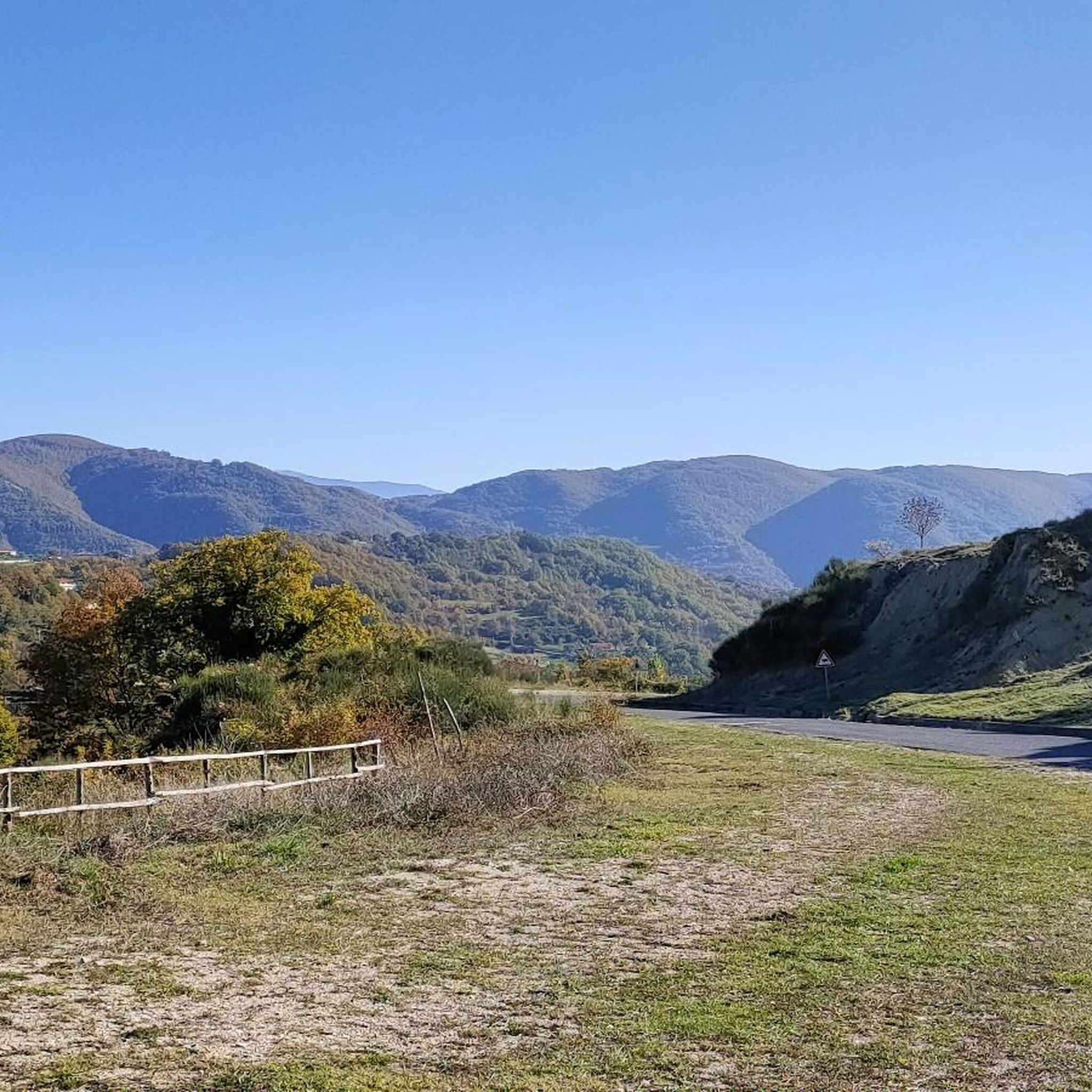
beautiful dirt road also for gravel
1
0

The first temple located in Monteleone Sabino dates back to at least the 3rd century
0
0

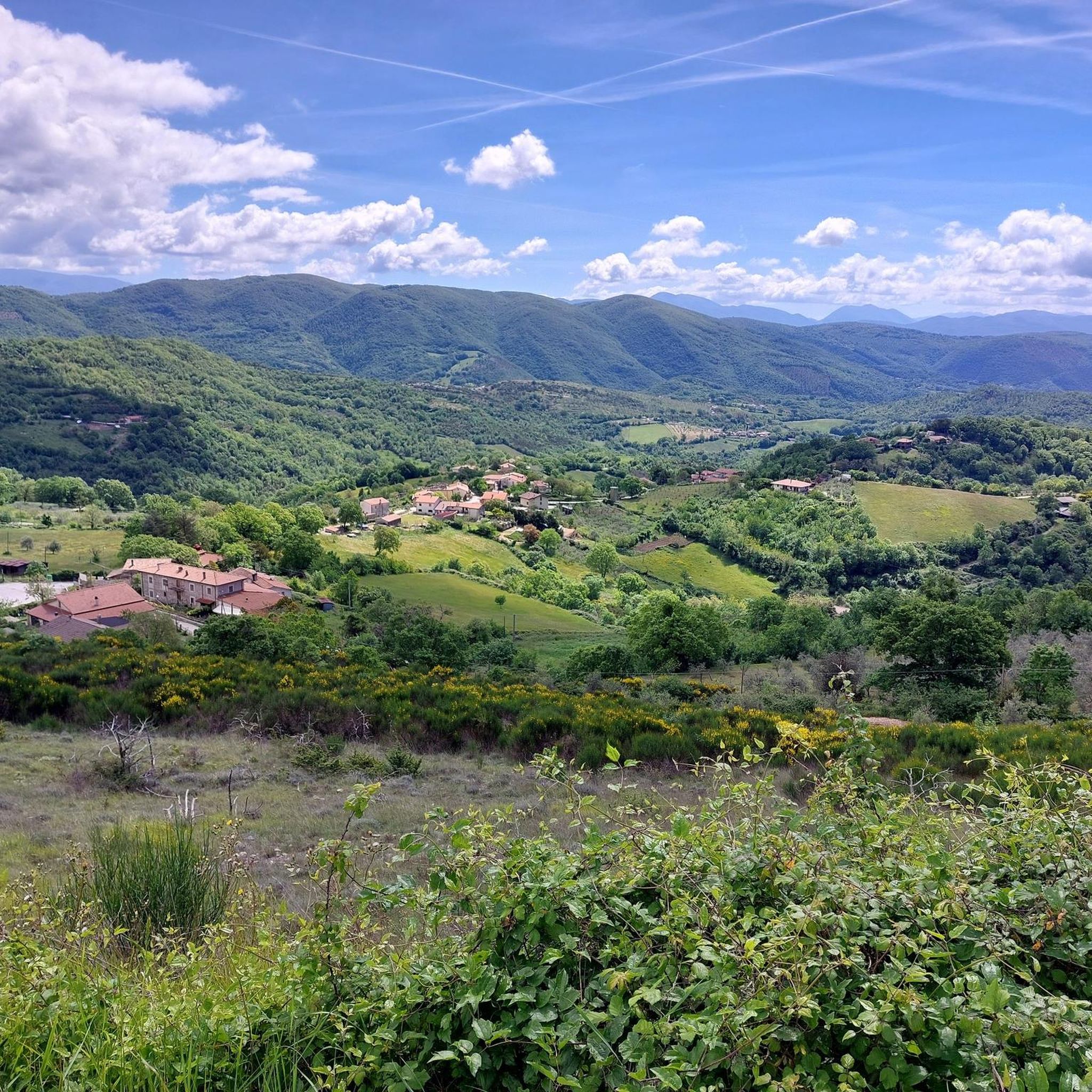
Poggio Moiano is a beautiful village of medieval origin, built on a hill overlooking the surrounding woods of the Monti Lucretili regional park. In the surrounding area there are various testimonies from the Roman era even if the first news of the town is later and dates back to the year 1000 AD. Here every year, during the last week of June for the feast of the Sacred Heart, the flower display takes place with the streets of the village transformed into enormous canvases for works made with flower petals.
0
0

The first temple located in Monteleone Sabino dates back to at least the 3rd century; it was rebuilt in Romanesque style in the 11th century, recovering part of the structures and much of the material from the pre-existing building.[1][2] Before the construction of the primitive chapel, built to house the remains of Saint Victoria, it seems that no place of Christian worship existed on the site. The site is archaeologically important due to the presence in the space around the church of remains from the Roman era: buildings, architectural details and tombs. The oldest part, adjacent to the catacombs, which preserves tombs from the imperial age of the Decian period. A short distance away are the ruins of a Roman villa, with a cistern connected to underground springs. For a long time there was the habit of the faithful to drink this water, because it was close to the tomb of Saint Victoria. Starting from 593 Pope Gregory I reunited various dioceses in the Trebula Mutuesca area. In 817 Pope Stephen IV re-entrusted the sanctuary to the Benedictine monks, which by now must have reached considerable dimensions, with three internal naves and a bell tower... follows "https://it.wikipedia.org/wiki/Santuario_di_Santa_Vittoria#Storia" The powerful Orsini family had important restoration and conservation works carried out in the 15th century. In 1574, following the Council of Trent, Bishop Pietro Camaiani assigned an income to the church, so that it was kept in good condition.[4] The building was restored starting in 2018, to repair the damage caused by the earthquake that hit the area in 2016 and to counteract the slow collapse of the embankment on which the structure is located. The interventions concerned the internal roofing, protection against water infiltration and deformations of the bell tower.[1]
0
0
Frequently Asked Questions
How many touring cycling routes are available around Mompeo?
There are over 60 touring cycling routes around Mompeo. These include 14 moderate routes and 48 difficult routes, offering a wide range of options for different skill levels.
What is the terrain like for touring cycling in Mompeo?
The terrain around Mompeo is diverse, characterized by its proximity to the Riserva Naturale Regionale Nazzano Tevere-Farfa. You'll find a blend of mostly paved sections and some unpaved 'strade bianche' (white roads). The area features gentle hills rather than steep ascents, making for manageable challenges, especially along the tranquil fluvial landscapes of the Tiber and Farfa rivers.
What do other cyclists say about touring in Mompeo?
The touring cycling routes around Mompeo are highly rated by the komoot community, with an average score of 4.7 stars from over 40 reviews. Cyclists often praise the unique riverine scenery, the peaceful escape offered by the natural reserve, and the opportunities to observe diverse wildlife.
Are there any easy touring cycling routes in Mompeo?
While the majority of routes are classified as moderate to difficult, the region's gentle hills and well-maintained paths within the Riserva Naturale Regionale Nazzano Tevere-Farfa can offer accessible sections. For a less strenuous experience, look for routes primarily within the reserve's pedestrian and cycle path, which are generally flatter.
Are there challenging touring cycling routes for experienced cyclists?
Yes, Mompeo offers numerous challenging routes. For instance, the In the Sabine Mountains in the protected area Monte Tancia and Monte Pizzuto — ring tour is a difficult 44.6 km route with significant elevation gain. Another demanding option is the Rieti, Navel of Italy – Roman Bridge over the Velino River loop from Frasso Sabino, which covers 86.8 km with substantial climbs.
Can I find circular touring cycling routes around Mompeo?
Yes, many touring cycling routes in the Mompeo area are designed as loops. An example is the View of Castel di Tora – Orvinio loop from Frasso Sabino, a 72.7 km trail that offers scenic landscapes and returns to its starting point.
What natural features or landmarks can I see along touring cycling routes in Mompeo?
The routes often pass through the Riserva Naturale Regionale Nazzano Tevere-Farfa, offering views of wetlands, reed beds, and riparian woodlands along the Tiber and Farfa rivers. You might also encounter highlights such as the Monte Pizzuto Summit or the Monte Tancia Summit. The area is also excellent for birdwatching, with observation points along the paths.
Are there routes that pass by waterfalls?
Yes, some routes will lead you to beautiful waterfalls. The Acquaviva Waterfall – Castelnuovo di Farfa loop from Salisano is a notable route that features substantial climbs and descents, passing by natural waterfalls. You can also find the Pozze del Diavolo Waterfall as a highlight in the area.
Are touring cycling routes around Mompeo dog-friendly?
Many natural areas and paths in the Mompeo region, especially within the Riserva Naturale Regionale Nazzano Tevere-Farfa, are generally dog-friendly. However, it's always recommended to keep dogs on a leash, especially in protected areas, to protect wildlife and ensure a pleasant experience for all visitors. Check specific route details for any restrictions.
What are the options for parking when cycling around Mompeo?
Parking is typically available in or near the main towns and villages that serve as starting points for routes, such as Mompeo itself or Frasso Sabino. Look for designated parking areas in these locations, especially near trailheads or local amenities.
Are there places to eat or drink along the touring cycling routes?
Yes, you can often find refreshment points, cafes, or agriturismi (farm stays) in the villages and towns along the routes, offering opportunities to experience authentic Sabina flavors. For example, the Tancia Inn is a highlight in the area that serves as a restaurant.
What is the best time of year to go touring cycling in Mompeo?
The spring and autumn months generally offer the most pleasant conditions for touring cycling in Mompeo, with milder temperatures and beautiful natural scenery. Summers can be hot, especially in July and August, while winters are cooler but still offer opportunities for cycling on clear days.
Most popular attractions around Mompeo

Get inspired with the komoot mobile app


Explore more
Browse the best Cycling routes in other regions.
