The best walks and hikes in Reykjanesbær
4.6
(45)
396
hikers
13
hikes
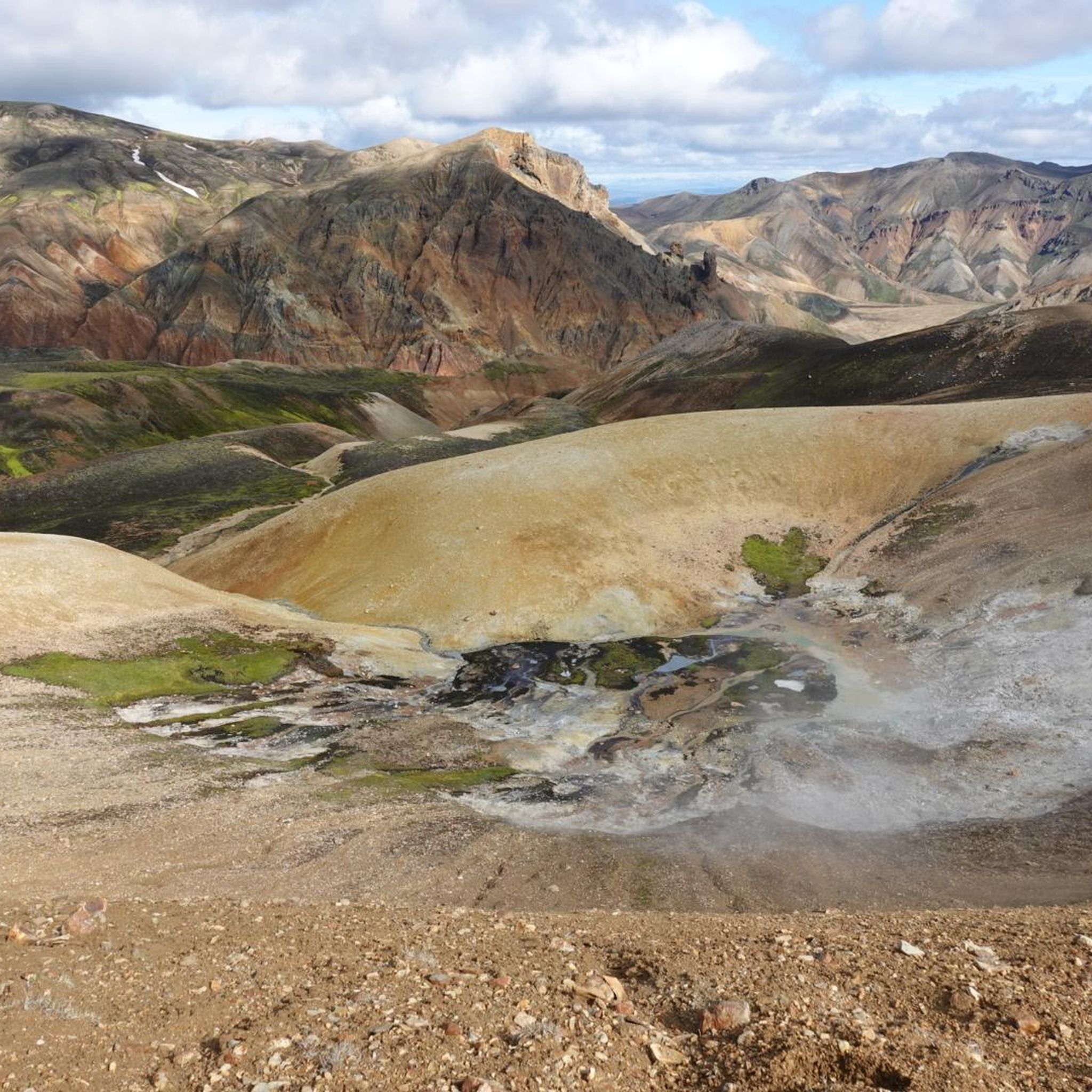
Hiking in Reykjanesbær offers exploration of a unique volcanic landscape on the Reykjanes Peninsula, a UNESCO Global Geopark. The region is characterized by vast fields of moss-grown lava, active geothermal areas with mud pools and fumaroles, and rugged coastal scenery where the Mid-Atlantic Ridge meets the mainland. Trails traverse diverse terrain, from newly formed lava fields to ancient paths and dramatic sea cliffs.
Best hiking trails in Reykjanesbær
- The most popular hiking route is Great Auk Statue (Geirfuglinn) – Valahnúkamöl Cliffs loop from Karl, a 4.9 miles (7.9 km) trail that takes 2 hours 24 minutes to complete. This moderate route showcases dramatic coastal geology and the Valahnúkamöl cliffs.
- Another top favourite among local hikers is Gunnuhver Geothermal Area – Valahnúkamöl Cliffs loop from Reykjanesviti, a moderate 8.4 miles (13.5 km) path. This trail leads through the active Gunnuhver Geothermal Area and along the rugged coastline.
- Local hikers also love the Thor's House – Sculpture by the Beach loop from Keflavík, a 6.1 miles (9.9 km) trail leading through coastal areas, often completed in about 2 hours 30 minutes.
- Hiking in Reykjanesbær is defined by volcanic landscapes, geothermal features, and rugged coastal paths. The network offers options for easy walks and more challenging moderate expeditions.
- The routes in Reykjanesbær are highly rated by the komoot community with an average score of 4.5 stars from more than 40 reviews. More than 300 hikers have used komoot to explore Reykjanesbær's varied terrain.
Last updated: July 12, 2026
4.6
(5)
47
hikers
7.92km
02:25
100m
100m
Moderate hike. Good fitness required. Mostly accessible paths. Sure-footedness required.
4.4
(5)
22
hikers
13.5km
03:35
130m
130m
Moderate hike. Good fitness required. Easily-accessible paths. Suitable for all skill levels.

Sign up for free
16
hikers
Easy hike. Great for any fitness level. Easily-accessible paths. Suitable for all skill levels.
4.0
(1)
9
hikers
Easy hike. Great for any fitness level. Easily-accessible paths. Suitable for all skill levels.
4.0
(2)
11
hikers
Easy hike. Great for any fitness level. Easily-accessible paths. Suitable for all skill levels.
4.0
(1)
8
hikers
Easy hike. Great for any fitness level. Easily-accessible paths. Suitable for all skill levels.
11
hikers
9.97km
02:32
20m
20m
Moderate hike. Good fitness required. Easily-accessible paths. Suitable for all skill levels.
5
hikers
2.46km
00:38
10m
10m
Easy hike. Great for any fitness level. Easily-accessible paths. Suitable for all skill levels.
1
hikers
6.87km
01:46
30m
30m
Easy hike. Great for any fitness level. Easily-accessible paths. Suitable for all skill levels.
5
hikers
1.89km
00:29
10m
10m
Easy hike. Great for any fitness level. Easily-accessible paths. Suitable for all skill levels.
Get access to more routes and recommendations from other explorers.
Sign up for free
Already have an account?
Our route recommendations are based on thousands of hikes, rides, and runs completed by other people on komoot.
Start today with a free account
Your next adventure awaits.
Login or Signup
Popular around Reykjanesbær
Tips from the Community

On the cliffs of Reykjanes, facing Eldey Island, stands this bronze sculpture: a great auk in its last refuge. It was here that the species became extinct in 1844, a victim of excessive hunting. Today, the statue not only commemorates a bird lost forever, but also sends a powerful message: protect what we still have. A silent pause, with sea, wind, and memory. 🌊🐦
1
0

The last inhabitants of the Gunnuhver geothermal field settled on this site in the 1930s. Here, on the now boiling-hot ground, stood the last house of the Höyer family. The foundations can only be guessed at in the smoke.
0
0
Gunnuhver is an area of mud pools and steam springs on the Reykjanes Peninsula. It is part of the UNESCO Global Geopark Reykjanes and is a protected area. However, the area is named after the witch Gunna, who is said to have once lived here. When Guðrun Önundardóttir, nicknamed Gunna, could no longer pay her landlord, Vilhjálmur Jónsson, her only possession, a cauldron. As a result, Gunna went mad and died. As her coffin was carried to the cemetery, the pallbearers noticed it becoming lighter and lighter. As they dug the grave, they heard a voice whispering: "Don't dig deep, I won't stay there long." The night after Gunna's funeral, her landlord was found badly injured and dead in a field with broken bones. His wife also died soon after. Gunna continued to haunt the area in the aftermath. She appeared to people, causing them to go mad or die. They sought advice from Pastor Eiríkur of Vogsósar. The magic-savvy pastor was supposed to banish Gunna's haunting. He gave them a ball of wool. Gunna was to grasp the loose end, then they were to roll the ball to a place where Gunna could do no harm. The ball of wool rolled into a spring. Gunna followed the thread and plunged into the spring, which has since been called Gunnuhver.
2
0
Iceland's first lighthouse was built on Valahnúkur in Reykjanes in 1878. By 1905, earthquakes and surf had damaged Valahnúkur so severely that there was a risk of the lighthouse collapsing into the sea. Therefore, a new lighthouse was built on the hill.
0
0
Below the new lighthouse stands the lighthouse keeper's house. The house has a beautiful sun terrace with a view of the cliffs and several information boards. It's a great place to linger. If the coffee machine is repaired, you can also enjoy a good cup of coffee...
0
0
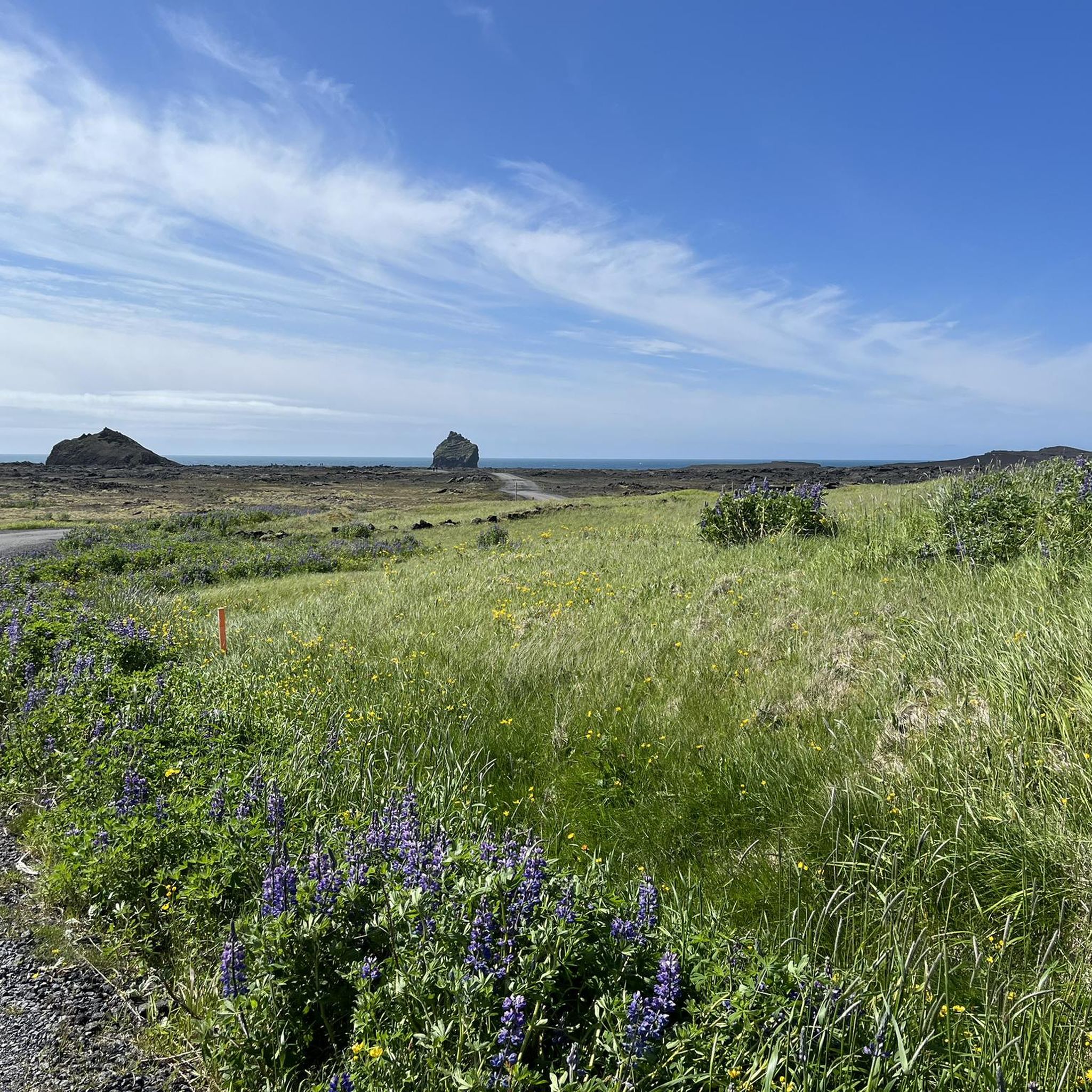
About 15 km off the coast lies the rocky island of Eldey, a palagonite rock that likely formed during a volcanic eruption on the Mid-Atlantic Ridge in 1210-1211. Eldey covers just under 2 hectares and is 77 m high at its highest point. The island is considered a bird paradise. Since 1940, Eldey has been a protected area and may only be accessed with special permission. The now-extinct great auks once lived on Eldey. These flightless birds grew to about 85 cm in length and probably weighed around 5 kg when fully grown. The birds' bellies were white, their backs black, and they had a large patch of white feathers on the front of their heads – this made them visually similar to penguins, even though auks and penguins were not actually related.
0
0
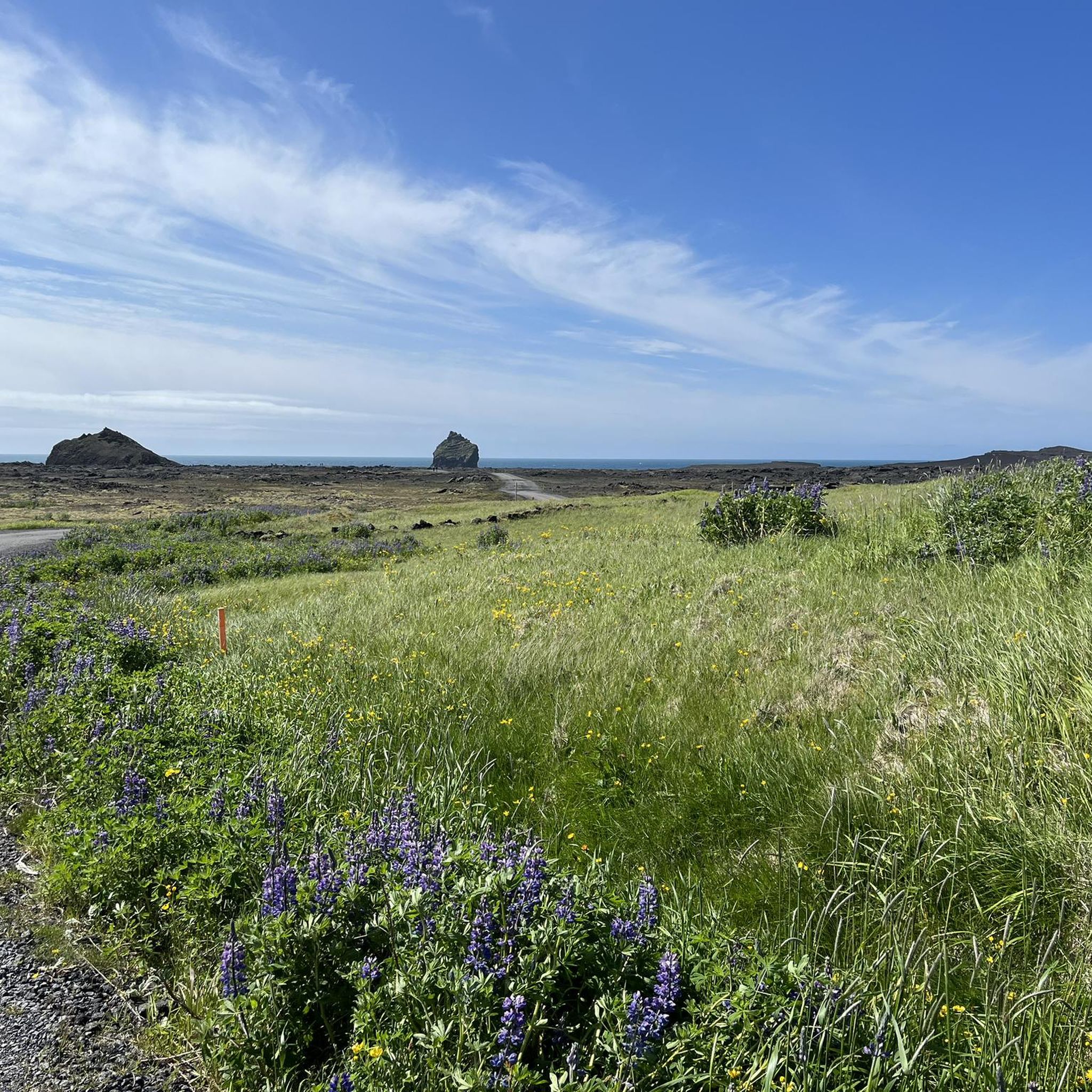
Reykjanestá, also known as Valahnúkamöl, is the southwesternmost tip of Reykjanes, with a roughly 400-meter-long cliff. The town, like everything here, is of volcanic origin.
1
0
Right here, overlooking the island of Eldey, the Netflix film "Eurovision Song Contest: The Story of Fire Saga" was filmed in 2019. In the film, the two main characters Lars (Will Ferrell) and Sigrit (Rachel McAdams) perform the song "Volcano Man" here on the cliffs of Valahnúkamöl.
0
0
Frequently Asked Questions
How many hiking trails are there in Reykjanesbær?
Reykjanesbær offers over a dozen hiking trails, ranging from easy walks to moderate expeditions. The komoot community has explored 13 different routes in the area.
What kind of terrain can I expect on hikes in Reykjanesbær?
Hikers in Reykjanesbær will encounter diverse terrain, including vast fields of moss-grown lava, rugged coastal paths, and areas shaped by geothermal activity. Some trails, particularly those near recent volcanic sites, may involve uneven ground and steeper sections.
Are there family-friendly hiking options in Reykjanesbær?
Yes, Reykjanesbær has several easy hiking options suitable for families. For example, the Keflavík Harbor – Stone figures Karl og Kerling loop from Keflavík is an easy 3.5 km trail, and the Seltjörn loop from Sólbrekkuskógur is another easy option at 2.5 km.
Can I hike with my dog in Reykjanesbær?
While many areas in Iceland are dog-friendly, it's always best to check local regulations for specific trails and protected areas within Reykjanesbær. Generally, dogs should be kept on a leash to protect wildlife and ensure their safety on volcanic terrain.
Are there circular hiking routes available?
Yes, many of the trails in Reykjanesbær are circular, offering varied scenery without retracing your steps. Popular loops include the Great Auk Statue (Geirfuglinn) – Valahnúkamöl Cliffs loop from Karl and the Gunnuhver Geothermal Area – Valahnúkamöl Cliffs loop from Reykjanesviti.
What natural features or landmarks can I see while hiking?
Hiking in Reykjanesbær offers views of dramatic volcanic landscapes, geothermal areas like Gunnuhver with its mud pools and fumaroles, and stunning coastal scenery. You can also visit landmarks such as the Reykjanesviti Lighthouse, the Great Auk Statue (Geirfuglinn), and the rugged Valahnúkamöl Cliffs.
When is the best time of year to hike in Reykjanesbær?
The best time to hike in Reykjanesbær is generally during the warmer months, from late spring to early autumn (May to September), when the weather is milder and daylight hours are longer. However, the unique volcanic landscapes offer a dramatic experience year-round, with winter hikes providing a different, often snow-covered, perspective.
What do other hikers enjoy most about hiking in Reykjanesbær?
The area is highly rated by the komoot community, with an average score of 4.5 stars from over 40 reviews. Hikers often praise the unique volcanic landscapes, the dramatic coastal views, and the opportunity to explore active geothermal areas.
Are there coastal hiking trails in Reykjanesbær?
Yes, Reykjanesbær is known for its stunning coastal scenery. The region features rugged cliffs, boulder-strewn shorelines, and trails that offer sea views and opportunities for bird watching. The Thor's House – Sculpture by the Beach loop from Keflavík is a moderate coastal trail.
Can I hike near volcanic areas in Reykjanesbær?
Yes, the Reykjanes Peninsula is a geologically active area. Recent volcanic eruption sites, such as Fagradalsfjall, offer the chance to witness newly formed lava fields and steaming ground. These hikes can be challenging due to uneven terrain, so proper preparation is essential.
Is parking available at trailheads in Reykjanesbær?
Parking is generally available at popular trailheads and attractions across the Reykjanes Peninsula. However, it's always advisable to check specific locations beforehand, especially for less-trafficked routes or during peak season.
What should I wear or bring for hiking in Reykjanesbær?
Due to Iceland's unpredictable weather, it's recommended to dress in layers, including waterproof and windproof outer shells. Sturdy hiking boots are essential for navigating uneven volcanic terrain and coastal paths. Always carry water, snacks, and a fully charged phone.
Most popular attractions in Reykjanesbær

Get inspired with the komoot mobile app


Explore more
Browse the best Hikes in other regions.
