Attractions and Places To See around Castel Guelfo Di Bologna - Top 20
Best attractions and places to see around Castel Guelfo Di Bologna include a blend of historical landmarks, cultural sites, and natural features. This charming medieval village in the Metropolitan City of Bologna, Italy, retains a distinct late-medieval character with solid fortifications. The surrounding Emilia-Romagna region offers opportunities to explore plains, rivers, and unique geological formations. Visitors can discover ancient architecture, open-air art, and scenic trails.
Best attractions and places to see around Castel Guelfo Di Bologna
- The most popular attractions…
Last updated: July 21, 2026
Dozza Painted Walls (Muro Dipinto)
Highlight • Monument
Translated by Google •
Tip by

Fegatella Spring
Highlight • Natural Monument
Translated by Google •
Tip by

Sign up now to discover places like this
Get recommendations on the best single tracks, peaks, & plenty of other exciting outdoor places.
Sign up for free
Enzo and Dino Ferrari International Circuit (Imola)
Highlight • Structure
Translated by Google •
Tip by

Sillaro Stream Singletrack
Highlight (Segment) • Trail
Translated by Google •
Tip by

Parco delle Acque Minerali
Highlight • Forest
It is …
Translated by Google •
Tip by
Sign up for free to discover even more attractions around Castel Guelfo Di Bologna.
Sign up for free
Already have an account?
Start today with a free account
Your next adventure awaits.
Login or Signup
Popular around Castel Guelfo Di Bologna

Tips from the Community

Update June 25. The route is no longer practicable, the trees on the ground, the uneven ground from the bulldozers have made the route practically impossible. I don't know if it is feasible from Castel San Pietro, but not from Castel Guelfo
2
0

Fascinating village for its architecture and the street art that is scattered throughout the citadel.
0
0

brisk walk
0
0

Done yesterday, the route from Castel Guelfo to Castel San Pietro is about 8km all up and down with curves, super beautiful and fun!! The passage over the stream is doable as long as you have neoprene shoes to walk with dry feet and then continue. Halfway after passing under the highway bridge, towards Castel San Pietro there is a tree that blocks the path, but you can get around it on foot by passing a bit in the woods. Overall the route is clean and doable even with a bit of mud after a rain
2
0

The Mineral Water Park is the historic green lung of Imola. Mainly known for its recreational and sporting function, it also has an undoubted botanical and historical value. It is located a short distance from the city center and is nowadays entirely surrounded by the “Enzo e Dino Ferrari” racetrack. It originated from the discovery of Dr. Gioacchino Cerchiari, which occurred in 1830, of the healing sulphurous water springs which made the place immediately popular. The first arrangement of the area into a real park dates back to 1871, with the creation of avenues and flowerbeds according to the so-called "English" model. Currently the park extends over 11 hectares and has a rich heritage of tree species, both native and exotic. Recent interventions have aimed to enhance this heritage by providing the park with two play areas and an educational path of a geological nature, and by redeveloping some historical areas: the area of the ancient springs (indicated by the restoration of the original cisterns), the monumental staircase that leads from Viale Atleti Azzurri d'Italia leads to the Belvedere, and the entrances to the park. In particular we highlight the one to the north, called 'Piazzetta della Fontana' from the ceramic work of the artist Mannes Laffi, and the one to the south, or Piazzetta delle Querce', characterized by paving in stone slabs and cubes which reflect the park logo : an oak leaf. (Source: https://visitareimola.it/vivere/tempo-libero/natura/parco-acque-minerali/ )
0
0

UPDATE JULY 2023 - With the May flood, the route was heavily damaged by the river and is currently partially impassable. On the Castel Guelfo side there are many fallen trees in the middle of the route and in certain points the bottom has become sandy. Furthermore, at the height of the ford, a part of the embankment (which included the route) collapsed completely. It will certainly take time to fix it, at the moment I advise against practicing it. [I'll try to delete this comment when it's fixed].
2
0
The Fonte Fegatella is one of the symbols most loved by the castellans. As the name itself suggests, the source, thanks to its salt-chromium-ionic water (high in bromine and iodine) has healing powers linked to liver health. These powers were discovered way back in 1337, when it is said of a herd of sheep seriously ill with liver disease who, by drinking the water of the Fegatella, returned to health. These properties of the Fegatella water were also studied and listed thanks to tests carried out by university professors present in the city during the seven months of the transfer of the Bolognese university headquarters to Castel San Pietro following the papal interdict on Bologna. ... The main temple monument dates back to the early 1950s, erected by the then independent healthcare company. Subject to interventions and renovations several times, in recent times the source has acquired a second tap towards the Lungo Sillaro park, on the other side of the road. (Source: https://prolococastelsanpietroterme.it/it/monumento/fonte-fegatella-fegatella-source/ )
0
0
Ducia and Dutia the oldest; Dozza the current one. This is the evolution of the name of the village, which passed through the forms of Duza and Doccia, before the final outcome. Many sounds to link this location to a single element: water, the lack of which has characterized its name, and therefore, its history. From the coat of arms of the Municipality, with the griffin drinking, to the findings of an ancient aqueduct coming from Monte del Re, up to the toponyms of the churches, everything connects the name of Dozza to the "shower", a conduit through which the water flows. Almost a paradox, for a village that for centuries has made quality wine a source of wealth and a flag. Inhabited since the Bronze Age, the place was first subjected to the Gauls, then to the Romans. It began to flourish again before the year 1000. It was the Bolognese who surrounded it with walls in 1086 and about two centuries later built the fortress with the ravelin, to defend the entrance to the village. The first written document that tells us about a Castrum Ducie dates back to 1126. For centuries it was the subject of dispute due to its strategic position dominating the Via Emilia. It flourished again and found a certain stability with Caterina Sforza, who rebuilt the fortress. Then, at the end of long disputes, it became a fiefdom of the Malvezzi-Campeggi family. (Source: https://www.comune.dozza.bo.it/la-citta/la-storia)
0
0
Frequently Asked Questions
What historical sites can I explore in Castel Guelfo di Bologna?
Castel Guelfo di Bologna is rich in history. You can explore its medieval core, known as Il Borgo, with its impressive defensive walls and four corner towers. Other significant historical buildings include Palazzo Malvezzi-Hercolani, which now serves as the town hall, and Palazzo del Podestà with its 15th-century cloister. Don't miss Il Cassero (Clock Tower), once the ancient gateway to the village, and the Church of San Giovanni Battista Decollato and Sacred Heart.
Are there opportunities for outdoor activities like cycling or hiking near Castel Guelfo di Bologna?
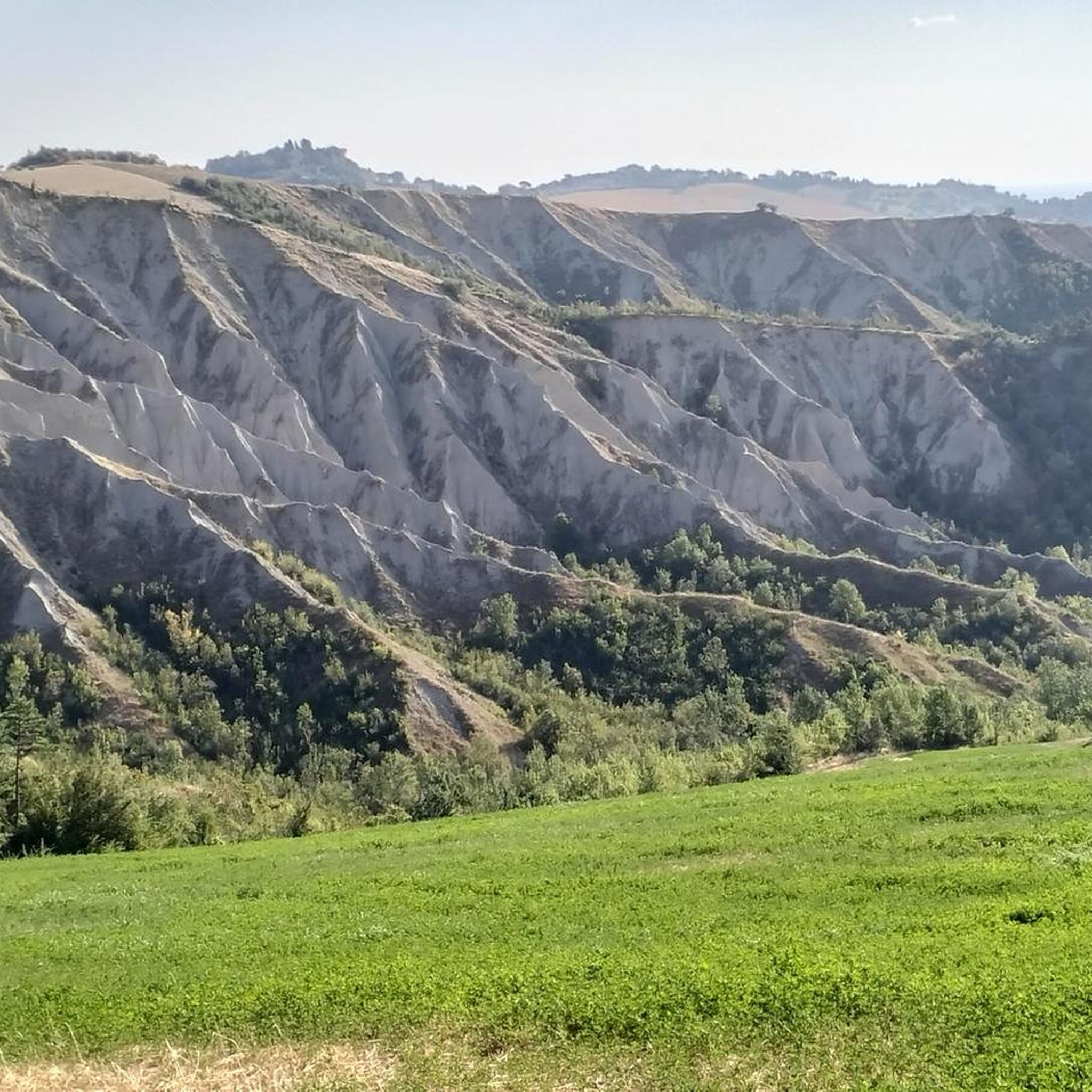
Yes, the area offers several options for outdoor enthusiasts. You can enjoy leisurely walks and cycling along the Ciclopedonale dei Tigli, a mile-long path starting from the historic center, or explore the surrounding plains. For more adventurous routes, consider the MTB Trails around Castel Guelfo Di Bologna or the Cycling around Castel Guelfo Di Bologna guides, which feature various routes including the scenic Ridge of the Calanchi between Fiagnano and Monte del Re.
What natural features are worth visiting near Castel Guelfo di Bologna?
Beyond the cultivated fields and river banks, you can visit the Fegatella Spring, a local symbol known for its salt-chromium-ionic water believed to have healing properties. The Ridge of the Calanchi between Fiagnano and Monte del Re offers suggestive gully landscapes and panoramic views. Further afield, the Oasi naturale del Quadrone is a nature reserve with paths, observation points, and an educational museum.
Can I find family-friendly attractions in the area?
Absolutely! Families can enjoy the artistic charm of the Dozza Painted Walls (Muro Dipinto), an open-air museum where art adorns the village's urban landscape. The Enzo and Dino Ferrari International Circuit (Imola) is also a popular spot for families interested in motor sports history. The Ciclopedonale dei Tigli offers easy walks and bike rides, and the Fegatella Spring is a pleasant, accessible natural spot.
Where can I experience local culture or events?
Castel Guelfo di Bologna hosts several traditional events. The Medieval Festival on May 1st features historical re-enactments, costume parades, and shows. In late June, the Wine and Donut Festival (Sagra del Vino e della Ciambella) celebrates local gastronomy with concerts and exhibitions. During mid-December, the Christmas Colors and Flavors market transforms the historic center with local artistic crafts.
What is the 'Motor Valley' and how can I explore it from Castel Guelfo?
Emilia-Romagna's 'Motor Valley' is a globally renowned area famous for its iconic car and motorcycle companies. Castel Guelfo serves as an excellent starting point to explore this region. A key attraction within the Motor Valley is the Enzo and Dino Ferrari International Circuit (Imola), known for hosting significant motorcycling and Formula 1 events.
Are there any unique shopping experiences nearby?
Yes, for those interested in shopping, the Castel Guelfo The Style Outlets is located just a few kilometers from the historic center. This large outlet center features 110 shops, offering a wide range of retail options.
What are the best times of year to visit Castel Guelfo di Bologna for outdoor activities?
The spring and autumn months are generally ideal for outdoor activities, offering pleasant temperatures for walking and cycling. While the Ridge of the Calanchi between Fiagnano and Monte del Re can be explored by bike or on foot, it's advisable to avoid wet or winter months due to challenging clayey mud and potentially exposed sections.
Are there any easy walking trails suitable for all abilities?
Yes, the Ciclopedonale dei Tigli, a mile-long path starting from the historic center, is perfect for long, easy walks. The surrounding plains also offer gentle routes amidst fields and channel banks. Additionally, the Oasi naturale del Quadrone nature reserve provides accessible paths and observation points suitable for leisurely exploration.
What do visitors enjoy the most about the attractions around Castel Guelfo di Bologna?
Visitors particularly appreciate the blend of history, art, and nature. The Dozza Painted Walls (Muro Dipinto) is highly praised for its unique open-air art. The Ridge of the Calanchi between Fiagnano and Monte del Re is loved for its spectacular and panoramic views, especially at sunset. The historical charm of Castel Guelfo's medieval village and the thrill of the Enzo and Dino Ferrari International Circuit (Imola) also receive high acclaim.
Can I bring my dog to attractions or on trails?
While specific rules for each attraction vary, many outdoor areas like the Ciclopedonale dei Tigli and the surrounding plains are generally dog-friendly for walks on a leash. For trails like the Ridge of the Calanchi, caution is advised due to narrow or exposed sections, so it's best to assess suitability for your dog. Always ensure responsible pet ownership, including waste disposal.
What is the Battilani Collection?
A few kilometers from Castel Guelfo, the Battilani Collection is a must-see for motorcycle enthusiasts. It showcases numerous Italian and foreign motorcycles from 1945 to the present, including rare models like the FN 1905 and Pennazio, along with stories of figures who shaped motorcycle history.
Most popular routes around Castel Guelfo Di Bologna
Most popular attractions around Castel Guelfo Di Bologna

Get inspired with the komoot mobile app


Explore more
Still not found the Highlight you’re looking for? See guides of the top attractions in other regions:
