Attractions and Places To See around Visco - Top 20
Best attractions and places to see around Visco include historical sites and outdoor activities. Visco, located in the Friuli-Venezia Giulia region of Italy, offers insights into local history and serves as a base for exploring the surrounding area. It is situated approximately 45 kilometers northwest of Trieste and 20 kilometers southeast of Udine. The region features significant historical landmarks and access to diverse landscapes.
Best attractions and places to see around Visco
- The most popular attractions is Palmanova, a…
Last updated: October 9, 2026
Udine Gate
Highlight • Historical Site
Translated by Google •
Tip by

Palmanova
Highlight • Historical Site
Translated by Google •
Tip by

Sign up now to discover places like this
Get recommendations on the best single tracks, peaks, & plenty of other exciting outdoor places.
Alpe‑Adria Cycle Path at Terzo d'Aquileia
Highlight (Segment) • Cycleway
Translated by Google •
Tip by

Palmanova Star Fortified Town
Highlight • Historical Site
Translated by Google •
Tip by

Strassoldo Medieval Village and Watermills
Highlight • Historical Site
Translated by Google •
Tip by

Sign up for free to discover even more attractions around Visco.
Already have an account?
Start today with a free account
Your next adventure awaits.
Tips from the Community

Palin, the "smart city", is a bit reminiscent of Neuf-Brisach.
0
0

Strassoldo is a medieval village that was included in the 2019 list of the "Borghi più belli d'Italia" (Most Beautiful Villages in Italy). With its two castles, Strassoldo represents a rare example of a well-preserved medieval village of exceptional charm. The Strassoldo family is one of the few examples of feudal lords who have remained in possession of the castles since their foundation and continue to inhabit them to this day. The castles can be entered through two entrance gates, and the paths inside are paved. The village surrounding the castle has continually expanded and has been well preserved and restored. Two mills with working wheels are particularly charming, one of which dates back to the 12th century and has been in operation for over seven hundred years. Full information: https://www.borghibellifvg.it/de/die-dorfer/strassoldo
0
0

An ancient medieval village between Palmanova and Cervignano, crossed by the Taglio River. Here, time seems to have stood still. It's worth a stop.
0
0

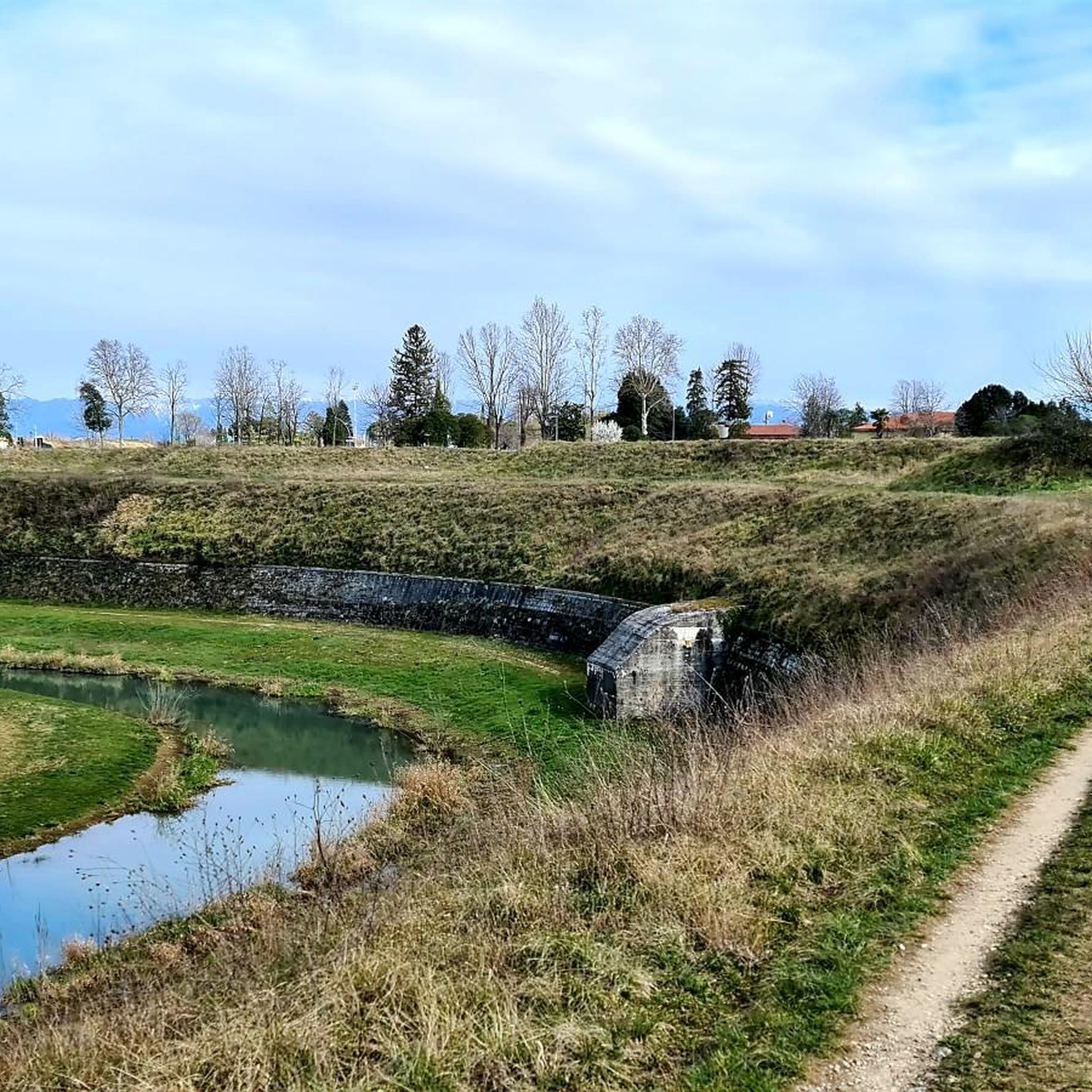
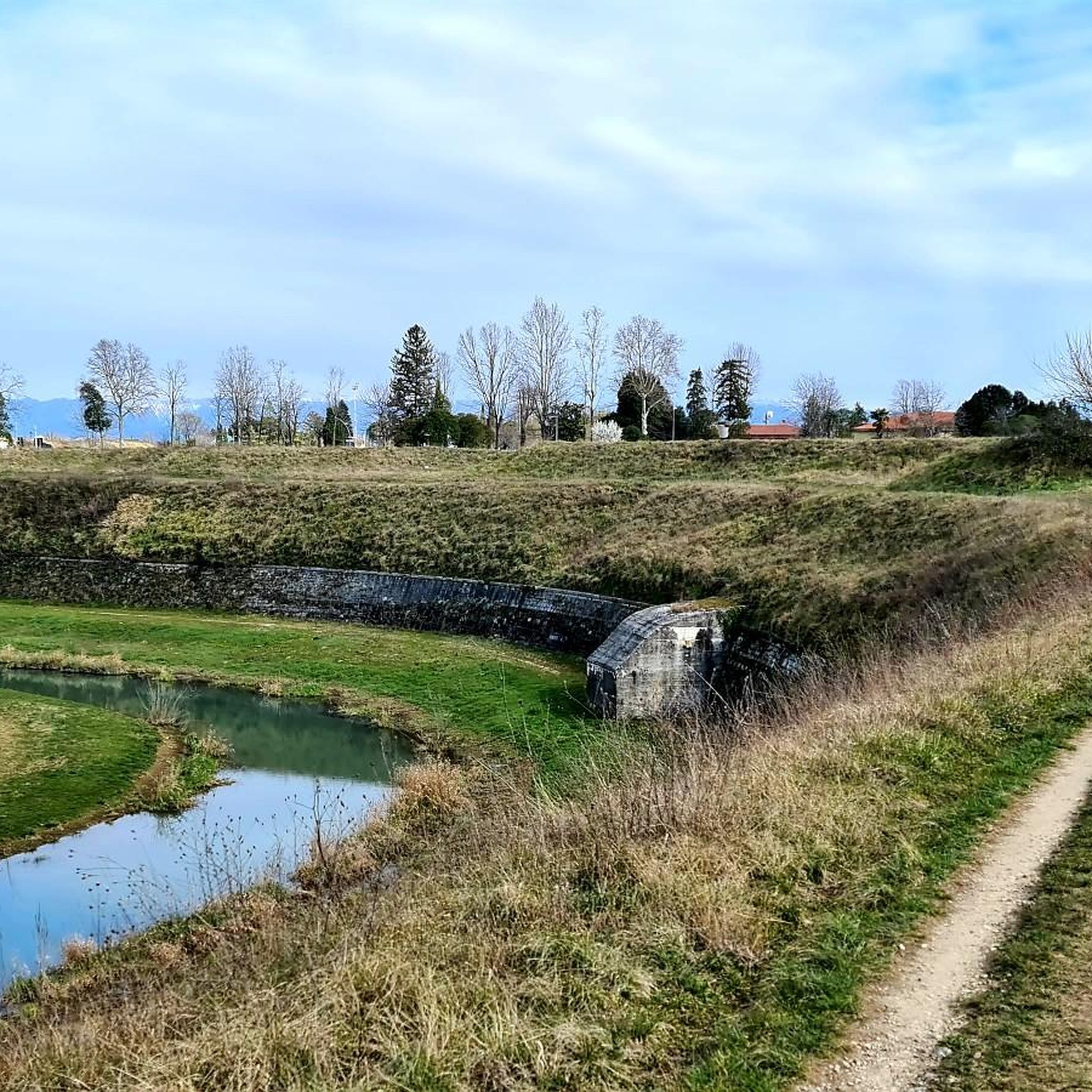
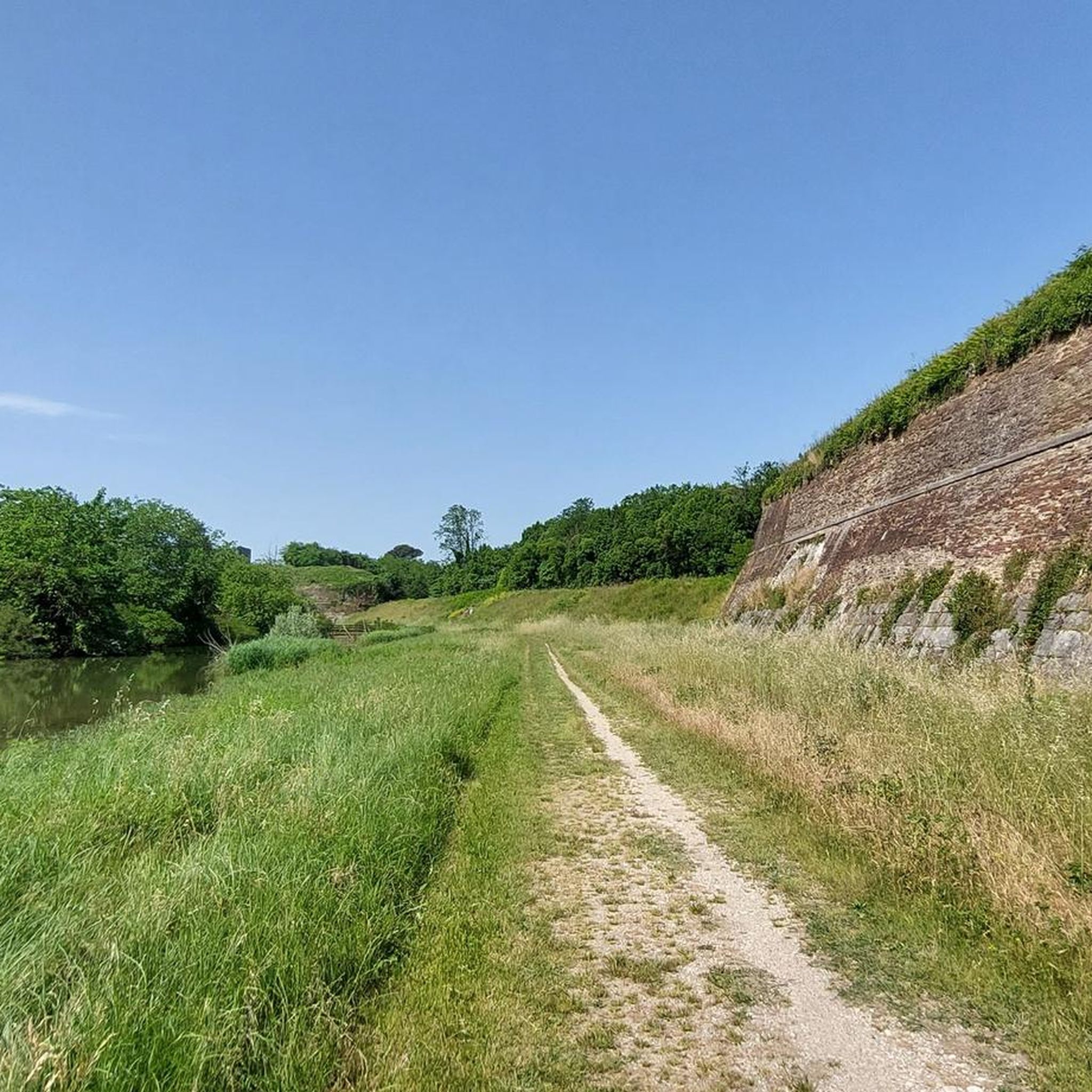
Venetian fortress from the 16th century in a typical star-shaped form.
0
0

It is a beautiful city
0
0

Small ancient village, really interesting. Worth a stop
1
0

The star-shaped city, built by the Venetians as an unconquerable fortified town fell under the rule of Napoleon Bonaparte who added the third circle of walls
1
0

The Twin Castles of Strassoldo di Sopra and Strassoldo di Sotto Initially, there was only one manor house on this site, known as the "Two Towers." The original Strassoldo Castle was built over a thousand years ago along the ancient Via Julia Augusta, the Roman road leading from Aquileia to Noricum. Several centuries later, two separate castles were built, each around one of the original towers, one of which still stands today, incorporated into the central palace of Sopra Castle. Each castle complex consists of a main structure surrounded by its own village composed of houses once used for administrative and agricultural purposes, and a centuries-old park with a spring. The village developed over the centuries outside the castle walls. Both castles were surrounded by a double wall with several gates. Today, some parts of the external walls remain, corresponding to the Porta Cisis leading to the Castello di Sotto complex, and the Porta Cistigna, the large arch leading to the Castello di Sopra complex. There is also part of the internal walls
2
0
Frequently Asked Questions
What historical sites can I explore near Visco?
Visco is close to several significant historical sites. The most prominent is Palmanova, a UNESCO World Heritage site known for its unique star-shaped design and Renaissance military architecture. Within Palmanova, you can also visit historical gates such as Udine Gate and Porta Aquileia (Palmanova). Additionally, Visco itself holds historical significance with the site of a former concentration camp, which later became disused barracks, offering a glimpse into local history.
Are there any cycling opportunities around Visco?
Yes, cycling enthusiasts can enjoy the Alpe‑Adria Cycle Path at Terzo d'Aquileia, which is accessible nearby. This scenic route connects Salzburg to Grado on the Adriatic, offering a popular and not overly difficult transalp experience. For more adventurous cycling, there are also numerous gravel biking and MTB trails around the region. You can find detailed routes in the Gravel biking around Visco and MTB Trails around Visco guides.
What kind of outdoor activities are available near Visco?
Beyond exploring historical sites, the area around Visco offers various outdoor activities. You can find numerous hiking trails, including easy loops around Palmanova like the "Porta Udine – Porta Aquileia loop from Palmanova" or the "Udine Gate – Palmanova loop from Palmanova." For more options, check out the Hiking around Visco guide. Cycling is also popular, with access to the Alpe-Adria Cycle Path and dedicated gravel biking and MTB routes.
Are there family-friendly attractions in the Visco area?
Absolutely. Many of the historical sites, such as Palmanova and its gates like Udine Gate and Porta Aquileia (Palmanova), are considered family-friendly. The unique star shape of Palmanova and its vast Piazza Grande can be fascinating for children. Additionally, the Alpe‑Adria Cycle Path at Terzo d'Aquileia offers an accessible and enjoyable outdoor activity for families.
What makes Palmanova a unique place to visit?
Palmanova is unique due to its perfectly preserved nine-pointed star shape, a prime example of an ideal Renaissance city and military architecture. Built by the Republic of Venice in 1593, it's a UNESCO World Heritage site. Visitors can explore its distinct fortifications, the vast central Piazza Grande, and historical gates, offering a fascinating journey back in time.
Can I find easy hiking trails near Visco?
Yes, there are several easy hiking trails, particularly around the fortified town of Palmanova. Examples include the "Porta Udine – Porta Aquileia loop from Palmanova" (7.2 km) and the "Udine Gate – Palmanova loop from Palmanova" (3.1 km). These routes offer a chance to explore the historical surroundings without significant difficulty. More options can be found in the Hiking around Visco guide.
What is the significance of the Udine Gate in Palmanova?
The Udine Gate is one of the three original entrances to the fortified city of Palmanova, built in 1605. It's a significant historical site that retains features like large wheels used for its drawbridge and historical rooms that housed guards. It serves as a testament to the city's elaborate defensive architecture and is a key point of entry for visitors exploring Palmanova.
Are there any natural attractions or scenic spots close to Visco?
While Visco itself is a small municipality, the broader Friuli-Venezia Giulia region is known for its diverse landscapes. The Alpe‑Adria Cycle Path at Terzo d'Aquileia offers scenic views as it winds through the region. The fortified town of Palmanova Star Fortified Town, while man-made, is also considered a scenic spot due to its unique architectural layout and surrounding green areas.
What do visitors particularly appreciate about the attractions near Visco?
Visitors frequently appreciate the well-preserved historical sites, especially Palmanova, for its extraordinary condition and unique star shape. The accessibility of the Alpe‑Adria Cycle Path at Terzo d'Aquileia is also highly valued for its scenic route. The komoot community has shared over 340 photos and given more than 1500 upvotes to the attractions around Visco, highlighting their appeal.
How can I explore the fortifications of Palmanova?
You can explore the fortifications of Palmanova by walking or cycling along the paths that trace its unique star shape. The city's three main gates, including Udine Gate and Porta Aquileia (Palmanova), are excellent starting points. There are also specific routes like the "Palmanova Fortifications Trail" available for mountain biking, as detailed in the MTB Trails around Visco guide.
Is there a specific time of year recommended for visiting Visco's outdoor attractions?
While specific seasonal recommendations for Visco are not detailed, the Friuli-Venezia Giulia region generally offers pleasant conditions for outdoor activities during spring and autumn, with milder temperatures ideal for hiking and cycling. Summer can also be suitable, especially for early morning or late afternoon excursions to avoid the midday heat. Winter might offer different scenic views, but some outdoor paths could be less accessible.
What is the historical background of Visco itself?
Visco, though a small comune, has a notable historical background. It is known for the site of a former concentration camp, established between February and September 1943 to intern people from Yugoslavia. This complex, largely intact in its urban and architectural setting, later served as an artillery depot and barracks before its closure in 1996. Efforts are ongoing to preserve and enhance the memory of this significant site.
Most popular attractions around Visco

Get inspired with the komoot mobile app


Explore more
Still not found the Highlight you’re looking for? See guides of the top attractions in other regions:
