Top 8 Castles around Dolcè
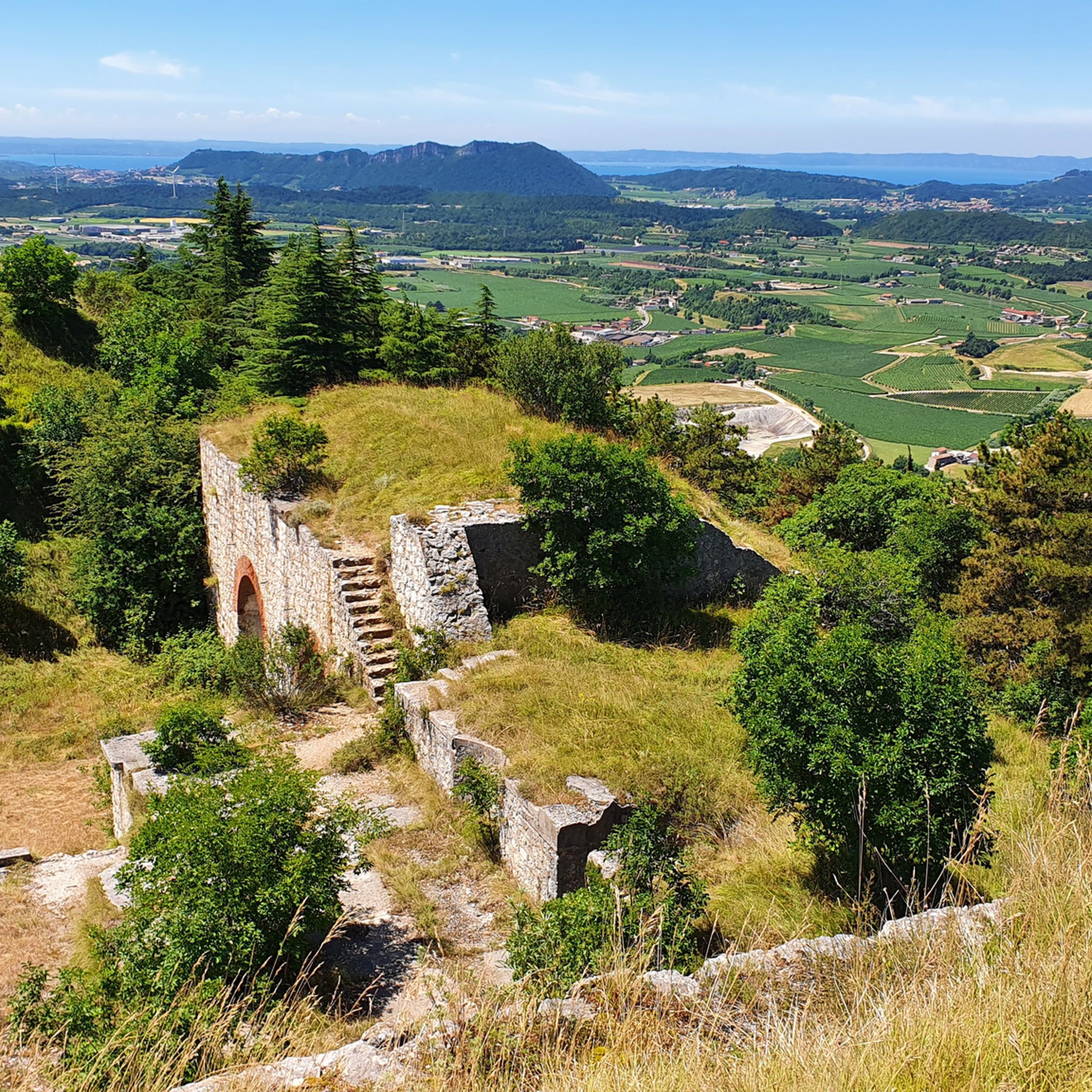
Best castles around Dolcè are primarily represented by 19th-century Austrian fortifications, strategically built to protect the Brennero road and the Val d'Adige. These structures offer a glimpse into the region's military past and are notable examples of defensive architecture. The area features historical fortifications and naturalistic itineraries along the Adige river, providing various trekking paths around Dolcè castles and forts. This municipality in the province of Verona offers a historical landscape shaped by these defensive structures.
Best castles around Dolcè
…Last updated: May 3, 2026
Lazise City Walls
Highlight • Historical Site
The old town with the castle and the harbor is absolutely worth seeing.
The origins of the Castello Scaligero in Lazise on Lake …
Translated by Google •
Tip by

Scaliger Castle
Highlight • Castle
Translated by Google •
Tip by

Sign up now to discover places like this
Get recommendations on the best single tracks, peaks, & plenty of other exciting outdoor places.
Sign up for free
Forte Degenfeld
Highlight • Historical Site
Translated by Google •
Tip by

Castello di Avio
Highlight • Castle
It is an …
Translated by Google •
Tip by

Forte Mollinary
Highlight • Historical Site
Translated by Google •
Tip by

Sign up for free to discover even more castles around Dolcè.
Sign up for free
Already have an account?
Start today with a free account
Your next adventure awaits.
Login or Signup


Other adventures around Dolcè

Tips from the Community

A very well-preserved castle, partly inhabited and partly open to visitors, it is definitely worth a stop.
0
0

The Castello di Avio, also known as Castello di Sabbionara (in older German texts as "Schloss Aue"), dates back in part to the 11th century and is one of the oldest fortifications in Trentino. It is located above the Vallagarina (German: Lagertal) in the municipality of Avio (district of Sabbionara d'Avio). Since 1977, thanks to a donation from Countess Emanuela di Castelbarco, the castle has been owned by the Fondo Ambiente Italiano (FAI) foundation. https://de.wikipedia.org/wiki/Castello_di_Avio A visit is a must! Once you pass through the entrance gate, you'll find yourself before a series of buildings, all surrounding a mighty 11th-century keep. Among these is the Palazzo Baronale with its numerous artistic treasures and the famous Stanza dell'amore, the Chamber of Love. Furthermore, there are five towers to admire here, including the so-called Picadora, from which those hanged once dangled. The entire complex is surrounded by a triple-layered, crenellated castle wall. Current prices, opening hours, etc., can be found here: https://fondoambiente.it/castello-di-avio-eng
1
0
In the Picadora Tower, executions by hanging were carried out in the past. https://fondoambiente.it/castello-di-avio-eng
1
0


Beautiful Fort built between 1859 and 1861
0
0

One of the many mighty Austro-Hungarian forts that controlled the territory and the Adige Valley
0
0
One of the three Austrian fortresses in Pastrengo, well maintained and preserved
0
0

More info on https://www.visitrovereto.it/scopri/castelli/castello-di-avio/ where you can find links to video clips on the Avio Castle.
0
2
Frequently Asked Questions
What kind of castles can I expect to find around Dolcè?
Dolcè is primarily known for its impressive 19th-century Austrian fortifications, such as Forte Wohlgemuth (Forte di Rivoli) and Fort Ceraino, which were built to protect strategic routes. For traditional medieval castles, you'll find examples like Lazise City Walls and Castello di Avio in nearby areas.
Are there any family-friendly castles or fortifications to visit near Dolcè?
Yes, Lazise City Walls and the associated Scaliger Castle in Lazise are considered family-friendly, offering a car-free medieval old town to explore. Forte Wohlgemuth, with its Great War Museum, can also be an engaging visit for families interested in history.
What are some of the most popular historical sites or fortifications in the Dolcè area?
Among the most popular are Lazise City Walls, a well-preserved medieval site, and Fort San Marco, a 19th-century defensive structure offering great views. Castello di Avio, an 11th-century fortress, is also highly appreciated by visitors.
Can I combine a visit to these fortifications with outdoor activities?
Absolutely. The area around Fort Ceraino is popular for naturalistic itineraries, including canoeing and rafting on the Adige river, and is part of the 'Adige Terra dei Forti' cycle path. You can find various outdoor routes, including mountain hikes and MTB trails, around Dolcè. For more details, explore the Mountain Hikes around Dolcè or MTB Trails around Dolcè guides.
Are there hiking trails near the castles or fortifications?
Yes, many fortifications are situated in scenic areas with hiking opportunities. For example, there are trails around Fort San Marco, though the climb can be demanding. The area around Fort Ceraino also offers naturalistic itineraries. You can find more hiking options in the Mountain Hikes around Dolcè guide.
What is the best time of year to visit the castles and fortifications around Dolcè?
Spring and autumn generally offer pleasant weather for exploring the fortifications and engaging in outdoor activities. The summer months can be warm, but also popular, especially for sites near Lake Garda. Winter walks are possible, but some facilities or access might be limited.
What can I expect to see at Forte Wohlgemuth (Forte di Rivoli)?
Forte Wohlgemuth, originally built in the mid-19th century, now houses the Great War Museum. Visitors can explore exhibits of weapons, documents, and war-related objects, providing a tangible connection to its military past and the history of Austrian dominion in the region.
Are there any castles with notable viewpoints?
Yes, Fort San Marco offers a wonderful view of the Adige valley from its elevated position. At Castello di Avio, you can climb one of its towers for panoramic views of the valley below.
What are some options for road cycling near the fortifications?
The region around Dolcè offers several road cycling routes that pass by historical sites. For instance, there's a difficult route that includes the San Giovanni Fortress and Forte di Rivoli. You can find more detailed routes in the Road Cycling Routes around Dolcè guide.
Is there a medieval castle near Dolcè that is well-preserved?
While Dolcè itself features 19th-century fortifications, the Scaliger Castle of Malcesine, located near Lake Garda, is a well-preserved medieval fortification known for its panoramic views. You can find more information about it on visitmalcesine.com.
What do visitors particularly enjoy about the castles and historical sites in this area?
Visitors often appreciate the historical significance and the well-preserved nature of sites like Lazise City Walls and the charm of its car-free old town. The panoramic views from fortifications like Fort San Marco and the historical atmosphere of Castello di Avio are also frequently highlighted.
Are there any hidden gem fortifications worth exploring?
While not a 'hidden gem' in the sense of being unknown, Forte Degenfeld (also known as Forte Piovezzano) is another significant 19th-century Austrian fort built to protect Verona. It's located on a hill south of Piovezzano and offers historical insights, though it may not always be open for internal visits.
Most popular routes around Dolcè
Most popular attractions around Dolcè

Get inspired with the komoot mobile app


Explore more
Looking for the best castles somewhere else? Discover other guides around Dolcè:
