Attractions and Places To See around Partanna - Top 20
Attractions and places to see around Partanna include a rich blend of historical landmarks, cultural sites, and natural features. Situated on a hill overlooking the Belice and Modione valleys, the town offers panoramic views of green plains and distant maritime headlands. Partanna is known for its historical significance, including ancient castles and archaeological sites. The area provides diverse opportunities for exploration and discovery.
Best attractions and places to see around Partanna
- The most popular attractions is Poggioreale Ruins, a…
Last updated: October 11, 2026
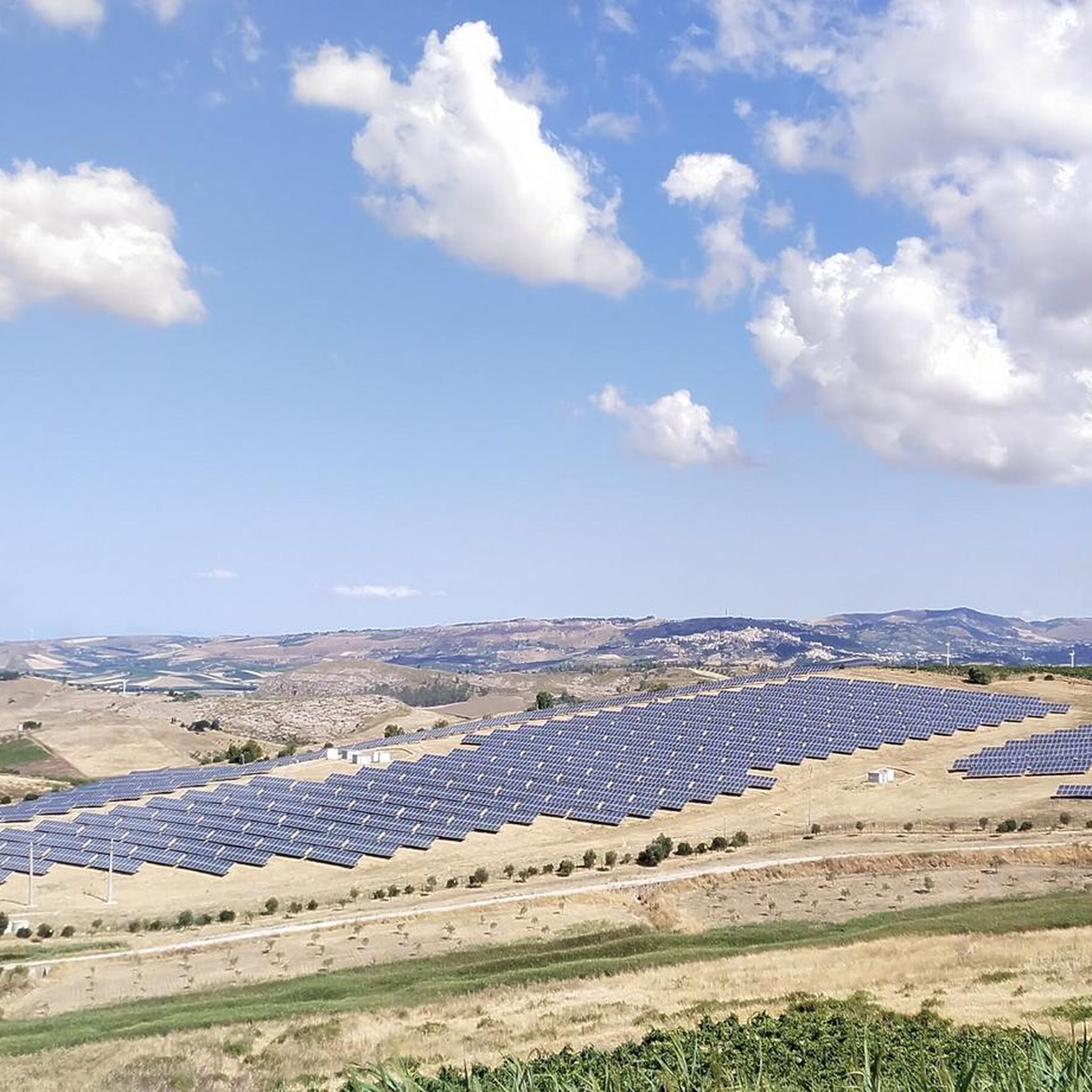
Wonderful view of Salemi
Highlight • Viewpoint
Translated by Google •
Tip by

Cretto di Burri
Highlight • Monument
Translated by Google •
Tip by

Sign up now to discover places like this
Get recommendations on the best single tracks, peaks, & plenty of other exciting outdoor places.
the Star of Belìce
Highlight • Monument
Translated by Google •
Tip by
Poggioreale Ruins
Highlight (Segment) • Historical Site
Translated by Google •
Tip by

Historic Centre of Salemi
Highlight • Historical Site
Translated by Google •
Tip by

Sign up for free to discover even more attractions around Partanna.
Already have an account?
Start today with a free account
Your next adventure awaits.

Tips from the Community

The Belice Gate, or Belice Gate, is a stainless steel installation by Pietro Consagra erected on the road leading to the town of Gibellina Nuova. The work recalls the town lights that were once displayed for the holidays, but over time it has also become a symbol of the Belice Valley. It was erected following the artistic reconstruction of Gibellina, as desired by Mayor Ludovico Corrao. The work is 26 meters tall.
25
0
The beautiful Stella at the entrance to Belice. https://it.m.wikipedia.org/wiki/Stella_d'entrata_al_Belice
27
0
A country that is absolutely worth visiting, it was the first capital of Italy, even if only for one day.
0
0

The Cretto di Burri in Gibellina, also known as “Il Grande Cretto”, is a unique work of art that honors the destroyed town of Gibellina after the devastating earthquake of 1968. Italian artist Alberto Burri created this monumental work between 1985 and 1989 and it was completed in 2015. With its huge white concrete blocks that look like giant cracks in the ground, the work symbolizes the lasting pain and memory of the past, but at the same time, renewal and reconstruction. Walking through the Cretto almost feels like walking through the past, as if you are re-entering the streets and alleys of the old town. The approximately 80,000 square meter area is made up of concrete structures that trace the original city layout. What is particularly impressive is the fact that the blocks are made from the rubble of the old town itself. When you stand on the Cretto and take in the simple but powerful aesthetic, you can literally feel the connection between art, history and human resilience. It is not only a reminder of what was lost, but also a symbol of hope and rebirth. It is especially beautiful if you do the hike in clear weather - the view into the distance underlines the silence and grandeur of this unique place.
1
0
History, culture and breathtaking views of the hilly surroundings are all mixed here. The view of the Norman-Swabian castle that towers over the town is particularly impressive - a perfect destination after a challenging stage. The climb, especially in the Monte delle Rose district, is quite demanding, but the reward is worth it: a spectacular view of the old town and the castle. Salemi is not only a visual highlight, but also steeped in history. In May 1860, Giuseppe Garibaldi briefly proclaimed Salemi the first capital of a united Italy - even if the title only lasted for one day. This town combines the legacy of a turbulent past with the charm of a typical Sicilian village, which lies about 400 meters above sea level. Salemi not only offers a historical insight, but also a challenging but worthwhile route through the rural region. When you drive through the winding streets here, you can literally feel how history and the present merge into one another.
0
0

seen online and seen live it is that place that is worth seeing live, huge and astonishing, shame only for the history of all this
2
1
place rich in history and suffering, unfortunately at 07/2024 it was not possible to access, everything was cordoned off, and work inside, I hope it is to try to recover something of this unique place
0
0
Work of art that marks the entrance to Belice.
38
0
Frequently Asked Questions
What historical landmarks can I explore in Partanna?
Partanna is rich in history. You can visit the Grifeo Castle, a significant 14th-century fortress that now houses a Prehistoric Museum. The Mother Church, rebuilt after the 1968 earthquake, retains its original external appearance and features a monumental wooden organ. The Archaeological Park of Stretto District is known for its Neolithic ditches and caved tombs, highlighting Partanna's ancient past as the "City of the Ditch Civilization."
Are there any sites related to the 1968 Belice earthquake?
Yes, the region has poignant reminders of the 1968 Belice earthquake. You can visit the Poggioreale Ruins, which are the remains of the city destroyed by the earthquake. Another significant site is the Cretto di Burri, a monumental work of environmental art created by Alberto Burri over the rubble of the old city of Gibellina, also destroyed by the earthquake.
Where can I find panoramic views around Partanna?
Partanna offers several stunning panoramic viewpoints. From Piazza Barone Adragna, you can overlook the Grifeo Castle and the Modione valley. Piazza Falcone e Borsellino provides views that, on clear days, extend to Pantelleria and the coastline between Mazara and Sciacca. The Montagna district's panoramic road offers vistas of the Egadi islands, Salemi, and Gibellina. Additionally, the Wonderful view of Salemi highlight offers expansive vistas of the historic town and its Norman-Swabian castle.
Are there any natural reserves or unique natural features to visit?
Yes, the area boasts several natural features. The Riserva di Zangara is a notable reserve with original scrub and woodland vegetation within a gorge, where a tributary of the Belice forms a waterfall. The characteristic 'Valloni' (large valleys/canals) resemble North African Oueds and are important oases of biodiversity. Partanna is also situated between the picturesque Belice and Modione Valleys, offering suggestive views across green plains.
What outdoor activities, like hiking or cycling, can I do near Partanna?
The area around Partanna is excellent for outdoor activities. You can find various routes for running, cycling, and road cycling. For instance, there are challenging running routes like the "Rocca delle Penne and Monte Finestrelle Loop" and diverse cycling options such as the "Finestrelle Forest – Cretto di Burri loop." You can explore more options and detailed routes in the dedicated guides for Running Trails around Partanna, Cycling around Partanna, and Road Cycling Routes around Partanna.
Are there specific trails for running around Partanna?
Yes, there are several running trails available. For a challenging run, consider the "Rocca delle Penne and Monte Finestrelle Loop" which covers over 13 km. If you prefer a moderate option, the "Running loop from Santa Ninfa" is about 13 km. You can find more running routes and their details in the Running Trails around Partanna guide.
Can I find cycling routes suitable for different skill levels?
Absolutely. The region offers a variety of cycling routes for different skill levels. For challenging rides, you might try the "View of the Cliffs of Sciacca – Seafront of Mazara del Vallo loop" (over 130 km) or the "Finestrelle Forest – Cretto di Burri loop" (over 60 km). Moderate options include the "Selinunte Cycle Path – Selinunte Archaeological Park loop." Explore these and more in the Cycling around Partanna and Road Cycling Routes around Partanna guides.
Are there family-friendly attractions or activities in the Partanna area?
For families, exploring the natural beauty of the area is a great option. The Finestrelle Forest offers compact dirt roads suitable for walking or cycling, providing a pleasant outdoor experience. The various panoramic viewpoints also offer accessible spots for families to enjoy the scenery together.
What do visitors enjoy most about the attractions near Partanna?
Visitors particularly appreciate the historical depth and scenic beauty. The Poggioreale Ruins are noted for being a place rich in history and suffering, offering a poignant glimpse into the past. The Cretto di Burri is described as a spectacular work of Land Art. The Historic Centre of Salemi is valued as a beautiful village that provides a cross-section of Sicilian history.
What is the best time of year to visit Partanna for outdoor activities?
Given Sicily's Mediterranean climate, spring (April-May) and autumn (September-October) are generally the best times for outdoor activities around Partanna. The weather is milder and more pleasant for hiking, cycling, and exploring historical sites without the intense heat of summer. During these seasons, the natural landscapes are also particularly vibrant.
What local products or food is Partanna known for?
Partanna is renowned for its agricultural products. It's particularly known for fine wine, important olive oil (especially from Nocellara del Belice olives), and Vastedda, a traditional sheep's milk cheese. The town is also called the "city of the onions" due to its large, sweet red onions.
Are there any religious sites of interest in Partanna?
Yes, besides the Mother Church, Partanna features other significant religious sites. The Church of San Rocco is noted for its interior, which is rich in valuable stucco, paintings, and frescoes, and offers a beautiful viewpoint. The Sanctuary of the Madonna della Libera is another important religious site, as is the Cloister of St. Benedict.
Most popular attractions around Partanna

Get inspired with the komoot mobile app


Explore more
Still not found the Highlight you’re looking for? See guides of the top attractions in other regions:
