The best cycling routes around Gibellina
4.8
(5)
144
riders
21
rides
Touring cycling routes around Gibellina traverse a landscape characterized by rolling hills and agricultural plains, punctuated by unique land art installations. The region features areas like the Belice Park and Finestrelle Forest, offering varied terrain for cyclists. Elevation changes are common, particularly on longer routes, providing both challenging climbs and scenic descents.
Best touring cycling routes around Gibellina
- The most popular touring cycling route is Parco del Belice — Ring tour, a 47.3 miles (76.2 km) trail that takes…
Last updated: September 25, 2026
5.0
(1)
2
riders
76.2km
05:08
1,300m
1,300m
Hard bike ride. Very good fitness required. Mostly paved surfaces. Suitable for all skill levels.
26
riders
53.7km
04:40
1,390m
1,390m
Hard bike ride. Very good fitness required. Mostly paved surfaces. Suitable for all skill levels.

4.0
(2)
13
riders
59.6km
04:38
1,370m
1,370m
Hard bike ride. Very good fitness required. Mostly paved surfaces. Suitable for all skill levels.
7
riders
51.6km
03:28
850m
850m
Hard bike ride. Very good fitness required. Mostly paved surfaces. Suitable for all skill levels.
6
riders
Hard bike ride. Very good fitness required. Mostly paved surfaces. Suitable for all skill levels.
Get access to more routes and recommendations from other explorers.
Already have an account?
Our route recommendations are based on thousands of hikes, rides, and runs completed by other people on komoot.
Start today with a free account
Your next adventure awaits.

Other adventures around Gibellina

Tips from the Community

It was built in 1615 at the behest of the Municipality to commemorate the completion of the imposing Bigini aqueduct and the city's water network. The author of the work was the Neapolitan Orazio Pigrone, an expert in hydraulics, as evidenced by the inscription on the plaque placed between the first and second basins. It is a marble fountain about nine meters high with four tiers of basins. A niche, surmounted by a shell motif on the fourth spout, houses a marble statue: a nymph sits on a rock and holds a jug in her right hand from which water flowed, and with her left she holds a cornucopia, the quintessential symbol of abundance. The baroque style of the ensemble is evident from the volutes that repeat on the three floors of the construction, while a late baroque pediment with a curved line defines it at the top. In the fountain, the image of a palm tree is repeated several times, a symbol of the Tagliavia family; today the palm tree is the emblem of the city and is part of the city's coat of arms, along with the legend Palmosa civitas castrum vetranum, with a clear allusion to Selinunte, called "palmosa" in the third canto of the Aeneid. A testimony to a late 16th-17th century Tuscan-Roman Mannerism, of which Ammanati's fountains are the highest interpretation, the fountain stands out on a stone-clad wall defined at the top by a cornice and a voluted architectural element bearing the city's coat of arms.
8
0
The Parish Church of San Giovanni Battista is located in Piazza Regina Margherita in Castelvetrano (TP). Built between 1589 and 1660, it is the religious heart of the city. It houses the splendid marble statue of the patron saint sculpted by Antonello Gagini in 1522 and the frescoes by Gennaro Pardo.
2
0
The Church of Purgatory, in the municipality of Partanna (TP), stands on the site of an Arab watchtower, incorporated in the 14th century, as a bell tower, into a church dedicated to San Vito, the city's patron saint, by the will of the Grifeo Lords of Partanna, and later dedicated to SS. Salvatore, which served as the Mother Church until 1625.
1
0
The entrance to the municipality of Santa Ninfa, if you come from Gibellina. https://it.wikipedia.org/wiki/Santa_Ninfa
5
0

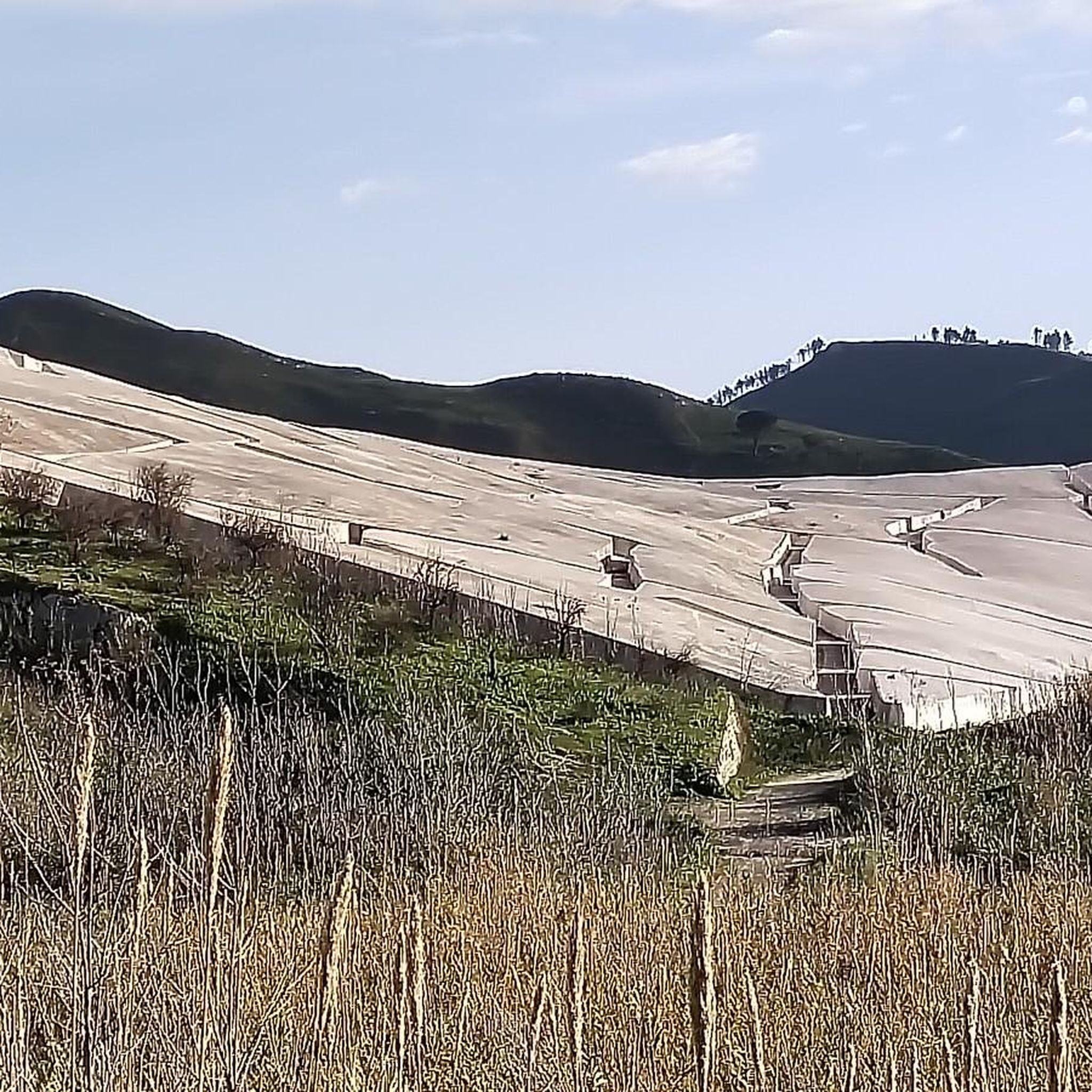
The largest work of art in Europe and the memory of an earthquake that indelibly changed the history of the province. An almost mystical and extraordinarily evocative place.
0
0

Maradona can be found everywhere in Sicily but not always as well as here
0
0
A village uninhabited for decades, ever since the entire population was relocated en masse to a brand-new town. Three thousand people, the exodus of survivors of the 1968 earthquake that destroyed entire towns in the provinces of Trapani and Agrigento. Today, only façades remain, baroque railings, old majolica tiles, a tangle of houses leaning against the bell tower of the main church, and stairways that look like they were cut out with scissors on a sheet of paper. Before the earthquake, Poggioreale was a delightful baroque village, with noble palaces, the square with the club, the inn, and everything else. The ruins bear witness to a tragedy from 40 years ago: fear, escape, separation. A place that, due to its beauty and the evocative atmosphere it evokes, has been the setting for numerous famous films: it is here that Tornatore filmed some scenes from Malena and The Star Man. An island out of time, with the hands of the clock stopped on the terrible night of January 15, 1968.
20
0
The Belice Gate, or Belice Gate, is a stainless steel installation by Pietro Consagra erected on the road leading to the town of Gibellina Nuova. The work recalls the town lights that were once displayed for the holidays, but over time it has also become a symbol of the Belice Valley. It was erected following the artistic reconstruction of Gibellina, as desired by Mayor Ludovico Corrao. The work is 26 meters tall.
25
0
Frequently Asked Questions
How many touring cycling routes are available around Gibellina?
There are over 20 touring cycling routes in the Gibellina area, offering a variety of experiences through rolling hills and agricultural plains. These routes are highly rated by the komoot community, with an average score of 4.8 stars.
Are there touring cycling routes suitable for beginners in Gibellina?
The touring cycling routes around Gibellina are primarily for moderate to advanced cyclists. Most routes feature significant elevation gain and challenging climbs, with 17 routes rated as difficult and 4 as moderate. There are currently no routes specifically categorized as easy.
What kind of terrain can I expect on touring cycling routes in Gibellina?
You can expect a landscape characterized by rolling hills and agricultural plains, often punctuated by unique land art installations. Routes frequently feature elevation changes, providing both challenging climbs and scenic descents, particularly on longer tours through areas like the Belice Park and Finestrelle Forest.
Are there any circular touring cycling routes around Gibellina?
Yes, many touring cycling routes in Gibellina are designed as loops. For example, the Parco del Belice — Ring tour is a popular 47.3-mile (76.2 km) circular route exploring the natural park. Another option is the The Star of Belìce – Cretto di Burri loop from Salemi-Gibellina, which is a difficult 32.2-mile (51.9 km) path featuring significant elevation gain.
What are some notable landmarks or attractions I can see along the touring cycling routes?
Many routes pass by significant cultural and historical sites. A prominent landmark is the Cretto di Burri, a monumental land art installation. You can also explore the Historic Centre of Salemi, or the Poggioreale Ruins. For scenic views, consider the Wonderful view of Salemi.
What is the best season for touring cycling in Gibellina?
The best seasons for touring cycling in Gibellina are typically spring (April to June) and autumn (September to October). During these months, the weather is generally mild and pleasant, avoiding the intense heat of summer and the cooler, wetter conditions of winter. This allows for more comfortable rides through the region's open landscapes.
Are there any touring cycling routes that go through the Finestrelle Forest?
Yes, the Finestrelle Forest – Cretto di Burri loop from Santa Ninfa is a difficult 37.6-mile (60.5 km) route that takes you through the Finestrelle Forest, offering a different natural environment compared to the more open agricultural areas. This route also passes by the Cretto di Burri.
What are the typical durations for touring cycling routes in Gibellina?
Route durations vary significantly based on distance and elevation. For instance, the Parco del Belice — Ring tour, at 47.3 miles (76.2 km), typically takes around 5 hours 9 minutes. A shorter option like the Cretto di Burri – The Great Cretto by Burri loop from Salemi Gibellina, which is 24.8 miles (39.9 km), can be completed in about 2 hours 36 minutes.
Is public transport available to access touring cycling trails around Gibellina?
Public transport options directly to trailheads in the rural Gibellina area can be limited. It is advisable to check local bus schedules or consider driving to a starting point, especially for routes that begin further from major towns. Some routes, like those starting from Salemi-Gibellina, might have better accessibility.
Where can I find parking for touring cycling routes in Gibellina?
Parking is generally available in the towns and villages near the starting points of the routes, such as Salemi or Santa Ninfa. For routes that venture into more remote areas, look for designated parking spots or safe roadside areas where you can leave your vehicle. Always ensure your parking spot is secure and does not obstruct local traffic or access.
Are there any family-friendly touring cycling routes in Gibellina?
Given the prevalence of moderate to difficult routes with significant elevation changes, most touring cycling routes in Gibellina are more suited for experienced cyclists. Families with younger children or those seeking very easy, flat rides might find limited options directly within this guide. It's recommended to review individual route profiles for specific difficulty and terrain details.
What do other touring cyclists enjoy most about cycling in Gibellina?
The area is highly rated by the komoot community, with an average score of 4.8 stars from over 10 reviews. Reviewers often praise the unique blend of natural landscapes and striking land art, particularly the Cretto di Burri. The challenging climbs and rewarding views across the rolling hills are also frequently highlighted as key attractions.
Most popular attractions around Gibellina

Get inspired with the komoot mobile app


Explore more
Browse the best Cycling routes in other regions.
