Attractions and Places To See around Peglio - Top 20
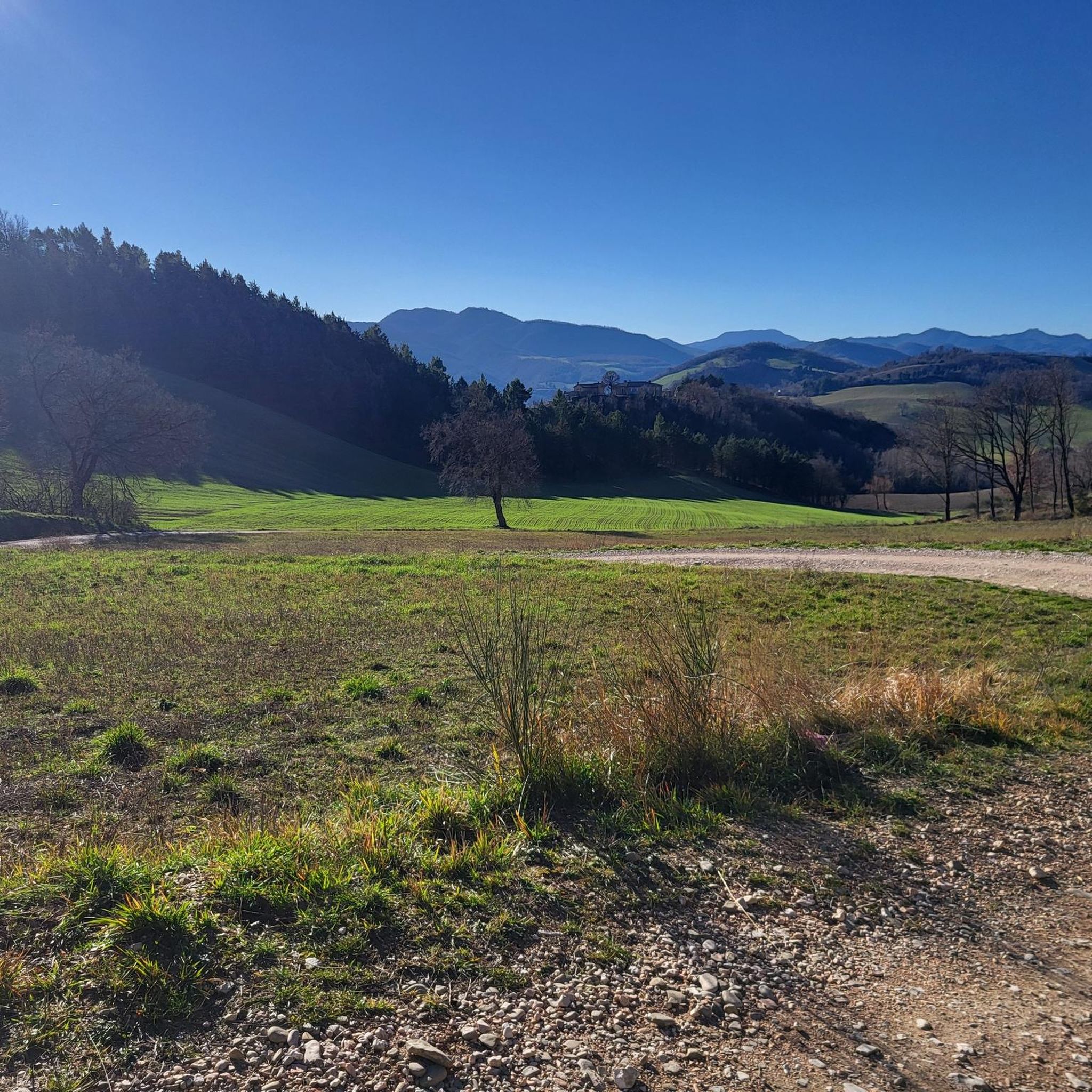
Best attractions and places to see around Peglio Italy include a rich historical landscape in the Marche region, characterized by medieval villages and panoramic views of the Metauro valley. This area offers a blend of cultural sites and natural vistas, extending towards the Apennine mountains. The region is known for its historical architecture and significant Renaissance heritage, particularly in nearby Urbino. Visitors can explore a variety of historical sites and enjoy the scenic beauty of the surrounding hills.
Best attractions…
Last updated: October 9, 2026
Ducal Palace
Highlight • Castle
Translated by Google •
Tip by

Fortezza Albornoz
Highlight • Historical Site
Translated by Google •
Tip by

Sign up now to discover places like this
Get recommendations on the best single tracks, peaks, & plenty of other exciting outdoor places.
Luciano Biagiotti's Miniature City of Urbino
Highlight • Structure
Translated by Google •
Tip by

Gadana. Church of St. Mary of the Assumption of Valdazzo
Highlight • Religious Site
Translated by Google •
Tip by

Brancaleoni Castle of Piobbico
Highlight • Castle
Translated by Google •
Tip by
Sign up for free to discover even more attractions around Peglio.
Already have an account?
Start today with a free account
Your next adventure awaits.

Tips from the Community

Urbino is a city in the Marche region, recognized as a UNESCO World Heritage site for its Renaissance-era historic center. It is located in a hilly area and is characterized by uphill streets, squares, and brick buildings. Among the main sites is the Ducal Palace of Urbino, home to the National Gallery of the Marche. Urbino is also the birthplace of Raffaello Sanzio, with a house-museum that can be visited. The city is home to the University of Urbino Carlo Bo, which contributes to the presence of students throughout the year.
0
0

The Palazzo Ducale in Urbino is a Renaissance palace and houses the famous Renaissance picture gallery of the Marche.
2
0

The city of Urbino is located on the highest part of a hill which, seen from afar, takes your breath away with such beauty.
2
0

The church of Santa Maria Assunta is the main Catholic place of worship in Urbino and cathedral of the archdiocese of Urbino-Urbania-Sant'Angelo in Vado.
2
0


I recommend trying the Urbino piadina 🥙
0
0

The history of Piobbico is connected to the history of the Brancaleoni count family, which dominated these districts for seven centuries, in fact the Brancaleoni Castle developed in successive periods, from 1200 to 1700. Its construction began as a fortress and then assumed, over the years, the appearance and grace of a Renaissance palace, full of frescoes, stuccos, fireplaces, writings in Latin, Greek and vernacular, dates and names, which allowed to reconstruct the architectural history of this large container (135 rooms). Going up the medieval village you arrive at the square where the clock tower stands. The tower rests on a pointed arch vault dating back to the 1200s, therefore prior to the construction of the first nucleus of the building, evidence of an old watchtower. Towards the end of the 16th century, a tower was erected above the vault on which two clocks were placed, one on the facade facing the town and one on the facade facing the San Carlo courtyard. On the entrance facade, next to the tower, you can admire an elegant loggia which, together with the balustrade, make the facade less massive, giving the whole complex a refinement that is more suited to a Palace than a Castle. In fact, this immense building (135 rooms) has developed over the centuries, through a series of interventions, expansions, until reaching the current structure in which the Renaissance features prevail, but also presents evident defensive and military security elements typical of the late Middle Ages.
1
0
Walking through the narrow streets of Urbino, a visit to this authentic masterpiece of miniature reproductions is absolutely not to be missed. Free visit and explanations on the reproduction techniques of the Dear Luciano. Every year Luciano Biagiotti adds a piece to his Urbino of polystyrene and das. He began in 2006 with a reproduction of the arched staircase at the back of the Doge's Palace and has finished, for now, with the Mausoleum of the Dukes. At the center of his miniature city is the Nativity. It is the crib model that the artist from Urbino shares with the public in the church of San Domenico, one of the 44 stages of the Via dei Presepi. The review, organized by the Pro Urbino, extends throughout the historic center, with displays in shop windows, palaces, churches, courtyards and alleys. In Luciano Biagiotti's nativity scene, the city's monuments do not respond to a pre-established order: they are positioned differently from reality and not all the details between the original and the model are faithful. So we find the obelisk in piazza Rinascimento in place of the statue of Raphael and the Renaissance painter is in front of the botanical garden in via Bramante. “I wanted to create my own Urbino,” explains the artist. In 26 meters of perimeter the most important points of the city are all there. Some you recognize immediately, others you have to look for. At first glance, the effect is a bit alienating. There is also a hidden part that can only be seen by inserting the camera into a hole in the crib: it is a reproduction of one of the chapels in the crypt of the Cathedral, with an altar, chalice and crucifix.
2
0
Frequently Asked Questions
What historical sites can I visit around Peglio?
The area around Peglio in the Marche region is rich in history. You can explore the magnificent Ducal Palace, a Renaissance ducal palace and UNESCO World Heritage Site. The city of Urbino itself is a major historical site and a significant center of the Italian Renaissance. Also, consider visiting the Church of St. Mary of the Assumption of Valdazzo, which has origins dating back to the 13th century.
Are there any unique cultural experiences or events in Peglio, Marche?
Yes, Peglio in the Marche region hosts several unique events. In February, you can experience 'Panceros Day,' celebrating peasant traditions with tastings of local pork products and wines. May brings 'Orti Giulivi e Fiori Ammiccanti,' a flower and plant market exhibition featuring local handicrafts and concerts. In September, 'Vivaio Peglio' offers conferences and workshops focused on botany and eco-systems.
What is the significance of Urbino near Peglio?
Urbino is a city of immense historical and artistic richness, recognized as a UNESCO World Heritage Site and considered one of the most important centers of the Italian Renaissance. It is home to the Ducal Palace, which houses the famous Renaissance picture gallery of the Marche region and is the birthplace of Raffaello Sanzio.
Can I see medieval architecture in Peglio?
Yes, the medieval village of Peglio in Marche features notable historical structures. You can see the 13th-century Torre del Girone, which stands at the top of the hill and offers stunning views. There is also the Civic Tower, another significant historical landmark in the village.
Are there family-friendly attractions near Peglio?
Absolutely. Families will enjoy Luciano Biagiotti's Miniature City of Urbino, an authentic masterpiece of miniature reproductions of Urbino's monuments. The Ducal Palace, Urbino is also considered family-friendly, offering an engaging historical experience.
What outdoor activities are available around Peglio?
The area around Peglio offers various outdoor activities, particularly cycling and running. You can find numerous routes for road cycling, touring bicycles, and jogging. For example, there are challenging road cycling routes like the "Ducal Palace – Gola del Furlo Gorge loop" and touring bicycle routes such as the "Urbania Historic Center – Urbino loop." Running enthusiasts can explore trails like the "Church of the Dead of Urbania loop." You can find more details on these activities in the dedicated guides for Road Cycling Routes around Peglio, Cycling around Peglio, and Running Trails around Peglio.
What are the best viewpoints near Peglio?
Peglio in the Marche region is perched on a chalky ancient massif, providing spectacular panoramic views of the Metauro valley and the surrounding Apennine mountains. From the Torre del Girone, you can enjoy enchanting vistas of cultivated fields and hills, extending to Monte Catria, Monte Petrano, Monte Nerone, Carpegna, Sasso Simone and Simoncello, Montecopiolo, and even the towers of the Republic of San Marino. The city of Urbino also offers great views of the surrounding hills and villages.
What is the best time to visit Peglio for outdoor activities?
While specific weather data isn't provided, the region's events suggest pleasant weather in spring and early autumn. The 'Orti Giulivi e Fiori Ammiccanti' flower market in May and 'Vivaio Peglio' botanical events in September indicate favorable conditions for outdoor exploration and enjoying the natural beauty of the area.
Are there any religious buildings of interest in the area?
Yes, the Church of St. Mary of the Assumption of Valdazzo is a notable religious building with origins in the 13th century, rebuilt in the 15th century. In Peglio itself, the Baroque-style Church of San Fortunato is considered one of the oldest in the diocese of Urbino and houses a valuable terracotta Via Crucis and two Lombard-era crypts.
What do visitors enjoy most about the attractions around Peglio?
Visitors particularly appreciate the rich historical landscape and the well-preserved medieval castles and Renaissance heritage. The city of Urbino is frequently praised for its art, culture, and great atmosphere with narrow, steep streets and excellent views. The Ducal Palace is a highlight for its historical significance and beauty. The area's scenic beauty and opportunities for cycling are also highly valued by the komoot community.
Can I find information on local markets or produce in Peglio?
Yes, the 'Panceros Day' event in February celebrates peasant traditions with tastings of local pork products and wines. Additionally, the 'Orti Giulivi e Fiori Ammiccanti' in May is a flower and plant market exhibition, which often includes local artistic handicrafts, providing a chance to experience local produce and crafts.
Most popular attractions around Peglio

Get inspired with the komoot mobile app


Explore more
Still not found the Highlight you’re looking for? See guides of the top attractions in other regions:
