Attractions and Places To See around Caggiano - Top 20
Best attractions and places to see around Caggiano include a blend of historic sites and natural features in the Campania region of Italy. This historic village, situated at 828 meters above sea level, offers extensive views of the surrounding landscape, including the Tanagro Valley and distant Gulf of Salerno. Caggiano's past as a Roman fortified settlement and a stop for Templars contributes to its cultural significance. The area provides opportunities to explore both ancient landmarks and elevated natural viewpoints.
Best…
Last updated: July 7, 2026
Il Figliolo Summit
Highlight • Summit
Translated by Google •
Tip by

Aresta di Petina Astronomical Observatory
Highlight • Structure
The Aresta di Petina astronomical observatory is located on top of the Alburni, at 1300 meters above sea level, in the Cilento and Vallo di Diano National Park.
cielomareterra.org/node/163
Translated by Google •
Tip by
Sign up now to discover places like this
Get recommendations on the best single tracks, peaks, & plenty of other exciting outdoor places.
Sign up for free
Scenic road overlooking the Tanagro Valley
Highlight • Mountain Pass
Translated by Google •
Tip by

Cascata Grande di Savoia
Highlight • Waterfall
Translated by Google •
Tip by

The Castle of Buccino
Highlight • Castle
Translated by Google •
Tip by
Sign up for free to discover even more attractions around Caggiano.
Sign up for free
Already have an account?
Start today with a free account
Your next adventure awaits.
Login or Signup

Tips from the Community

Buccino is the ancient Volcei. Worth seeing are the urban archaeological park in the pretty town center and the Norman castle.
0
0

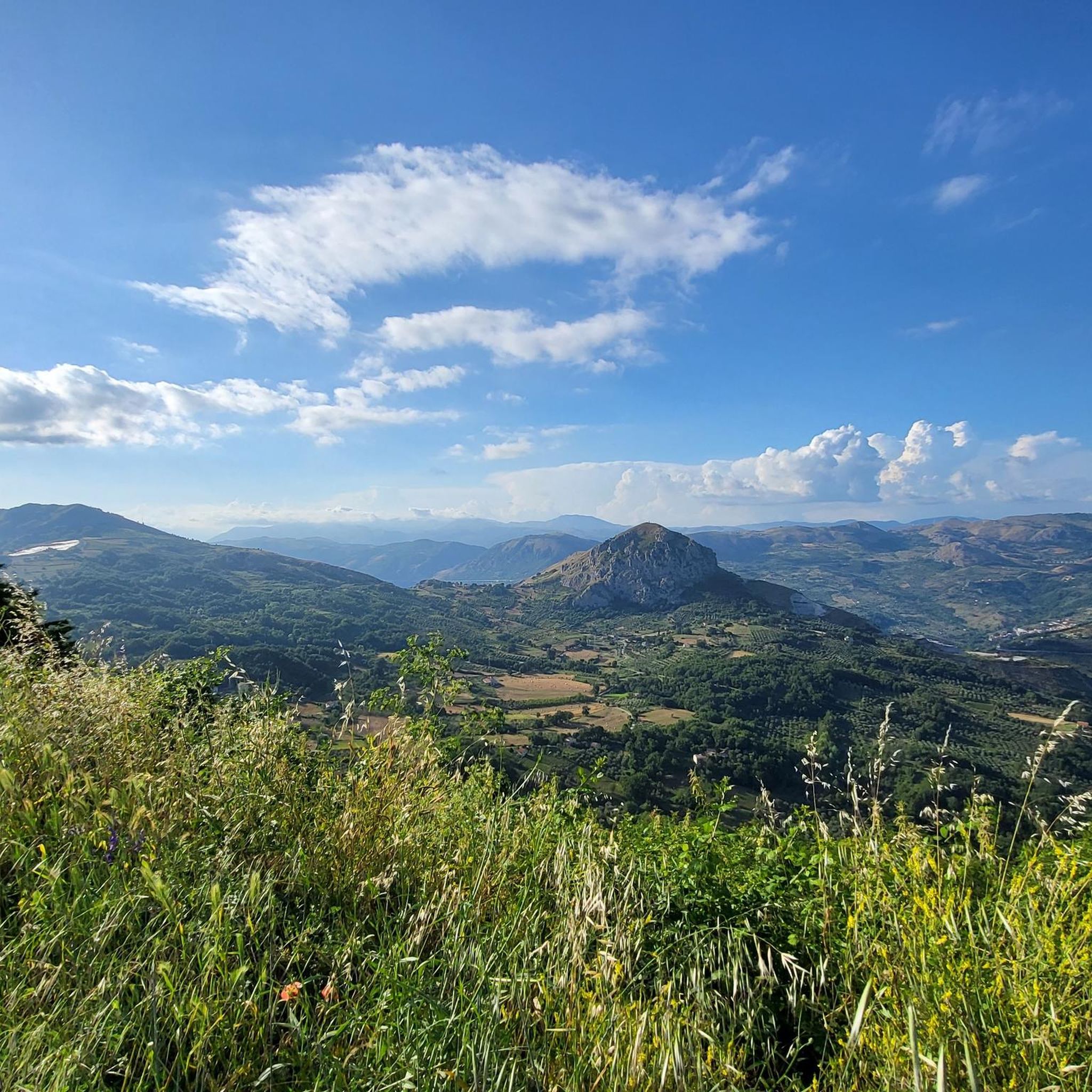
Near the large rocky spur of Figliolo it is necessary to climb to reach the summit, where the statue of the Madonna marks the highest point. From here you can enjoy a spectacular 360 degree view. WARNINGS for those who want to reach the summit of Figliolo (see photo!) For the more adventurous you can climb to the top of Figliolo, to do so go around the wall towards SE climbing on a gravelly trail up to a crack between the rocks. You will find a huge boulder stuck between the walls, you have to go beyond it and you have to climb in this crack between the rocks (you need a bit of agility and caution especially when going down). You climb up reaching the summit ridge, paying attention to a slightly exposed section and avoiding the side where more friable rock is visible (yellow color). From the Madonna on the summit you can read Monte Figliolo 1337 m. The view is phenomenal and worth the little "climb" but, it is NOT for everyone, you need good mountaineering experience and you must not suffer from vertigo.
2
0

Cima Il Figliolo is a rocky outcrop in the municipality of Petina. At more than 1300 meters above sea level, it offers a splendid view of Monte Panormo, the highest peak of the Alburni Mountains, and of the Tanagro valley.
0
0

The large waterfall is one of the Savoia waterfalls, it is located in the Tuorno valley, a place of extreme beauty.
1
0
The climb to the Alburni pass is long and with challenging slopes, but the road is spectacular and the effort is amply rewarded. After the hairpin bends, you cross one of the most beautiful beech woods in the Cilento Vallo di Diano and Alburni National Park.
3
0
Aresta di Petina astronomical observatory The Aresta di Petina astronomical observatory is located on top of the Alburni, at 1300 meters above sea level, in the Cilento and Vallo di Diano National Park. http://www.cielomareterra.org/node/163
2
0
That of Buccino represents a typical example of the baronial castle of the Salerno hinterland. The manor, although in a state of ruin, has recently been restored as part of the programs of the Ancient Volcei urban park. The various architectural elements have been preserved through which it is possible to read the chronological and functional evolution of the site. It is not excluded that the promontory guarding the underlying inhabited area was already used in Roman times, as evidenced by the various elements of reuse found in recent works. However, we must wait until the 12th century to have the first documentary information of the fief of Buccino, through which we know the names of the first dominus: Nicola di Principato, count (1128); Judge Aminabad (1141); Riccardo Philippi (1141). With the advent of the Swabians the castle had to lose importance, since it is not mentioned in the Statutum de reparatione castrorum imperialium. Even afterwards there is no news about the presence of castellans and servants inside the castle. From these data it can be deduced that the Buccinese castle did not play a particularly important role, from a military point of view, in the chessboard of the Kingdom's fortifications. In 1247 the castrum Buccino or Pulcini belonged to the feudal lord Tommaso di Fasanella. With the Angevins the castle was again assigned to important feudal lords, who changed the face of the manor according to the customs of the time. In 1269 the castle, together with those of Campagna, Eboli, Auletta and Quaglietta, was assigned to Roberto, eldest son of the Count of Flanders. Already in 1271 it was revoked from the Royal Curia, to be then assigned, until 1274, to Gualtiero de Sommerouse, soldier and executioner of the Kingdom. During the fifth summons of Charles I of Anjou (1276-1277) the castle was stolen from Tommaso Count of Marsico to be assigned to Guidone d'Alemagna, soldier, executioner, councilor, royal family, treasurer and fiscal receiver. In the following two centuries, the castle was in the possession of the d'Alemagna family, then passed to the Caracciolo and Di Sangro families. At present the castle structure is characterized by a mighty Norman square-plan keep which must have been the only existing structure, at least until the advent of the Angevins. The construction of a first courtyard dates back to the late 13th century, with related residential buildings, two circular towers at the corners and a large cistern, with an adjoining service area in the southern part. This first transformation is probably the work of the d'Alemagna family, in a crucial moment for the history of the Kingdom, characterized by the so-called war of the Vespers, which broke out in 1282 and which reached its peak in Campania at the end of the 13th century. In that period they began to build circular towers with escarpments at the base with an upper crown consisting of corbels and arches for the plumbing defense. Although the circular towers of the castle of Buccino are cut off, they fall within this type of construction, typical of Angevin castle architecture. In the first half of the 14th century, the castle underwent a new structural reorganization. The hill is equipped with a defensive system consisting of a moat with two other circular towers and a second wall. Some rooms and a stable included in the perimeter area of the external walls can still be ascribed to the Angevin age. Between the sixteenth and seventeenth centuries the castle underwent a gradual abandonment, as evidenced by the progressive filling layers of the moat and the levels of obliteration found in the environment identified as the stable. The resumption of intensive occupation of the hill takes place between the eighteenth and nineteenth centuries when the reorganization of the internal courtyard, occupied along the northern edge by a stable, and the creation of a water drainage system, defined a substantial change in the intended use of the spaces. During the nineteenth century. the castle assumes the appearance of a building witnessed by four large limestone, located along the northern slope of the hill, and by numerous lime extinguishing pits in the southern part. arch. Lucio Ganelli
1
0

Frequently Asked Questions
What natural attractions can I explore around Caggiano?
Caggiano is surrounded by beautiful natural features. You can visit the Cascata Grande di Savoia, a large waterfall located in the scenic Tuorno valley. For breathtaking panoramic views, consider a climb to Il Figliolo Summit, where a statue of the Madonna marks the highest point. Additionally, the Scenic road overlooking the Tanagro Valley offers challenging slopes through one of the most beautiful beech woods in the Cilento Vallo di Diano and Alburni National Park.
Are there any historical or cultural sites in Caggiano?
Yes, Caggiano is rich in history. The Historic Center of Caggiano itself is like stepping back into the Middle Ages, with narrow streets, ancient gates, and stone arches. The magnificent Castle, built by the Normans in the 10th century, dominates the village. You can also visit the Church of the Santissimo Salvatore, known for its intriguing circular carvings and side chapels dedicated to influential local families. Caggiano also has historical significance as a former stopping point for Templars, with symbols of their presence still found throughout the village.
What kind of outdoor activities can I do near Caggiano?
The region around Caggiano offers a variety of outdoor activities. You can find numerous hiking routes, including trails to the Savoia waterfalls or to Il Figliolo Summit. For cyclists, there are road cycling routes and mountain biking trails that wind through the picturesque landscape, including challenging climbs to the Alburni pass.
Where can I find the best panoramic views in Caggiano?
Caggiano, being one of the highest municipalities in the province of Salerno, offers spectacular 360-degree views. The Il Figliolo Summit is highly recommended for its extensive vistas of Monte Panormo and the Tanagro valley. The Scenic road overlooking the Tanagro Valley also provides stunning views as it winds through the Alburni mountains. Even from the historic center, you can enjoy serene sunrises and sunsets stretching towards the Gulf of Salerno.
Are there any unique scientific or educational attractions?
Yes, the Aresta di Petina Astronomical Observatory is a unique attraction. Located on top of the Alburni mountains at 1300 meters above sea level within the Cilento and Vallo di Diano National Park, it offers a special experience for those interested in astronomy and stargazing.
What is the best time of year to visit Caggiano?
The region's description of 'gentle wheat fields, vineyards, rugged mountains, and sunsets over the Gulf of Salerno' suggests that spring, summer, and early autumn would be ideal for enjoying the natural beauty and outdoor activities. These seasons typically offer pleasant weather for exploring the historic center, hiking to summits, and enjoying panoramic views.
Are there any challenging hikes or climbs in the area?
For the adventurous, the climb to Il Figliolo Summit is considered challenging. It involves navigating a gravelly trail and a crack between rocks, requiring agility and caution, especially on the descent. The Scenic road overlooking the Tanagro Valley also features challenging slopes, particularly for road cycling.
What do visitors enjoy most about the attractions around Caggiano?
Visitors particularly enjoy the spectacular 360-degree views from elevated points like Il Figliolo Summit. The beauty of the Cascata Grande di Savoia in the Tuorno valley is also highly appreciated. The challenging yet rewarding experience of the Scenic road overlooking the Tanagro Valley, with its stunning beech woods, is another highlight for many.
Can I find any unique architectural features in Caggiano?
Yes, Caggiano's historic center is notable for its intricate network of narrow streets and elegant gates with heavy wooden doors and iron knockers. Look for the unique 'truzzulatùr' – stone arches adorned with carved decorations and emblems – which historically symbolized the importance of the families residing there. The Church of the Santissimo Salvatore also features intriguing circular carvings on its façade.
Are there opportunities for cycling near Caggiano?
Absolutely. The area offers various cycling opportunities, including road cycling routes with challenging slopes, such as the climb to the Alburni pass. There are also mountain biking trails that allow you to explore the diverse terrain and forests of the region.
What is the significance of the Alburni mountains in the Caggiano area?
The Alburni mountains are a prominent natural feature near Caggiano, forming part of the Cilento Vallo di Diano and Alburni National Park. They offer spectacular views, challenging routes for hiking and cycling, and are home to the Aresta di Petina Astronomical Observatory. The Scenic road overlooking the Tanagro Valley also winds through beautiful beech woods within these mountains.
Most popular attractions around Caggiano

Get inspired with the komoot mobile app


Explore more
Still not found the Highlight you’re looking for? See guides of the top attractions in other regions:
