Attractions and Places To See around Piaggine - Top 20
Best attractions and places to see around Piaggine, a village located within Italy's Cilento National Park, offer a blend of natural landscapes and historical sites. The region features prominent mountains like Mount Cervati, the Calore Lucano River, and extensive forests. Visitors can explore ancient architecture, historic churches, and significant natural formations within this protected area.
Best attractions and places to see around Piaggine
- The most popular attractions is Medieval Bridge of Magliano Nuovo over the Calore River, a bridge that is the largest and best preserved of the four medieval bridges over the Calore Lucano river in the Cilento National Park. It is a humpback bridge located in the Magliano Nuovo hamlet.
- Another must-see spot is Calore Gorges, a gorge with an undemanding trekking route along the river. Paths lead along the Calore Gorges, offering scenic views and access to natural pools.
- Visitors also love Vallivona Sinkhole, a cave that showcases the typical karst morphology of the Cervati massif. This natural depression of the soil is a crossing cave about 500 meters long.
- Piaggine is known for its historical sites, natural monuments, and religious buildings. The area offers a variety of attractions to see and explore, from ancient bridges to mountain sanctuaries and geological formations.
- The attractions around Piaggine are appreciated by the komoot community, with more than 40 upvotes and over 70 photos shared by visitors.
Last updated: July 2, 2026
Medieval Bridge of Magliano Nuovo over the Calore River
Highlight • Bridge
Translated by Google •
Tip by

Vallivona Sinkhole
Highlight • Cave
Translated by Google •
Tip by

Sign up now to discover places like this
Get recommendations on the best single tracks, peaks, & plenty of other exciting outdoor places.
Sign up for free
Sanctuary of Madonna della Neve
Highlight • Religious Site
The date of construction is not well defined, the structure certainly dates back to before 1000 and was perhaps brought to light by the "Santa Maria della Neve" Archconfraternity.
The name of Madonna del Cervato is linked to the position in which it is found. In fact, the sanctuary allows you to travel along a steep and complex road that leads to the top of the mountain which bears the denomination of Monte Cervato or Cervati. It is a very high relief, approximately 1800 meters and is the highest in Campania.
The faithful who arrive at the top of the mountain can admire the landscape and with this also the beauty of the small chapel of the Madonna del Cervato. Inside you can see two different spaces, which have undergone two processes in different periods. The innermost part is the one built before 1000, while the other part was built around 1600. The external facade is particular and is covered with local stone.
The Madonna del Cervato sanctuary is not open all year round. The door of the small chapel usually sees the light on the first Sunday of June and can be visited until the second Sunday of October.
The most important event in this period of time is set for July 26, when the pilgrimage takes place from the village of Sanza to the top of the mountain, with the statue of the Madonna della Neve on the shoulders.
On August 5th it is then brought back to the city and with it the feast of the Madonna della Neve del Cervato is celebrated, protector of all the inhabitants of the small Valdianese town.
Translated by Google •
Tip by

Calore Gorges
Highlight • Gorge
Translated by Google •
Tip by

Monte Cervati
Highlight • Summit
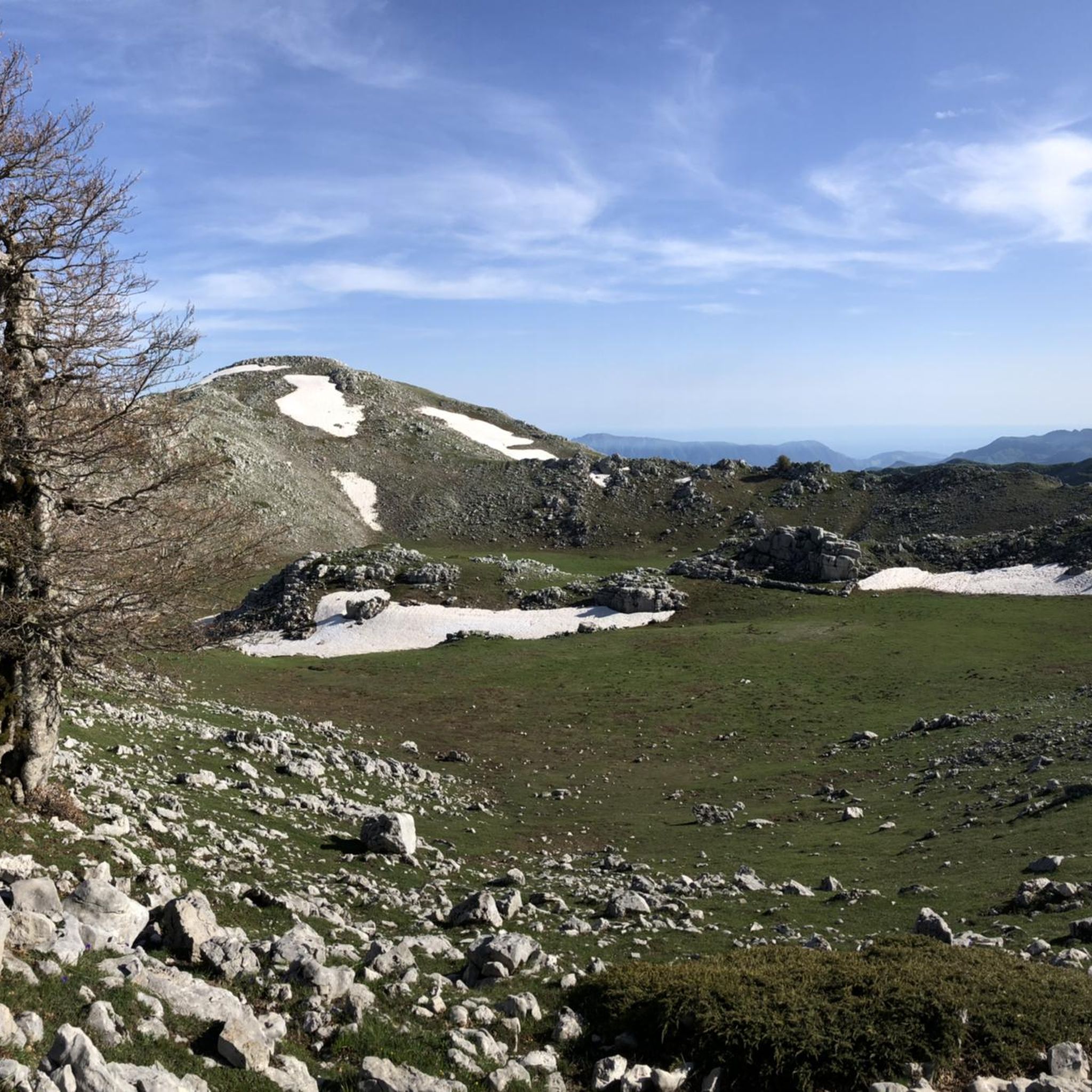
We could not miss the climb to the highest peak of Campania Monte Cervati, 1899 meters above sea level, located in the center-south of the Cilento and Vallo di Diano National Park, in the large forest area of Pruno
Translated by Google •
Tip by
Sign up for free to discover even more attractions around Piaggine.
Sign up for free
Already have an account?
Start today with a free account
Your next adventure awaits.
Login or Signup
Other adventures around Piaggine

Tips from the Community

The Sanctuary of the Madonna della Neve (or Madonna del Cervato) is a suggestive place of worship located at about 1850 meters above sea level on Mount Cervati, in the Cilento National Park, near Sanza. Characterized by a chapel nestled in a natural cave, it is a destination for pilgrimages, especially between the end of July and August 5th, and represents one of the highest and most fascinating peaks in Campania. https://blogcamminarenellastoria.wordpress.com/2022/12/14/il-monte-cervati-e-la-madonna-della-neve/
1
0
Monte Cervati is a mountain in the Lucanian Apennines, 1899 m above sea level, located in the province of Salerno. It is the highest peak in Cilento, as well as one of the highest in Campania by altitude .... https://it.wikipedia.org/wiki/Monte_Cervati
1
0

Valuable
0
0

A brief explanation of the patronage of 'MARY OF THE SNOW', which visitors don't encounter very often: This takes us far back in church history to the fourth/fifth century, and geographically to Rome. On August 5, 363, the so-called "miracle of the snow" occurred at the site where the Basilica of Santa Maria Maggiore now stands. That is to say, on that day, in the middle of summer, snow lay there in the morning because the Virgin Mary wished to have a church dedicated to her built on that spot. She conveyed this wish in a vision to a wealthy couple – who subsequently initiated and financed the construction – and to the Bishop of Rome, who at that time was Pope Liberius. The Roman church holds the rank of a patriarchal basilica (papal basilica) and is the origin of all churches and chapels with this patronage. In the liturgical calendar of the Catholic Church, August 5th, the feast day of the church's consecration (in the year 432 by Pope Sixtus III), is an optional memorial. Santa Maria Maggiore in Rome was the focus of international attention last year because Pope Francis, who died on Easter Monday 2025, had chosen this church as his final resting place.
0
0
Here is the info on the Vallivona Affondator: https://www.archeotrekking.net/it/scheda_singola/188-l-affondamento-di-vallivona.html
3
0
Here is the info: https://drive.google.com/file/d/1UlQWiWK45afivZjuXxtYBWe77kqg_A5U/view?usp=drive_link
3
0

We pedal in the middle of thick vegetation that gives us a little coolness even on hot summer days. At this point we cross the Calore river thanks to an ancient Roman bridge.
0
1

Monte Cervati with its 1899 meters is the highest peak in Cilento and the second in Campania. It can be reached by paths that start from Sanza, Piaggine or from Monte San Giacomo and offers 360-degree views of the Cilento National Park, Vallo di Diano and Alburni.
6
0
Frequently Asked Questions
What natural features can I explore around Piaggine?
Piaggine is nestled within the Cilento National Park, offering diverse natural landscapes. You can explore the dramatic Calore Gorges with their scenic paths and natural pools, or visit the unique Vallivona Sinkhole, a significant karst formation. The area is also dominated by Mount Cervati, Campania's highest peak, and features dense forests like Cervatello and Mercori woods.
Are there opportunities for hiking or cycling near Piaggine's attractions?
Yes, the region around Piaggine is excellent for outdoor activities. You can find numerous routes for cycling, mountain biking, and road cycling. For detailed routes, explore the Cycling around Piaggine guide, the MTB Trails around Piaggine guide, and the Road Cycling Routes around Piaggine guide. The Calore Gorges also offer an undemanding trekking route along the river.
What historical and cultural sites can I visit in Piaggine?
Piaggine boasts a rich history. You can explore several historic churches, including the Church of San Nicola and the Church of the Madonna del Carmine, both dating back to the 1500s. Stroll through the oldest areas like Ponte S. Giuseppe to admire ancient palaces with elegant stone portals, such as Palazzo Vairo. Don't miss the well-preserved Medieval Bridge of Magliano Nuovo over the Calore River, a significant landmark in the region.
Are there any notable religious sites around Piaggine?
Beyond the village churches, a prominent religious site is the Sanctuary of Madonna della Neve, located near the summit of Mount Cervati. This pilgrimage destination, also known as Madonna del Cervato, is set in a natural grotto and holds celebrations on August 5th. Another chapel, the Church of Madonna del Vivo, opens on Mount Vivo for the celebration of Our Lady of the Assumption on August 15th.
Where can I find scenic viewpoints around Piaggine?
For breathtaking views, head towards Mount Cervati, the highest peak in Campania. The Sanctuary of Madonna della Neve offers panoramic vistas from its high-altitude location. Additionally, paths leading to Mount Vivo, Mottola, and Cerasulo provide excellent opportunities for scenic overlooks of the surrounding Cilento National Park.
Can I go wild swimming in the area?
Yes, the Calore Lucano River offers spots for refreshing dips. The Calore Gorges feature natural pools along its paths. A particularly inviting spot is The Remolino of Felitto, where the dam of an old hydroelectric plant has created a natural pool of cool water, perfect for a break.
What is the highest mountain near Piaggine?
The highest peak near Piaggine is Mount Cervati, standing at 1899 meters. It is the highest mountain in Campania and is characterized by ancient beech woods and diverse wildlife, including wolves and royal eagles. The area around Mount Cervati also features the Sanctuary of Madonna della Neve.
Are there any museums in Piaggine?
Yes, Piaggine is home to the Museo della Montagna (Mountain Museum). This naturalistic museum showcases botanic and faunistic finds, including embalmed birds and medicinal plants native to the Cilento region, offering insights into the local environment.
What is the best time of year to visit Piaggine?
The best time to visit Piaggine largely depends on your interests. For outdoor activities like hiking and cycling, spring and autumn offer pleasant temperatures. If you're interested in local religious traditions, August is significant, with pilgrimages to the Church of Madonna del Vivo on August 15th and celebrations for the Madonna della Neve on August 5th.
What are some unique geological formations to see?
The region's karst morphology is evident in formations like the Vallivona Sinkhole in Sanza, a crossing cave about 500 meters long that showcases the geological nature of the Cervati massif. The area around the Sanctuary of Madonna della Neve also features high jagged rock walls, sinkholes, and caves.
What kind of architecture can I expect to see in Piaggine?
Piaggine's architecture reflects its long history. You'll find ancient palaces with elegant stone portals, courtyards, and coats of arms in the oldest parts of the village, such as Ponte S. Giuseppe, Tempa, Coste, and S. Anna. These courtyards often feature cobblestone paving and water wells. The historic churches also display centuries of architectural styles and renovations.
Where does the Calore Lucano River originate?
The Calore Lucano River, a significant natural feature of the area, originates from Mount Cervati. Piaggine is situated on slopes near this river, which flows through the dramatic Calore Gorges and is known for its majestic waterfall, considered one of the most photographed in Italy.
Most popular attractions around Piaggine

Get inspired with the komoot mobile app


Explore more
Still not found the Highlight you’re looking for? See guides of the top attractions in other regions:
