Attractions and Places To See around Villata - Top 20
Attractions and places to see around Villata include a mix of historical sites and natural areas within the Vercelli province of Italy. The region features the Lame del Sesia Natural Park, known for its river environment and diverse ecosystems. Villata is also situated near historical settlements and religious buildings, offering insights into the area's past. This area provides opportunities for exploring both natural landscapes and cultural landmarks.
Best attractions and places to see around Villata
- The most popular attraction is Lame del Sesia Natural Park, a natural park that extends over approximately 900 hectares along the Sesia river. This park features a river environment with meanders, bodies of water, woods, and gravels.
- Another must-see spot is Hospitale Sancti Eusebi, a facility that serves as a welcoming place for pilgrims on the Via Francigena. This hostel is open all year for pedestrians and cyclists, offering accommodation in Vercelli.
- Visitors also love Olcenengo, an ancient village surrounded by irrigation canals. The town features a public fountain, a church, and parts of a castle dating from 1100.
- Villata is known for its natural parks, historical settlements, and religious buildings. The area offers a variety of attractions to see and explore, from natural oases to historical pilgrim hostels.
- The attractions around Villata are appreciated by the komoot community, with 22 photos and 26 upvotes.
Last updated: May 11, 2026
Lame del Sesia Natural Park
Highlight • Natural
Translated by Google •
Tip by

Hospitale Sancti Eusebi
Highlight • Rest Area
Translated by Google •
Tip by

Sign up now to discover places like this
Get recommendations on the best single tracks, peaks, & plenty of other exciting outdoor places.
Sign up for free
Basilica of Saint Andrew of Vercelli
Highlight • Religious Site
Translated by Google •
Tip by
Olcenengo
Highlight • Settlement
Agriculture is the main economic sector of Olcenengo, but in the shadow of the large farms, craft businesses related to the rice sector have developed: mechanical workshops, wooden products, pig farms with their own production of typical sausages, small family-run rice mills .
The town hall, the small square with the fountain of the "sgorgia" and the "frog", the church are the most characteristic points of the city. Only a few parts of the castle, dating from 1100, are still used as a farm. The town hall is a compact building rising over two floors. The public fountain in Piazza Paietta has become the symbol of the city: a frog at the edge of the pool sprays a stream of water at a "sgorgia" (blue heron), the typical bird of the rice fields. viefrancigene.org/it/resource/poi/olcenengo
Translated by Google •
Tip by
Abbey of San Nazzaro
Highlight • Religious Site
Translated by Google •
Tip by

Sign up for free to discover even more attractions around Villata.
Sign up for free
Already have an account?
Start today with a free account
Your next adventure awaits.
Login or Signup



Tips from the Community

The Abbey of San Nazzaro Sesia is a complex made up of structures from different historical periods. The oldest parts are the bell tower, built as a watchtower, and the two wings of the narthex preceding the façade, which are what remains of the quadriportico built around 1150, shortly after the abbey itself was founded (1040). The cuts resulting from the demolition of the other two sides are still clearly visible today. The narthex is almost entirely made up of stones from the Sesia river arranged in a herringbone pattern to increase its solidity. The mortar itself was obtained from materials found on site, near the Sesia river. It was probably originally used as a “hospitalis”, that is, it served as a place of rest and refreshment for travellers and pilgrims, who we know were very numerous in medieval times, and it also had the function of hosting catechumens.
0
0


Hospitale Sancti Eusebi in Vercelli, Italy, is a welcoming place for pilgrims on the Via Francigena. This hostel is open all year round for pedestrians and cyclists. Please note that there is no reception for pilgrims on horseback. For group reception, you must book in advance. The opening hours are from 14:00 to 22:00. In the winter months (October-February) hot water is available for showers and heating is provided on one floor of the accommodation (kitchen + room with 6 beds). It is recommended to bring a warm sleeping bag. Within a radius of 200 meters you will find a church, a bus stop, an ATM, a bar/restaurant, a supermarket, a pharmacy and a residential area. Within 1 kilometer you will find the train station and the hospital. Smoking is prohibited throughout the property and pets are not allowed. The reception is only open during fixed hours. For direct contact you should look up the contact details on the internet. The Hospitale Sancti Eusebi offers a simple and welcoming place for pilgrims following the Via Francigena.
8
0
This beautiful church was built in 1220, during a prosperous period. The style is a combination of Northern Gothic (vertical towers and octagonal bell tower) and the typical style from the Po Valley (triangular gable, arches and use of brick). The facade, a colorful whole of stone and marble, is flanked by high towers and has three vaulted porches; The tympanums are probably by sculptor Benedetto Antelami. The very massive bell tower (right) dates from the 15th century. The sober interior with three naves has a choir with wooden inlay and the funerary monument (14th century) of Tomasso Gallo, first abbot of the basilica (second chapel in the right transept). The left aisle leads to the monastery buildings and to the cloister, which offers beautiful views of the complex.
7
0
The Hospitale Sancti Eusebi in Vercelli, Italy, is a welcoming place for pilgrims on the Via Francigena. This hostel is open all year round to pedestrians and cyclists. Please note that there is no reception for pilgrims on horseback. You must book in advance for group reception. Opening hours are from 2:00 PM to 10:00 PM. In the winter months (October-February) hot water is available for showers and heating is provided on one floor of the accommodation (kitchen + room with 6 beds). It is recommended to bring a warm sleeping bag. Within a radius of 200 meters you will find a church, a bus stop, an ATM, a bar/restaurant, a supermarket, a pharmacy and an inhabited area. The train station and hospital are within 1 kilometer. Smoking is prohibited throughout the property and pets are not allowed. The reception is only open at fixed times. For direct contact you have to look for the contact details on the internet. The Hospitale Sancti Eusebi offers a simple and welcoming place for pilgrims following the Via Francigena
1
0
The ancient village of Olcenengo is surrounded by the slow flow of its irrigation canals and shrouded in winter fog, dense and impenetrable guardian of landscapes with an ancient flavor. Agriculture is the main economic sector of Olcenengo, but in the shadow of the large farms, craft businesses related to the rice sector have developed: mechanical workshops, wooden products, pig farms with their own production of typical sausages, small family-run rice mills . The town hall, the small square with the fountain of the "sgorgia" and the "frog", the church are the most characteristic points of the city. Only a few parts of the castle, dating from 1100, are still used as a farm. The town hall is a compact building rising over two floors. The public fountain in Piazza Paietta has become the symbol of the city: a frog at the edge of the pool sprays a stream of water at a "sgorgia" (blue heron), the typical bird of the rice fields. https://www.viefrancigene.org/it/resource/poi/olcenengo/
7
0

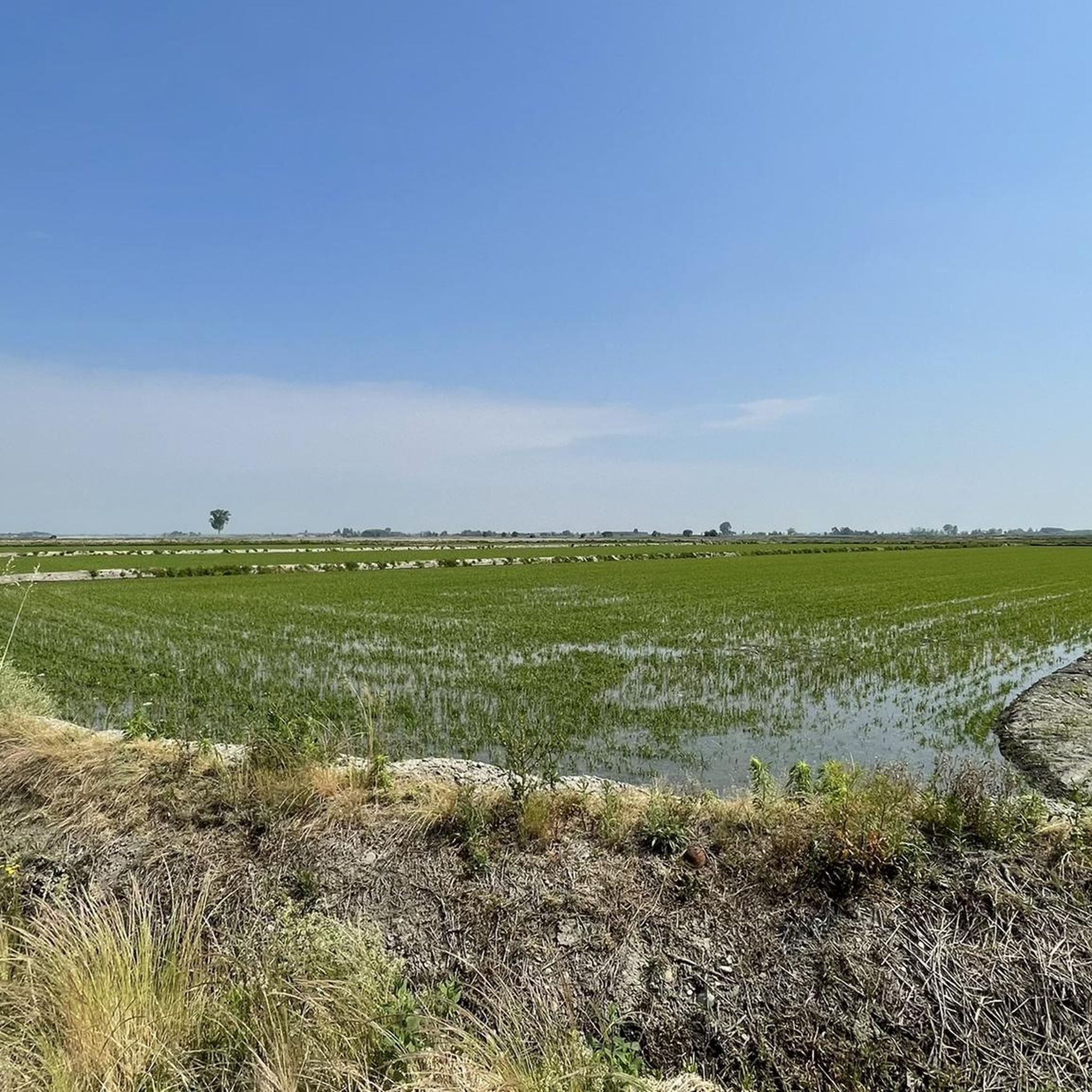
The Lame del Sesia park extends over an area of approximately 900 hectares along a stretch of almost 8 kilometers of the Sesia river, located between the provinces of Novara and Vercelli. The river environment, enriched by blades, meanders, bodies of water, woods, gravels and sands, constitutes an important natural oasis in stark contrast to the surrounding landscape characterized by rice monoculture.
2
0

In addition to the Basilica of Sant' Andrea and the Cathedral of Sant' Eusebio, also interesting are the Avogadro Tower, Piazza Cavour with its porticoes, the statue of Cavour and the nearby Torre dell'Angelo visible from the square.
0
0
Frequently Asked Questions
What historical sites can I visit near Villata?
The region around Villata is rich in history. You can explore the magnificent medieval fortress, the Castello di Villalta, which dates back to the year 1000 and is a significant landmark in Friuli. Additionally, the ancient village of Olcenengo features parts of a castle from 1100. Other notable historical religious buildings include the Basilica of Saint Andrew of Vercelli and the Abbey of San Nazzaro.
What is the significance of the Castello di Villalta?
The Castello di Villalta is considered the most significant medieval castle in Friuli, strategically located on the first morainic ridge overlooking the plain. Its history spans over a millennium, with Roman foundations and continuous rebuilding between 1200 and 1400. It served as a crucial defensive structure and was declared a national monument in 1974, showcasing monumental architecture, double perimeter walls, and defense towers.
Are there natural attractions around Villata?
Yes, the primary natural attraction is the Lame del Sesia Natural Park. This park extends over approximately 900 hectares along the Sesia river, featuring a diverse river environment with meanders, bodies of water, woods, and gravels. It stands as an important natural oasis amidst the surrounding rice monoculture.
Are there opportunities for wildlife viewing in the area?
The Lame del Sesia Natural Park is described as an important natural oasis with diverse ecosystems, making it a good spot for observing local wildlife, particularly birds and other riverine species. The park's environment, with its blades, meanders, and woods, supports a variety of flora and fauna.
What outdoor activities can I do near Villata?
Near Villata, you can enjoy various outdoor activities. There are options for hiking, gravel biking, and running. These activities allow you to explore the natural landscapes and historical areas surrounding the town.
Are there hiking trails suitable for beginners around Villata?
Yes, there are easy hiking trails available. For instance, you can find routes like the 'Former Church of Saint Victor – Fountain loop from Vercelli' (5.7 km) and 'Hiking loop from Albano Vercellese' (7.5 km). You can find more details on these and other trails in the Hiking around Villata guide.
Where can I go for gravel biking near Villata?
For gravel biking, you can explore several routes, including the 'Cathedral of Saint Eusebius – Olcenengo loop from Vercelli' (61.8 km) or the 'Elvo Castle – Vercelli Tree-Lined Cycle Path loop from Vercelli' (42.6 km). More options are available in the Gravel biking around Villata guide.
Is there a place for pilgrims near Villata?
Yes, the Hospitale Sancti Eusebi in Vercelli serves as a welcoming place for pilgrims on the Via Francigena. This hostel is open year-round for pedestrians and cyclists, offering accommodation and essential services. It's recommended to book in advance for groups.
What is Olcenengo known for?
Olcenengo is an ancient village characterized by its irrigation canals and an 'ancient flavor.' It features a public fountain with a frog sculpture, a church, and remnants of a castle dating back to 1100. Agriculture, particularly rice-related businesses, is central to its economy.
Are there family-friendly attractions around Villata?
Yes, several attractions are suitable for families. The Lame del Sesia Natural Park offers a natural environment for exploration. Historical sites like the village of Olcenengo and the Basilica of Saint Andrew of Vercelli are also considered family-friendly, offering educational and engaging experiences.
What is the best time of year for outdoor activities around Villata?
The use of the Lame del Sesia Natural Park is possible throughout the year. Generally, spring and autumn offer pleasant temperatures for hiking, biking, and running, avoiding the heat of summer and potential chill of winter. However, with appropriate gear, outdoor activities can be enjoyed in most seasons.
Can I visit ancient religious buildings in the area?
Absolutely. The Basilica of Saint Andrew of Vercelli, built in 1220, is a significant example of Romanesque-Gothic architecture and one of the earliest Gothic monuments in Italy. Another important site is the Abbey of San Nazzaro, a complex with structures from various historical periods, including a bell tower and narthex dating back to 1150.
Most popular routes around Villata

Get inspired with the komoot mobile app


Explore more
Still not found the Highlight you’re looking for? See guides of the top attractions in other regions:
