Attractions and Places To See around Poppi - Top 20
Best attractions and places to see around Poppi include a rich tapestry of historical landmarks, cultural sites, and natural beauty within Tuscany's Casentino Valley. This medieval village offers a quintessential Tuscan experience, featuring well-preserved architecture and significant natural areas. Visitors can explore ancient forests, historical sanctuaries, and prominent mountain peaks.
Best attractions and places to see around Poppi
- The most popular attractions is La Verna Sanctuary, a religious building and historical site where Saint Francis received the stigmata. The complex includes the small church of Santa Maria degli Angeli and the Chapel of the Sacred Stigmata.
- Another must-see spot is Mount Falco, a summit and natural monument. At 1,658 meters, it is the highest peak in the Tuscan-Romagnolo Apennines and is known as the "Roof of the Casentinesi Forests."
- Visitors also love Pratomagno Summit Cross, a summit with a distinctive steel truss cross. Inaugurated in 1928, it offers views of the Valdarnese and Casentinese fronts.
- Poppi is known for its historical sites, religious buildings, and natural summits. The area provides a variety of attractions to see and explore, from medieval castles to vast national parks.
- The attractions around Poppi are appreciated by the komoot community, with more than 460 upvotes and over 480 photos shared by visitors.
Last updated: July 6, 2026
La Verna Sanctuary
Highlight • Religious Site
Translated by Google •
Tip by

Camaldoli Hermitage
Highlight • Religious Site
Translated by Google •
Tip by
Sign up now to discover places like this
Get recommendations on the best single tracks, peaks, & plenty of other exciting outdoor places.
Sign up for free
Mount Falco
Highlight • Summit
Translated by Google •
Tip by

Pratomagno Summit Cross
Highlight • Summit
The inauguration took place in 1928; the idea for its construction had come up two years earlier as part of the celebrations of the 700th anniversary of the death of Saint Francis of Assisi. In the almost 100 years of its existence, the cross has required repairs/maintenance several times, and so it is to be hoped that it will continue to crown the summit and serve as a widely visible sign of blessing for the country and its people.
Translated by Google •
Tip by

Fangacci Hut
Highlight • Mountain Hut
Translated by Google •
Tip by

Sign up for free to discover even more attractions around Poppi.
Sign up for free
Already have an account?
Start today with a free account
Your next adventure awaits.
Login or Signup



Tips from the Community

A particularly beautiful destination in winter 🥰
1
0

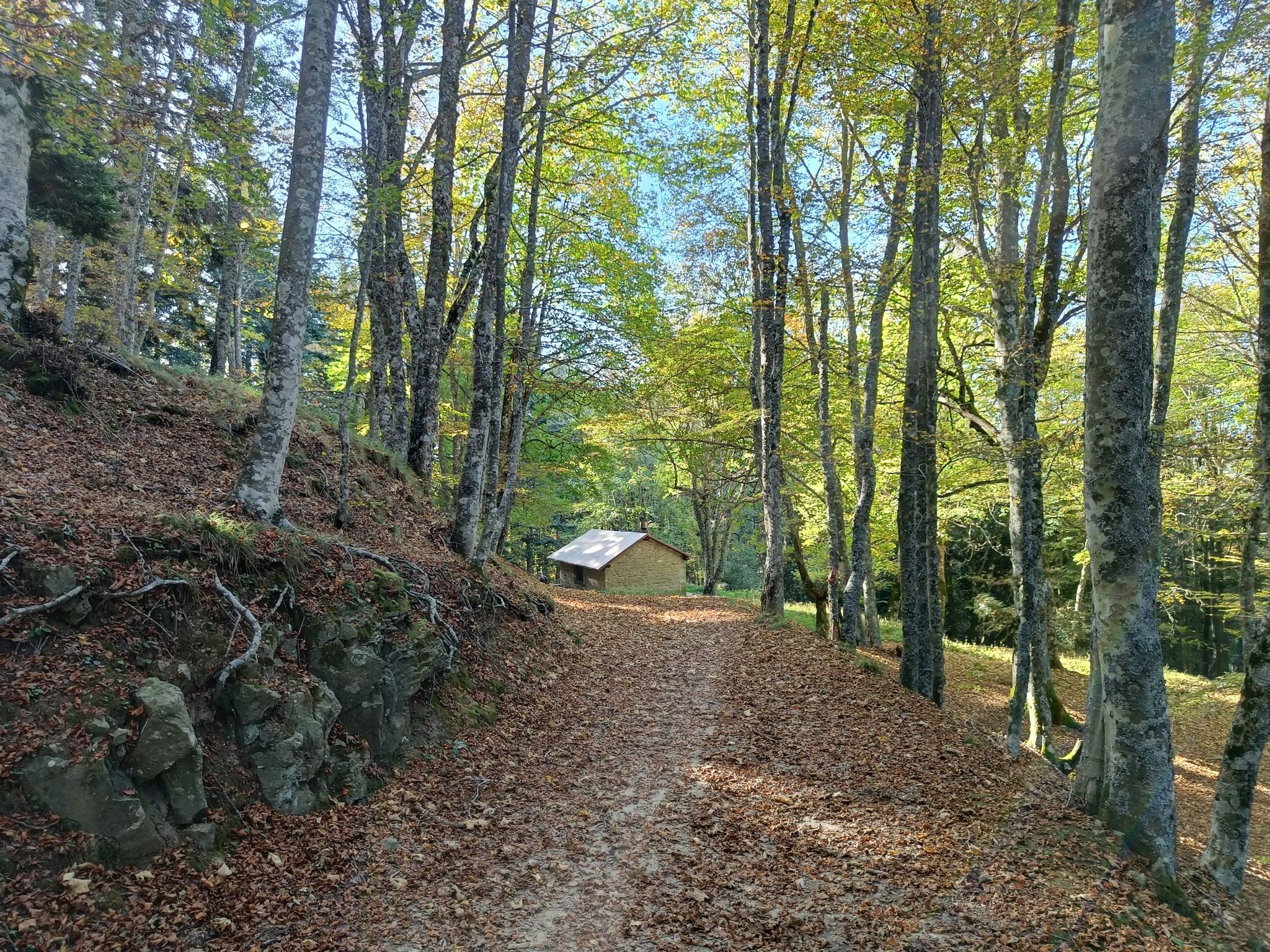
The refuge, not managed, is located at an altitude of 1234 m. above sea level inside the Casentinesi Forest National Park, along the road that from the Camaldoli Hermitage, passing through Prato alla Penna, leads to Badia a Prataglia.
4
0

The place where the sanctuary is located today was donated to Saint Francis by Count Orlando Cattani of Chiusi in 1213. First a hermitage was founded which became a recurring destination for Francis and his disciples for periods of meditation and prayer. Francis stayed here for the last time in 1224. It was precisely on the occasion of that last visit that the Saint received the stigmata. The complex includes the small church of Santa Maria degli Angeli built by Francis himself, the corridor and the Chapel of the Sacred Stigmata and the Basilica dedicated to Santa Maria Assunta where you can admire the Annunciation by the sculptor Andrea della Robbia. The sanctuary is surrounded by the monumental forest of La Verna, a forest of fir and beech trees cared for over the centuries by the Franciscan friars.
4
0
The hermitage of Camaldoli was founded around 1025 AD by the hermit friar Romualdo, today San Romualdo. At the beginning the structure had five cells for hermits and a church for common prayer. Today there are twenty cells and the most "recent" dates back to 1743. Over the centuries, other common structures have been built: the refectory, the library and the guesthouse. All the cells are built following the model of the first cell of San Romualdo, still visible although incorporated by the library: it is a small house with a garden surrounded by walls. The internal spaces of the hermitage can only be visited during guided tours; the timetables can be found on the Camaldoli community website.
1
1

Mount Falco stands on the border between Arezzo and Florence and is also known as the "Roof of the Casentinesi Forests". With its 1,658 meters of altitude, it is the highest peak in the Tuscan-Romagnolo Apennines, exceeding the adjacent Mount Falterona by just four metres. To protect the alpine and subalpine vegetation present here, which is rare for these areas, an integral nature reserve has been established in this area.
3
0

The Holy Mountain of La Verna, as “the raw rock between the Tiber and the Arno…” is called, is the place where the “stigmatized” Francis wanted to relive the same torments that Christ suffered on Calvary. The monastery is located on the Alverna elevation on the southwest slope of Monte Penna north of Chiusi della Verna at 1,128 meters. Places worth seeing in this place of pilgrimage are the Basilica of St. Mary, Queen of Angels (S. Maria degli Angeli) and the chapel of the same name, the so-called “Outstanding Rock” (Sasso Spicco), the Corridor of the Stigmata and the Chapel of the Stigmata (Cappella delle Sacrestimmate).
4
1
Here you find yourself at the foot of the rock, which is cut vertically, and look up to the sky to admire the magnificence of the rock! The path from Rimbocci up to La Verna is quite strenuous because you have to overcome a large difference in altitude (a good 600m) in just a few km. It leads to an old donkey path, on which you continue uphill with a steep incline to the monastery.
4
0

Very windy route, organize yourself with appropriate clothing.
2
1
Frequently Asked Questions
What historical landmarks can I explore in Poppi and its surroundings?
Poppi is rich in history. The most prominent landmark is the Poppi Castle (Castello dei Conti Guidi), a well-preserved 13th-century fortress offering panoramic views and housing 14th-century frescoes by Taddeo Gaddi. You can also visit the La Verna Sanctuary, where St. Francis of Assisi received the stigmata, and the Camaldoli Hermitage, an 11th-century spiritual retreat nestled in ancient forests.
Are there any significant natural attractions or viewpoints near Poppi?
Absolutely. Poppi is a gateway to the Casentino Forests, Mount Falterona and Campigna National Park, known for its ancient forests and diverse wildlife. You can visit Mount Falco, the highest peak in the Tuscan-Romagnolo Apennines, offering stunning vistas. Another excellent viewpoint is the Pratomagno Summit Cross, which provides expansive views of the Valdarnese and Casentinese fronts.
What kind of outdoor activities can I do around Poppi?
The area around Poppi is ideal for outdoor enthusiasts. You can explore numerous hiking trails, including challenging routes like the 'Tour of Monte Penna from Passo Fangacci to Foresta della Lama' or 'Sentiero Italia - Stage L05'. For cyclists, there are extensive MTB and gravel biking routes, such as the 'Arno River Cycle Path – Camaldoli Monastery loop from Poppi'. You can find more details on these activities in the hiking guide, MTB trails guide, and gravel biking guide for Poppi.
Are there family-friendly attractions or activities in the Poppi area?
Yes, families can enjoy the natural beauty of the region. The Parco Zoo della Fauna Europea, covering 50 hectares, is home to various European animals like chamois, otters, and bears, making it a great educational and fun outing for children. Exploring the historic center of Poppi with its medieval streets and the impressive Poppi Castle can also be an engaging experience for all ages.
What is the best time of year to visit Poppi for outdoor activities?
The best time to visit Poppi for outdoor activities is generally during spring (April-May) and autumn (September-October) when the weather is mild and pleasant for hiking and cycling. Summer can be warm, but the higher elevations in the Casentino Forests offer cooler temperatures. Winter provides a different charm, with opportunities for winter walking routes, especially in the national park.
Can I visit the Poppi Castle, and what are its main features?
Yes, the Poppi Castle (Castello dei Conti Guidi) is open to visitors. Its main features include a beautiful courtyard with a splendid staircase, the Chapel of Conte Guidi adorned with 14th-century frescoes by Taddeo Gaddi, and the Libreria Rilliana, which houses thousands of medieval manuscripts. The castle also provides magnificent panoramic views of the Casentino Valley.
What is the significance of the La Verna Sanctuary?
The La Verna Sanctuary is a deeply spiritual and historical site. It is famously where Saint Francis of Assisi received the stigmata in 1224. The complex includes the small church of Santa Maria degli Angeli, built by Francis himself, and the Chapel of the Sacred Stigmata. It's a place of meditation and prayer, surrounded by a monumental forest.
Are there any lesser-known historical sites worth visiting in Poppi?
Beyond the main castle, Poppi's historic center itself is a gem with well-preserved medieval architecture and charming piazzas. You can also discover the hexagonal Oratory of Madonna del Morbo, built in the 17th century, and the 11th-century Abbey of San Fedele, which features an evocative crypt and notable artworks like the 'Madonna del Ginocchio'.
Where can I find accommodation near Poppi's main attractions?
Poppi offers various accommodation options, from charming guesthouses within the historic center to agriturismos in the surrounding countryside. Many accommodations are conveniently located near the Poppi Castle, providing easy access to the village's attractions and a base for exploring the Casentino Valley.
What is the Casentino Valley known for?
The Casentino Valley, where Poppi is situated, is renowned for its picturesque landscapes, tranquil atmosphere, and rich historical and natural heritage. It's characterized by ancient forests, rolling hills, and the Arno River, which originates from Mount Falterona. The valley is perfect for those seeking a blend of cultural exploration and outdoor adventure.
Is there a place to eat or get coffee near the hiking trails or main attractions?
Yes, Poppi's historic center has several cafes and restaurants where you can enjoy local Tuscan cuisine and coffee. For those exploring the national park, the Fangacci Hut, located within the Casentinesi Forest National Park, offers a place to rest and is sometimes managed, providing basic amenities for hikers.
What makes the Camaldoli Hermitage unique?
The Camaldoli Hermitage, founded by Saint Romualdo in the early 11th century, is unique for its blend of monastic life and natural beauty. It's immersed in a centuries-old beech forest and features a distinctive layout of individual cells for hermits, a church, and a guesthouse. The internal spaces can be visited through guided tours, offering a glimpse into its ancient traditions.
Most popular attractions around Poppi

Get inspired with the komoot mobile app


Explore more
Still not found the Highlight you’re looking for? See guides of the top attractions in other regions:
