The best road cycling routes around Murlo
4.6
(225)
12,004
riders
19
rides
Road cycling routes around Murlo traverse a diverse landscape of rolling hills, wooded areas, and historic "white roads" in the heart of Tuscany. The terrain transitions from high hills towards the Merse river valley to softer hills typical of the Crete Senesi on the Arbia river side. This varied environment provides engaging experiences for road cyclists, featuring both paved and unpaved surfaces. The region's municipal and provincial roads are generally not busy, ensuring a more enjoyable experience.
Best road cycling routes around Murlo
- The most popular road cycling route is Beautiful view over the Crete Senesi region! – Asciano Historic Center loop from Murlo, a 36.5 miles (58.7 km) trail that takes 2 hours 51 minutes to complete. This moderate route offers views over the Crete Senesi region.
- Another top favourite among local road cyclists is San Fabiano Countryside View – Grancia di Cuna loop from Murlo, a moderate 28.4 miles (45.7 km) path. This route provides scenic countryside views around San Fabiano.
- Local road cyclists also love the Castello di Bibbiano – Montalcino loop from Murlo, a 32.6 miles (52.5 km) trail leading through the Montalcino area, often completed in about 2 hours 56 minutes.
- Road cycling around Murlo is defined by rolling hills, wooded areas, and historic "white roads." The network offers options for different ability levels, from moderate rides to more difficult routes with significant elevation gain.
- The routes in Murlo are highly rated by the komoot community with an average score of 4.7 stars from over 150 reviews. More than 4000 road cyclists have used komoot to explore Murlo's varied terrain.
Last updated: May 12, 2026
4.8
(13)
244
riders
Moderate road ride. Good fitness required. Some segments of this route may be unpaved and difficult to ride.
5.0
(5)
92
riders
45.8km
02:21
530m
530m
Moderate road ride. Good fitness required. Some segments of this route may be unpaved and difficult to ride.

Sign up for free
5.0
(5)
76
riders
53.0km
02:58
880m
880m
Moderate road ride. Good fitness required. Some segments of this route may be unpaved and difficult to ride.
3.0
(1)
39
riders
Moderate road ride. Good fitness required. Mostly well-paved surfaces and easy to ride.
41
riders
98.0km
05:13
1,580m
1,580m
Hard road ride. Very good fitness required. Some segments of this route may be unpaved and difficult to ride.
Get access to more routes and recommendations from other explorers.
Sign up for free
Already have an account?
Our route recommendations are based on thousands of hikes, rides, and runs completed by other people on komoot.
Start today with a free account
Your next adventure awaits.
Login or Signup

Tips from the Community

Porta Romana is one of the ancient gates in the walls of Siena, located on the route of the ancient Via Cassia. It was built in 1327 - 1328 by Agnolo di Ventura and Agostino di Giovanni, equipped with battlements and a defensive wall. In 1417, Taddeo di Bartolo was commissioned to paint the fresco that was to adorn it with a depiction of the Virgin, like the other city gates, to implore divine protection for the city. In 1978, the frescoes, due to advanced deterioration, were detached and transferred to the Basilica of San Francesco. However, there is a Roman inscription at the Porta Romana!The inscription was written on a travertine tablet and, based on its graphic characters and content, can be dated to the Augustan period (27 BC – 0) saying "Silvanus sacr(um) / C. Victricius / Memor VIvir / [a] ugustalis posuit" = Caio Victricio Memore Seviro augustale dedicated a small temple to Silvanus.
0
0

In Siena, as we know, your eye always falls there, on the shell-shaped Campo or the striped marble of the Duomo. And rightly so. But then there are those places that speak to you in a different voice, more raspy and sincere. Porta Romana is one of them. Let's be clear: this isn't a small archway placed there for show. This is a beast of brick and stone, a fortress planted to the south to tell those arriving from Rome: "Be careful, you're entering Siena." It's massive, imposing, it makes you feel small and immediately reminds you that this city was once a serious thing, a power that had to be defended. It has none of the frills of other monuments; it gets straight to the point, and for me, its charm begins right there.
1
0

Details about the Romanesque church: https://it.wikipedia.org/wiki/Pieve_di_San_Giovanni_Battista_(Ponte_allo_Spino)
0
0
beautiful Romanesque church with arched courtyard, half cloister (?) unfortunately closed
0
0
Great Romanesque church with arcade, unfortunately closed.
0
0

The name is due to the bridge that crosses the Arbia stream. The place has been documented since the early Middle Ages as it lies along the route of the ancient Via Francigena. Particularly in the itinerary of Sigeric, Archbishop of Canterbury, the place represented the fourteenth stage (Submansio) and was then called Arbia. The bridge that gives its name to the city was built by the municipality of Siena in 1388 and rebuilt in 1656 under Prince Mattia de' Medici, governor of Siena.
1
0
The Porta Romana, also known as Porta Nuova, is one of the gates in the medieval walls of Siena. The gate was built in 1327-1328. It has a complex structure with two separate portals separated by a small courtyard, and the inner gate is higher than the outer one. The large arches are covered with travertine marble. In 1417, Taddeo di Bartolo was commissioned to paint the Madonna icon on the inner portal, dedicated to the protection of the city. The painting was further updated by Sassetta and later Sano di Pietro who completed it in 1466.
4
0

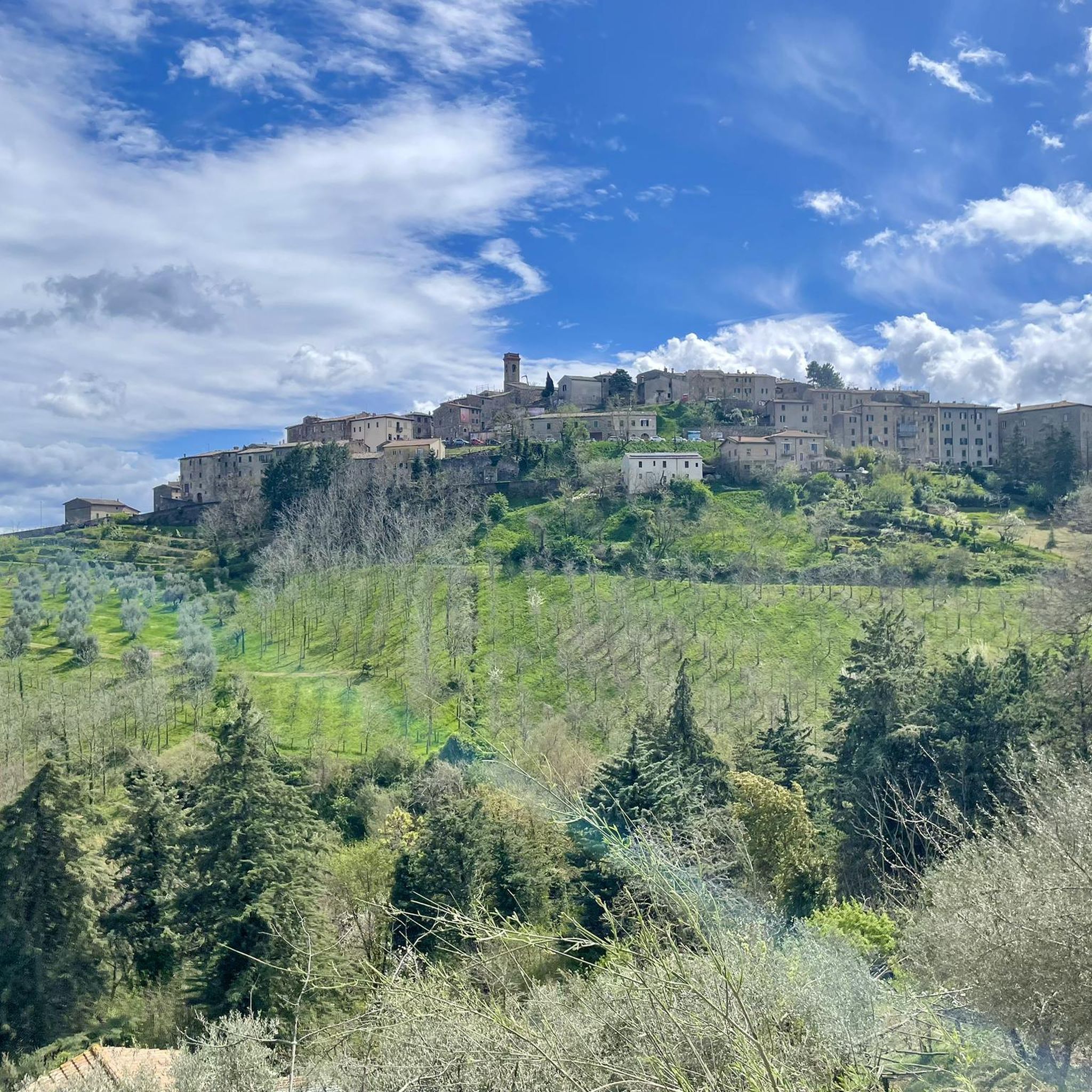
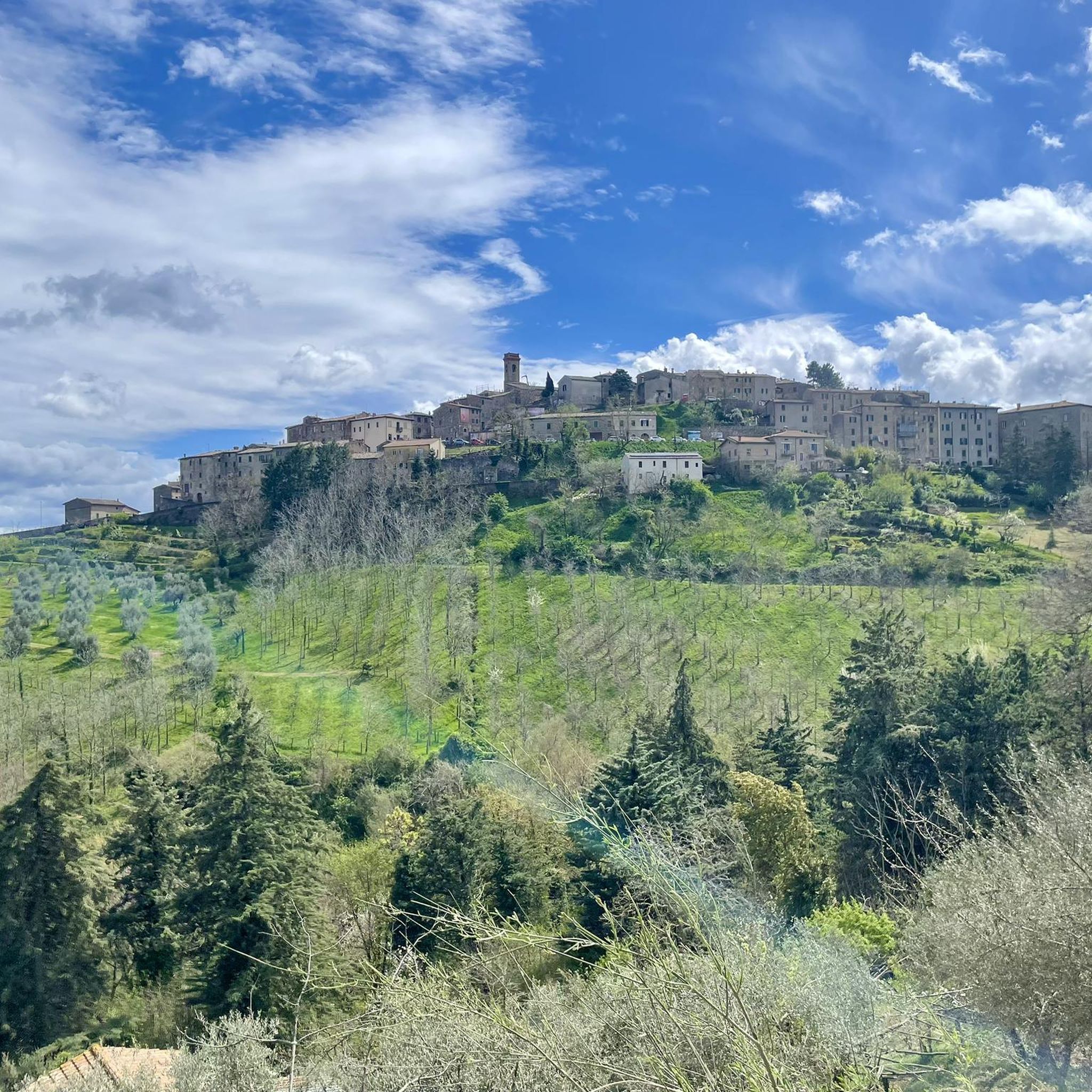
Beautiful town, with a characteristic center and an ideal point from which to start your cycling adventures on the dirt roads
2
0
Frequently Asked Questions
How many road cycling routes are available around Murlo?
There are over 20 road cycling routes around Murlo, offering a diverse range of experiences. These routes are highly rated by the komoot community, with an average score of 4.7 stars.
What kind of terrain can I expect on road cycling routes in Murlo?
Road cycling in Murlo features a varied landscape of rolling hills, wooded areas, and historic 'white roads' (strade bianche). You'll encounter a mix of paved and unpaved surfaces, with terrain transitioning from higher hills towards the Merse river valley to softer hills typical of the Crete Senesi on the Arbia river side.
Are there routes suitable for beginners or less experienced road cyclists?
Yes, Murlo offers routes suitable for various fitness levels. While many routes involve significant elevation, there are options that are less demanding. For example, the San Fabiano Countryside View – Grancia di Cuna loop from Murlo is a moderate 28.4-mile (45.7 km) path with a manageable elevation gain, providing scenic countryside views.
What are some challenging road cycling routes for experienced riders?
Experienced riders seeking a challenge will find plenty of options. The region is integrated into iconic circuits like the permanent Eroica route and includes sections of the famous Strade Bianche. For a demanding ride, consider the San Fabiano Countryside View – Porta Romana, Siena loop from Murlo, a difficult 60.9-mile (98 km) route with over 1500 meters of elevation gain.
Can I find routes that include the famous 'white roads' or Eroica sections?
Absolutely. Murlo's territory includes sections of the famous 'Strade Bianche' (white roads) and the permanent Eroica route, offering a quintessential Tuscan cycling experience. You can find highlights like the Strada Bianca Murlo–Siena or a Section of the Eroica on the Crete Senesi within the area.
What historical or natural attractions can I see along the road cycling routes in Murlo?
Murlo is rich in attractions. You can cycle past historic villages like Murlo Historic Village itself, or explore nearby castles such as Bibbiano Castle and Montalcino Fortress. The region also boasts natural beauty, including the Basso Merse Nature Reserve, which protects the Merse and Farma rivers.
What is the best time of year for road cycling in Murlo?
The region offers a great cycling experience throughout the year, but spring and autumn generally provide the most pleasant weather for road cycling, with milder temperatures and beautiful landscapes. The permanent Eroica route, for instance, is designed to be enjoyed year-round.
Where can I find parking for road cycling routes in Murlo?
While specific parking areas for cyclists are not detailed, the municipal and provincial roads around Murlo are generally not busy, making it easier to find suitable parking in or near the villages where routes typically start. Consider parking in Murlo village or other local towns like Vescovado or Casciano.
Are there family-friendly road cycling options in Murlo?
While many routes in Murlo involve rolling hills and some challenging sections, families with older children or those comfortable with moderate distances can find suitable options. Look for routes described as 'moderate' with lower elevation gains. Always check the route details for distance and elevation to ensure it matches your family's ability.
What do other cyclists say about road cycling in Murlo?
The road cycling routes around Murlo are highly regarded by the komoot community, holding an impressive average rating of 4.7 stars from over 150 reviews. Cyclists often praise the diverse terrain, the blend of paved and 'white roads,' and the stunning views over the Tuscan landscape, particularly the Crete Senesi.
Are there any circular road cycling routes starting from Murlo?
Yes, many of the road cycling routes around Murlo are designed as loops, allowing you to start and finish in the same location. Examples include the popular Beautiful view over the Crete Senesi region! – Asciano Historic Center loop from Murlo and the Castello di Bibbiano – Montalcino loop from Murlo.
Can I combine road cycling with exploring local villages or historical sites?
Absolutely. Murlo is an 'open-air museum' of medieval architecture, and many routes pass through or near charming villages and historical sites. You can cycle to places like Buonconvento or the Historic town of Montalcino, and visit the Archaeological Museum in Murlo Castle to see Etruscan artifacts.
Most popular attractions around Murlo

Get inspired with the komoot mobile app


Explore more
Browse the best Road cycling routes in other regions.
