Attractions and Places To See around Maltis/Martis - Top 20
Best attractions and places to see around Maltis/Martis are found in the Martis region of Sardinia, Italy. This area is characterized by its rural environment, historical sites, and natural landscapes. Visitors can explore ancient structures, enjoy panoramic views, and discover unique natural formations. The region offers a mix of cultural heritage and outdoor exploration opportunities.
Best attractions and places to see around Maltis/Martis
- The most popular attractions is Domu de Janas La Rocca, a historical site that represents a…
Last updated: July 6, 2026
Fairies’ Houses
Highlight • Historical Site
Translated by Google •
Tip by

Tergu Wind Farm
Highlight (Segment) • Structure
Translated by Google •
Tip by

Sign up now to discover places like this
Get recommendations on the best single tracks, peaks, & plenty of other exciting outdoor places.
Sign up for free
Domu de Janas La Rocca
Highlight • Historical Site
Translated by Google •
Tip by

Church of Our Lady of Bonaria on Mount Tuffudesu
Highlight • Religious Site
Translated by Google •
Tip by

Cascata Pilchina di li Caaddaggi
Highlight • Waterfall
Translated by Google •
Tip by

Sign up for free to discover even more attractions around Maltis/Martis.
Sign up for free
Already have an account?
Start today with a free account
Your next adventure awaits.
Login or Signup
Tips from the Community

This museum displays a prehistoric dwelling, along with a few everyday objects from the more recent past. Admission is 3 euros, as of 2025.
0
0

When you come to a fence at some point… you have to go over it to continue!
0
0

The "house in the rock", an extraordinary pre-Nuragic architecture 'lived' until the 20th century, is in the 'heart' of a village in Anglona, in the north-west of Sardinia. It is the largest domu de Janas excavated to date.
0
0
You are in front of a beautiful natural waterfall where you can stop and cool off.
0
0


Unfortunately, the church itself cannot be visited from the inside. But the view of the landscape is just great!
0
0
Frequently Asked Questions
Where exactly is the Maltis/Martis region located?
The attractions and places to see referred to as 'Maltis/Martis' are primarily found in the Martis region of Sardinia, Italy. This area is known for its rural environment, historical sites, and natural landscapes.
What historical sites can I visit in the Martis region?
The Martis region is rich in history. You can explore the ancient pre-Nuragic architecture of Domu de Janas La Rocca, which is noted as the largest 'house in the rock' excavated to date. Another significant site is Fairies’ Houses, a limestone rock structure that served as a burial site, prison, and residential building, with guided tours available.
Are there any unique natural features or viewpoints in the area?
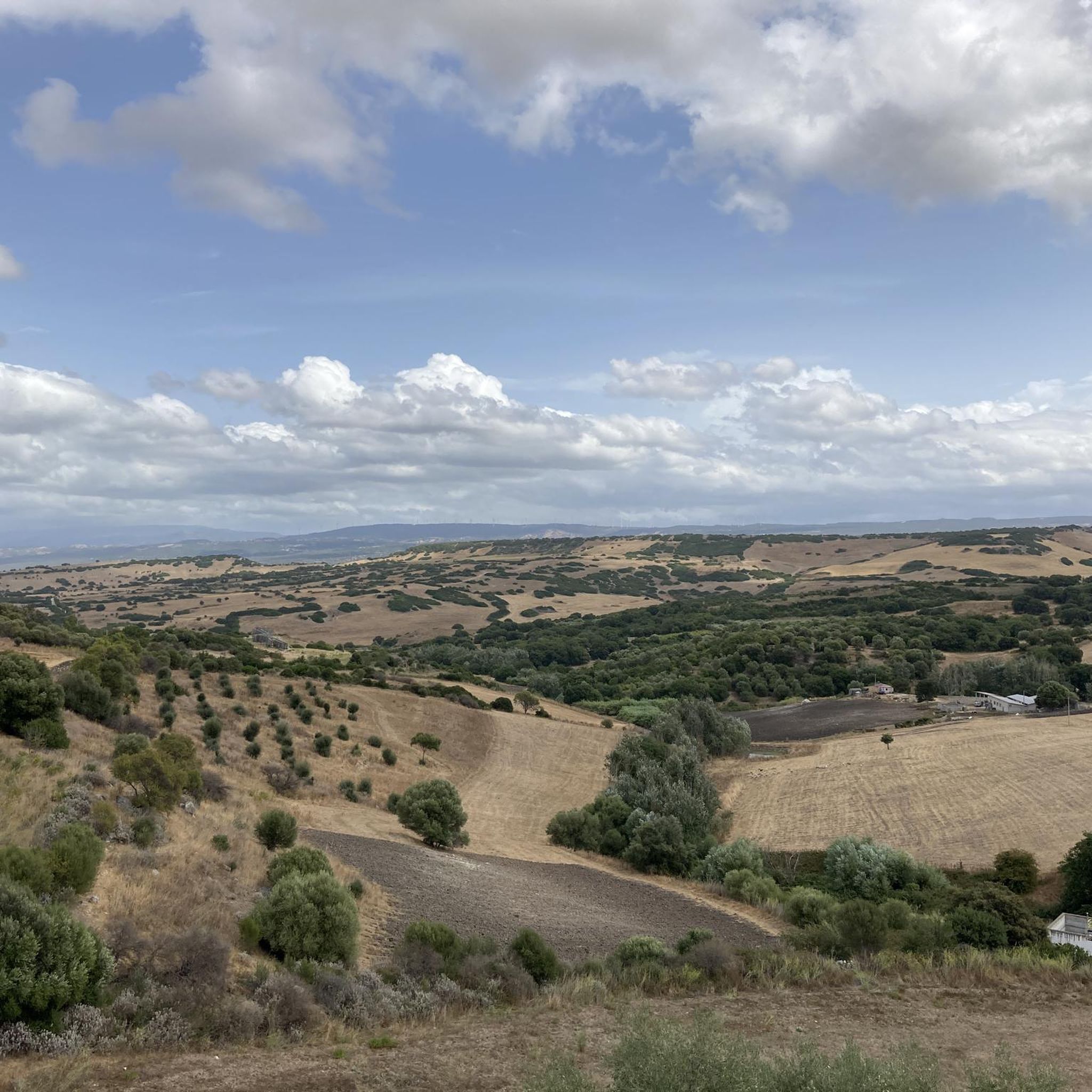
Yes, the region offers several natural and scenic spots. You can visit Cascata Pilchina di li Caaddaggi, a beautiful natural waterfall where you can cool off. For panoramic views, the Tergu Wind Farm offers a unique perspective of gigantic wind turbines set against a rural backdrop of pastures and cork oaks. Additionally, the Church of Our Lady of Bonaria on Mount Tuffudesu provides magnificent views over the north-west of Sardinia from its 766-meter summit.
What kind of outdoor activities can I do near these attractions?
The Martis region is excellent for outdoor enthusiasts. You can find various routes for hiking, road cycling, and general cycling. For hiking, explore trails like the 'Picnic Area Near Stone Ruins – Ruins of a Stone House loop' or the 'Chiesa di San Pantaleo loop'. Cyclists can enjoy scenic routes such as 'From Perfugas to Lake Coghinas via Chiarimonti' or the 'Scenic Road to Chiarimonti – Tergu Wind Farm loop'. You can find more details and routes on the respective guide pages for Hiking around Maltis/Martis, Road Cycling Routes around Maltis/Martis, and Cycling around Maltis/Martis.
Are there family-friendly attractions or activities in the Martis area?
Yes, the Fairies’ Houses historical site is categorized as family-friendly and offers guided tours, which can be an engaging experience for families. Many of the hiking trails, especially the 'easy' rated ones like the 'Picnic Area Near Stone Ruins – Ruins of a Stone House loop', are suitable for families looking for a gentle outdoor adventure.
What do visitors enjoy most about the attractions in Martis?
Visitors appreciate the blend of historical significance and natural beauty. For instance, the Fairies’ Houses are valued for their historical depth and the opportunity for guided tours. The Tergu Wind Farm is noted for its suggestive views of modern structures in an ancient rural setting. The Church of Our Lady of Bonaria on Mount Tuffudesu is praised for its magnificent panoramic views, despite the challenging ascent.
What is the best time to visit Martis for outdoor activities?
Sardinia generally enjoys a mild winter and hot summer climate. For hiking and cycling, spring and autumn typically offer the most comfortable temperatures, avoiding the intense heat of mid-summer. However, some ascents, like to the Church of Our Lady of Bonaria, can be very hot in mid-August, so planning accordingly is advised.
Are there any challenging hikes or climbs in the region?
Yes, for those seeking a challenge, the ascent to the Church of Our Lady of Bonaria on Mount Tuffudesu is described as partly crisp with sections up to a 15% incline, and the last 200 meters may require carrying a bike due to stairs. There are also 'difficult' rated hiking routes like the 'Ridge Trail loop from Laerru' and 'Ridge Trail loop from Su Coloru (ingresso alto) K0028'.
Can I find places to eat or drink near the attractions?
While specific cafes or pubs directly adjacent to every highlight are not detailed, the region is rural. It's advisable to check in nearby towns like Martis, Sedini, or Perfugas for restaurants and cafes. For example, near the Church of Our Lady of Bonaria, there might be a refugio, though it may have seasonal closures.
Are there any hidden gems or less-known spots worth discovering?
While the main highlights are well-regarded, the rural environment itself offers many opportunities for discovery. The Cascata Pilchina di li Caaddaggi, for instance, is described as 'not so easy to find', suggesting a more off-the-beaten-path experience for those willing to explore. The ancient structures like Domu de Janas La Rocca, nestled in the 'heart' of a village, offer a glimpse into a rich, less-publicized history.
What is the accessibility like for attractions in Martis?
Information on specific wheelchair accessibility for all attractions is limited. However, historical sites like Fairies’ Houses might involve uneven terrain typical of ancient structures. Natural features and viewpoints, especially those requiring ascents like Mount Tuffudesu, are generally not wheelchair accessible due to steep paths and stairs. It is recommended to inquire directly with specific sites for detailed accessibility information.
Are there options for dog-friendly trails or activities?
While specific dog-friendly designations for each trail are not provided, many natural outdoor areas and hiking trails in rural Sardinia are generally suitable for dogs, provided they are kept on a leash and owners clean up after them. It's always best to check local regulations or signage at trailheads for any restrictions.
Most popular attractions around Maltis/Martis

Get inspired with the komoot mobile app


Explore more
Still not found the Highlight you’re looking for? See guides of the top attractions in other regions:
