Attractions and Places To See around Bard - Top 20
Best attractions and places to see around Bard are concentrated in a historically significant village within Italy's Aosta Valley. Situated in a narrow gorge where the Dora Baltea river flows, Bard is known for its strategic location and well-preserved historical landmarks. The area offers a blend of historical sites, natural features, and cultural experiences, set against an Alpine backdrop.
Best attractions and places to see around Bard
- The most popular attraction is Fort Bard, a castle that dominates the valley floor. This 19th-century fortress houses three permanent museums, including the Museum of the Alps, and offers panoramic views.
- Another must-see spot is Roman Arch and Road in Donnas, a historical site featuring remains of an ancient Roman road. Visitors can observe cart tracks carved into the rock over 100 meters and a preserved milestone indicating distances.
- Visitors also love Lake Ville, a lake that serves as a nature reserve. It offers trails suitable for various visitors and is known for its accessibility features.
- Bard is known for its historical sites, natural features, and cultural experiences. The region provides a variety of attractions to see and explore, from ancient Roman engineering to medieval villages and natural lakes.
- The attractions around Bard are appreciated by the komoot community, with over 170 upvotes and 335 photos shared by visitors.
Last updated: May 9, 2026
Fort Bard
Highlight • Castle
Translated by Google •
Tip by

Roman Arch and Road in Donnas
Highlight • Historical Site
Over a length of over 100 m, you can still see the tracks of the carts that have truly carved furrows into the rock.
On the rock wall you can see a column-like shape. These are the remains of a milestone. The carved Roman numerals XXXVI indicate the distance. The distance from Donnas to Aosta was previously given as 36 miles.
Translated by Google •
Tip by

Sign up now to discover places like this
Get recommendations on the best single tracks, peaks, & plenty of other exciting outdoor places.
Sign up for free
Roman Bridge of Pont-Saint-Martin
Highlight • Bridge
Translated by Google •
Tip by
Lake Ville
Highlight • Lake
Translated by Google •
Tip by

Chemp Art Village
Highlight • Settlement
This small cluster of stone and wood houses tells the story of a rural society far from the present day, in which the villages were connected to each other by a long network of mule tracks, and where life took place in perfect harmony with the slow rhythms dedicated to cultivation and livestock.
The rebirth of the small village was "a dream carried by the wind", as quoted by Giuseppe (Pino) Bettoni, a craftsman and artist from the Aosta Valley, originally from the valley, who moved to the village and with great sensitivity gave it a new look.
The place has now become an open-air museum in which the dialogue between the beautiful sculptures he created, placed in the most evocative corners, between the houses or free in contact with the fresh air, dialogue with the surrounding nature.
Translated by Google •
Tip by

Sign up for free to discover even more attractions around Bard.
Sign up for free
Already have an account?
Start today with a free account
Your next adventure awaits.
Login or Signup
Tips from the Community

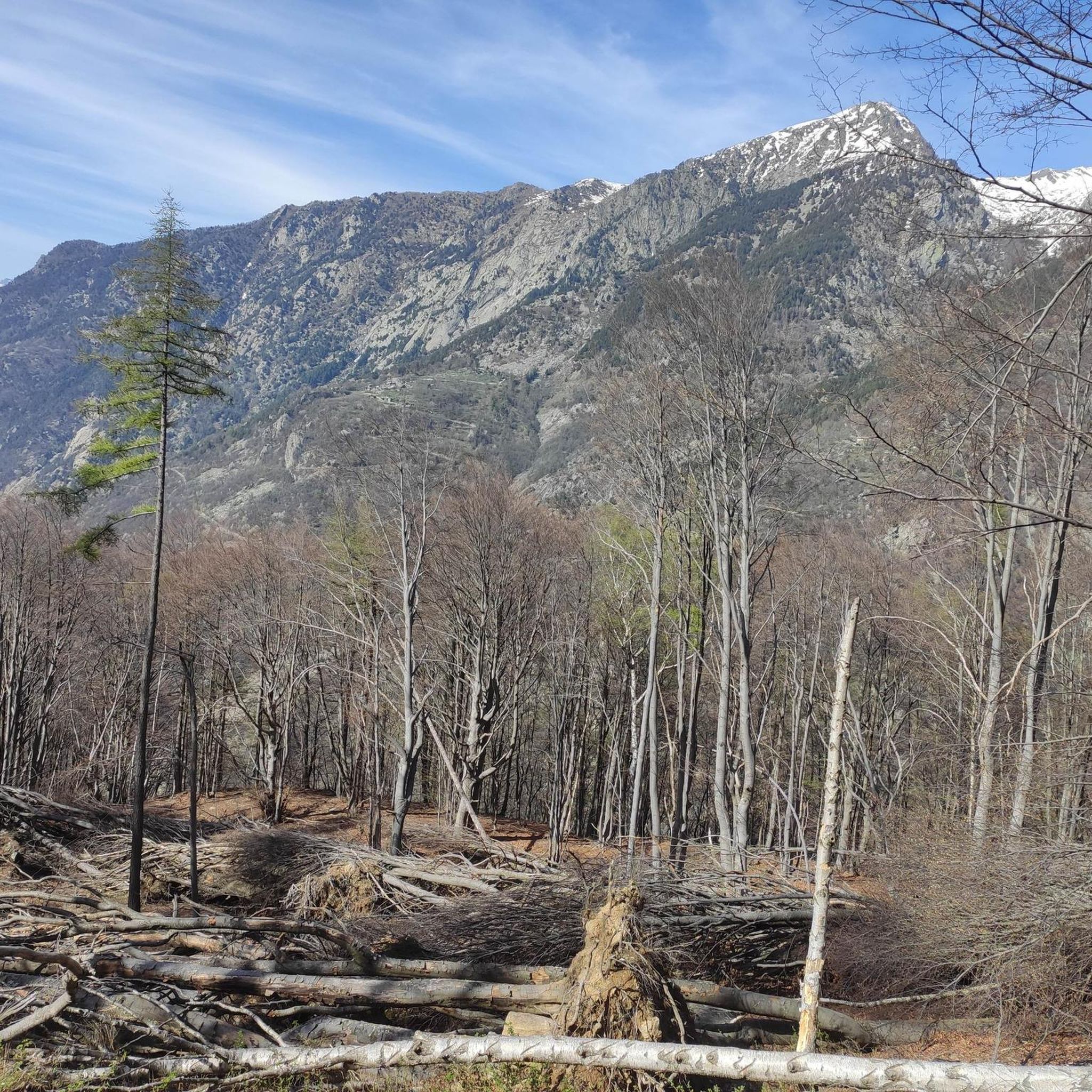
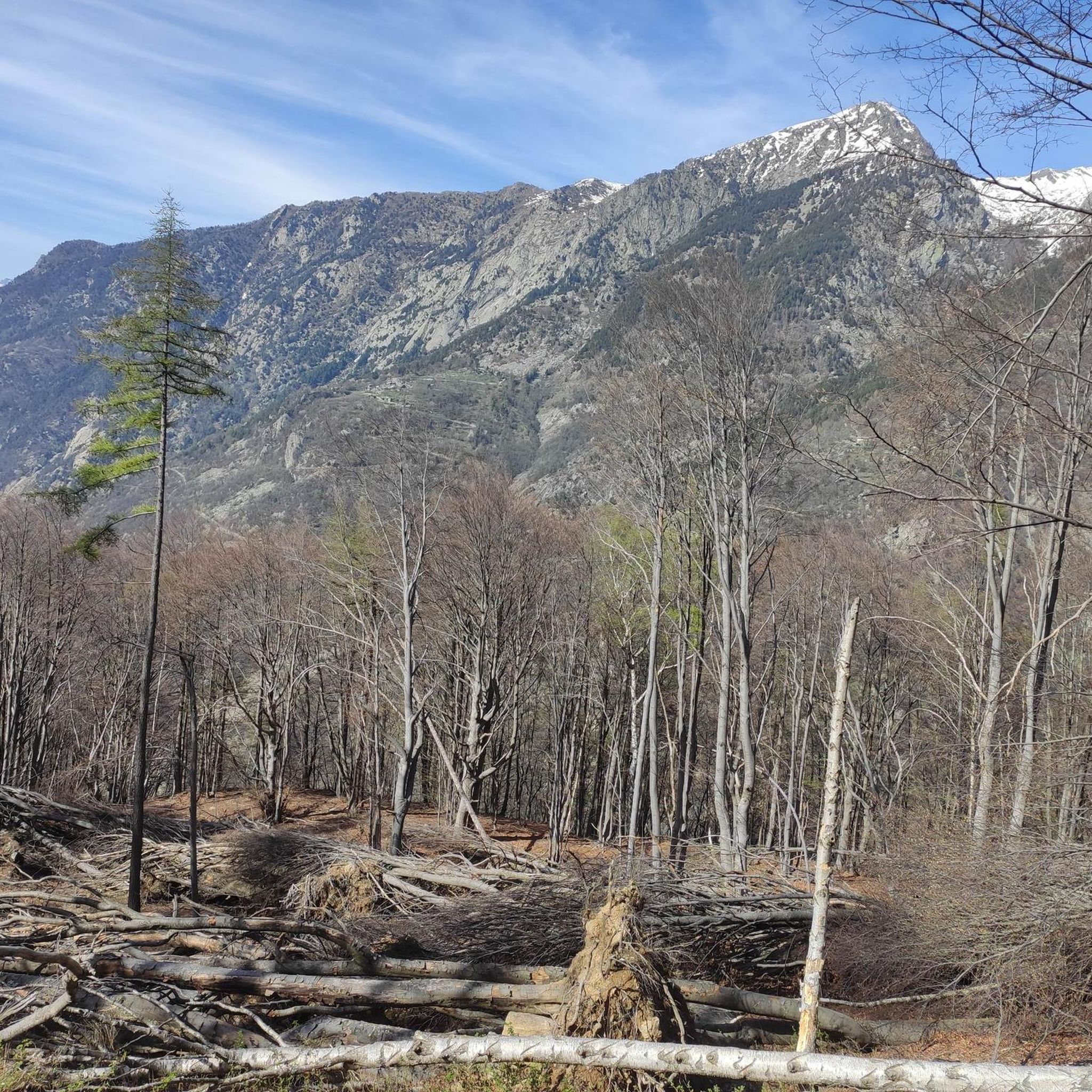
Village with characteristic wooden and other statues, reachable on foot with mule tracks on steep sections coming from Nantay, or by asphalt road
1
0

finding peace like this place elsewhere, if you go there during the week, is very difficult
0
0

The Lago di Villa Nature Reserve was established in 1982 and extends over 25 hectares, at an altitude of between 810 and 980 meters, between the municipalities of Challand-Saint-Victor and Montjovet. An oasis of peace and tranquility where you can listen to the sounds of nature and observe the surrounding mountains. It is interesting to visit in every season, to admire the colors of the changing leaves, as well as the plant and animal species that populate it. Here are some technical data on the natural area: Environment: low mountain peaty lake basin, characterized by a clear contrast between the marshy environment of the lake and the surrounding arid environment. Fauna: the nature reserve represents the main regional reproductive station for the common toad. Among the reptiles there are the maraou lizard and the whip snake, while the fish fauna consists of cyprinids and eels. Flora: the lake waters are home to two very rare floating plants in the Aosta Valley, the white water lily (if you want to enjoy its bloom, the recommended months are June and July) and the amphibian polygon. The reed bed is mainly made up of common reed; the arboreal vegetation is made up of hygrophilous thickets near the banks and thickets of Scots pine and downy oak on the surrounding sunny slopes.
0
0

The Roman road of the Gauls, built to connect Rome with the Rhone Valley, has in the Donnas section one of its most characteristic and spectacular points, carved out of the living rock over a length of 221 metres. In a place where in ancient times the rocky promontory plunged into the waters of the Dora, the Romans launched a real challenge to nature by carving out a living rock on which they could draw perfectly vertical walls and in whose bosom they cut the roadbed. Exciting and unusual, here the Via delle Gallie gives its best by offering the spectacle of a vaulted passage 4 metres thick, 4 metres high and almost 3 metres wide that eloquently illustrates the amount of rock removed and shows all the refinement of a road engineering never again achieved until viaducts and modern tunnels. In the Middle Ages it served as a gate to the village, which was closed at night; The other defences were of course: on one side the mountain and on the other the river. A fundamental road, much used over the centuries, as evidenced by the deep ruts left by the passage of carts and the wear of the walking surface that has been patched and repaired at various points over time. A little further on, on the right, we recognise the excellent profile of a milestone, also spared in the rocky bank, which informs us of the distance to Augusta Praetoria (the current city of Aosta): XXXVI miles (about 54 km).
6
0

In addition to many temporary exhibitions, often aimed at promoting and learning about the culture and territory of the Aosta Valley and the Alps, the Forte di Bard includes three permanent museums. 1.) On the top floor is the Museum of the Alps. Here the secrets of the mountain have been presented through a multimedia path and interactive installations. A truly worthwhile and informative museum!!! 2.) A second museum room is dedicated to the prisons of the fort, twenty-four narrow cells (1.3 x 2 meters) distributed in four areas and accessed from a gallery decorated with historical prints and paintings that tell the story of the building. 3.) Finally, the Fortress and Border Museum of the Opera Ferdinando offers a journey through the history of the Bard through a parade of historical and plastic weapons, including scale models of defensive structures and miniature armies. Source: https://www.visititaly.eu/it/luoghi-e-itinerari/cosa-vedere-a-bard-borgo-in-valle-aosta
42
0
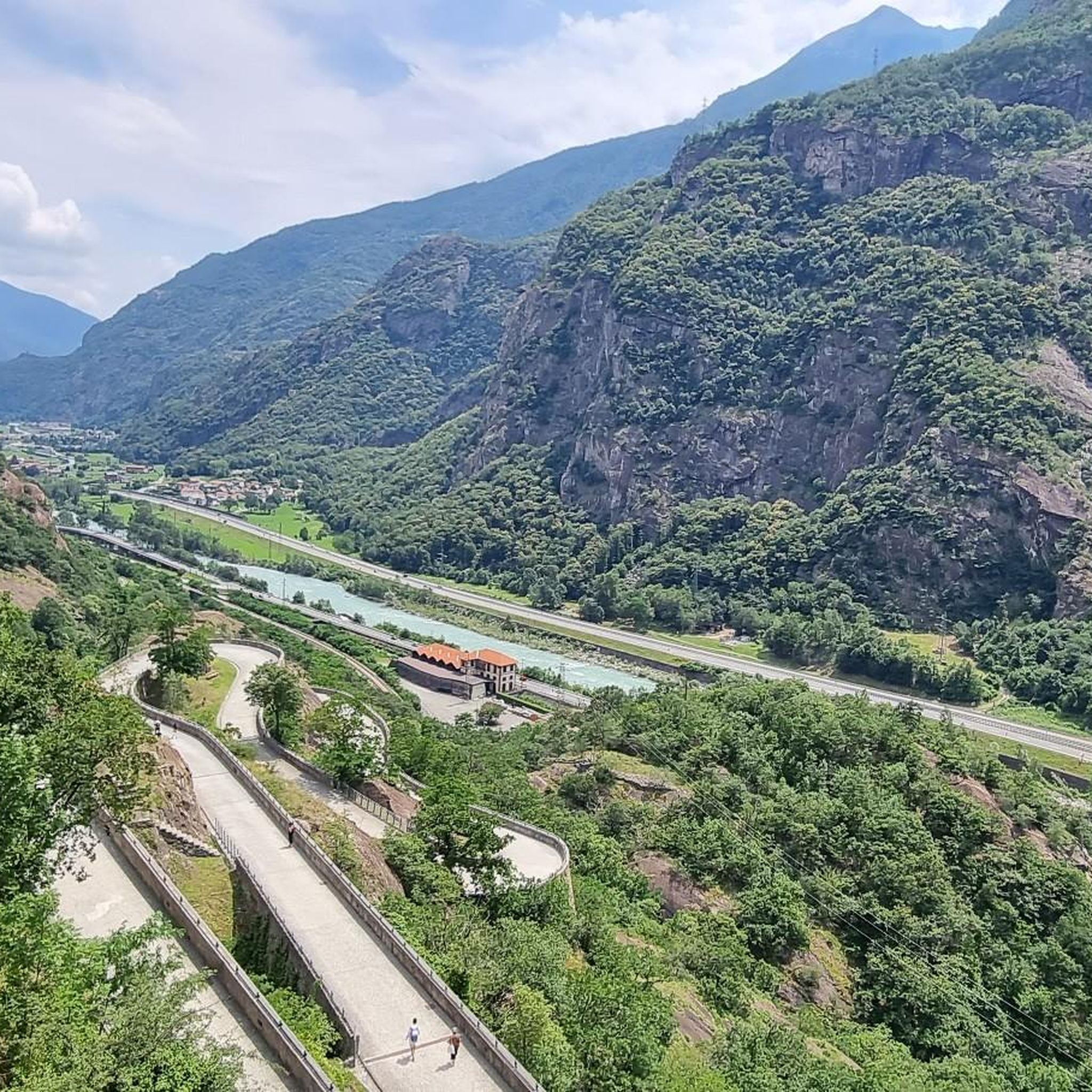
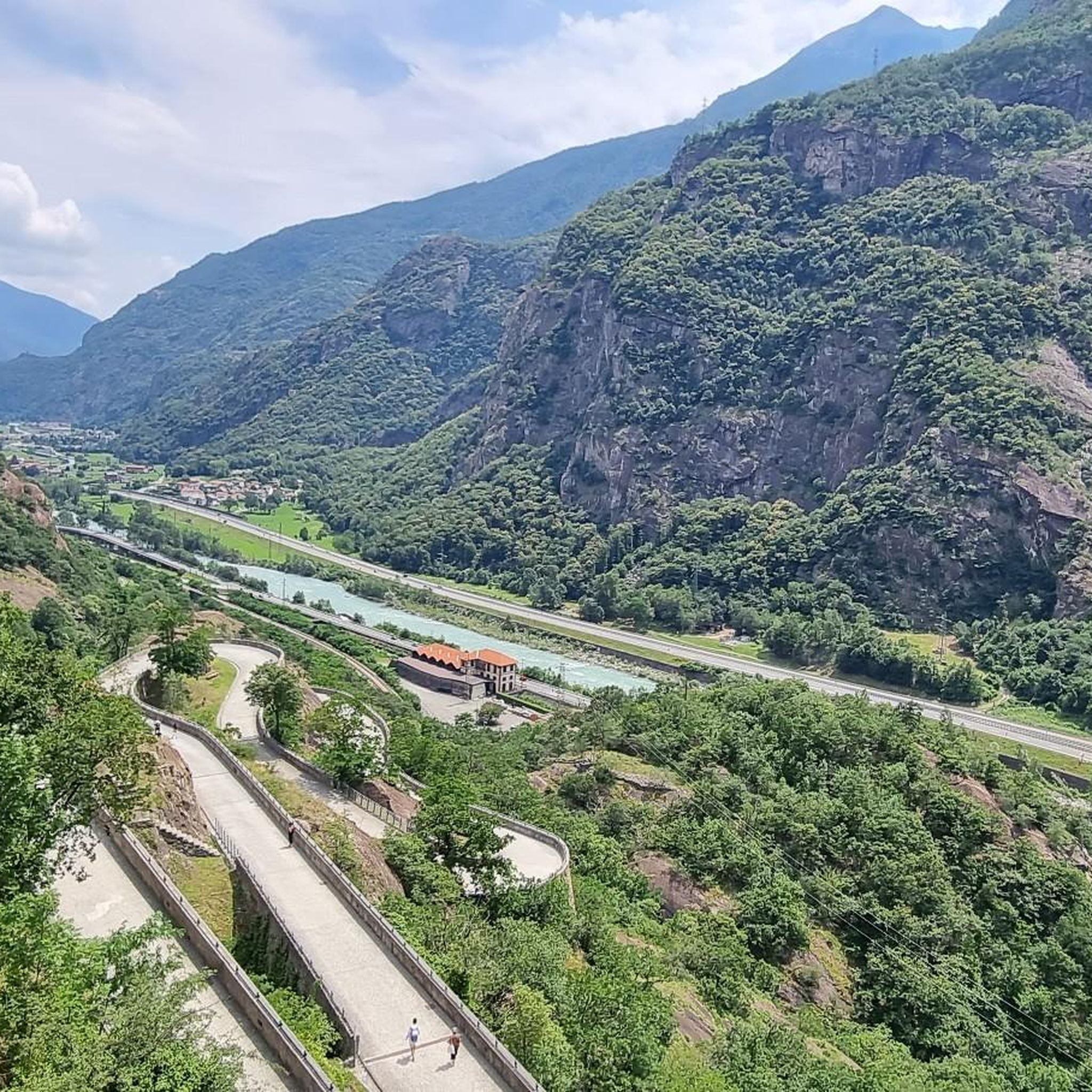
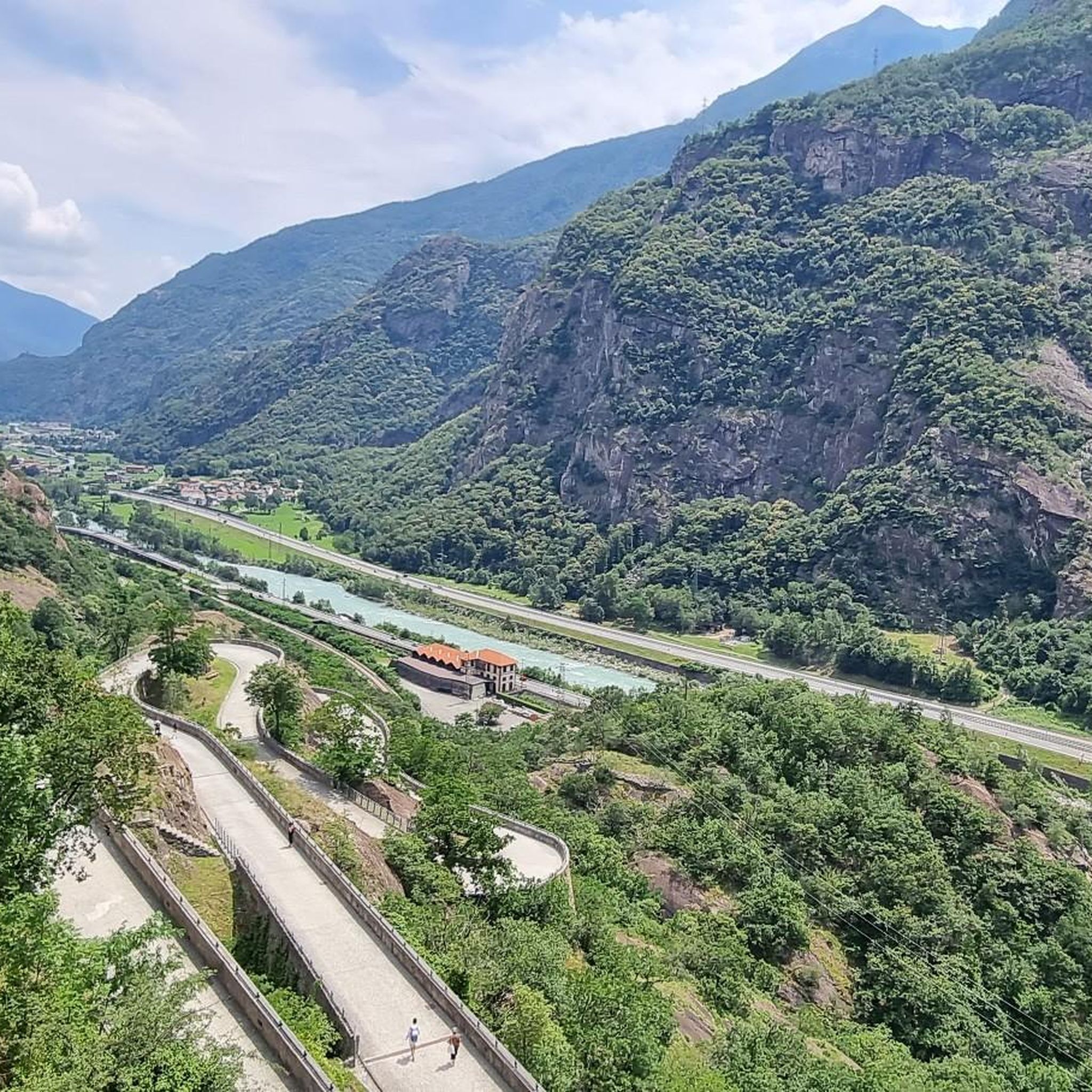
The Fort de Bard, which has remained almost unchanged since its reconstruction, represents one of the best examples of a dam fortress from the beginning of the 19th century. The stronghold has three main buildings, on several levels, between 400 and 467 meters high: from the lowest, the Ouvrage Ferdinand, to the middle one, the Ouvrage Victor and, at the top, the Ouvrage Charles-Albert, a whole of 283 rooms. The Ouvrage Ferdinand is shaped like pincers and has two buildings, the Ouvrage Ferdinand Inférieur and the Ouvrage Ferdinand Supérieur. The Ouvrage Mortai, placed behind the latter and the adjoining Powder Magazine house the rooms intended for the didactic laboratories. About halfway up the rock, stands the Ouvrage Victor where you will find "Les Alpes des Enfants", an interactive trail. At the top, the most imposing of the three structures has an enclosure on which all the buildings rest and which contains the Ouvrage de Gola, its courtyard, which can defend the south side, and the Ouvrage Charles-Albert and its large quadrangular courtyard of the Place d'Armes, surrounded by large arcades. The first floor of the Ouvrage Charles-Albert is dedicated to the "Musée des Alpes". Inside the structure, there is also a tour of the history of the Fort, in the Prison rooms. The Fort is accessible by an external road, on the south side, which leads to the courtyard of the Ouvrage de Gola, and by an internal road which winds in narrow steep bends, protected by large stone walls and which goes up the opposite slope towards the North, thus allowing one to reach the Ouvrage Charles-Albert. These two roads are only accessible on foot. The summit of the rock and the fortress is easily accessible thanks to the panoramic lifts which, from the village of Bard to the foot of the Fort, provide access to the Ouvrage Charles-Albert and therefore to the Museum of the Alps. https://www.viefrancigene.org/fr/resource/poi/forte-di-bard/
5
0
The impressive fortress of Bard dominates the upper valley of the Dora Baltea. After being dismantled by Napoleon in 1800, it was rebuilt in the 19th century by the House of Savoy.
7
0
Frequently Asked Questions
What historical sites can I explore in and around Bard?
Bard is rich in history. You can visit the imposing Fort Bard, a 19th-century fortress with a history dating back to the 4th century AD. The medieval village of Bard itself is a historical gem, with narrow streets and ancient buildings. Just outside Bard, explore the remarkably preserved Roman Arch and Road in Donnas, featuring visible cart tracks and a milestone. Further afield, the Roman Bridge of Pont-Saint-Martin is another ancient marvel.
Are there any museums within Fort Bard?
Yes, Fort Bard hosts several permanent museums. These include the interactive Museum of the Alps, the Prisons which detail the fort's military history, and the Museum of Fortifications and Frontiers. There's also 'The Children's Alps,' an educational space for families.
What natural features can I discover near Bard?
The region offers several natural attractions. You can visit Lake Ville, a nature reserve ideal for observing local flora and fauna. Explore the Geosite with 'Marmitte dei Giganti' (giant's potholes) beyond the village, which also features ancient rock carvings. The Dora Baltea River Gorge, where Bard is situated, provides dramatic scenery, and the Via Francigena offers paths for hikers to enjoy the natural surroundings.
What outdoor activities are available near Bard?
The area around Bard is excellent for outdoor enthusiasts. You can find numerous hiking trails, including sections of the ancient Via Francigena. For more structured activities, explore the hiking routes around Bard, road cycling routes, or running trails. The nearby Gran Paradiso National Park is also a significant natural attraction for its wildlife and mountain scenery.
Are there family-friendly attractions in Bard?
Absolutely. Fort Bard is family-friendly, offering panoramic lifts and 'The Children's Alps' museum. Lake Ville is another great option, with trails suitable for all visitors. The Roman Bridge of Pont-Saint-Martin is also a fascinating historical site that families can enjoy.
What is the best time of year to visit Bard?
Bard is enjoyable throughout the year, but the spring and autumn months (April-May and September-October) often offer pleasant weather for exploring historical sites and outdoor activities. These seasons also avoid the peak summer heat and winter cold, making for comfortable visits. October is particularly notable for the annual *Marché au Fort* gastronomy and wine festival.
Can I find any ancient Roman structures besides the Fort?
Yes, Bard and its surroundings are home to significant Roman heritage. Beyond the medieval village, you can visit the well-preserved Roman Arch and Road in Donnas, which was part of the ancient Via delle Gallie. Another impressive Roman structure is the Roman Bridge of Pont-Saint-Martin, a spectacular single-arched stone bridge.
Are there any accessible attractions for visitors with mobility needs?
Yes, some attractions in Bard are designed with accessibility in mind. Lake Ville offers a parking area right next to the lake and a walkway suitable for wheelchairs, allowing access right above the water. Fort Bard can be accessed via panoramic lifts, providing impressive Alpine views during the ascent.
What are some unique cultural experiences or events in Bard?
Bard hosts various cultural events throughout the year. These include historical reenactments, such as 'Napoleonica,' which reconstructs Napoleon's passage in 1800. The Fort Bard also serves as a cultural center, hosting music concerts, art exhibitions, and theatrical productions. The annual *Marché au Fort* in October is a popular gastronomy and wine festival.
Are there any vineyards or wine-related attractions nearby?
Yes, the region is known for its vineyards. You can explore the Terraced Vineyards of Torredaniele, which offer an aerial walk with stunning views. The nearby vineyards of Donnas are particularly famous, and visitors can enjoy walks along the 'Vineyard Path' and sample local Donnas DOC wine.
What do visitors enjoy most about Bard?
Visitors frequently praise Bard for its unique blend of history and natural beauty. Many are captivated by the imposing presence of Fort Bard and its museums, especially the interactive Museum of the Alps. The well-preserved medieval village and the ancient Roman Arch and Road in Donnas are also highly appreciated for their historical significance. The scenic views from the fort and the tranquil atmosphere of places like Lake Ville are also highlights for many.
Can I visit other castles in the wider Aosta Valley region?
Yes, the Aosta Valley is renowned for its castles. Beyond Fort Bard, you can visit the famous Castello di Issogne, known for its inner courtyard and frescoes, or the Castello di Graines, which offers views of Brusson and the Val d'Ayas. These provide further insights into the region's rich history.
Most popular attractions around Bard

Get inspired with the komoot mobile app


Explore more
Still not found the Highlight you’re looking for? See guides of the top attractions in other regions:
