Attractions and Places To See around Civitella Del Tronto - Top 20
Best attractions and places to see around Civitella Del Tronto include historical sites, religious buildings, and natural features. This area in Italy's Abruzzo region is known for its medieval architecture and elevated position, offering views of the surrounding landscape. The town is situated within the Gran Sasso e Monti della Laga National Park, providing opportunities to explore mountain scenery. Visitors can discover a variety of cultural and natural points of interest.
Best attractions and places to see around Civitella Del Tronto
- The most popular attractions is Civitella del Tronto Historic Town and Fortress, a historical site that includes one of Europe's largest fortresses. This site offers views and features narrow, cobbled streets.
- Another must-see spot is San Marco Hermitage (Eremo di San Marco), a religious building and historical site. This hermitage is a natural cavity on a rock face, enclosed by a church-shaped building with a bell tower.
- Visitors also love Piazza del Popolo, Ascoli Piceno, a historical site. This piazza is paved with travertine and features the Palazzo dei Capitani del Popolo and the Chiesa San Francesco.
- Civitella Del Tronto is known for historical sites, religious buildings, and settlements. The region offers a variety of attractions to see and explore, from ancient fortresses to charming villages and natural caves.
- The attractions around Civitella Del Tronto are appreciated by the komoot community, with 15 highlights and 60 photos shared.
Last updated: July 20, 2026
Salinello Gorge
Highlight • Gorge
The Salinello river has created a deep gorge between the Twin Mountains.
Translated by Google •
Tip by

Piazza del Popolo, Ascoli Piceno
Highlight • Historical Site
At the piazza you will also find the "Palazzo dei Capitani del Popolo", today's town hall, which was built around 1530 in its current form. Under the architect Cola dell'Amatrice, it was created by merging three small buildings, with a new facade built in front of them to create a uniform front line, only the medieval tower remained unchanged.
Translated by Google •
Tip by

Sign up now to discover places like this
Get recommendations on the best single tracks, peaks, & plenty of other exciting outdoor places.
Sign up for free
Controguerra — Village and Vineyards
Highlight • Settlement
The municipality gives its name to the winegrowing area of Controguerra. In the surroundings of the municipality also Montepulciano vines are grown for the DOC wine Montepulciano d'Abruzzo.
Wikipedia
Translated by Google •
Tip by

Cathedral of Saint Emygdius (Cattedrale di Sant'Emidio)
Highlight • Religious Site
Translated by Google •
Tip by
San Marco Hermitage (Eremo di San Marco)
Highlight • Religious Site
In ancient times, the building housed a convent founded by Cistercian monks at the beginning of the 13th century and consists of two overlapping rooms, connected by a staircase resting on the rock. It is a very “poor” construction, which recalls the Benedictine monastic rule.
Inside the Hermitage, it is still possible to find traces of the primitive frescoes painted by the monks on the walls and on the vault of the lower room. On the ceiling of the cave, the splendid “tapestry” of maidenhair fern is noteworthy.
The Hermitage of San Marco has been restored and brought back to its maximum splendor. It retains its evocative power that attracts tourists and travelers, lovers of history and nature.
(c) visitascoli.it/esperienze/colle-san-marco-meta-di-eremiti-nel-corso-dei-secoli
Translated by Google •
Tip by

Sign up for free to discover even more attractions around Civitella Del Tronto.
Sign up for free
Already have an account?
Start today with a free account
Your next adventure awaits.
Login or Signup
Popular around Civitella Del Tronto
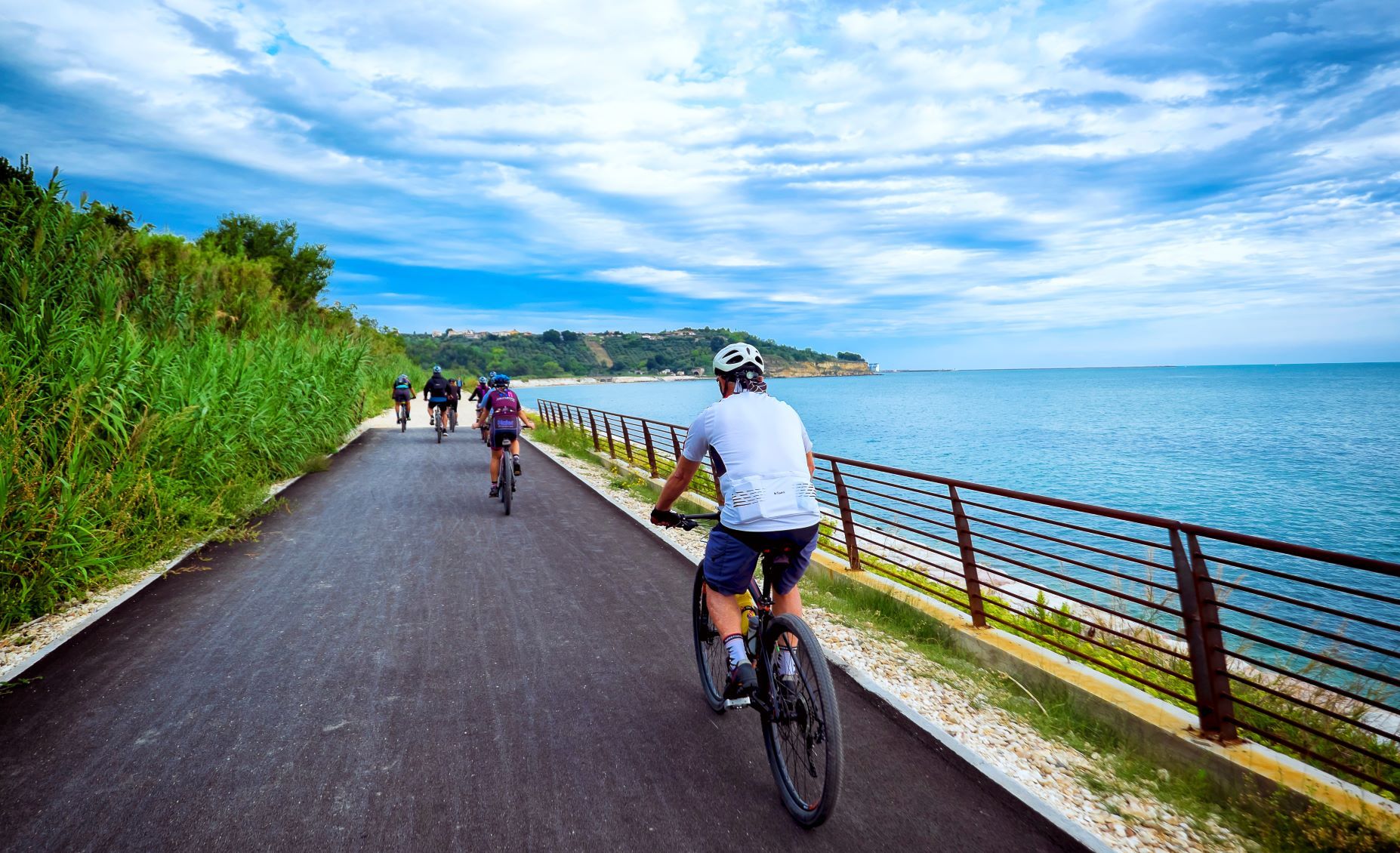
Between the Adriatic Sea and the Apennines — rides in Italy’s Abruzzo
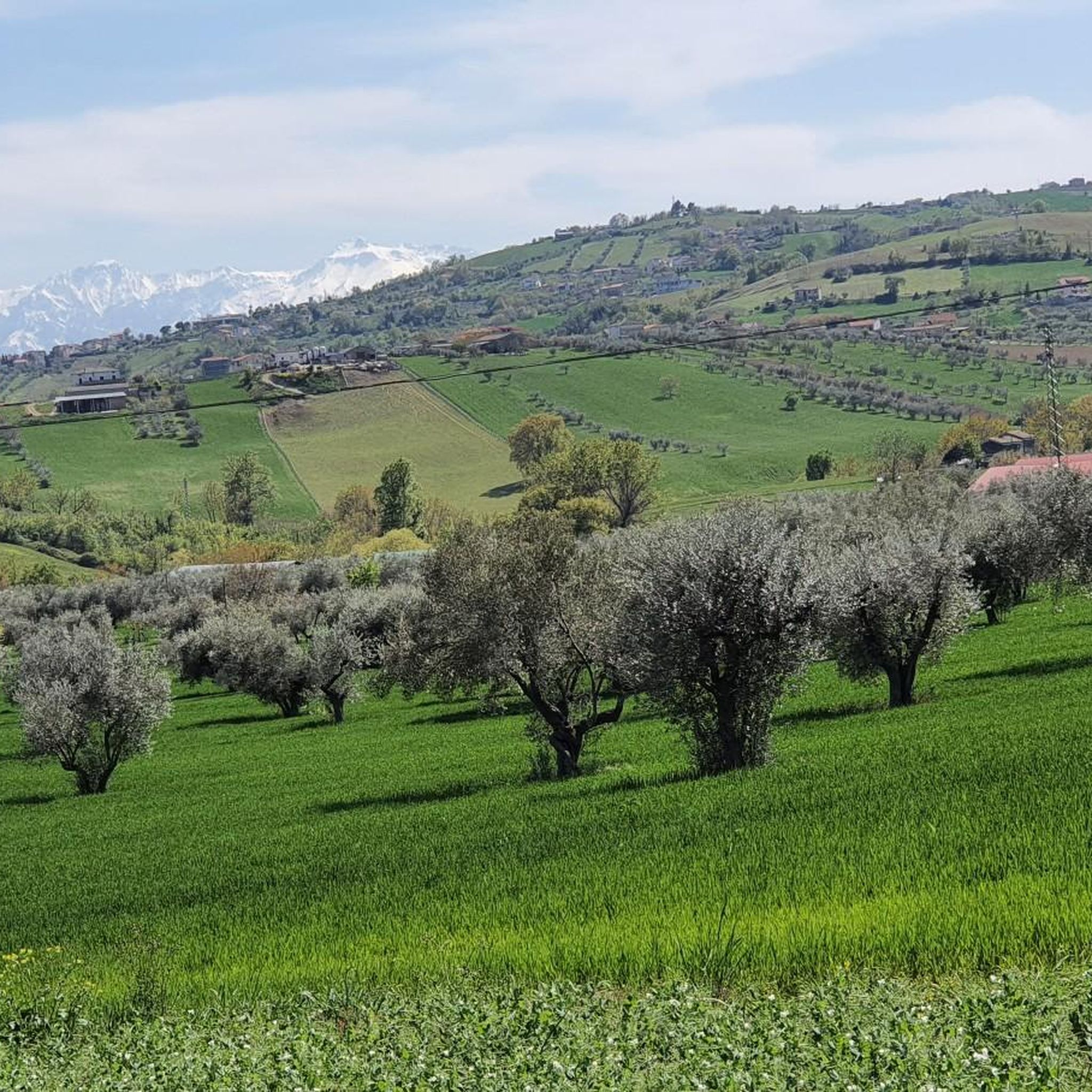
Hiking around Civitella Del Tronto
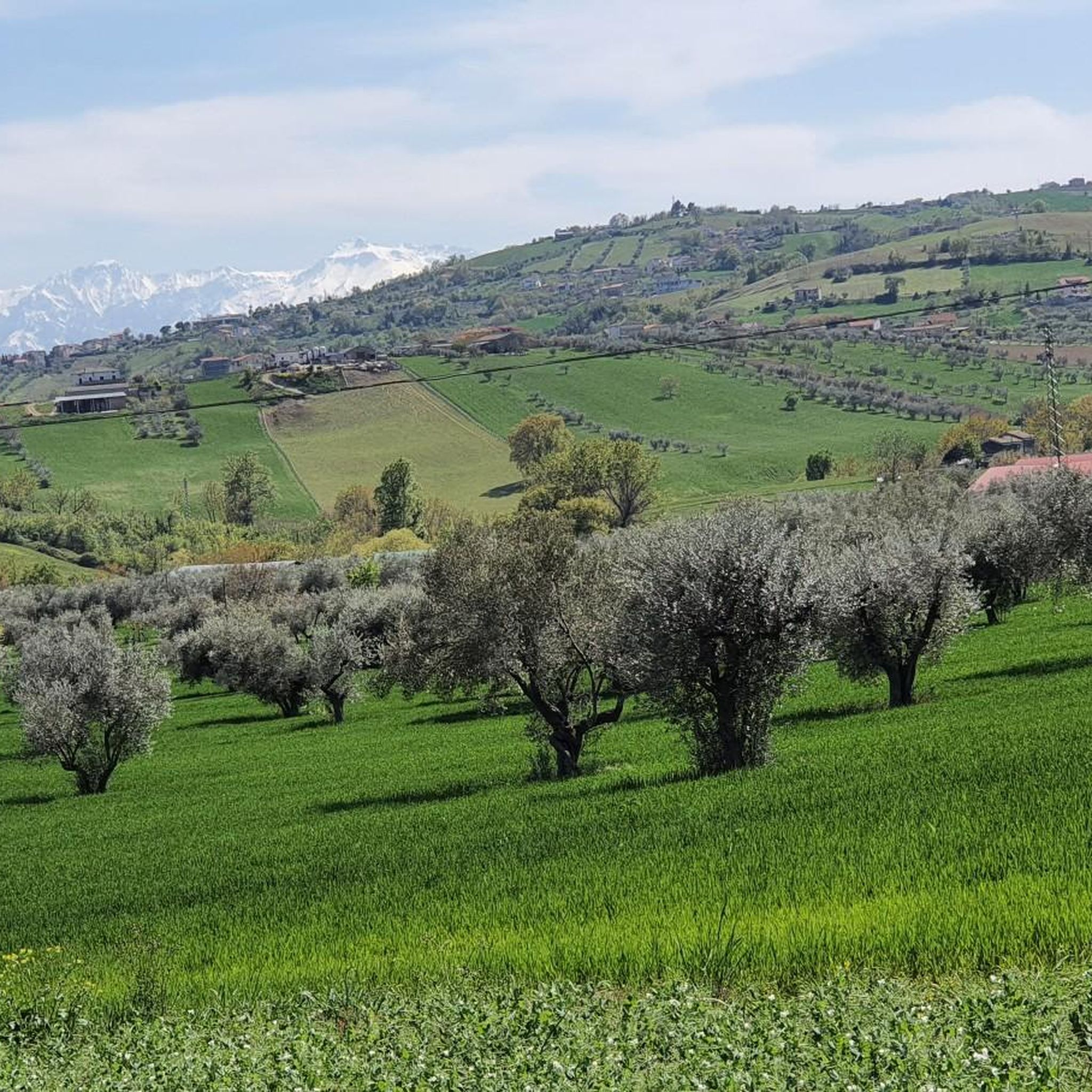
Cycling around Civitella Del Tronto
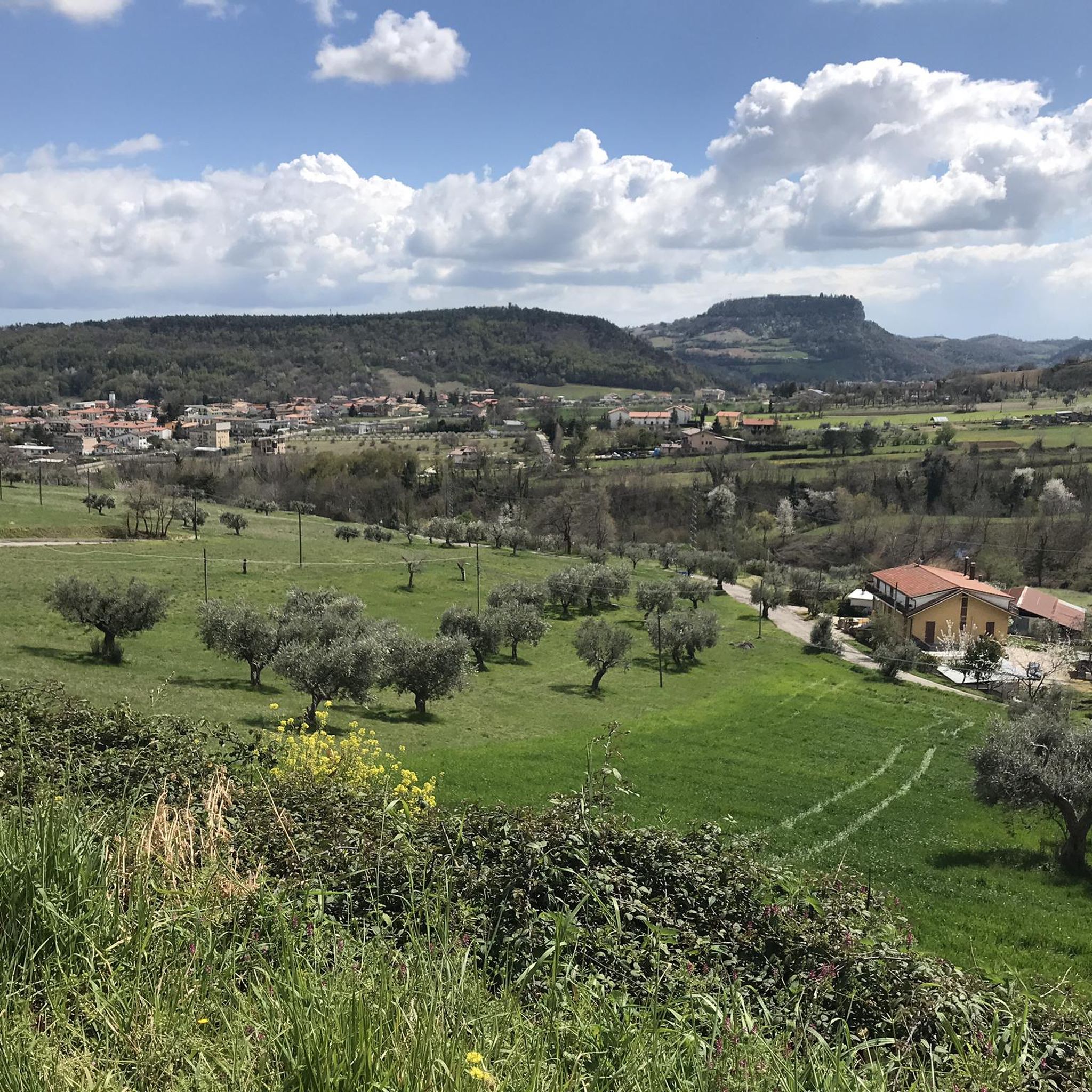
MTB Trails around Civitella Del Tronto
Running Trails around Civitella Del Tronto
Road Cycling Routes around Civitella Del Tronto

Gravel biking around Civitella Del Tronto
Other adventures around Civitella Del Tronto

Tips from the Community

Trekking that starts from the equipped area of Ripa Alta, with parking, water fountain, kiosk-bar and picnic tables. The path in the first part is very steep and without shade from the sun. You then enter the woods: the path follows the course of the river which, in the summer period, is completely dry (August 2025). In several places you can leave the path and enter the riverbed, thus skirting the rocky walls of the twin mountains. The path is marked as risky: in truth, in the summer period it is easily manageable even by children aged ten and over; in the period when the river is present, it may be riskier to venture there.
0
0

Ancient 13th-century monastery built in travertine and embedded in the rock. It is located on Colle San Marco, a few kilometers from Ascoli Piceno, and is reachable via a stone staircase that acts as a bridge over a deep moat. Usually open on weekends and holidays during the spring and summer months. The path to get there is also suitable for families.
1
0
The Cathedral of Sant'Emidio, located in the monumental Piazza Arringo, is the main place of worship in Ascoli Piceno. The building is a fascinating historical palimpsest that blends remains of a Roman civil basilica with Romanesque structures and a Renaissance facade designed by Nicola Filotesio. The real treasure, however, is hidden in its underground: the Crypt of Sant'Emidio. Built in the 11th century, it is one of the largest in Italy and houses the remains of the Patron Saint within a precious 4th-century Roman sarcophagus. The environment, a suggestive 'forest' of about 60 travertine and marble columns, is enriched by a cycle of modern mosaics that narrate the Saint's protection of the city during World War II. Recent restorations have also brought to light rare medieval frescoes and portions of an ancient 14th-century cemetery.
1
0
Piazza del Popolo in Ascoli is often called the 'Living Room of Italy'. It is a Renaissance masterpiece characterized by its travertine paving, which gives it a unique elegance. Its rectangular shape is framed by a loggia of 59 arches and crenellated palazzi. The historic heart of the city, it hosts the Palazzo dei Capitani, the Church of San Francesco, and the historic Caffè Meletti. It is considered one of the most beautiful squares in Italy.
0
0

short but steep path
0
0

From the imposing chestnut forest, the main path leads to a clearing located on a huge travertine spur, overlooking the forest. On the rock face, you can see, at the top right, the fascinating structure of the Hermitage of San Marco, a natural cavity closed by a church-shaped building with a bell tower and connected to the path by a stone staircase. The wall, in Romanesque style, is made of ashlar stones and has a single-lancet window and five double-lancet windows. In ancient times, the building housed a convent founded by Cistercian monks at the beginning of the 13th century and consists of two overlapping rooms, connected by a staircase resting on the rock. It is a very “poor” construction, which recalls the Benedictine monastic rule. Inside the Hermitage, it is still possible to find traces of the primitive frescoes painted by the monks on the walls and on the vault of the lower room. On the ceiling of the cave, the splendid “tapestry” of maidenhair fern is noteworthy. The Hermitage of San Marco has been restored and brought back to its maximum splendor. It retains its evocative power that attracts tourists and travelers, lovers of history and nature. (c) https://visitascoli.it/esperienze/colle-san-marco-meta-di-eremiti-nel-corso-dei-secoli/
2
0

Piazza del Popolo is the living room of the city of Ascoli. The square with its white travertine is surrounded by palaces, historic buildings, loggias and porticos. Among others the historic Meletti café, Palazzo dei Capitani and the church of San Francesco.
0
0

Known as the Salotto d'Italia, Piazza del Popolo is the heart of the historic center of Ascoli Piceno and is itself an open-air monument.
1
0
Frequently Asked Questions
What historical sites can I explore in Civitella del Tronto and its surroundings?
The region is rich in history. You can visit the impressive Civitella del Tronto Historic Town and Fortress, one of Europe's largest fortresses, offering panoramic views and a journey through medieval streets. Another significant site is the Piazza del Popolo in Ascoli Piceno, a beautiful Renaissance square paved with travertine, featuring the Palazzo dei Capitani del Popolo and the Chiesa San Francesco. Don't miss the archaeological area of Ripa di Civitella, which holds relics from Paleolithic and Neolithic times.
Are there any notable religious buildings to visit near Civitella del Tronto?
Yes, several significant religious sites are worth exploring. The San Marco Hermitage (Eremo di San Marco) is a fascinating structure built into a natural rock cavity, once a convent founded by Cistercian monks. In Ascoli Piceno, the Cathedral of Saint Emygdius is a must-see, known for its magnificent interior and crypt. Other churches include the 13th-century Chiesa di San Lorenzo and the 14th-century Chiesa di San Francesco within Civitella del Tronto's historic center, as well as the Convent of Santa Maria dei Lumi.
What natural attractions and viewpoints are there in the area?
Civitella del Tronto is nestled within the Gran Sasso e Monti della Laga National Park, offering stunning natural beauty. The Fortress itself provides 360-degree views of three mountain ranges and the Adriatic Sea on clear days. You can also visit Controguerra — Village and Vineyards for picturesque landscapes. The Monti della Laga range features gentle, forested peaks, fast-flowing streams, and waterfalls. For unique natural formations, explore the Salomone and Sant'Angelo Grottos.
What outdoor activities can I do near Civitella del Tronto?
The region offers excellent opportunities for outdoor enthusiasts. You can find various routes for mountain biking, road cycling, and gravel biking. For mountain biking, consider routes like 'San Giacomo e Monte Girella – giro ad anello' or 'Crested Newt Pond – Colle San Marco Plateau loop'. Road cyclists might enjoy 'Giulianova seafront – Monument to Gaetano Braga loop'. Gravel biking options include 'Monticelli Cycle Path – Sentina Gravel Cycle Path loop'. You can find more details on these and other routes in the MTB Trails around Civitella Del Tronto, Road Cycling Routes around Civitella Del Tronto, and Gravel biking around Civitella Del Tronto guides.
Are there any family-friendly attractions in Civitella del Tronto?
Many attractions in the area are suitable for families. The Civitella del Tronto Historic Town and Fortress is a great place for children to explore history and enjoy the vast grounds. The Piazza del Popolo in Ascoli Piceno offers a spacious area for strolling and enjoying local cafes. The Controguerra — Village and Vineyards also provides a pleasant setting for families to enjoy the scenery.
How long should I plan for a visit to the Civitella del Tronto Fortress?
The Fortress of Civitella del Tronto is extensive, spanning over 500 meters with a surface area of 25,000 square meters. To fully explore its ramparts, cisterns, barracks, the ruins of the Governor's palace, the Saint James church, and the museum, you should allocate at least 2-3 hours. This allows time to appreciate the historical details and the stunning 360-degree views.
What is 'La Ruetta' and where can I find it?
'La Ruetta' is one of the narrowest streets in Italy, located within the historic center of Civitella del Tronto. It's a unique and charming feature of the medieval village, offering a glimpse into its past architecture. You can find it by wandering through the cobbled streets of the old town.
What is the best time of year to visit Civitella del Tronto?
Civitella del Tronto is beautiful year-round, but the spring and autumn months (April-June and September-October) generally offer pleasant weather for exploring the historic town, fortress, and surrounding natural parks. These seasons provide comfortable temperatures for outdoor activities and clear views. Summer can be warm, while winter offers a quieter experience, though some outdoor activities might be limited by weather.
Are there any museums in Civitella del Tronto?
Yes, within the Fortress of Civitella del Tronto, you can find the Museo delle Armi (Museum of Arms). This small museum displays a collection of historical weapons and maps, providing further insight into the fortress's military past.
What are some hidden gems or less-known places to visit around Civitella del Tronto?
Beyond the main attractions, consider visiting the Abbey of Santa Maria in Montesanto, a historically powerful abbey restored to its 13th-century state. The Convent of Santa Maria dei Lumi, situated on a hill opposite the town, also offers a rich history and a famed 15th-century sculpture. For nature lovers, the Salomone and Sant'Angelo Grottos provide an interesting natural exploration.
Where can I find parking when visiting the Civitella del Tronto Fortress?
Parking is generally available at the base of the town or just outside the historic center. From there, it's a short walk up to the fortress. Specific parking areas are usually signposted as you approach the town. It's advisable to arrive earlier in the day during peak season to secure a spot.
What do visitors enjoy most about Civitella del Tronto?
Visitors frequently praise the medieval charm of the town, describing it as stepping back in time. The narrow, cobbled streets and stone buildings create a captivating atmosphere. The Fortress is highly appreciated for its historical significance and the breathtaking panoramic views it offers. Many also enjoy the tranquility and the opportunity to simply linger and stroll through the beautiful surroundings.
Most popular routes around Civitella Del Tronto
Most popular attractions around Civitella Del Tronto

Get inspired with the komoot mobile app


Explore more
Still not found the Highlight you’re looking for? See guides of the top attractions in other regions:
