The best road cycling routes around Santa Maria Di Sala
4.2
(335)
10,916
riders
362
rides
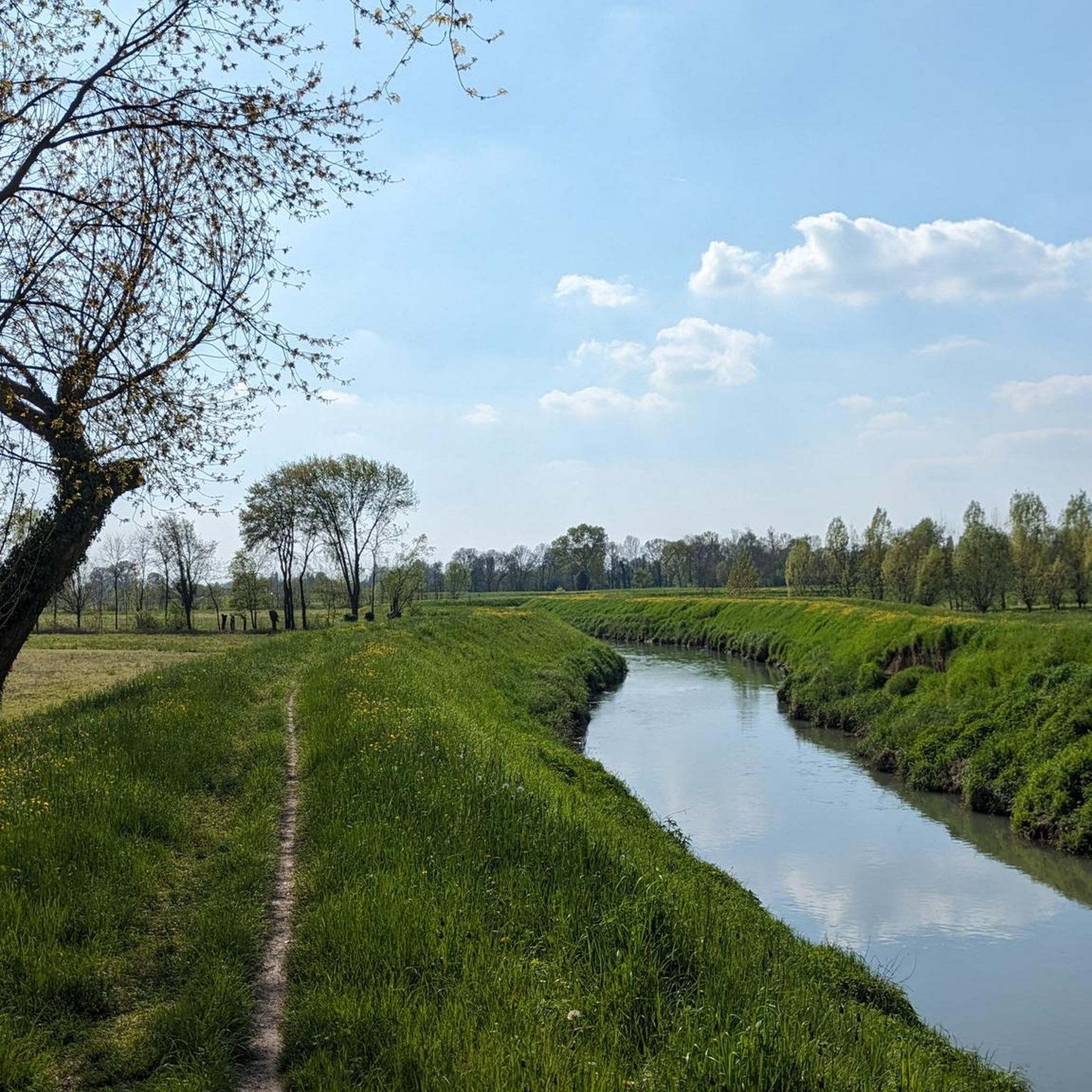
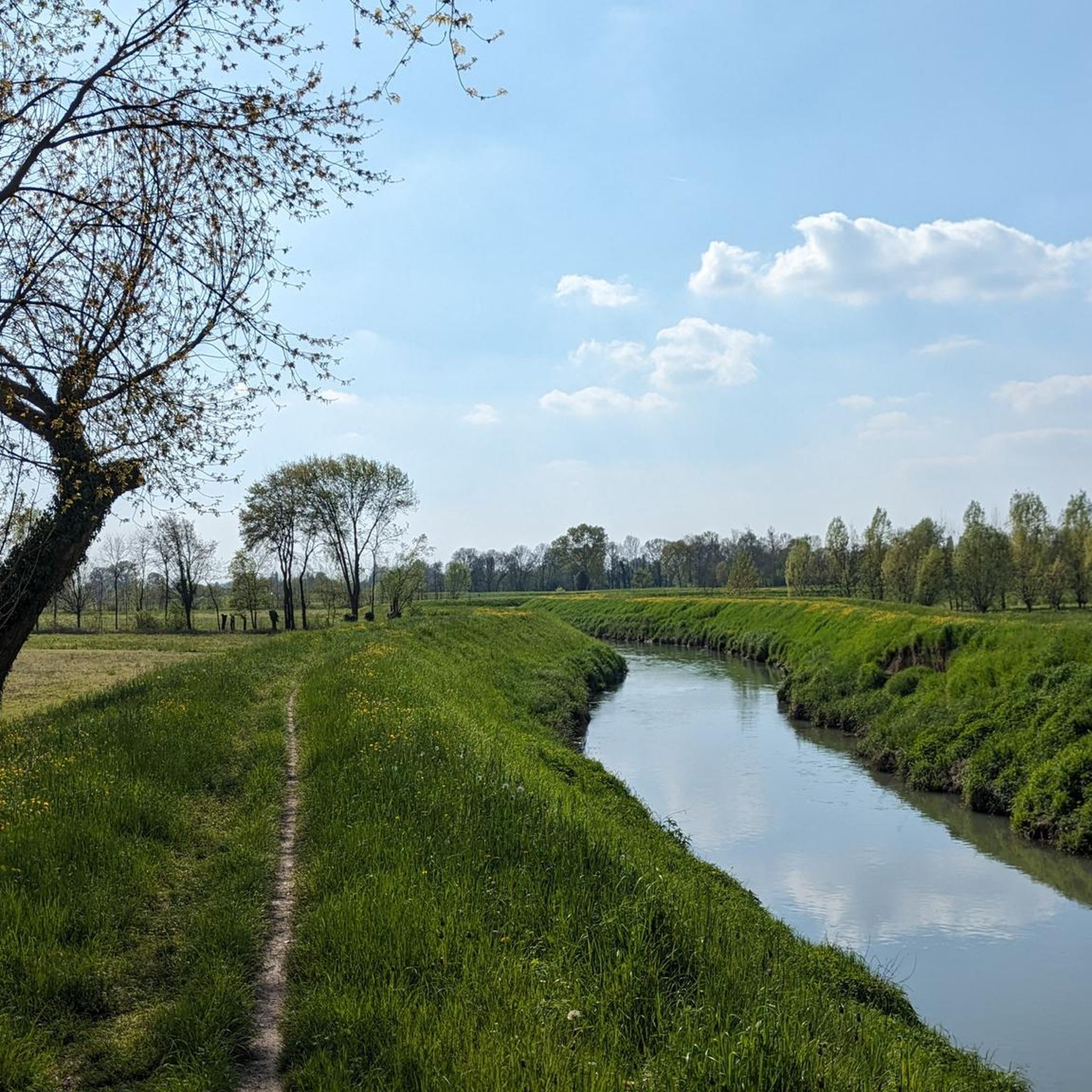
Road cycling around Santa Maria Di Sala, located in Italy's Veneto region, is characterized by its flat plains and an extensive network of canals. The terrain offers minimal elevation changes, making it suitable for various cycling paces and distances. Agricultural fields and traditional farmhouses define much of the landscape, providing open views and quiet roads, while waterways like the Brenta River and the historic Brenta Riviera offer scenic routes.
Best road cycling routes around Santa Maria Di Sala
- The most…
Last updated: October 7, 2026
25
riders
Moderate road ride. Great for any fitness level. Some segments of this route may be unpaved and difficult to ride.
16
riders
Moderate road ride. Great for any fitness level. Some segments of this route may be unpaved and difficult to ride.

5.0
(1)
24
riders
25.5km
01:04
30m
30m
Moderate road ride. Great for any fitness level. Some segments of this route may be unpaved and difficult to ride.
9
riders
38.8km
01:31
50m
50m
Easy road ride. Great for any fitness level. Mostly well-paved surfaces and easy to ride.
5
riders
31.1km
01:10
30m
30m
Easy road ride. Great for any fitness level. Mostly well-paved surfaces and easy to ride.
Get access to more routes and recommendations from other explorers.
Already have an account?
Our route recommendations are based on thousands of hikes, rides, and runs completed by other people on komoot.
Start today with a free account
Your next adventure awaits.

Tips from the Community

Villa Foscarini Rossi, in Stra, is one of the historic villas that tell the story of the great transformation of the Riviera del Brenta between the 16th and 18th centuries, when Venetian families built elegant country residences along the river. The villa was built in the 17th century by the Foscarini family and later passed to the Rossi family. The complex still preserves the historic rooms and artistic heritage of the villa today; it also houses the Rossimoda Shoe Museum, linked to the shoemaking tradition of the Riviera del Brenta.
1
0

Characteristic place of the Riviera del Brenta. Excellent bike tours
0
0

Mira is a municipality in the metropolitan city of Venice located along the Riviera del Brenta, a territory historically famous as a holiday resort for the Venetian nobility. The inseparable bond with water characterizes the entire urban landscape, crossed by the Naviglio del Brenta and embellished by extraordinary patrician villas. Among these stands out the famous Villa Foscari, known as "La Malcontenta", an architectural masterpiece designed by Andrea Palladio and included in the UNESCO World Heritage. In addition to its extraordinary historical-artistic richness, Mira boasts significant economic importance due to its historic chemical and industrial center, which developed in the twentieth century close to Porto Marghera. Today the town combines the memory of the villa civilization, its strategic proximity to the Venetian lagoon, and a vibrant productive reality, configuring itself as a crucial cultural and economic hub of the territory.
2
0
Located in Mira Taglio along the Riviera del Brenta, the Palazzo Bonlini complex (also known as Villa Bonlini) is a historic Venetian residence built between the late 16th and early 17th centuries. Recognizable in the famous 18th-century prints by Coronelli and Costa, the original property included the dominical body, a monumental barchessa, a casino, and an oratory, the latter now disappeared, all immersed in a grandiose park. In addition to its architectural value, the site holds great importance for industrial archaeology: its barchessa actually became the first seat in Mira for the activities of the renowned Distilleria Drioli, a historic Dalmatian company known worldwide for the production of Maraschino. Today the palace, partially modified over the centuries, is owned by the Opera Pia Casa Paterna.
0
0

Caffè Pedrocchi, Italy's most famous coffee house (historically, architecturally, and socially of greatest importance. Used to be open day and night, hence "caffè senza porte = without doors"). See description on my Padua visit (Komoot March 25, 2026).
0
0

Ferrara Piazza del Mercato (Pizza delle erbe)
0
0

Palazzo della Ragione, Padua The Salòn, or Palazzo della Ragione, the former seat of Padua's municipal courts, is one of the largest column-free halls in Europe. Considered one of the most famous civic monuments in Europe from the time of the Communes, the building was begun in 1218. Between 1306 and 1308, Fra Giovanni degli Eremitani transformed the three large rooms into a single hall and designed a roof in the shape of an inverted ship's hull. Giotto and his workshop were commissioned to paint the walls with frescoes; however, the cycle was destroyed by fire in 1420. The frescoes were restored by the Paduan Nicolo’ Miretto in collaboration with Stefano da Ferrara and other painters, based on the studies of Pietro d’Abano, a wealthy scholar of his time. The fresco cycle is one of the very few medieval astrological cycles to have survived to this day. The connection between the paintings and the function of the place explains the presence of animal figures representing the insignia of the courts, whose function is also linked to the allegories of Justice, Law, the Community in Rule, and the frescoes depicting the Judgment of Solomon and the court scene. In the great hall is the "Pietra del Vituperio," or Stone of Shame, upon which insolvent debtors, clad only in a shirt, had to sit three times (the custom is the origin of the expression "to stay in one's shirt"), while repeating the Latin phrase "cedo bonis" (roughly translated as "I will pay the bill"). Also located there is the large wooden horse, crafted by Annibale Capodilista for a tournament and donated to the city by the family. Today, the great hall serves as a venue for exhibitions and cultural events. Not to mention that "Sotto il salone" is the oldest cooperative in the world, dating back 700 years. Text / Source: Turismo Padova https://www.turismopadova.it/en/the-palazzo-della-ragione/
14
0
Basilica of Santa Giustina, Padua The Basilica of Santa Giustina, which housed one of the most important and influential religious communities in Padua during the Middle Ages, has its origins long before the arrival of the monks: The first basilica was built in the 6th century on the site of the former cemetery of Prato della Valle, where the young martyr Giustina, a victim of Maximian's persecutions of Christians, was buried in 304 AD. The arrival of the Benedictines in Padua dates back to the 10th century. After their settlement, the remains of saints, hidden during the barbarian invasions, gradually came to light, including those of Saint Giustina and Saint Luke the Evangelist, author of the Third Gospel and chronicler of the Acts of the Apostles. His relics were brought from Thebes (Greece) to Constantinople and then from Constantinople to Padua. The present basilica dates from the 16th century and is 122 meters long, with three naves in the form of a Latin cross. The apse contains the remarkable carvings of the 15th-century wooden choir and the altarpiece by Paolo Veronese from 1575, depicting the Martyrdom of Saint Giustina. The transept houses the tomb of Saint Luke the Evangelist on the left and the tomb of Saint Matthias the Apostle on the right. From there, the impressive Martyrs' Corridor leads to the chapel in the form of a Greek cross, built at the end of the 6th century on the tomb of Saint Prosdocimus, the first Bishop of Padua. The monastery was dissolved by Napoleon in 1810 and served as a barracks until 1919, when the Benedictines returned to Sant'Giustina. Only with an authorized guide is it possible to visit the 14th-century Chapel of St. Luke, where Elena Lucrezia Cornaro Piscopia, the world's first female academic (1678), is buried, as well as the old 15th-century choir and the vestibule leading to the sacristy. Text / Source: Prato della Valle - Sagrato di Santa Giustina, Padova (PD) http://www.abbaziasantagiustina.org https://www.turismopadova.it/de/orte/benediktinerabtei-der-heiligen-giustina/
16
0
Frequently Asked Questions
What is the general terrain like for road cycling around Santa Maria Di Sala?
The Santa Maria Di Sala region is characterized by its flat plains and an extensive network of canals, offering minimal elevation changes. This makes it ideal for various cycling paces and distances, from leisurely rides to more challenging training. You'll cycle through agricultural fields and past traditional farmhouses, enjoying open views and quiet roads.
How many road cycling routes are available in the Santa Maria Di Sala area?
There are over 350 road cycling routes available around Santa Maria Di Sala on komoot. These routes cater to different skill levels, with a significant number of easy and moderate options to explore the flat plains and scenic waterways.
Are there easy road cycling routes suitable for beginners or families?
Yes, the flat terrain around Santa Maria Di Sala is very suitable for beginners and families. Many routes have minimal elevation, making them accessible. An excellent easy option is the Roadbike loop from Vigonza, which covers 17.6 miles (28.3 km) through open plains and rural areas.
What kind of distances can I expect on road cycling routes in this region?
Routes in Santa Maria Di Sala vary in distance. You can find shorter loops, such as the Roadbike loop from Vigonza at 17.6 miles (28.3 km), or longer rides like the Villa Pisani, Stra – Prato della Valle loop from Pianiga, which is 30.9 miles (49.7 km). The flat nature of the region allows cyclists to cover significant distances without extreme elevation changes.
What are some notable landmarks or points of interest I can see while cycling?
While cycling, you can admire the historic Venetian villas along the Brenta Riviera, such as the famous Villa Pisani, Stra. The region also features picturesque waterways like the Brenta River, and you might encounter the Horse Trail (Brenta River Trail), which offers a scenic route through vegetation. Another point of interest is the Villa Giovannelli Colonna.
Are there any circular road cycling routes available?
Yes, many road cycling routes in the Santa Maria Di Sala area are designed as loops, allowing you to start and end in the same location. For example, the From Salsan to Marteago – Canale Taglio loop from Veternigo is a popular circular path that navigates through the region's characteristic canals and agricultural landscapes.
When is the best time of year for road cycling in Santa Maria Di Sala?
The temperate climate of Santa Maria Di Sala, with warm summers and cool, damp winters, makes spring and autumn ideal seasons for road cycling. During these times, the weather is generally pleasant, offering comfortable conditions to explore the region's flat plains and scenic routes.
What do other road cyclists enjoy most about the routes in Santa Maria Di Sala?
The road cycling routes in Santa Maria Di Sala are highly rated by the komoot community, with an average score of 4.3 stars from over 200 reviews. Cyclists often praise the quiet roads, the picturesque views of agricultural fields and canals, and the opportunity to explore historic villas along the Brenta Riviera. The flat terrain is also frequently highlighted as a positive for enjoyable rides.
Are there any routes that pass by historical sites or fortresses?
Yes, you can find routes that take you past historical sites. For instance, the Historic Center of Noale – Tempesta Fortress, Noale loop from Veternigo offers a ride that includes cultural landmarks like the Tempesta Fortress.
Are there places to stop for refreshments or coffee along the routes?
While specific cafes on every route aren't guaranteed, the region has local amenities. You might encounter places like the Ostiglia Refreshment Kiosk, which can be a convenient stop on some routes. Many routes pass through or near small towns where you can find cafes and shops.
What kind of natural features can I expect to see while cycling?
The natural landscape is defined by expansive agricultural plains and a network of canals. You'll experience open views of the countryside, and some routes follow waterways like the Brenta River. The region also features small lakes and natural oases, such as the Lycaena Oasis or the WWF Cave di Noale Oasis, offering peaceful natural settings.
Most popular routes around Santa Maria Di Sala
Most popular attractions around Santa Maria Di Sala

Get inspired with the komoot mobile app


Explore more
Browse the best Road cycling routes in other regions.
