The best cycling routes around San Stino Di Livenza
4.4
(176)
1,163
riders
47
rides
Touring cycling around San Stino Di Livenza is characterized by its largely flat terrain and lush Venetian countryside. The region is situated between the Livenza River and the Malgher Canal, offering scenic water features and agricultural landscapes. Historically, the area featured dense woodlands and a lagoon environment, contributing to its diverse natural appeal. This makes it well-suited for touring cyclists seeking accessible routes with minimal elevation gain.
Best touring cycling routes around San Stino Di Livenza
- The most popular touring…
Last updated: July 18, 2026
4.4
(35)
287
riders
60.2km
03:29
70m
70m
Hard bike ride. Good fitness required. You may need to push your bike for some segments of this route.
4.5
(80)
378
riders
46.7km
03:14
60m
60m
Moderate bike ride. Good fitness required. Mostly paved surfaces. Suitable for all skill levels.

Sign up for free
5.0
(3)
46
riders
Hard bike ride. Very good fitness required. Mostly paved surfaces. Suitable for all skill levels.
5.0
(4)
27
riders
45.6km
02:46
70m
70m
Moderate bike ride. Good fitness required. Mostly paved surfaces. Suitable for all skill levels.
4.9
(7)
57
riders
Moderate bike ride. Good fitness required. Mostly paved surfaces. Suitable for all skill levels.
Get access to more routes and recommendations from other explorers.
Sign up for free
Already have an account?
Our route recommendations are based on thousands of hikes, rides, and runs completed by other people on komoot.
Start today with a free account
Your next adventure awaits.
Login or Signup

Tips from the Community

The Bell Tower of the Caorle Cathedral is the true symbol of the lagoon city and represents a unique architectural masterpiece in the world. It stands in Piazza Vescovado, next to the Romanesque Basilica of Santo Stefano Protomartire. Unique Characteristics Cylindrical shape: Unlike almost all medieval bell towers with a square plan, it has a cylindrical structure with clear Byzantine-Ravenna influence. Conical spire: The upper part ends with a conical spire worked with "saw teeth" in brick, an element that makes it a unique specimen of its kind. Inclination: The tower is slightly inclined. It has an inclination of about 1.4° in the east-southeast direction due to ground subsidence over the centuries. Dimensions: It is 42 meters high and has a diameter at the base of about 6.5 meters.
1
0

The townscape of La Salute di Livenza is characterized by the typical Venetian, very massive bell tower and the associated church.
0
0
At La Salute and from the bridge over the Livenza, there are great views of the Livenza.
0
0
A classic waterworks, which through ongoing maintenance is almost considered a museum piece of the draining of the marshlands. The orientation of the building allows for extraordinary and unique photos to be taken at almost any time of day due to solar radiation.
0
0
Romantic cycle path along the dam through the reed belt with a view of many "Casoni". The route is more single-track than cycle path. Caution in the summer months due to the blackberry bushes, which easily overgrow the path and lay thorns that are disliked by bike tires.
0
0
Romantic cycle path along the dam, past the reed belt with views of many "Casoni". The route is more single-track than cycle path. Beware in the summer months of the blackberry bushes, which easily overgrow the path and lay thorns unloved by bike tires.
0
0
Romantic cycle path along the dam along the reed belt with a view of many "Casoni". The route is more of a singletrack than a cycle path. Be careful in the summer months because of the blackberry bushes, which easily overgrow the path and lay thorns that are disliked by bike tires.
0
0
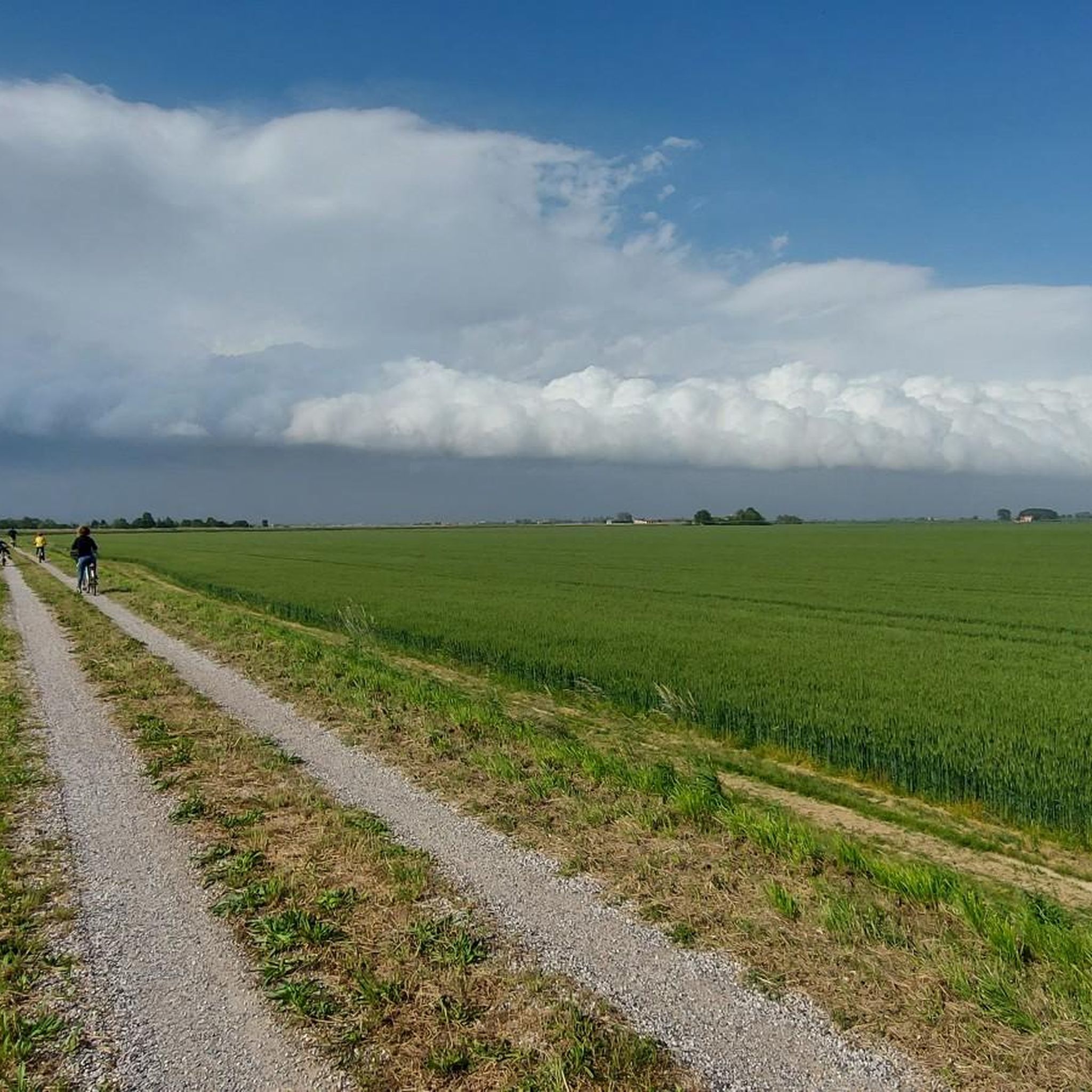
A perfect "a la Italia" branded cycle path with reddish gravel as a surface, the gravel not too fine and not too coarse.
0
0
Frequently Asked Questions
What kind of terrain can I expect when touring cycling around San Stino di Livenza?
The terrain around San Stino di Livenza is largely flat, making it ideal for touring cyclists. You'll primarily encounter lush Venetian countryside, riverine paths along the Livenza River and Malgher Canal, and agricultural fields. While there are minimal elevation gains, the routes offer diverse scenery.
How many touring cycling routes are available in the San Stino di Livenza area?
There are over 45 touring cycling routes available around San Stino di Livenza, catering to various skill levels. These include 16 easy routes, 25 moderate routes, and 5 more challenging options.
Are there any family-friendly cycling routes in San Stino di Livenza?
Yes, San Stino di Livenza offers several easy routes suitable for families. An excellent option is the Ponte delle Bilance – Caorle Bell Tower loop from La Salute di Livenza, an easy 25.4 km path that provides a scenic journey towards the historic Caorle Bell Tower.
What historical or cultural landmarks can I see along the cycling routes?
You can explore several historical and cultural landmarks. The town itself has Roman origins. Notable attractions include the 10th-century Castello di San Stino (exterior viewable), elegant 17th and 18th-century villas in surrounding villages, and the 16th-century Church of San Marco Evangelista in Corbolone. The Via dei Casoni – Casoni of Caorle loop from San Stino di Livenza will take you through the area of the traditional Casoni of Caorle, which are distinctive fishermen's huts.
Are there any natural attractions or viewpoints to enjoy while cycling?
Absolutely. The region is rich in natural beauty, situated between the Livenza River and the Malgher Canal. You can visit the Vallevecchia Nature Reserve, observe wildlife from the Observation Tower at Brussa Wetlands, or enjoy the peaceful Bosco Olmè. The Confluence of the Monticano and Livenza Rivers also offers a scenic spot.
What do other touring cyclists enjoy most about cycling in San Stino di Livenza?
The area is highly rated by the komoot community, with an average score of 4.4 stars from over 100 reviews. Reviewers often praise the largely flat and accessible routes, the picturesque Venetian countryside, and the blend of natural beauty with historical points of interest like the Casoni of Caorle.
Are there any long-distance touring cycling routes available?
Yes, there are several longer routes for those seeking a more extensive ride. For example, the Prà dei Gai South Entrance – Motta di Livenza Town Center loop from San Stino di Livenza is a challenging 77.4 km route, offering a significant distance for experienced touring cyclists.
Can I find circular cycling routes in the area?
Many of the touring cycling routes around San Stino di Livenza are designed as loops, allowing you to start and end in the same location. Examples include the moderate Ponte delle Bilance – Tezze Bridge over the Livenza loop from San Giorgio di Livenza, which covers 49.8 km along the Livenza River.
What is the best time of year for touring cycling in San Stino di Livenza?
The region's mild climate makes it suitable for cycling for much of the year. Spring and autumn generally offer pleasant temperatures and less crowded paths. Summer can be warm, but the flat terrain and proximity to water features can still make for enjoyable rides, especially in the mornings or late afternoons.
Are there routes that feature traditional fishermen's huts?
Yes, you can explore routes that highlight the traditional Casoni, which are unique fishermen's huts made of reeds and wood. The Via dei Casoni – Casoni of Caorle loop from San Stino di Livenza is specifically designed to take you through this distinctive cultural landscape, allowing you to see highlights like Via dei Casoni and the Casoni Fishermen's Huts of Caorle.
Are there any paved cycling paths in San Stino di Livenza?
Yes, the area includes paved cycling paths suitable for touring. The Ponte delle Bilance – Paved Cycling Path loop from La Salute di Livenza is a moderate 43.8 km route that utilizes such paths, offering a smooth ride through the scenic landscape.
Most popular routes around San Stino Di Livenza
Most popular attractions around San Stino Di Livenza

Get inspired with the komoot mobile app


Explore more
Browse the best Cycling routes in other regions.
