Attractions and Places To See around Marsala - Top 20
Best attractions and places to see around Marsala, a historic city on Sicily's western coast, offers a diverse landscape of cultural sites and natural beauty. The region is known for its ancient history, significant role in Italian unification, and world-renowned fortified wine. Visitors can explore a blend of historical landmarks, protected natural reserves like the Stagnone Lagoon, and extensive sandy beaches.
Best attractions and places to see around Marsala
- The most popular attractions is Garibaldi Gate (Marsala), a man-made monument that served as the main entrance to the city. This imposing city gate holds historical importance as the entry point for Giuseppe Garibaldi and his "Thousand" men in 1860, an event crucial to the unification of Italy.
- Another must-see spot is Cathedral of the Most Holy Savior of Mazara del Vallo, a religious building built by the Normans and renovated in the Baroque style. This cathedral is the main place of Catholic worship in Mazara del Vallo and features sea-green colored domes.
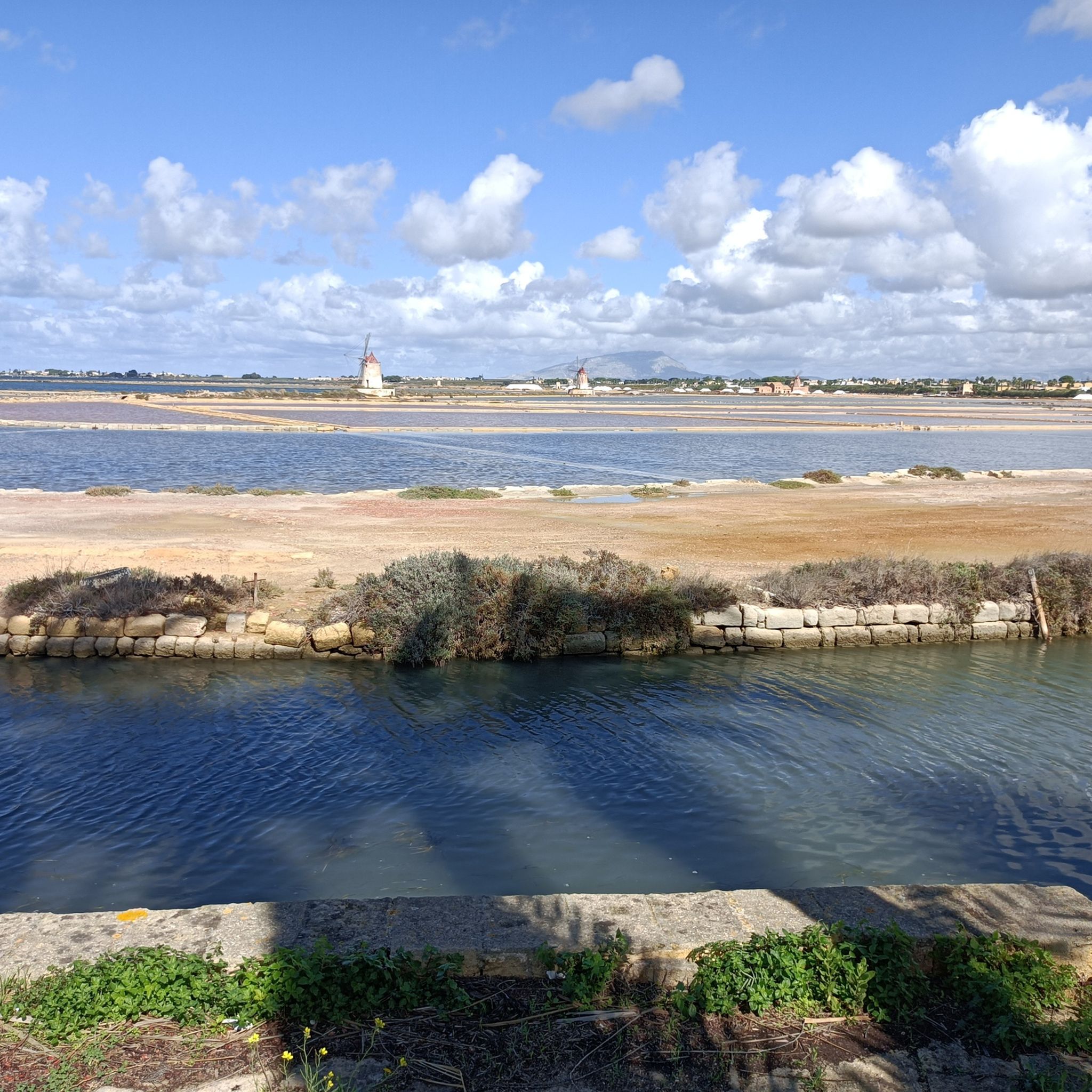
- Visitors also love Trapani and Paceco Salt Pans, a natural monument with a rich history of sea salt extraction. This area is also important for nature, serving as a protected natural area and passage for various species of migratory birds.
- Marsala is known for its historical sites, natural reserves, and cultural attractions. The city offers a variety of experiences, from ancient gates and cathedrals to salt pans and archaeological parks.
- The attractions around Marsala are appreciated by the komoot community, with more than 50 upvotes and 35 photos shared across 22 highlights.
Last updated: July 6, 2026
Garibaldi Gate (Marsala)
Highlight • Monument
Translated by Google •
Tip by

Trapani and Paceco Salt Pans
Highlight • Natural Monument
Translated by Google •
Tip by

Sign up now to discover places like this
Get recommendations on the best single tracks, peaks, & plenty of other exciting outdoor places.
Sign up for free
Cathedral of the Most Holy Savior of Mazara del Vallo
Highlight • Religious Site
Translated by Google •
Tip by

Wonderful view of Salemi
Highlight • Viewpoint
Today Salemi is a splendid town of around 10,000 inhabitants, part of the most beautiful villages in Italy according to the National Association of Italian Municipalities.
Translated by Google •
Tip by

Red Cove
Highlight • Beach
Translated by Google •
Tip by
Sign up for free to discover even more attractions around Marsala.
Sign up for free
Already have an account?
Start today with a free account
Your next adventure awaits.
Login or Signup
Other adventures around Marsala

Tips from the Community

Nice place with a few shops around.
0
0
The cathedral looks especially photogenic in the afternoon
0
0

An important natural product is extracted from the sea's saltwater here. Only through the power of the elements, sun and wind, which evaporate the water in the saltworks' shallow basins, does pure salt remain. Even today, you won't find a kitchen without salt to season dishes. But in earlier times, it had an additional significance: It was important for preserving food—making it so precious that salt was called "white gold."
0
0

The crystalline seabed of fine gravel mixed with sand is typical of this cove
0
0

A visit to Porta Garibaldi in Marsala is like a leap into the past. This imposing city gate, which once served as the main entrance to the city, bears witness to the region's turbulent history. It was here in 1860 that Giuseppe Garibaldi began his legendary march with the "thousand" soldiers to unite Italy. When you walk through the gate, you feel the historical significance of this place. The fine stone carvings, the Latin inscriptions and the impressive coat of arms that sits on the gate are real eye-catchers. The saying "Dominus custodiat introitum et exitum tuum" - "The Lord guard your entrance and exit" - reflects the protective function of the gate. A walk through the gate takes you straight into the lively center of Marsala, where cafes and shops line the narrow streets. The portal acts like a time machine: as soon as you walk through, modern life opens up, but you still have one foot anchored in the past.
1
0
The Cathedral of Mazara del Vallo, the "Santissimo Salvatore", immediately captivates you. This mixture of Norman origins and baroque splendor was begun as early as 1086 and later redesigned in the baroque style in the 17th century. The sea-green domes give the cathedral a unique charm, especially when they shine in the light of the Sicilian sun. As you walk through the main square in front of the cathedral, you immediately notice how it is embedded in the surrounding architecture and yet stands out as a dominant monument. A highlight of the interior is the ornate carving and the detailed statues that recall the history of the city and its rulers. Particularly nice: The spacious, shady squares around the cathedral invite you to take a break in the shade of the palm trees. If you come in the afternoon, make sure you allow enough time for the visit, as the cathedral sometimes closes earlier.
1
1
History, culture and breathtaking views of the hilly surroundings are all mixed here. The view of the Norman-Swabian castle that towers over the town is particularly impressive - a perfect destination after a challenging stage. The climb, especially in the Monte delle Rose district, is quite demanding, but the reward is worth it: a spectacular view of the old town and the castle. Salemi is not only a visual highlight, but also steeped in history. In May 1860, Giuseppe Garibaldi briefly proclaimed Salemi the first capital of a united Italy - even if the title only lasted for one day. This town combines the legacy of a turbulent past with the charm of a typical Sicilian village, which lies about 400 meters above sea level. Salemi not only offers a historical insight, but also a challenging but worthwhile route through the rural region. When you drive through the winding streets here, you can literally feel how history and the present merge into one another.
0
0
A road bike tour through the salt pans of Trapani and Paceco offers a fascinating insight into the millennia-old tradition of salt production. The flat and well-paved roads lead directly through the quiet basin landscapes, past old windmills that are still used today to regulate water. The vast, open landscape and the shimmering salt create an impressive backdrop that makes every ride an unforgettable experience. In addition to the rich history, the region is also an important resting place for migratory birds such as flamingos, which can be observed during the ride. A special highlight on the route is the Calendula maritima, a rare plant that grows exclusively in this region and is a symbol of local nature conservation. A short stop at the salt museum in one of the windmills is worthwhile to learn more about the importance of salt and the people who have worked with it for thousands of years. This route offers a perfect mix of exercise, cultural experience and enjoyment of nature—ideal for road cyclists who are looking for something special off the beaten track.
0
0
Frequently Asked Questions
What historical landmarks can I explore in Marsala?
Marsala is rich in history. You can visit the iconic Garibaldi Gate, which marks the entry point for Giuseppe Garibaldi and his 'Thousand' men in 1860, a pivotal moment for Italian unification. The city center also features the beautifully restored Baroque old town, including Marsala Cathedral, and ancient gates like Porta Nuova. Don't miss the view of Salemi, which was briefly the capital of Italy during Garibaldi's campaign.
Where can I experience Marsala's natural beauty and unique landscapes?
The 'Isole dello Stagnone' Nature Reserve is a must-see, featuring shallow waters, windmills, and ancient salt fields. This area is particularly stunning at sunset. You can also visit the Trapani and Paceco Salt Pans, which have a rich history of sea salt extraction and are important for migratory birds. For coastal views, Red Cove offers crystal clear waters and a dramatic landscape.
Are there any family-friendly attractions in Marsala?
Yes, several attractions are suitable for families. The Garibaldi Gate and the historic city center are great for leisurely strolls. The Trapani and Paceco Salt Pans offer an educational and visually striking experience, especially with the windmills and birdwatching opportunities. The South Zone Beaches, just a few kilometers from the city center, provide sandy shores and amenities for a relaxing family day.
What outdoor activities can I do near Marsala's attractions?
Marsala offers various outdoor activities, especially around the Stagnone Lagoon and salt pans. You can enjoy hiking, mountain biking, and road cycling. For hiking, explore routes like the 'Historic pier to Mozia Island – Saline Ettore e Infersa loop'. Cyclists can try the 'Stagnone Cycle Path' or routes around the salt pans. Find more details on these activities in the Hiking around Marsala, MTB Trails around Marsala, and Road Cycling Routes around Marsala guides.
Where can I learn about Marsala's ancient history and archaeology?
The Lilibeo Archaeological Park and Baglio Anselmi Archaeological Museum are excellent places to delve into Marsala's ancient past. The museum, housed in a former wine-making establishment, displays artifacts from Carthaginian, Greek, and Roman periods, including a Punic warship wreck. The attached park features ruins of fortifications, city gates, and a Roman road from the ancient city of Lilybaeum. Additionally, Mozia Island (Isola di San Pantaleo) within the Stagnone Lagoon was an ancient Phoenician city and hosts the Whitaker Museum.
What is the best time of year to visit Marsala for sightseeing and outdoor activities?
The spring (April-May) and autumn (September-October) months are generally ideal for visiting Marsala. The weather is pleasant for exploring historical sites and engaging in outdoor activities like hiking or cycling without the intense heat of summer. These periods also offer beautiful light for photography, especially around the salt pans at sunset.
Can I visit a winery in Marsala?
Absolutely! Marsala is world-renowned for its fortified wine. Visiting a winery like Florio Winery (Cantine Florio) offers a fantastic experience. You can take tours of historical cellars, learn about the winemaking process, and enjoy wine tastings, often paired with local food. Other notable wineries in the area include Donnafugata and Cantine Pellegrino.
What are the best viewpoints in the Marsala area?
For stunning panoramic views, Capo Boeo, the westernmost tip of Sicily, offers breathtaking vistas. The Trapani and Paceco Salt Pans are also a spectacular viewpoint, especially at sunset when the light creates a magical glow over the salt flats and windmills. From the castle in Salemi, you can also enjoy a wonderful view of Salemi and its surroundings.
Are there any unique cultural sites beyond the main landmarks?
Yes, Marsala offers several unique cultural sites. The Monumental Complex of San Pietro, a former Benedictine monastery, now houses the Civic Museum where you can explore Marsala's history through various exhibits. The Museum of the Flemish Tapestries showcases rare 16th-century tapestries. For archaeology enthusiasts, the Church of San Giovanni Battista al Boeo, Paleochristian Necropolis, and Hypogeum of Crispia Salvia are also worth exploring.
What is the 'Isole dello Stagnone' Nature Reserve known for?
The 'Isole dello Stagnone' Nature Reserve is famous for its unique ecosystem, characterized by shallow, calm waters, historic salt pans, and picturesque windmills. It's a significant site for birdwatching, particularly for flamingos, and is a popular spot for kitesurfing and windsurfing due to its consistent winds and shallow conditions. The reserve also encompasses four small islands, including the ancient Phoenician city of Mozia (San Pantaleo).
Where can I find local markets or vibrant evening spots in Marsala?
The Mercato Antico (Ancient Market) in Marsala's city center is a lively spot. By day, it functions as a traditional fish market, offering a glimpse into local life. In the evenings, it transforms into a vibrant hub with various eateries and bars, making it a great place to experience Marsala's nightlife and enjoy local cuisine.
Most popular attractions around Marsala

Get inspired with the komoot mobile app


Explore more
Still not found the Highlight you’re looking for? See guides of the top attractions in other regions:
