Attractions and Places To See around Lusiana Conco - Top 20
Attractions and places to see around Lusiana Conco are located in the Asiago Plateau, a region characterized by its historical significance and varied natural landscapes. The area features numerous World War I sites, ancient settlements, and extensive forests. Visitors can explore a mix of historical landmarks, natural features like karst formations, and cultural points of interest. The municipality offers diverse terrain, from deep woods to sunny pastures, providing a range of outdoor experiences.
Best attractions and places to see around Lusiana Conco
- The most popular attraction is Silan Waterfalls, a waterfall formed by the Silàn stream. This site features spectacular waterfalls with natural pools amidst a lush forest.
- Another must-see spot is Vaca Mora Cycle Path (Former Rocchette-Asiago Railway), a cycle way created from an old railway line. It offers a pleasant route through the landscape, passing disused stations.
- Visitors also love Barenthal British Cemetery, a historical site. This military cemetery from World War I is one of several in the Asiago Plateau, serving as a place for reflection.
- Lusiana Conco is known for its historical sites, natural features, and cultural points of interest. The region offers a variety of attractions, including ancient settlements, war memorials, and unique art installations.
- The attractions around Lusiana Conco are appreciated by the komoot community, with more than 320 upvotes and 32 photos shared by visitors.
Last updated: October 9, 2026
Brenta Cycle Path
Highlight • Cycleway
Translated by Google •
Tip by

Rialto Bridge of Valstagna
Highlight • Bridge
The first place in the valley is Pergine Valsugana. The lively town at the gateway to the famous valley is characterized by the impressive castle complex of Castel Pergine above the town. The castle is considered to be largely original in terms of its shape and structure, apart from an alleged Roman fortress that is said to have once stood here.
Text / Source: Valsugana
valsugana.de/die-orte-im-tal
Translated by Google •
Tip by

Sign up now to discover places like this
Get recommendations on the best single tracks, peaks, & plenty of other exciting outdoor places.
Valstagna and Ponte Vecchio on the Brenta
Highlight • Settlement
Translated by Google •
Tip by

Barenthal British Cemetery
Highlight • Historical Site
Translated by Google •
Tip by

Vaca Mora Cycle Path (Former Rocchette-Asiago Railway)
Highlight (Segment) • Cycleway
Translated by Google •
Tip by

Sign up for free to discover even more attractions around Lusiana Conco.
Already have an account?
Start today with a free account
Your next adventure awaits.
Popular around Lusiana Conco
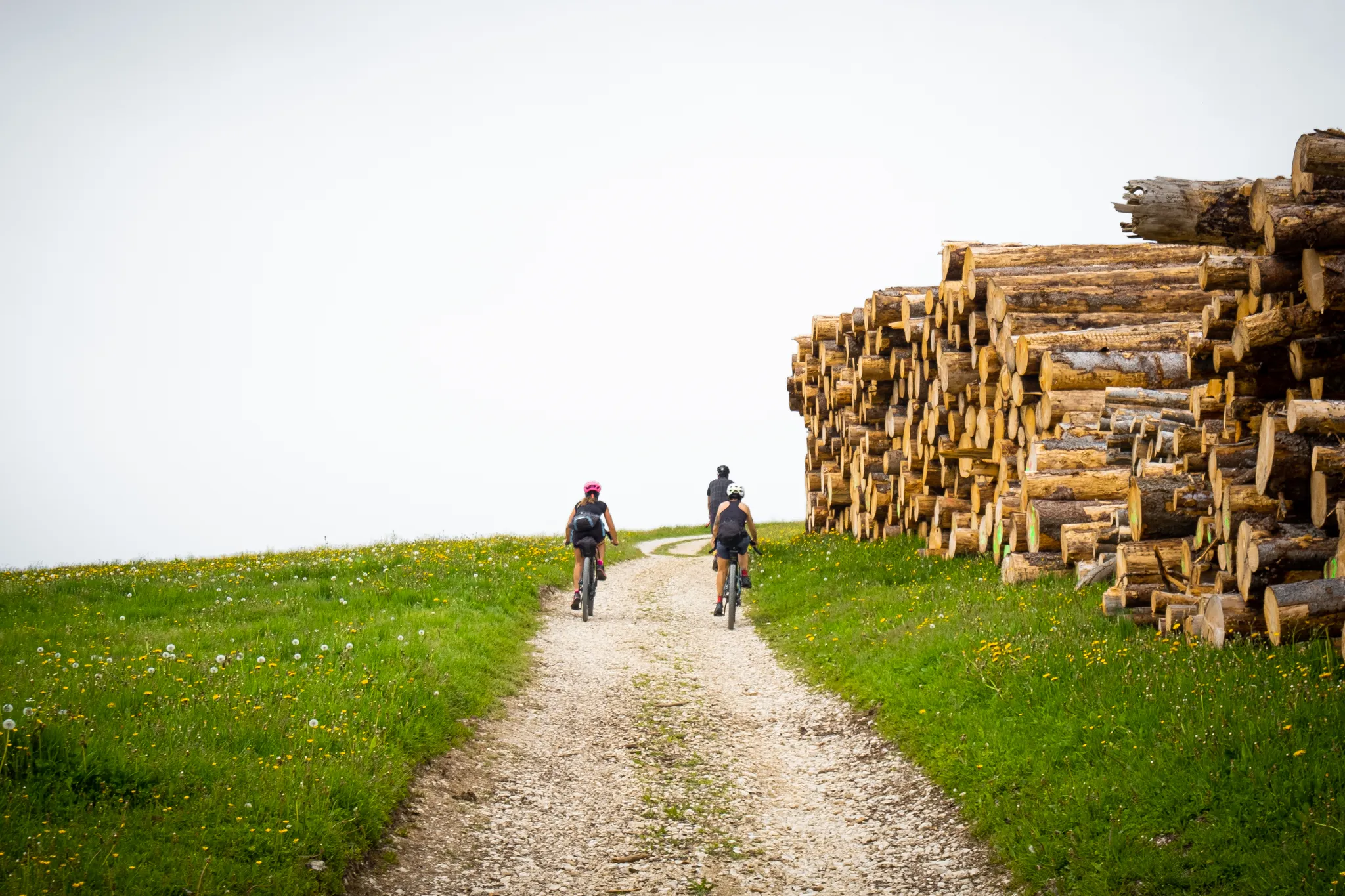

Other adventures around Lusiana Conco

Tips from the Community


The Rialto Bridge of Valstagna is an important infrastructural work located in the municipality of Valbrenta, in the province of Vicenza. Crossing the Brenta river, this bridge historically connects the inhabited area of Valstagna, on the right bank, to the hamlet of Carpanè and the SS 47 of Valsugana, on the left bank, representing a vital hub for local traffic and for cycle tourists on the Brenta Cycle Path. Recently, the structure has undergone a radical restoration and safety intervention, which concluded with its reopening in the summer of 2025. The works, worth over one million euros, have made it possible to repair the damaged parts, widen the roadway, and create a protected pedestrian walkway. A spectacular LED lighting system has also been installed, which colors the bridge during historical events such as the Palio delle Zattere.
0
0
La Ciclovia del Brenta is a picturesque cycle touring route that winds for about 140 kilometers, connecting Caldonazzo in Trentino with Chioggia, overlooking the Venice lagoon. The route follows the course of the Brenta river, offering an extraordinary variety of landscapes. The first section, known as the Ciclopista della Valsugana, gently descends through the mountains along the lake, then enters a valley rich in woods, rocky walls, and historic villages like Bassano del Grappa. Continuing towards the Venetian plain, the itinerary passes through important art cities like Padua and transforms into the famous Riviera del Brenta, renowned for its monumental Palladian and patrician villas. The route finally concludes at the gates of the Adriatic Sea. Mostly flat and largely paved or on compact dirt, the cycle path is suitable for cyclists of all levels.
0
0

cycle path for cycling serenely, well-maintained and very smooth
0
0

“Death is not the end, but only a very specific end: namely, the end of a first, provisional period of life and the beginning of a new, unending epoch. Jesus said, ‘My kingdom is not of this world.’ So there is another world. Not only his disciples believed in this other world, but also his opponents. The lawyer, for example, asked him what he must do ‘to inherit eternal life.’ (…) Precisely because it lasts forever, this life is so precious that everything else in the present world pales in comparison.” (Text by Albino Luciani / Pope John Paul I)
0
0

Beautiful cycle path that runs alongside the Brenta River
0
0

Very characteristic village north of Bassano in a very narrow part of the Valbrenta
1
0

In the locality of Barenthal there is a British cemetery (there are 5 in the whole Plateau) which contains 126 fallen soldiers identified by the Commonwealth belonging to the troops of the XIV Corps of the British Expeditionary Force.
0
0
Frequently Asked Questions
What are some notable historical sites to explore in Lusiana Conco?
Lusiana Conco is rich in history. You can visit the extensive Open-Air Museum of Lusiana, explore the reconstructed Prehistoric Village on Mount Corgnon, or see the ancient Val Lastaro Excavations. Significant World War I sites include the Italian-French Cemetery of Conco and the Monument to the Unknown Soldier on Monte Corno. The Barenthal British Cemetery also offers a place for reflection on the Great War.
Where can I experience the natural beauty of Lusiana Conco?
The region boasts diverse natural landscapes. Explore the trails of Monte Corno, which features beech and fir forests, pastures, and impressive karst formations. The Alpine Botanic Garden of Mount Corno showcases over 350 species of subalpine and mountain plants. Don't miss the Silan Waterfalls, a spectacular series of cascades with natural pools amidst a lush forest. The Valle dei Mulini (Mill Valley) also offers a scenic path through a historically significant area.
Are there any family-friendly attractions in Lusiana Conco?
Yes, Lusiana Conco offers several family-friendly options. The Prehistoric Village on Mount Corgnon provides engaging experimental activities like clay working and archery. Sojo's Park features 80 works of contemporary art immersed in nature, which can be an interesting walk for all ages. The Silan Waterfalls are also a popular spot for families to enjoy a beautiful walk in nature.
What kind of outdoor activities can I do near these attractions?
Lusiana Conco is ideal for outdoor enthusiasts. You can enjoy hiking, mountain biking, and running. For hiking, consider routes like the 'Poilus Loop A' or the 'Valle dei Mulini Historic Mill Trail'. Cyclists can explore the Vaca Mora Cycle Path, a pleasant route on a former railway line. You can find more options for hiking, mountain hikes, and running in the area.
Where can I find unique cultural experiences in Lusiana Conco?
Beyond historical sites, Lusiana Conco offers unique cultural points. Sojo's Park is an innovative open-air gallery with contemporary art installations. 'The forest talks about itself' in Demonstrative Area Labiolo is an open-air exhibition dedicated to forest activities. You can also explore the 23 historic centers and 135 districts (contrade) that make up the municipality, each with its own charm and authentic atmosphere.
Are there any viewpoints offering panoramic vistas?
Yes, Monte Corno (1,383 meters) offers trails with expansive views. On clear days, you might even see the Venice Lagoon. For truly spectacular panoramic views, consider driving to Cima Larici, about an hour away, which extends north to the Brenta Dolomites and Valsugana, including the Lakes of Caldonazzo and Levico.
What is the Vaca Mora Cycle Path?
The Vaca Mora Cycle Path is a popular route created from the old railway line that once connected Rocchette to Asiago. It offers a pleasant journey through the landscape, passing disused stations. The path has a mostly compact dirt surface, making it suitable for cycling and walking, and is known for its well-maintained condition.
What are some hidden gems or lesser-known spots in the area?
Beyond the main attractions, consider visiting the Bell Tower in Contrà Campana, which houses a bronze bell from 1388, making it the oldest in the Vicenza area. The Commemorative Stone for the Powder Magazine Explosion in Gomarolo marks a tragic World War I event. Also, the Catalog Field is a unique initiative reproducing over 60 ancient varieties of Lusiana apples and pears.
What do visitors enjoy most about the attractions in Lusiana Conco?
Visitors frequently appreciate the blend of natural beauty and historical significance. The Silan Waterfalls are praised for their spectacular appearance and the beautiful surrounding forest. The Vaca Mora Cycle Path is loved for its well-maintained surface and scenic route. Many find the World War I cemeteries, like the Barenthal British Cemetery, to be very suggestive and a place for meditation.
Can I find evidence of ancient human habitation in Lusiana Conco?
Absolutely. The region has a deep past. The Prehistoric Village on Mount Corgnon is built on the remains of a Neolithic fortified settlement. Archaeological finds from Mount Corgnon, Coldinechele, and Covolo demonstrate human habitation since the Paleolithic era. The Val Lastaro Excavations have even revealed settlements of hunters dating back 11,000 years.
Are there any specific trails for easy walking or beginner hikers?
Yes, for easier walks, you can explore routes like the 'Sentiero dell'Amore (Trail of Love) from Santa Caterina' or 'Poilus Loop B'. The Valle dei Mulini also offers a paved path suitable for a leisurely stroll. These trails provide a gentle way to experience the region's beauty. More options can be found in the hiking guide.
What kind of forests and landscapes characterize Lusiana Conco?
Lusiana Conco is characterized by vast pine and beech forests, expansive pastures, and unique karst formations. The landscape features deep woods, sunny clearings, and rocky outcrops that provide breathtaking views. This diverse terrain makes it an ideal destination for those seeking varied natural environments.
Most popular routes around Lusiana Conco
Most popular attractions around Lusiana Conco

Get inspired with the komoot mobile app


Explore more
Still not found the Highlight you’re looking for? See guides of the top attractions in other regions:
