The best walks and hikes around Gistel
4.1
(118)
648
hikers
73
hikes
Hiking around Gistel, a town in West Flanders, Belgium, offers diverse routes through its picturesque surroundings. The region is characterized by flat polder landscapes, rural paths, and proximity to coastal dunes, providing varied terrain for outdoor activities. Hikers can explore well-maintained paths in local parks like De Warande, or venture into the wider network of trails that traverse agricultural areas and connect to nearby coastal features.
Best hiking trails around Gistel
- The most popular hiking route is Kasteel Montjoie –…
Last updated: August 25, 2026
4.4
(13)
71
hikers
12.5km
03:11
30m
30m
Moderate hike. Good fitness required. Easily-accessible paths. Suitable for all skill levels.
4.4
(7)
38
hikers
6.78km
01:42
10m
10m
Easy hike. Great for any fitness level. Easily-accessible paths. Suitable for all skill levels.

Sign up for free
4.2
(9)
43
hikers
8.71km
02:12
20m
20m
Moderate hike. Good fitness required. Easily-accessible paths. Suitable for all skill levels.
4.4
(8)
18
hikers
7.94km
02:01
20m
20m
Moderate hike. Good fitness required. Easily-accessible paths. Suitable for all skill levels.
3.8
(13)
38
hikers
4.84km
01:13
10m
10m
Easy hike. Great for any fitness level. Easily-accessible paths. Suitable for all skill levels.
Get access to more routes and recommendations from other explorers.
Sign up for free
Already have an account?
Our route recommendations are based on thousands of hikes, rides, and runs completed by other people on komoot.
Start today with a free account
Your next adventure awaits.
Login or Signup

Tips from the Community

Cycling outdoors is just wonderful, isn't it? :)
0
0

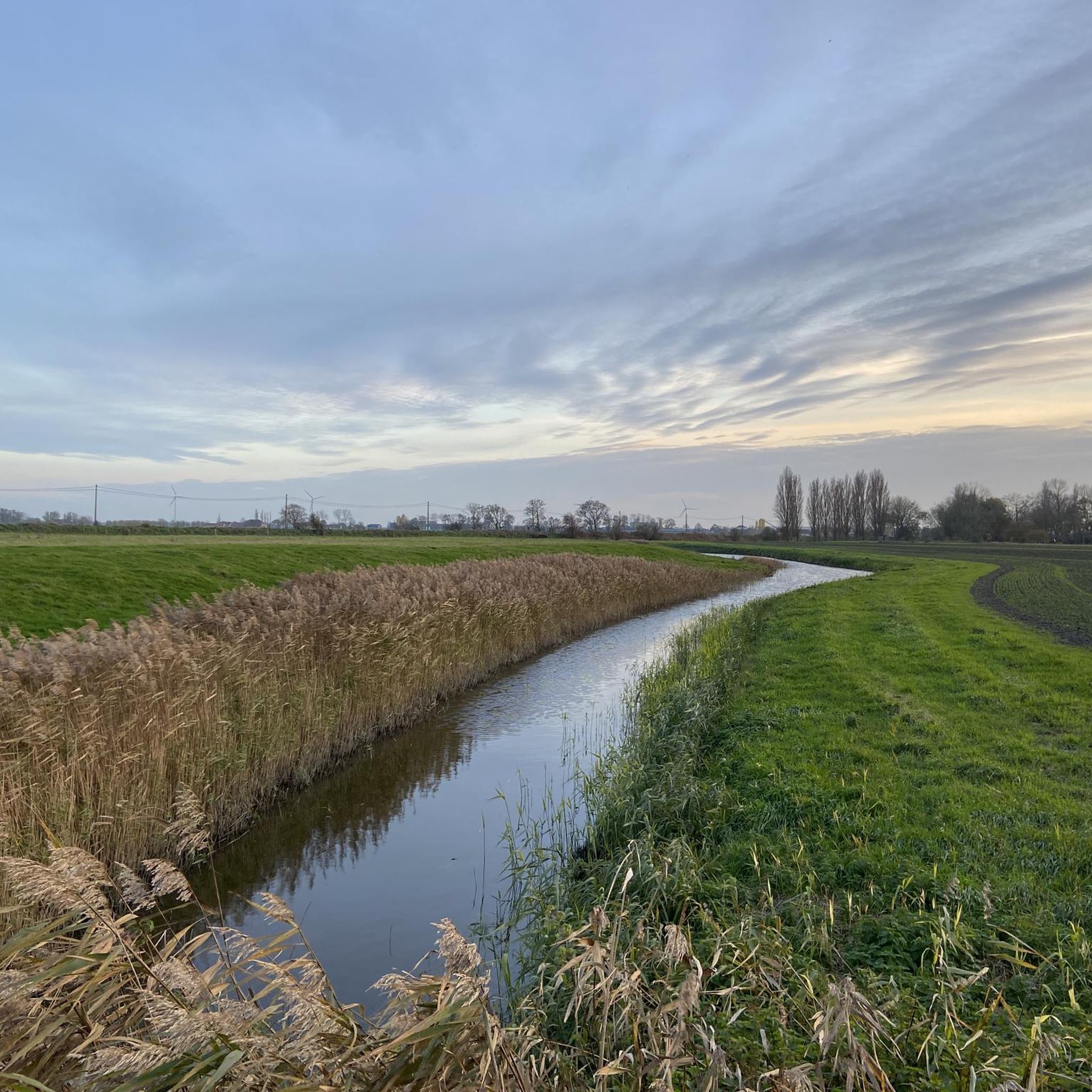
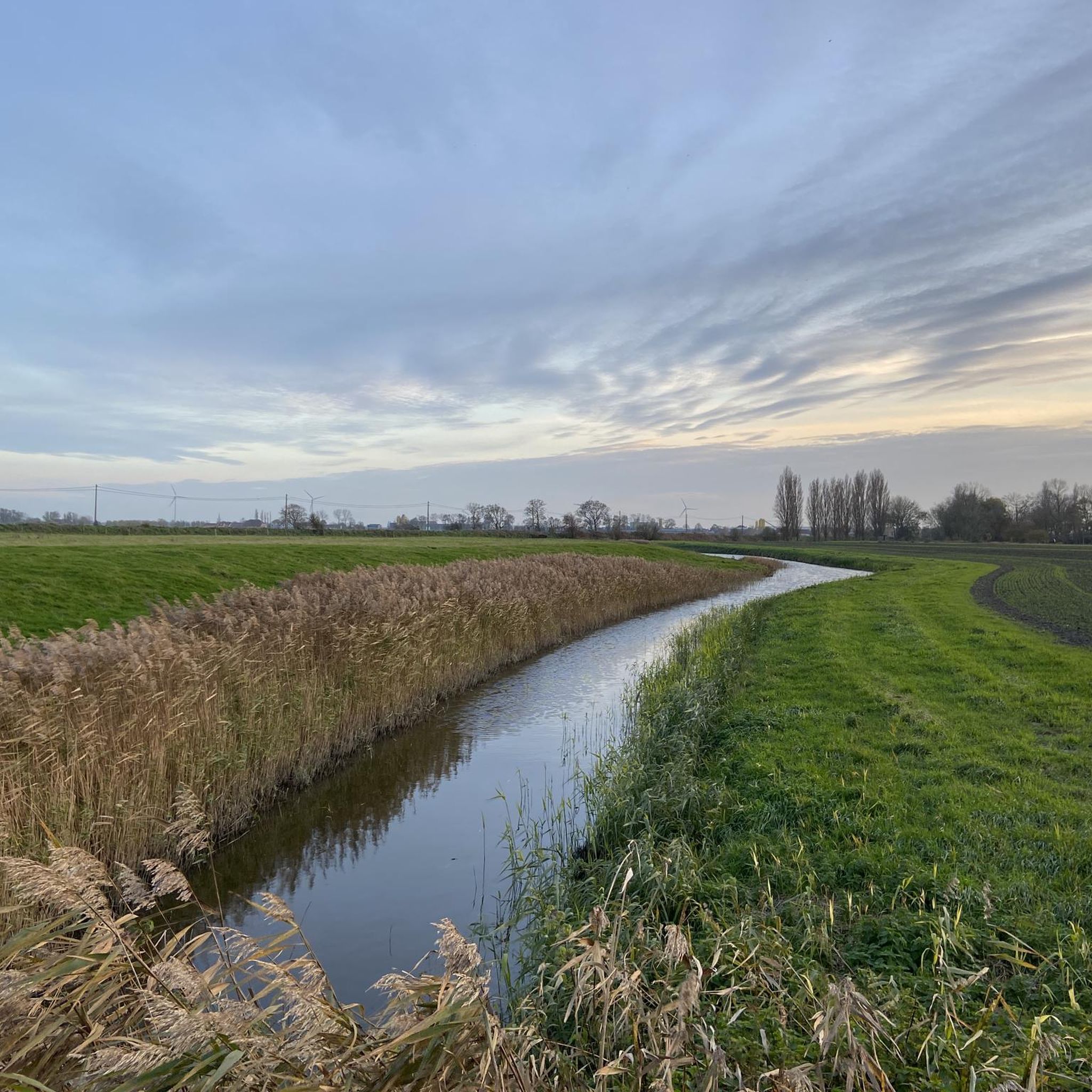
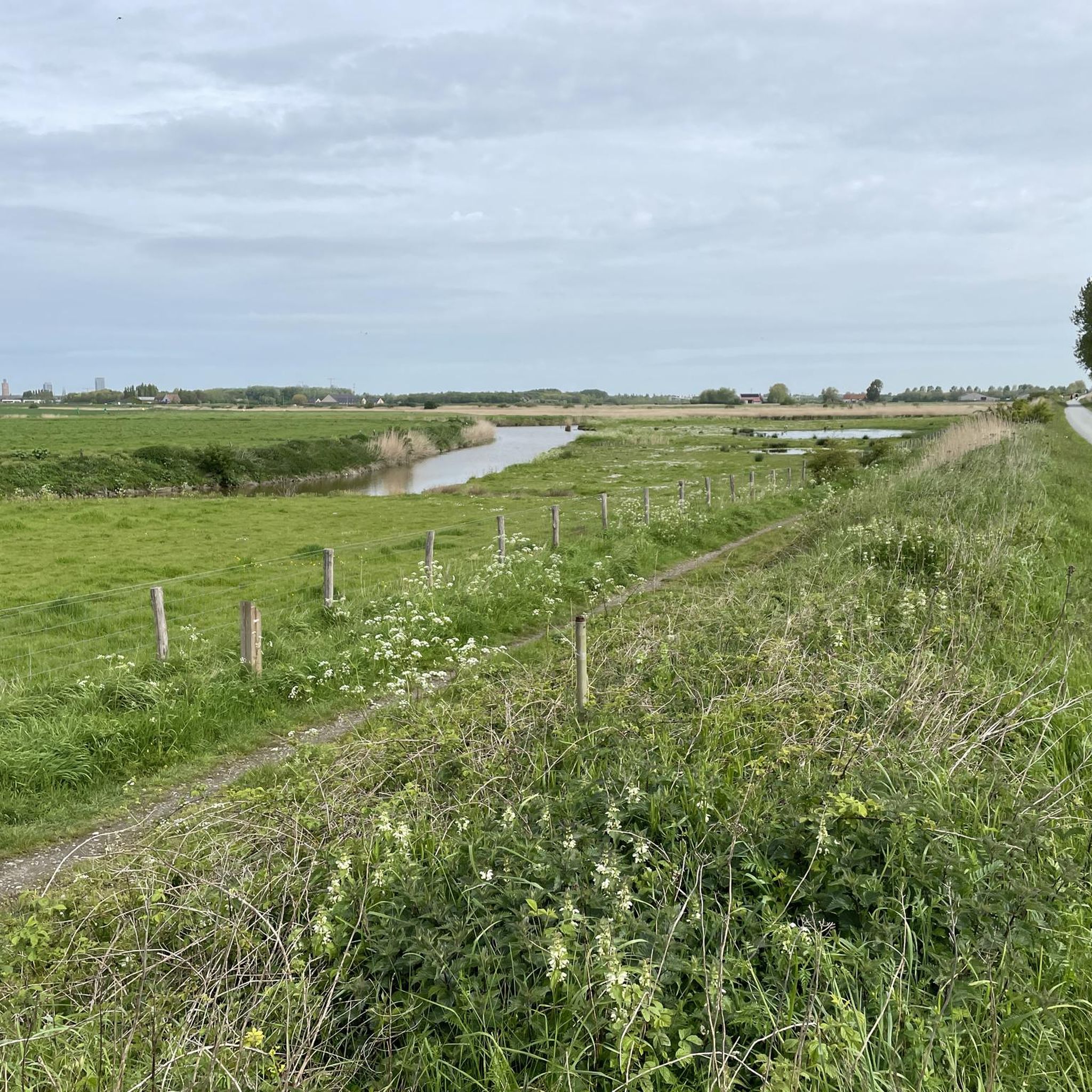
The Creek Area around Ostend is a unique wetland zone, with a network of creeks, marshes, reed beds and grasslands. These creeks were created by the natural silting up of rivers and other waterways. The area has a rich biodiversity, which makes it ideal for a nature walk.
0
0

The area of the Zoutekreek and the Sluiskreek is an important breeding ground for many birds: bluethroat, reed bunting, reed warbler, reed warbler, lapwing, black-tailed godwit, stonechat, etc. The surrounding polder complex contains 'jungles at knee height' with glass land that, in addition to a unique fauna and flora also has an ancient relief structure.
0
0

The Oostmolen site is located on the eastern edge of the city center of Gist. Due to its dual function as a grain and oil mill, the Oostmolen must be regarded as a unique example among the post mills. The blade cross is not only a driving source for the two pairs of grinding stones in the rotating mill housing, but also for the oil mill in the stamping shed. The mill was already mentioned in 1302. Initially it was a ban mill, as every tenth shovel of grain had to be given to the Lord of Gistel. The mill is depicted on the map of Jacob Van Deventer (ca. 1659-1573) and on the Sanderus engraving (1641). The current mill building dates from the 18th century and is on the Ferraris map (1770-1778). The Oostmolen was a typical Flemish post mill that was originally placed on brick slabs. In 1841 it was placed on a tower block by Karel Peel Keckaert to turn it into an oil mill or stomping ground. In 1933, the blades were covered by owner and molinologist Alfred Ronse, one of the first mills in West Flanders. In 1971 the Ronse family donated the mill to the city of Gistel. After a fire in 1979, the mill was completely rebuilt between 1979 and 1982 by Guido and Herman Peel under the supervision of engineer-architect Walter Snauwaert. The inauguration of the restored grain and oil mill took place on May 19, 1984. In June 1999, a wooden rod broke off. Between 2005 and 2007, the Dutch company Adriaens Molenbouw carried out a grinding restoration.
1
0

once the site of a castle where Snaaskerke arose
1
0

On the Polderdijk, opposite the farm "'t Meeuwenhof", there is a striking cast-iron pole on a base of brick and bluestone with the inscription “station geodesique 1853”. A geodetic signal or geodetic point is a fixed known point from which one starts when measuring distances for mapping a certain region. The iron pile along the Polderdijk is the geodetic signal of Zandvoorde, which is part of a mid-19th century geodetic net, more specifically a triangular net whose angles were measured and whose scale was determined by measuring three bases in Belgium, namely Ostend, Lommel and Hamipré.
7
0

The historic polders of Ostend were created in the sixteenth century, on the eve of the Siege of Ostend (1601–1604). The city was in the hands of the Beggars and was besieged by the Spaniards. The Beggars made a breach in the dunes (this is now the harbor channel) and the sea invaded the land. A large flood area arose, intersected with narrow creeks. Ostend had thus become an island and an almost impregnable fortress. The Beggars resisted the Spanish army for more than three years. The area of the Zoutekreek and the Sluiskreek is an important breeding ground for many birds: bluethroat, reed bunting, reed warbler, warbler, lapwing, black-tailed godwit, stonechat, etc. The surrounding polder complex contains 'jungle forests at knee height' with glass land that, in addition to a unique fauna and flora also has an ancient relief structure. Source: https://www.oostende.be/Krekengebied
1
1

nice resting point
1
1
Frequently Asked Questions
How many hiking trails are available around Gistel?
Gistel offers a wide variety of hiking opportunities, with over 70 routes available. These trails cater to different preferences, ranging from easy strolls to more challenging treks through the diverse landscapes of West Flanders.
Are there easy hiking trails suitable for beginners or families in Gistel?
Yes, Gistel is very welcoming for beginners and families. Over 50 of the available routes are rated as easy. You can enjoy leisurely walks through well-maintained paths in places like De Warande Park, or explore the flat polder terrain. An example of an easy route is Kasteel Montjoie – Oostmolen loop from Gistel, which is about 4.8 miles (7.7 km) long.
Can I find circular hiking routes in Gistel?
Many of the hiking routes around Gistel are designed as circular loops, allowing you to start and end at the same point. For instance, the Bourgogne Canal – Bourgogne Pathway loop from Westkerke is an easy 3-mile (4.8 km) circular trail that takes you through pleasant canal-side scenery.
What kind of landscapes can I expect to see while hiking near Gistel?
Hiking around Gistel offers a diverse range of landscapes. You'll encounter flat polder lands, rural paths winding through agricultural areas, and charming local parks. For more expansive views, the region's proximity to the coast means you can also explore trails along the scenic coastal dunes, offering vistas of the North Sea.
Are there any scenic viewpoints or natural attractions along the trails?
Absolutely. The Gistel area is rich in natural beauty. You can discover highlights such as the Yser Estuary, Nieuwpoort, the tranquil Ostend Creeks, and the expansive Belgian Sandy Beaches. These offer picturesque settings and opportunities to observe local flora and fauna.
What are some historical sites or landmarks I can explore while hiking?
Gistel's surroundings are steeped in history. Hikers can visit significant landmarks like the King Albert I Monument and the Ganzepoot Locks. Another notable historical site is Raversyde and the Atlantic Wall, offering insights into the region's past.
Are there longer or more challenging hikes for experienced hikers?
While Gistel is known for its flat terrain, there are moderate options for those seeking a longer walk. For example, the Hoeve Vanmassenhove – Gistel Camper Parking Area loop from Ostend is a moderate 5.4-mile (8.7 km) trail that takes you through agricultural and open landscapes. There is also one difficult route for those looking for a significant challenge.
Is there parking available at the trailheads in Gistel?
Yes, many routes around Gistel, particularly those starting from or passing through key points, offer convenient parking. For instance, some trails are named with reference to the 'Gistel Camper Parking Area,' indicating accessible starting points for your hike.
What do other hikers say about the trails in Gistel?
The hiking trails in Gistel are highly regarded by the komoot community, boasting an average rating of 4.2 stars from over 90 reviews. Hikers frequently praise the well-maintained paths, the peaceful rural scenery, and the variety of routes suitable for different fitness levels.
Are the hiking trails in Gistel suitable for dogs?
Generally, the rural paths and open polder landscapes around Gistel are suitable for dog walking. Many local hikers enjoy these areas with their canine companions. However, it's always recommended to keep dogs on a leash, especially near agricultural fields or protected natural areas, and to check for any specific local regulations.
What is the best time of year to go hiking in Gistel?
Gistel offers pleasant hiking experiences throughout much of the year. Spring and autumn provide mild temperatures and beautiful scenery, with blooming flowers or vibrant fall foliage. Summer is also popular, though it can be warmer. Even in winter, the flat terrain makes for accessible walks, especially on crisp, clear days.
Most popular attractions around Gistel

Get inspired with the komoot mobile app


Explore more
Browse the best Hikes in other regions.
