The best cycling routes around Nevele
4.3
(103)
1,336
riders
90
rides
Touring cycling around Nevele, located in Flanders, Belgium, is characterized by its flat terrain and extensive network of waterways. The region features numerous canals, such as the Ghent–Bruges Canal, and river valleys like the Oude Kale, providing level paths suitable for cycling. The landscape is primarily agricultural, interspersed with small villages and green spaces, offering consistent riding conditions with minimal elevation changes.
Best touring cycling routes around Nevele
- The most popular touring cycling route is Bruges – Ghent–Bruges Canal loop from Landegem, a 42.8 miles (68.9 km) trail that takes 3 hours 53 minutes to complete. This route follows the historic canal paths, offering flat and scenic cycling.
- Another top favourite among local touring cyclists is Canal Path Ostend–Bruges – Bruges–Ostend Canal loop from Landegem, a difficult 65.9 miles (106.0 km) path. This route provides a long-distance experience along the canals connecting major cities.
- Local touring cyclists also love the Jachthaven Deinze – Street art - tunnel loop from Landegem, a 15.2 miles (24.4 km) trail leading through urban and waterside areas, often completed in about 1 hour 26 minutes.
- Touring cycling around Nevele is defined by canal paths, river valleys, and agricultural landscapes. The network offers options for various ability levels, from easy loops to more challenging long-distance routes.
- The routes in Nevele are highly rated by the komoot community with an average score of 4.5 stars from over 370 reviews. More than 2,700 touring cyclists have used komoot to explore Nevele's varied terrain.
Last updated: July 4, 2026
5.0
(2)
63
riders
Moderate bike ride. Good fitness required. Mostly paved surfaces. Suitable for all skill levels.
4.2
(5)
79
riders
24.0km
01:24
30m
30m
Easy bike ride. Great for any fitness level. Mostly paved surfaces. Suitable for all skill levels.

Sign up for free
4.5
(2)
54
riders
27.5km
01:36
40m
40m
Easy bike ride. Great for any fitness level. Mostly paved surfaces. Suitable for all skill levels.
4.0
(4)
46
riders
Moderate bike ride. Good fitness required. Mostly paved surfaces. Suitable for all skill levels.
4.0
(1)
40
riders
22.5km
01:19
30m
30m
Easy bike ride. Great for any fitness level. Mostly paved surfaces. Suitable for all skill levels.
Get access to more routes and recommendations from other explorers.
Sign up for free
Already have an account?
Our route recommendations are based on thousands of hikes, rides, and runs completed by other people on komoot.
Start today with a free account
Your next adventure awaits.
Login or Signup
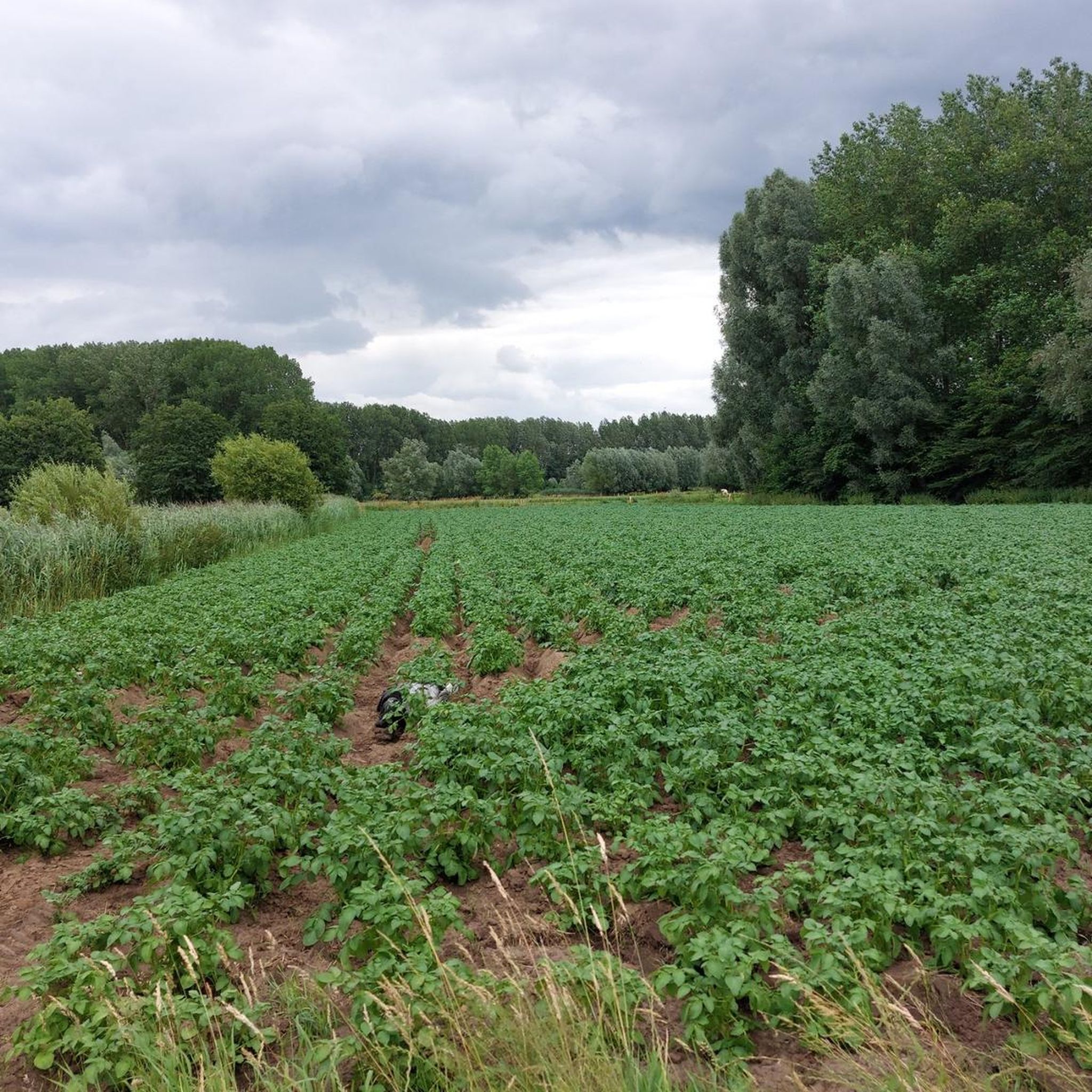
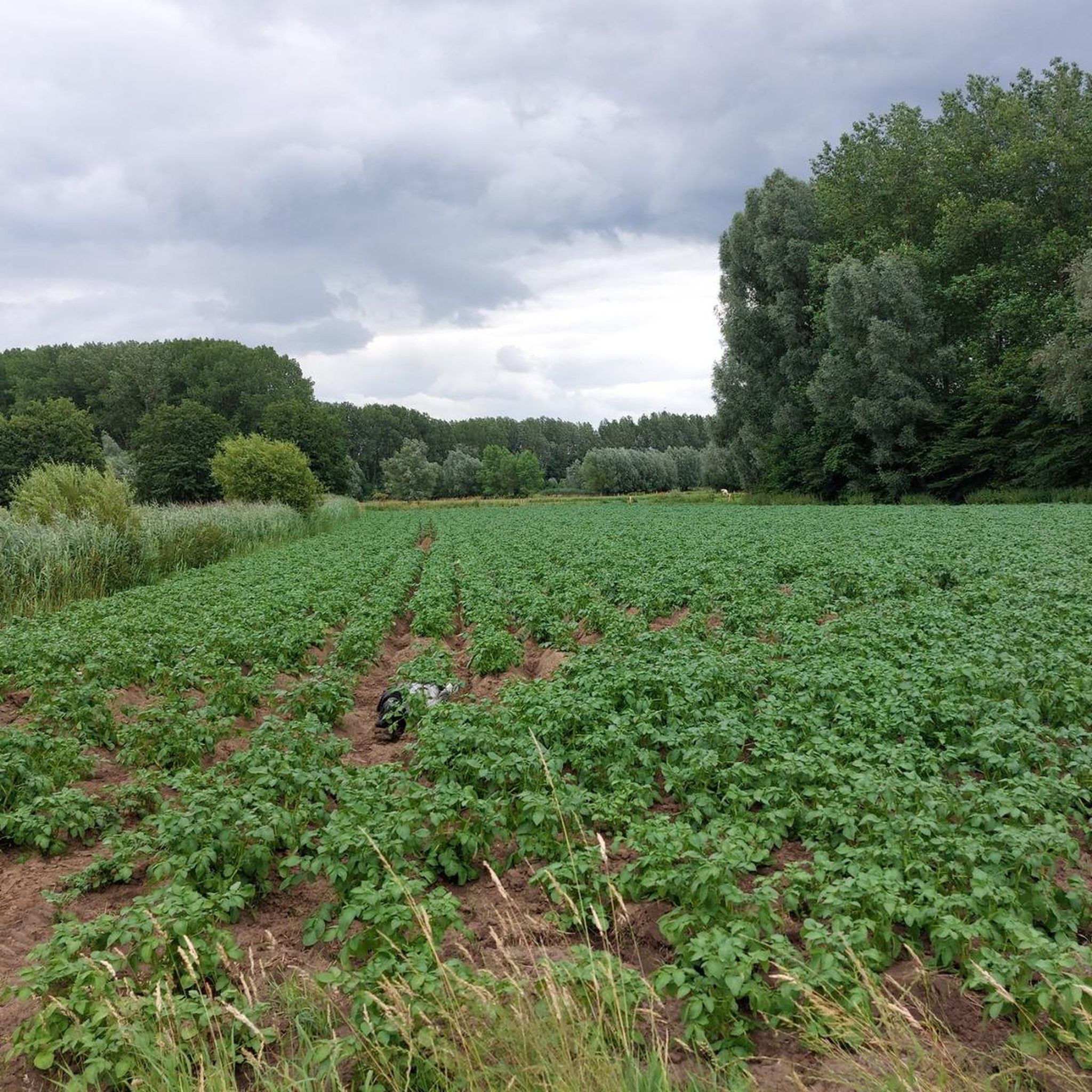

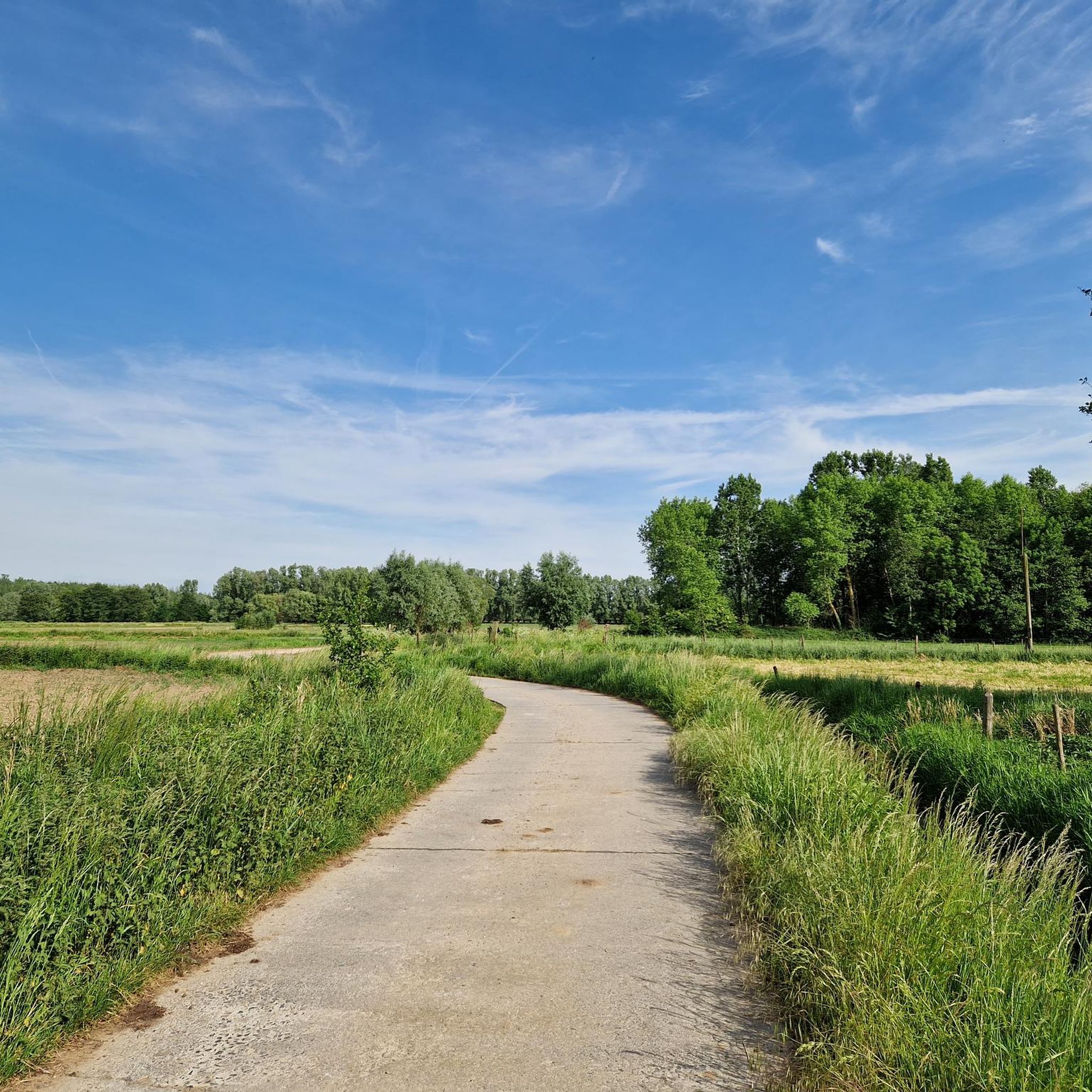
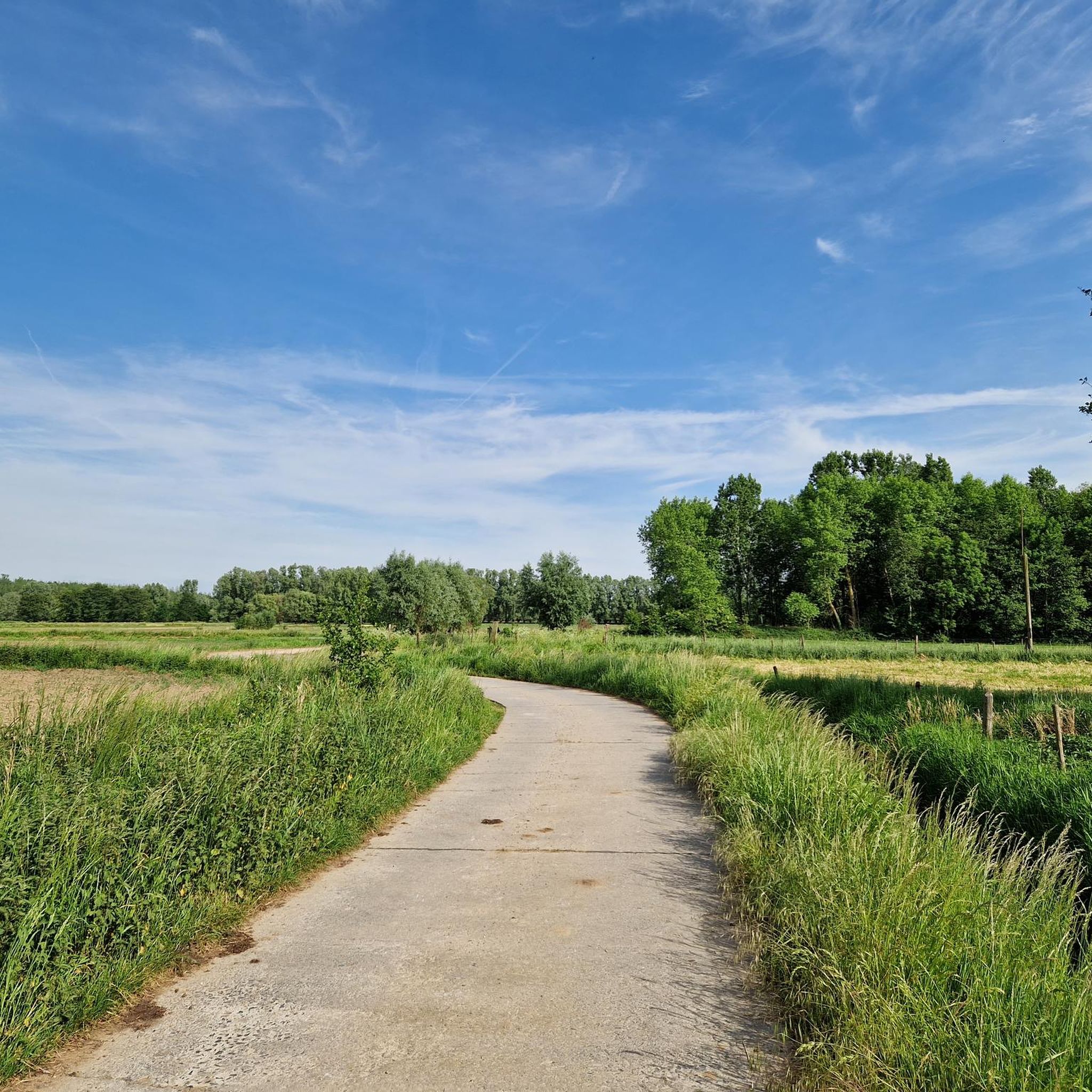
Tips from the Community

Cozy terrace with homemade delicacies served on tableware made in their own pottery. There is a showroom with all homemade pottery... and a small room with beautiful artworks. Free to view and possibility to buy. Definitely worth it!
0
0

De Lieve is a historic inland waterway canal that was dug between 1251 and 1269 from Ghent to Damme, originally Aardenburg. The period of prosperity is situated in the 13th and 14th centuries. Despite the silting up of the Zwin (early 14th and early 15th centuries), the digging of the Sasse Vaart in the mid-16th century, and the digging of the Ghent - Bruges canal in 1613-1614, it retained its original function until the beginning of the 18th century. In Ghent, Evergem, and Lievegem, the Lieve has been preserved as an open watercourse in sections. The route within the municipality of Damme has been preserved as a wide strip in the landscape. Source: https://www.lievegem.be/de-lieve
7
0

Over the centuries, the people of Ghent remain true to their reputation as stubborn rebels. They even rise up against their own prince, Emperor Charles V. However, this goes one step too far: the people of Ghent are publicly humiliated, and the Roland Bell – a symbol of Ghent's independence – is removed from the Belfry. The once powerful city-state is brought to its knees, both figuratively and literally. Economically, things also gradually worsen. The city loses its access to the sea, and the population halves. It is only in the second half of the 18th century that an economic upswing occurs. Under Dutch leadership, Ghent gets its own university in 1816. As a reminder of this, a statue of King William I, founder of the university, was erected on De Reep. Ten years later, the city becomes a seaport again with the Ghent-Terneuzen Canal. Source: https://visit.gent.be/de/wissenswertes/praktische-auskuenfte/warum-gent/gent-im-laufe-der-jahrhunderte
2
0
The history of Ghent begins in the year 630, when Saint Amandus decides to build an abbey at the confluence (or 'Ganda') of the rivers Leie and Scheldt. Almost 1400 years of history are still omnipresent in the city today: a medieval castle in a moat, an imposing cathedral, a belfry, three beguinages,… You will not find such a high density of history per square meter anywhere else as in the historic district of Ghent! From 1000 to approx. 1550, Ghent was one of the most important cities in Europe. Ghent was larger than London and only had Paris 'above' it. The 60,000 inhabitants the city had in the 14th century vehemently defended their rights: the counts and princes had to experience firsthand that the proud and rebellious Ghent citizen does not give up his acquired privileges and freedoms without a fight. Until the Battle of the Golden Spurs in 1302, the city was ruled by a few wealthy merchant families. As they generally preferred the French king to the Count of Flanders, they were given the derogatory nickname 'Leliaerts' by the people, derived from the lily (NL: lelie) on the French coat of arms. In the course of the increasing political power of the craftsmen and guilds in the 14th century, Ghent gained a more democratic leadership. As England blocked the import of raw materials for the vital textile industry, Ghent, during the Hundred Years' War (out of necessity), sided with England (1338-1345). The wealthy cloth merchant Jacob van Artevelde led the resistance against Count Louis of Nevers, a vassal of the French king. In 1345, the 'wise man' was murdered by his fellow citizens. His great significance is evident from the fact that Ghent is still referred to as 'Artevelde City' today. Ghent had to give up its alliance with England and recognize the King of France. In 1407, the seat of the Council of Flanders, the highest judicial body of the county, moved from Bruges to the Count's Castle. Dutch became the lingua franca. Source: https://visit.gent.be/de/wissenswertes/praktische-auskuenfte/warum-gent/gent-im-laufe-der-jahrhunderte
2
0
without cars and partly unpaved
0
0

It's very quiet to cycle there.
0
0

Beautiful bike ride, well-prepared paths, not busy
1
0

Only cycle path so watch out for oncoming traffic, the slope of the bridge is perfect
0
0
Frequently Asked Questions
How many touring cycling routes are available around Nevele?
There are over 90 touring cycling routes in the Nevele region, offering a wide range of options for touring cyclists. These include 49 easy routes, 40 moderate routes, and a few more challenging long-distance paths.
What kind of terrain can I expect on touring cycling routes in Nevele?
Nevele's touring cycling routes are characterized by mostly flat terrain, making them suitable for consistent riding. You'll find extensive canal paths, serene river valleys like the Oude Kale, and agricultural landscapes. While many surfaces are paved, some routes may include gravel or natural paths, especially through forest sections like the Keigatbos.
Are there any family-friendly touring cycling routes in Nevele?
Yes, Nevele offers several easy routes perfect for families. The flat terrain along canals and through meadows provides a safe and enjoyable experience for all ages. A good option is the Jachthaven Deinze – Street art - tunnel loop from Landegem, which is 24.4 km long and generally takes less than 1.5 hours to complete.
What natural features or landmarks can I see along the cycling routes?
Nevele's routes showcase diverse natural beauty and historical sites. You can cycle along picturesque meadows, tranquil riverside paths of the Leie, and through the scenic Oude Kale Valley. Notable attractions include the protected town center of Hansbeke with its distinctive blue and white shutters, and the castle village of Merendree, home to impressive castles like Ten Walle Castle and Castle Velde. For nature lovers, the Bourgoyen-Ossemeersen Nature Reserve is also nearby.
Are there any circular touring cycling routes in Nevele?
Many of Nevele's touring cycling routes are designed as loops, allowing you to start and end at the same point. For example, the Bruges – Ghent–Bruges Canal loop from Landegem offers a 68.9 km circular journey along historic canal paths.
What is the best time of year for touring cycling in Nevele?
The region is generally pleasant for cycling from spring through early autumn. During these seasons, the weather is typically mild, and the landscapes are vibrant. The flat terrain means routes are accessible in most conditions, but checking local weather forecasts is always recommended.
Can I access touring cycling routes in Nevele using public transport?
While specific public transport connections to every trailhead might vary, Nevele is well-integrated into the regional transport network. Many routes start near villages or towns that are accessible by public transport, making it possible to combine cycling with train or bus travel. It's advisable to check local transport schedules for specific starting points.
Are there places to park my car when starting a touring cycling route?
Yes, many starting points for touring cycling routes in Nevele, especially in and around larger villages like Landegem or Hansbeke, offer designated parking areas. These are often found near local amenities or public spaces, providing convenient access to the cycling network.
What do other touring cyclists enjoy most about cycling in Nevele?
The touring cycling experience in Nevele is highly rated by the komoot community, with an average score of 4.5 stars from over 370 reviews. Cyclists often praise the region's flat, well-maintained paths, the serene canal-side rides, and the charming blend of natural scenery with historical villages and castles.
Are there any long-distance touring cycling options available?
Yes, for those seeking a longer challenge, Nevele offers routes that connect to major cities. The Canal Path Ostend–Bruges – Bruges–Ostend Canal loop from Landegem is a difficult 106 km path that provides an extensive journey along the canals, ideal for experienced touring cyclists.
Are there any specific routes that highlight the Oude Kale Valley?
Absolutely. The Oude Kale Valley is a beautiful area for cycling. Consider the Oude Kale Valley – Oude Kaele Farm and Orchard loop from Landegem, a moderate 58.4 km route that takes you directly through this scenic landscape, often on mostly paved surfaces.
Can I find cafes or pubs along the touring cycling routes in Nevele?
Yes, the routes often pass through or near charming villages and towns where you can find cafes, pubs, and restaurants. These provide excellent opportunities for a break, a meal, or to refuel during your ride. The cycling node network in Nevele also helps in planning routes that include such stops.
Most popular attractions around Nevele

Get inspired with the komoot mobile app


Explore more
Browse the best Cycling routes in other regions.
