Top 7 Castles around Walhain
Best castles around Walhain offer a glimpse into the region's rich historical past, featuring structures that range from medieval ruins to fortified strongholds. The area is characterized by its historical significance, particularly with sites like the Château de Walhain, a notable example of a Philippian castle. Visitors can explore various architectural styles and defensive structures, often surrounded by picturesque landscapes. These historical sites provide tangible links to the feudal period and the history of the Duchy of Brabant.
Best castles…
Last updated: October 4, 2026
Abbaye de la Ramée
Highlight • Historical Site
Translated by Google •
Tip by

Château de Beaulieu (Lathuy)
Highlight • Castle
Translated by Google •
Tip by

Sign up now to discover places like this
Get recommendations on the best single tracks, peaks, & plenty of other exciting outdoor places.
Corroy-le-Château Castle
Highlight • Castle
Translated by Google •
Tip by

Le Manoir de Là-Bas
Highlight • Castle
The first known lord of the domain of Là-Bas was Jean de Vaul, in 1450. In 1686, in the income due to taxes, the farm appears …
Translated by Google •
Tip by

Ruins of Walhain Castle
Highlight • Castle
Translated by Google •
Tip by

Sign up for free to discover even more castles around Walhain.
Already have an account?
Start today with a free account
Your next adventure awaits.
Tips from the Community

The Abbey of La Ramée, located in Jauchelette (Geldenaken), was founded around 1215 by Héluide, abbess of Nijvel. The Cistercian nuns moved in 1216 to the banks of the Great Gete and came under the spiritual authority of the neighboring Abbey of Villers-la-Ville. In the 13th century, the community experienced a period of flourishing thanks to Cistercian mysticism and a highly regarded scriptorium. The abbey managed to acquire a large agricultural area and became very prosperous. However, during the 16th and 17th centuries, the monastery was repeatedly plundered due to wars, forcing the sisters to flee temporarily. In 1706, the English general Marlborough even set up a field hospital there during the Battle of Ramillies. After the French Revolution, the abbey was confiscated in 1796 and sold as national property. The monastic buildings were largely dismantled, but the farm and associated agricultural lands were spared. In 1722, the spectacular tithe barn was built, which is still considered the largest in Belgium today. In 1980, the complex was recognized as exceptional heritage of Wallonia. After a thorough restoration in the 90s, the domain serves as an exclusive venue for seminars and business events.
3
0

A beautiful driveway - with a fairly recent iron wayside cross at the beginning - takes you to this 'castle' that has a beautiful domain behind it with quite a few special trees and a large pond. The castle, as a plaque at the entrance says, was inhabited by a certain baron Jean-Pierre de Beaulieu, actually Jean-Pierre baron de Beaulieu-Marconnay in full and Johann Peter von Beaulieu in German. Why in German? Well, Jean-Pierre, J-P to his friends, was born in Lathuy in 1725. And that was part of the Austrian Netherlands at the time. And J-P became a general in the Austrian army where he fought against the Prussians during the Seven Years' War and against the French during the First Coalition War. In the battle against the French, led by a young man named Napoleon, Beaulieu became an artillery general and commander of the Austrian army in Italy. In 1796, however, he was replaced because he had not succeeded in stopping Bonaparte's troops. He died in 1819 in Linz, Austria, on his estate at the ripe old age of 94. So he did not stay here very often. But the domain is still worth it. The castle you see here is not the first one. The first was built around 1777 by the lord general and a second one was built in 1803. Only a few elements of the first castles remain due to destruction during the war. At the end of the 19th century, the castle came into the hands of the Pastur family. That is the same family that bought the castle in Jodoigne that later became known as Pastur Castle - see https://www.komoot.com/nl-nl/highlight/5965104 Finally: in Lathuy you can follow a 'de Beaulieu walk', information board near the church.
5
0


La Ramée Abbey, founded around 1215 by Héluide, is located in Walloon Brabant, at a bend in the Grande Gette River. It was almost entirely rebuilt in the 18th century. In 1796, the Revolution dispersed its community, leading to the abbey's sale in 1799. Today, La Ramée Abbey is used exclusively for hosting business seminars.
2
0

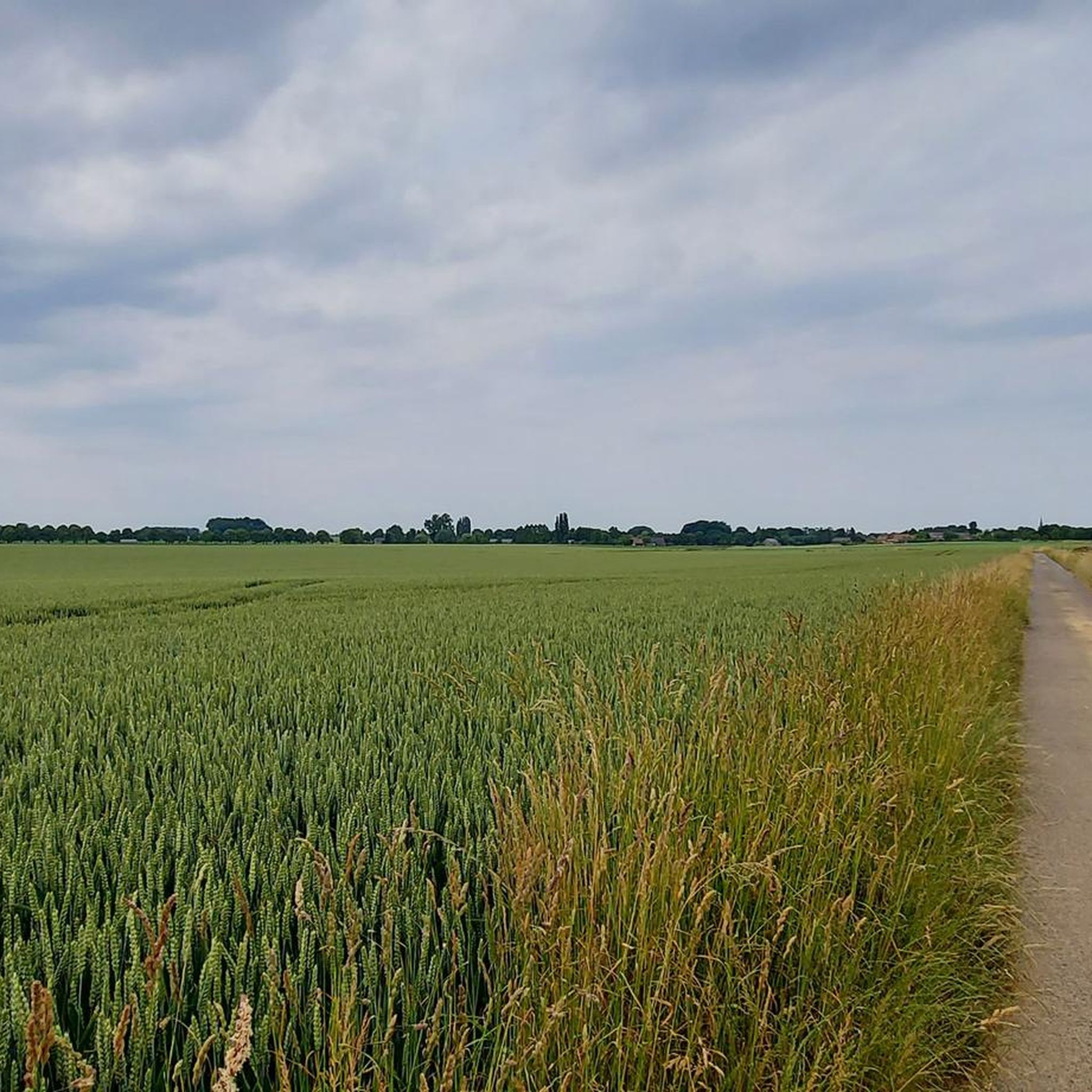
The ruin has since been renovated and is surrounded by rolling meadows with grazing animals...
14
0
A large white villa behind a wall and gate has the appearance of a castle here...
12
0

If you are looking for a medieval castle that has retained its original architecture and charm, you should visit the Château de Corroy-le-Château in the province of Namur, Belgium. There you will find a magnificent fortress surrounded by a moat, with four towers, a drawbridge and a chapel. The castle was built in the 13th century by the counts of Vianden to defend the border of the Duchy of Brabant against the counts of Flanders and Namur. You will be able to admire the impressive collection of weapons, armor, tapestries and furniture that belonged to the noble families who owned the castle over the centuries. The castle is open to visitors from May to September, on Sundays and public holidays. Don't miss this opportunity to travel back in time and discover the history and culture of this remarkable place.
2
0

The Mansion Over There The first known lord of the domain of Là-Bas was Jean de Vaul, in 1450. In 1686, in the income due to taxes, the farm appears as occupying 127 bonniers. It was by far the largest farm in the village. It was owned by the De Posson family. The barons of Posson rebuilt in 1734, the current farm adjoining the castle as well as the old manor. On the two towers are also their coats of arms: three cruets (in dialect: “Posson” means “pints”). Lambert de Philippart ennobled in 1783, married Philippine de Posson and inherited the estate. They had six children, including Charles Philippart, who was mayor of Aische-en-Refail and who died unmarried in 1860. His sister, Rose Joséphine, married Count Philibert Emmanuel Van Goidtsnoven in 1819 and inherited the estate. They had one son: Eugène-Charles who himself gave birth to Léopold Van Goidtsnoven, husband of the Countess Van der Burch and who restored the castle to its current form in 1870. He also established the layout of the park. The initials “L.V.G. » still appear in the wrought iron balustrade of the moat, in the moldings and the marbles of the entrance hall. In 1907, the Count of Aspremont Lynden married the only daughter of Count Léopold Van Goidtsnoven and built the right wing of the manor with the large conciergerie called "La Tour". His coat of arms appears in the central gable of the castle. During the Second World War, Princes Baudouin and Albert camped in the property in 1942. At that time, the Manor secretly sheltered Jewish children (under the patronage of Queen Elisabeth). https://collections.ushmm.org/search/catalog/pa1184741 It was in 1955 that the firm Governor created the campsite for passing tourists. In 1958, the professor and abbot Paul Boutes acquired the estate to make it a center for study in the open air. Eight years later, the castle was bought by the company Europa Camping which acquired the farm in 1971. The campsite will be operated until 2018. The estate was purchased by a promoter with the project to build 235 homes. A committee of residents (“Sauvons Aische Rural”) opposes the project.
0
0
Frequently Asked Questions
What makes the castles around Walhain historically significant?
The castles in the Walhain region offer a deep dive into the area's rich past, particularly the feudal period and the history of the Duchy of Brabant. The Ruins of Walhain Castle, for instance, is a notable example of a 'Philippian castle' with origins dating back to the 12th century, showcasing medieval defensive structures like a circular keep and moats. Other sites like Corroy-le-Château Castle have retained their original medieval architecture, providing a tangible link to centuries of history.
What is the most well-preserved castle to visit near Walhain?
If you're looking for a castle that has largely retained its original architecture and charm, Corroy-le-Château Castle is an excellent choice. This magnificent fortress, surrounded by a moat, features four towers, a drawbridge, and a chapel, offering a true glimpse into medieval life.
Can I visit the ruins of Walhain Castle, and how do I arrange it?
Yes, the Ruins of Walhain Castle are a significant historical site. However, it is not freely accessible. Visits can be arranged by contacting the Walhain Tourist Office. The site is also subject to ongoing archaeological excavations, making it particularly interesting for those keen on heritage preservation.
Are there any castles with notable natural surroundings or gardens?
Yes, Château de Beaulieu (Lathuy) is known for its beautiful domain behind the castle, featuring special trees and a large pond. The castle itself, built in 1803, is set within picturesque surroundings, making it a pleasant spot for a visit.
What is the best time of year to visit the castles around Walhain?
The castles around Walhain can be enjoyed throughout the year, but spring and summer (May to September) generally offer the most pleasant weather for exploring the outdoor ruins and castle grounds. This period also often aligns with specific opening hours for sites like Corroy-le-Château Castle.
Are the castles around Walhain generally accessible for families with children?
Many of the historical sites, including the Ruins of Walhain Castle and Abbaye de la Ramée, are considered family-friendly. Exploring ruins and historical grounds can be an engaging activity for children, offering a tangible connection to history. It's always a good idea to check specific accessibility details for each site if you have very young children or strollers.
Are there any dog-friendly options for visiting castles or their surroundings near Walhain?
While specific castle interiors might have restrictions, the outdoor areas and surrounding landscapes of many castles, including the Ruins of Walhain Castle, are often suitable for walks with dogs on a leash. For dedicated dog-friendly outdoor activities, consider exploring the numerous hiking trails in the Walhain region, which you can find in the Hiking around Walhain guide.
What outdoor activities can I combine with a castle visit in the Walhain region?
The Walhain region offers a variety of outdoor activities that pair well with castle visits. You can explore extensive hiking trails, enjoy scenic cycling routes, or tackle challenging MTB trails. Many routes pass by or near historical sites, allowing you to combine physical activity with cultural exploration.
Are there hiking trails near the castles around Walhain?
Absolutely. The Walhain area is rich with hiking opportunities. For example, there's an easy 6.7 km loop trail called 'Basse-Cour Farm – Ruins of Walhain Castle loop from Walhain' that takes you directly past the Ruins of Walhain Castle. You can find more options in the Hiking around Walhain guide, which lists various trails of different difficulties.
Are there other notable historical sites besides castles in the Walhain area?
Yes, beyond traditional castles, the region features other significant historical sites. The Abbaye de la Ramée, founded around 1215 and largely rebuilt in the 18th century, is a beautiful historical site. Additionally, Le Manoir de Là-Bas, with its history dating back to 1450, offers another glimpse into the region's past, including its role during World War II.
What do visitors appreciate most about the castles in the Walhain area?
Visitors often appreciate the tangible link to history that these sites provide, allowing them to step back in time. The impressive architecture, even in ruins like the Ruins of Walhain Castle, and the picturesque settings are frequently highlighted. The ongoing preservation efforts and archaeological interest also draw those keen on understanding medieval life and heritage.
Most popular routes around Walhain
Most popular attractions around Walhain

Get inspired with the komoot mobile app


Explore more
Looking for the best castles somewhere else? Discover other guides around Walhain:
