Attractions and Places To See around Hooglede - Top 20
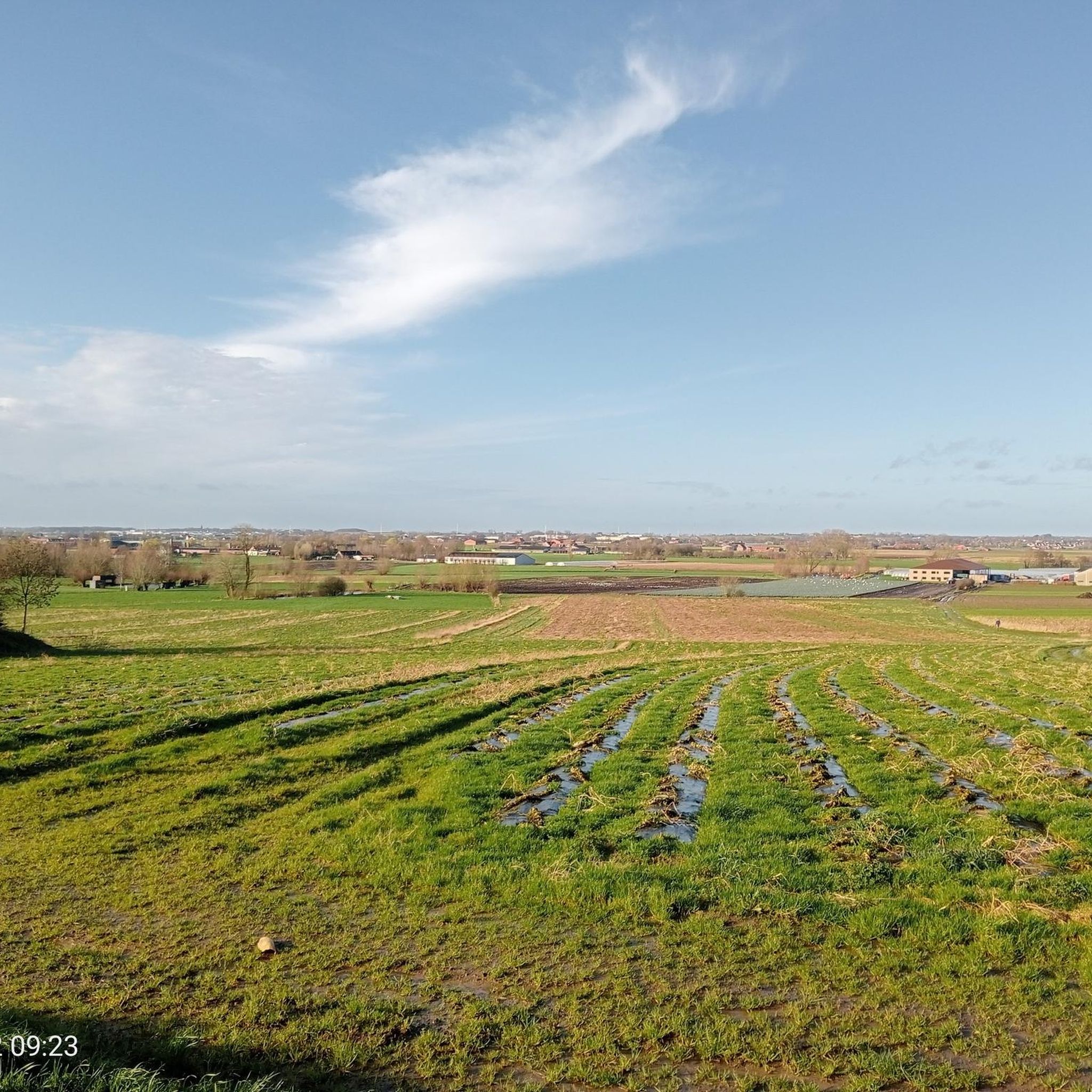
Best attractions and places to see around Hooglede include a variety of historical sites, cultural points of interest, and natural features. This region in West Flanders, Belgium, is characterized by its slightly undulating landscape, offering panoramas and separating the Lys and Ijzer river basins. Visitors can explore significant landmarks and delve into local history. The area also provides opportunities to enjoy the tranquil landscape through various outdoor activities.
Best attractions and places to see around Hooglede
- The most popular attractions is Tyne Cot Cemetery, a historical site that serves as the largest British military cemetery on mainland Europe. It is a significant World War I memorial, containing graves of thousands of soldiers and a memorial to those with unknown graves.
- Another must-see spot is d'Aertrycke Castle, a castle built between 1868 and 1871 in the Neo-Renaissance style. Visitors can expect a historic building now transformed into a hotel, restaurant, and conference center, set within a domain.
- Visitors also love Rumbeke Castle, a castle located in the provincial domain Sterrebos. This 18th-century renovated building holds historical significance, with legends dating back to the 9th century, and offers a quiet area for exploration.
- Hooglede is known for its historical sites, cultural points of interest, and natural features. The area offers a variety of attractions to see and explore, including war memorials, protected monuments, and scenic landscapes.
- The attractions around Hooglede are appreciated by the komoot community, with more than 380 upvotes and over 320 photos shared across 28 highlights.
Last updated: July 6, 2026
Tyne Cot Cemetery
Highlight • Historical Site
As a visitor, you become acquainted with the horror of the Battle of Passchendaele in various educational ways. Tyne Cot Cemetery is the largest British military cemetery on mainland Europe.
Translated by Google •
Tip by

d'Aertrycke Castle
Highlight • Castle
Translated by Google •
Tip by

Sign up now to discover places like this
Get recommendations on the best single tracks, peaks, & plenty of other exciting outdoor places.
Sign up for free
View of Tyne Cot Cemetery
Highlight • Historical Site
The cemetery was designed by Sir Herbert Baker and includes an impressive Cross of Sacrifice, built on a former German bunker. The cemetery was significantly expanded after the Armistice to include graves from nearby battlefields and smaller cemeteries.
Translated by Google •
Tip by

Rumbeke Castle
Highlight • Castle
source: hiking guide Flanders route GR 128
Translated by Google •
Tip by

Vredesmolen (Peace Mill) Klerken
Highlight • Monument
Translated by Google •
Tip by

Sign up for free to discover even more attractions around Hooglede.
Sign up for free
Already have an account?
Start today with a free account
Your next adventure awaits.
Login or Signup
Tips from the Community

A miniature version of the castle to give visually impaired people a tangible image of the castle. Equipped with Braille.
0
0

Tyne Cot Cemetery is the largest Commonwealth cemetery in the world, located near Passchendaele. It was established in October 1917 and contains over 11,000 graves of soldiers who died during the First World War. The site was strategically important during the Battle of Passchendaele and was used as an advanced dressing station after its capture by the 3rd Australian Division on 4 October 1917. The cemetery was designed by Sir Herbert Baker and includes an impressive Cross of Sacrifice, built on a former German bunker. The cemetery was significantly expanded after the Armistice to include graves from nearby battlefields and smaller cemeteries.
7
0

Tyne Cot Cemetery is the largest Commonwealth cemetery in the world, located near Passchendaele. It was established in October 1917 and contains over 11,000 graves of soldiers who died during the First World War. The site was strategically important during the Battle of Passchendaele and was used as an advanced dressing station after its capture by the 3rd Australian Division on 4 October 1917. The cemetery was designed by Sir Herbert Baker and includes an impressive Cross of Sacrifice, built on a former German bunker. The cemetery was significantly expanded after the Armistice to include graves from nearby battlefields and smaller cemeteries.
7
0
A poignant anecdote about Tyne Cot Cemetery concerns the father and son, Lieutenant Colonel Harry Moorhouse and Captain Ronald Moorhouse. Both served with the 4th Battalion, the King's Own Yorkshire Light Infantry, and were killed within an hour of each other during the Third Battle of Ypres. Harry Moorhouse was seeking medical attention for his badly wounded son when he himself was killed. Their bodies were never recovered, but their names are immortalised on the Tyne Cot Memorial.
9
0

Nowadays the castle is a luxury hotel/restaurant and conference centre (Restaurant realised in 1990 and hotel built in 1996 by the then organisers of the Rock Torhout festival). On the other side of the Torhout - Oostende road lies the domain of the Wijnendale castle.
2
2
The history of 'Domein d' Aertrycke' begins in 1865 when August de Maere, the spiritual father of the port of Zeebrugge, acquired 98 ha of the 'Verloren Kost' domain. In 1869 he had the now centrally located neo-Gothic castle built to a design by the Antwerp architect Joseph Schadde. In 1897 August de Maere, who had in the meantime been elevated to the nobility, was given permission to add d'Aertrycke to his name. With the exception of a short period after the First World War, the domain remained the property of the family. Xavier de Maere, the last owner of the castle, became known as second-in-command of the Belgian South Pole Expedition 1958-1959. After the death of his mother, who was the last of the family to live in the castle, he concluded an agreement with the West Flemish provincial government for the partial opening of the castle domain to the general public. In 2012, the province acquired full ownership and Domein d'Aertrycke became a fully-fledged provincial domain.
2
2
The castle De Maere d'Aertrycke is a castle in the Belgian city of Torhout. The neo-Gothic castle was built from 1868 to 1871 by order of August de Maere, the castle is still popularly called De Maeres castle. It is located between the center of Torhout, Wijnendale and Aartrijke. The castle is located in a romantic garden with a large pond, meadows and forests. The domain has a great natural value. Roe deer, Western European hedgehog and the European red squirrel are the mammals that live there. Birds are richly represented with the tufted duck, great spotted woodpecker, moorhen, coot, grebe, jackdaw, nuthatch, tree creeper, finch, blue tit and great tit. There are also amphibians: the brown frog and the common toad.
2
1
Frequently Asked Questions
What historical sites can I visit around Hooglede?
The region around Hooglede is rich in history, particularly related to World War I. You can visit the poignant Tyne Cot Cemetery, the largest British military cemetery on mainland Europe, or the Vredesmolen (Peace Mill) Klerken, a former German lookout post during the Great War. Hooglede itself also features the German Military Cemetery Hooglede (Ehrenfriedhof Hooglede Ost), a protected heritage site.
Are there any castles to explore near Hooglede?
Yes, there are a couple of notable castles nearby. You can visit d'Aertrycke Castle, a Neo-Renaissance castle built between 1868 and 1871, now a hotel and restaurant. Another option is Rumbeke Castle, an 18th-century renovated building located within the provincial domain Sterrebos, offering a quiet area for exploration.
What kind of natural landscapes can I expect to see in the Hooglede area?
Hooglede-Gits is characterized by its slightly undulating landscape, offering exceptional panoramas. The region sits on a ridge separating the Lys and Ijzer river basins, providing a varied natural backdrop for outdoor activities. While there are no specific natural highlights listed, the overall landscape is ideal for scenic walks and bike rides.
Are there opportunities for cycling around Hooglede?
Absolutely! The area is ideal for cyclists, with several junctions of important cycling networks and local routes. You can find various routes for touring bicycles, such as 'The Keuneleute Picnic Area – Gravel Path on Lepelstraat loop' or 'Hooglede Church – Roeselare Town Hall loop'. For more options, explore the Cycling around Hooglede guide.
What about hiking trails near Hooglede?
Hooglede offers several options for hikers. There are local cycling routes that can be adapted for walking, a municipal hiking route that allows exploration of every corner of the town, and the area is part of the 123-kilometer 'Grote Vijf Route,' a circular hiking trail spanning several municipalities. The provincial domain Sterrebos, home to Rumbeke Castle, also offers very nice and quiet areas for walking.
Are there any family-friendly attractions in Hooglede?
Yes, several attractions are suitable for families. The Tyne Cot Cemetery offers an experience area that makes history tangible for visitors of all ages. d'Aertrycke Castle and Rumbeke Castle are also listed as family-friendly. Additionally, Hoeve ter Kerst, near the Grijspeerdmolen, is a play-and-learn farm introducing visitors, especially children, to authentic rural life.
Where can I find a good viewpoint in the region?
The Vredesmolen (Peace Mill) Klerken, located at the highest point of the village (43 meters), offers beautiful views. In clear weather, you can see the Heuvelland with the Kemmelberg and even the skyline of the coast. The slightly undulating landscape of Hooglede-Gits also provides exceptional panoramas in various places.
Can I learn about local history and culture in Hooglede?
Hooglede has a rich cultural and historical heritage. You can visit the War Museum in the basement of the Hooglede library, which offers insights into battles from 1794, World War I, and World War II. The 'Projectjaar Warden Oom' celebrates local folk writer Edward Vermeulen with an experience expo and a treasure hunt for children. The village also features six street art masterpieces for an urban artistic experience.
What do visitors generally appreciate about the attractions around Hooglede?
Visitors frequently highlight the poignant and reflective atmosphere of historical sites like Tyne Cot Cemetery, noting its educational value and the impression it leaves. The castles, such as Rumbeke Castle, are appreciated for their quiet and beautiful surroundings. Overall, the blend of historical significance, cultural points of interest, and tranquil natural settings makes the area appealing.
What is the best time of year to visit Hooglede for outdoor activities?
The region's undulating landscape and numerous cycling and hiking routes are enjoyable throughout the warmer months. Spring and autumn offer pleasant temperatures for outdoor activities, with blooming nature or colorful foliage. Summer is also suitable, though it can be busier. Winter might be less ideal for extensive outdoor exploration due to colder weather, but historical sites remain accessible.
Are there mountain biking trails available near Hooglede?
Yes, Hooglede offers options for mountain biking enthusiasts. You can find routes like 'Haessackwegel – Castle Residence With Fountain loop' or 'Gravel path Gits-Hooglede – MTB Course World Championships 2007 loop'. These trails typically offer moderate difficulty. For a comprehensive list of routes, check out the MTB Trails around Hooglede guide.
Are there any protected monuments in Hooglede besides the military cemetery?
Yes, Hooglede is home to several other protected monuments. These include the historic Vredesmolen (Peace Mill) Klerken, the notable De Grijspeerdmolen (Gryspeerdmolen) windmill, the municipal Town Hall (Gemeentehuis van Hooglede), and the historic inn Herberg De Dubbele Arend.
Most popular routes around Hooglede
Most popular attractions around Hooglede

Get inspired with the komoot mobile app


Explore more
Still not found the Highlight you’re looking for? See guides of the top attractions in other regions:
