Attractions and Places To See around Shelsley Walsh - Top 20
Attractions and places to see around Shelsley Walsh offer a blend of historical significance and natural landscapes in Worcestershire, England. The area is known for its rural English heritage, including historic buildings and the nearby River Teme. Visitors can explore sites that reflect centuries of local history and enjoy the natural beauty of the Teme Valley. This region provides opportunities for discovering historical landmarks and engaging with the local environment.
Best attractions and places to see around Shelsley Walsh
- The…
Last updated: October 5, 2026
St Peter's Church, Martley
Highlight • Religious Site
Tip by

Holt Fleet Bridge
Highlight • River
Tip by

Sign up now to discover places like this
Get recommendations on the best single tracks, peaks, & plenty of other exciting outdoor places.
Ruins of St Michael's Church, Abberley
Highlight • Historical Site
Tip by
Dick Brook
Highlight • Historical Site
Tip by
The Talbot, Knightwick
Highlight • Settlement
Tip by

Sign up for free to discover even more attractions around Shelsley Walsh.
Already have an account?
Start today with a free account
Your next adventure awaits.
Tips from the Community

Doors open, with a visitor book to sign.
0
0

Fine church with lovely grounds, made from the local sandstone.
0
0
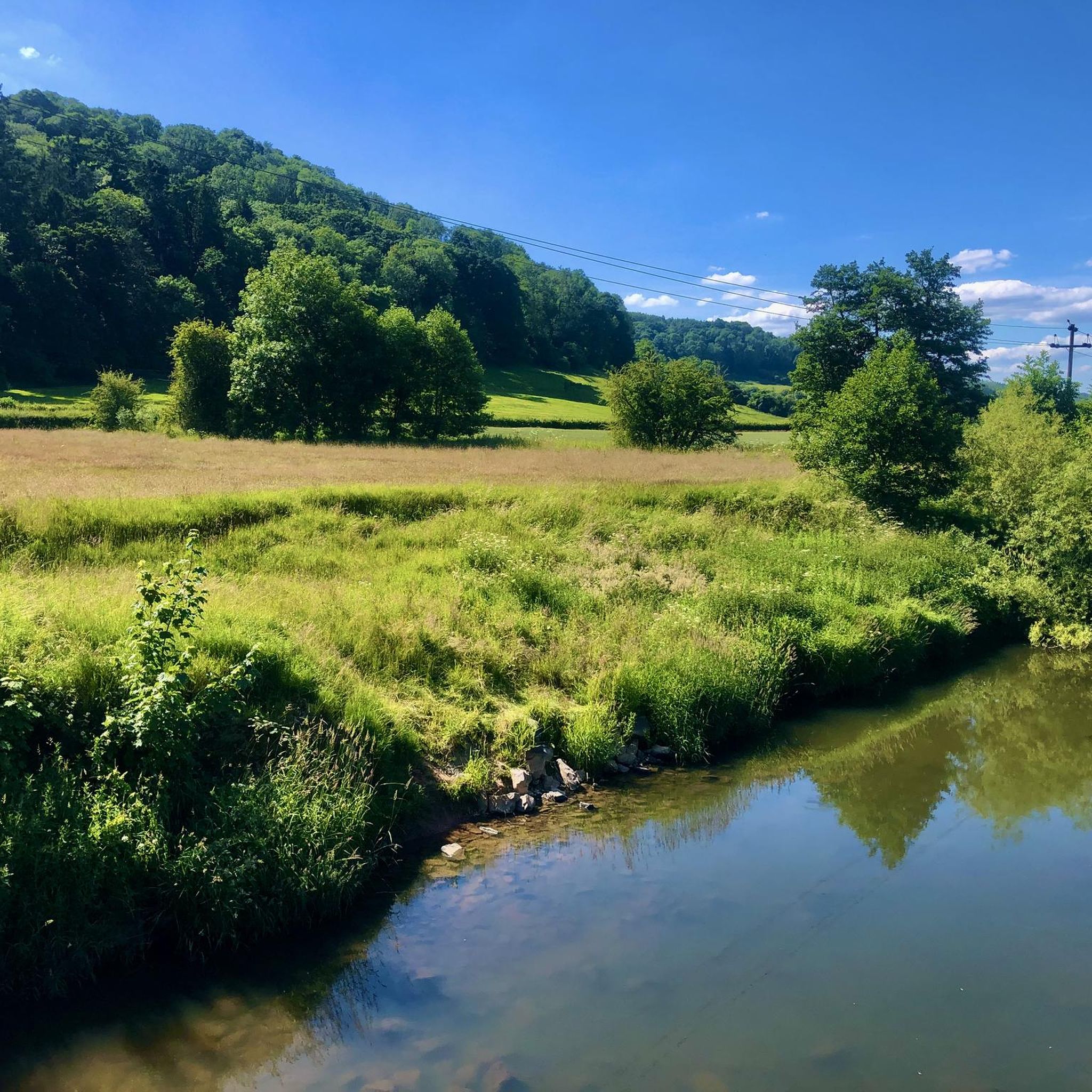
The Talbot is a particular favourite, they brew their own selection of excellent beers, and the food is superb too! It is also in a great location alongside the River Teme and below Ankerdine Hill. The little chapel in the photo above is actually the Knightwick Mortuary Chapel, and it is up a nearby hill, about 3/4 of a mile from the Talbot.
0
0

A large village church with 12th century Norman origins and work from several later periods. The tower is 15th century. The church was restored in 1909 by Sir Charles Nicholson. There is an excellent west window by Tom Denny, 1999. Parish church. Early C12, early C13 and circa 1315, restored 1875, 1884 and 1909. Last restoration by Sir Charles Nicholson. Ashlar, plain tile roof. Nave and chancel continuous, west tower, north vestry of 1875, south porch of 1184. Chancel: three bays, north wall early C13 with two lancets, north vestry; east window: restored Decorated of early C14, three trefoiled lights; south wall: eastern window Decorated with two trefoiled lights, other two larger each with two ogee trefoiled lights, formerly looked into Mortimer chapel (consecrated 1315, demolished), they flank a three-centred-headed priest's door; stepped right angle buttresses to corners. Nave: three bays, all windows restored: decorated each with two trefoiled lights in both walls. Restored early C12 south door with timber porch of 1884; blocked north door more complete and similar in design; doorway projects c150mm from wall face, with decorated semicircular head and consecration cross; wall has five bays defined by a series of early C12 pilasters, top four courses of naves walls are of alternate bands of red and white sandstone. West tower: C15 in three stages divided by moulded string, moulded plinth, embattled parapet with pinnacles of 1909 to diagonal corner buttresses. C15 Perpendicular west window with three cinquefoiled lights; first stage has single trefoiled lights, bell chamber has windows with two cinquefoiled lights under two-centred head. INTERIOR: chancel: double aumbry in north wall, piscina in south wall with priests head to label stop; nave: entrance to rood stairs and above rood left door, stairs were in an external projection, now lost; tower arch of two chamfered orders with moulded abaci at springing. Roofs: similar over nave and chancel, slightly lower pitch to chancel, collar-rafter roof with straight braces from rafter to collar and ashlar pieces, five tie beams in nave, two in chancel, probably early C14. A framed tympanum divides the nave from the chancel roof, probably C17. Fittings: wall paintings in nave of C15 including St Martin on horseback dividing his cloak for the beggar; in chancel wall paintings of late C13 and C15, including C15 canopy design on east wall, and a C15 Annunciation group on the south wall. A few late C15 Malvern tiles in chancel floor; early C20 screen, font, pulpit and organ. Late C15 recumbent effigy of alabaster against north wall of chancel, ridged coffin lid to south with traces of incised cross and pastoral staff. The two eastern windows in the south wall of the nave and central window in north wall are of circa 1915 by Walter E Tower. Source: britishlistedbuildings
0
0
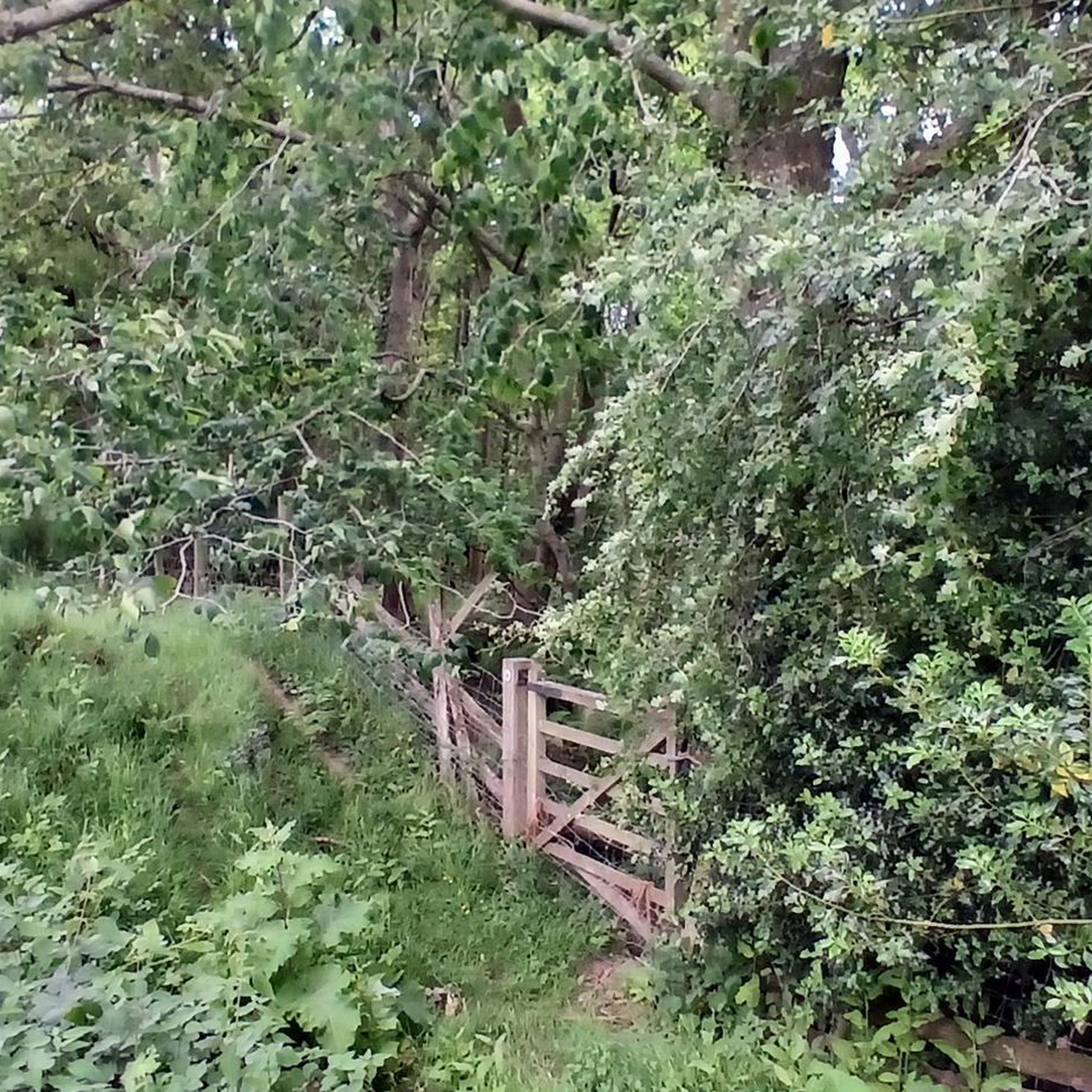
Dick Brook is thought to be the first canalised brook in England, engineered by Andrew Yarranton, a local pioneer of the industrial revolution. He did this in the mid-17th century, 100 years before James Brindley embarked on the canal-building revolution. The brook was dredged and locks built to enable boats to carry iron ore from the River Severn up Dick Brook to a blast furnace. 500m along the path, marked by a way-marker post, you reach the site of a former iron forge. There are some building remains and the area is being studied by local historians. As you continue westwards, to the right of the path there are the earthworks of the leat which fed water to turn the wheels at the forge. The furnace site was 100m up the valley to the south of the path as you go towards Glasshampton. Source: Geopark guide
0
0
The ruined church of ST. MICHAEL or ST. MARY consists of a chancel 26 ft. 3 in. by 13 ft. 3 in., south chapel 17 ft. 3 in. by 6 ft., nave 33 ft. 6 in. by 18 ft. 10 in., south aisle 36 ft. by 5 ft. 9 in., and west tower 11 ft. 3 in. by 10 ft. 9 in. These measurements are all internal. The church and tower are built of sandstone ashlar, faced externally and internally, except that the chapel walls are partly covered internally with a thin coat of plaster. The tower, nave and western portion of the chancel date from the early 12th century; about a hundred years later the chancel was lengthened eastwards, while the south chapel was added c. 1260, and the south aisle towards the end of the same century. Very little seems to have been done to the fabric till modern times, with the exception of the buttressing of the north wall of the nave in the 14th century and the insertion of a window in this wall in the 15th century. By the middle of the 19th century the fabric had been allowed to fall into considerable disrepair, and was abandoned, a new church being erected in 1852 on a site about a quarter of a mile to the north-west. In 1908 the chancel and chapel were put into a state of repair, and are now used for services. The nave and aisle are roofless and in a very ruinous condition, the walls being overgrown with ivy, while, with the exception of the north and east walls, only the lower stage of the tower, now covered with a pent roof, remains. The chancel has a three-light east window with original internal jambs and a wood frame of the early 19th century. The gable has been rebuilt in brickwork. At the north-east are two early 13thcentury lancets placed close together, forming twin lights; they have internal labels with head-stops, and stepped sills. To the west of these can be seen a straight joint in the walling, showing the junction between the work of the 12th century and that of the succeeding century. To the west of this again is an early 12th-century single-light window with a round head and stepped sill. High in the wall above can be seen the lines of two blocked clearstory windows. The easternmost window on the south side is a wide single light with a pointed head, plastered internally; this has evidently been formed out of twin lights similar to those on the north, the central jambs having been removed, probably in the late 16th century, while the outside has been rebuilt at a modern period in brick with rounded edges. About the middle of the wall is the east jamb of an early 12th-century light similar to that on the north. This was doubtless blocked in the 13th century, when the arch to the south chapel was pierced. This last is a low two-centred drop arch of two chamfered orders on the chancel side and plain on the side towards the chapel. The east respond has an impost moulding at the springing of the arch, enriched with the dog-tooth and having a king's head at the southern angle, while on the chancel side there is a small engaged round shaft with capital and base. Above the arch are the lower parts of two wide clearstory windows, now inclosed below the aisle roof. The jambs, which are of mediaeval character, have no grooves for glazing, and are now covered by the wall-plate of the chancel roof. There is an old plain square-headed aumbry near the centre of the north wall, and another aumbry opposite to it on the south. The wide two-centred chancel arch is probably of the 13th century. It is now blocked, the only part exposed being plastered. In the blocking is reset an early 12th-century doorway taken from the north wall of the nave and now very much weatherworn and decayed; the jambs have each a single engaged shaft with a rudimentary leaf capital and plain chamfered abacus, but no base. The semicircular head is enriched with cheveron ornament and has a simple chamfered label. At the east end of the south wall of the south chapel is an original window of two wide plain pointed lights under a two-centred head. To the west of this is a plain semicircular-headed doorway, probably of the early 18th century; the wide singlelight window on the west is formed by the modern filling in of the flying arch by which the chapel must have originally opened to the aisle. In the north wall of the nave is a late 15th-century window, originally, no doubt, of two lights, but the tracery has now gone. To the west of this is a wide gap in the wall, from which the doorway in the chancel arch has been taken. This wall is strengthened in the centre by a large 14th-century buttress, and by one of the same period at the west end, while two modern flying buttresses have also been added; the western part beyond the gap is further retained by a solid block of masonry. Of the south arcade, which was of three bays, only the two pillars and the east arch remain, the latter held in position by an iron tie. The pillars are circular with square plinths and circular moulded capitals; the remaining arch is pointed and of two chamfered orders, springing from twin corbels upon the east respond. The work dates from the late 13th century, but is very much weatherworn and decayed. The west wall at a modern period has had an additional 1 ft. 10 in. added to its thickness on the inside, which has been carried to a short distance above the tower doorway; this doorway has a semicircular arch with a simple splayed edge, and is probably of 14th-century date. There are three windows in the south wall of the aisle. The arch of the easternmost is broken away and the jambs are too much defaced to indicate its date; the other two are of the late 13th century and are each of two trefoiled lights under a square head. Both are very much weatherworn, but the western one is the more perfect. Between them is the 12th-century south doorway which was moved out from the south wall of the nave on the erection of the aisle; it has a semicircular arch of two moulded orders, a plain tympanum with strapwork border, and two engaged shafts in the jambs, with capitals which have evidently been carved, but no bases; all is very much decayed and the outer order of the arch has been partly broken away. The tower remains intact only in the lower stage. There is an original 12th-century round-headed light in the south wall, but above this the wall has been cut away to follow the slope of the roof which now covers in the remaining portion of the tower. On the west side is the lower part of a similar window, the arch of which with the wall above has gone, while the outer stonework of the jambs has been defaced. Below this window is a blocked doorway. The north wall remains up to the second stage of the tower. There is a double-chamfered string-course at the level of the window sills of the first stage, the lower chamfer of which on the north side is relieved with checker ornament. The chancel is covered by a trussed oak roof of the late 14th century, with foiled wind-braces and principals having collars and spandrel pieces. The aisle has a lean-to plaster ceiling. The east window is filled with early 19th-century heraldic glass, and in the south window of the chancel is a shield, Gules five wings saltirewise argent, for Porter, quartering Argent three helmets sable for Miniett, and Barry argent and sable three cotton hanks or, for Haywood. There is an 18th-century oak chest in the chapel. The eastern part of the chapel is screened off by a good 18th-century iron screen with plain vertical bars. On the south wall of the chancel is a marble monument, with two inscribed tablets, divided and flanked by Ionic columns resting on consoles and supporting an entablature crowned by a segmental pediment. The first tablet is to Elizabeth, wife of William Walshe and daughter of Sir George Blount of Sodington, who died in 1645, and above it is a shield charged with the fesse and martlets of Walshe impaling the barry wavy of Blount. The other tablet is to Ann, wife of George Walshe and daughter of John Collins of Suffolk, who died in 1679. The shield above bears the arms of Walshe impaling a griffon for Collins; the shields in both cases are uncoloured. Near the chancel arch, on the south wall, is a small oval monument, much worn, to John Chapman, rector, who died in 1690, and at the west end of the chancel is a slate tablet to John Brasier, who died in 1683. On the north wall of the chapel are monuments to Thomas Bury, who died in 1769, and Ann his wife, who died in 1761, and to Thomas Severn, who died in 1780, while on the south wall is a monument to Thomas Bury, who died in 1778. There are several 18th-century floor slabs in the chapel to the Walshe family, and one to Stephen Marsh, 'coroner of this county,' who died in 1705. Standing detached on the sill of one of the north windows in the chancel is a diminutive recumbent effigy of a knight in armour of circa 1400. The little figure is of a light sandstone, and measures 9 2/8 in. by 2¼ in. The head rests upon a horse's head and the feet upon a dog, and the hands are in the attitude of prayer; the lower part of the right leg, the left foot, and the right elbow are broken away. There is one old bell, cast at York, which is now cracked and placed on a wood frame in the chapel. It dates from the 15th century, and was probably the tenor, and is inscribed 'Ave Gracia Plena Dominus Tecum.' The initials are crowned, and the maker's stamp, three bells on a shield, is four times repeated. The plate consists of a silver stand paten of 1714, given by Elizabeth Walshe in 1715, and a modern chalice and cover paten and flagon. The registers before 1812 are as follows: (i) baptisms and burials 1559 to 1804, marriages 1559 to 1754; (ii) containing marriages 1754 to 1792 is missing; (iii) baptisms 1805 to 1813, burials 1805 to 1836, marriages 1792 to 1813.
0
0
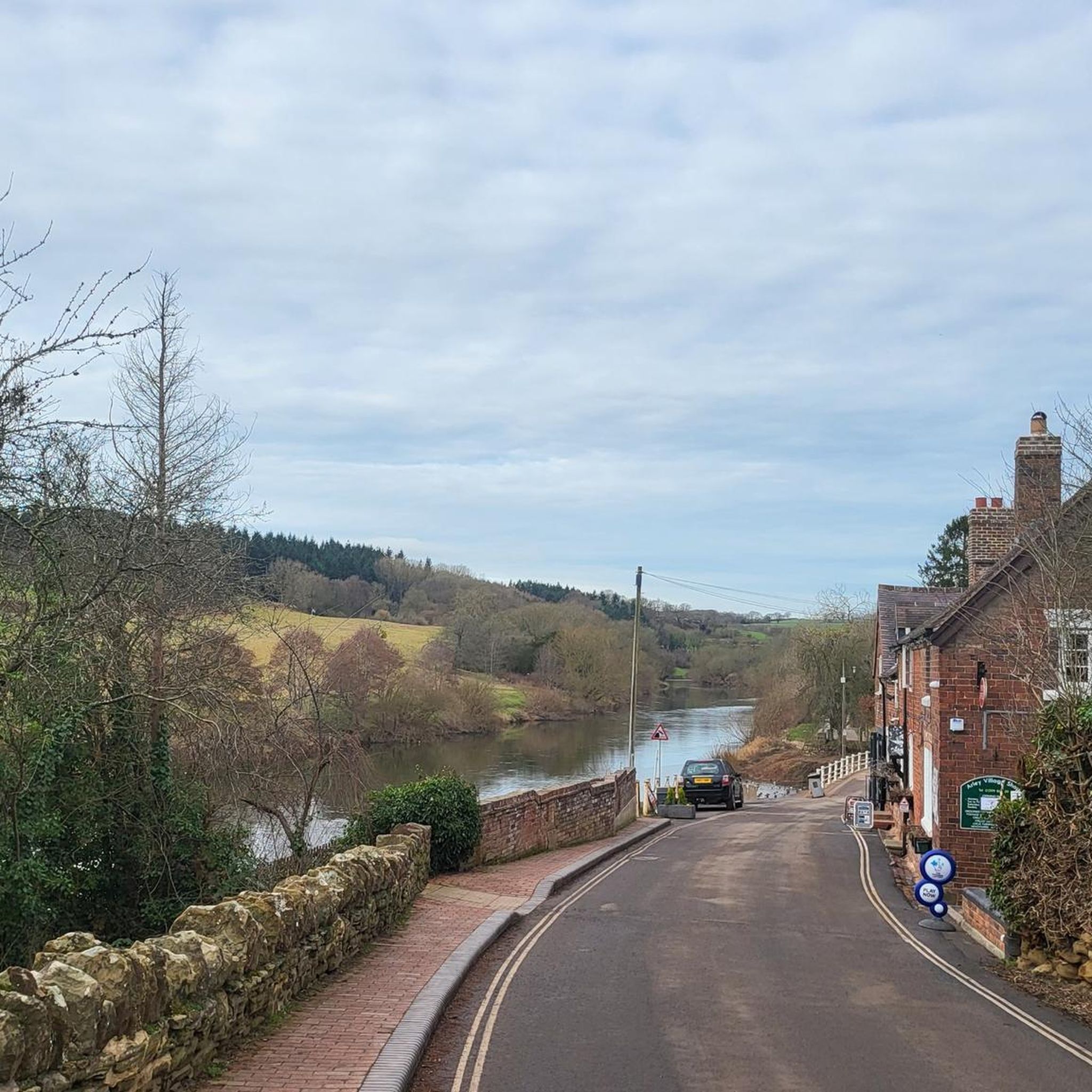
Holt Fleet Bridge, also known as Holt Bridge, is a cast-iron arch bridge over the River Severn, at Holt in Worcestershire, England. It has a span of 150 feet (46 m); it was designed by Thomas Telford and opened in 1828. It is Grade II listed, and is similar to Telford's Galton Bridge, which is a Grade I listed structure that spans his BCN New Main Line canal at Smethwick. The bridge was built with five cast-iron ribs, with X-braced spandrels, as were several of Telford's bridges. It was strengthened in 1928, when the upper and lower parts of each rib and some of the diagonal struts above them were encased in concrete. The road deck was rebuilt in reinforced concrete and widened at the same time. Semicircular arches at each end, built in red sandstone, allow for the passage of riverbank foot-traffic and floodwater.
0
0

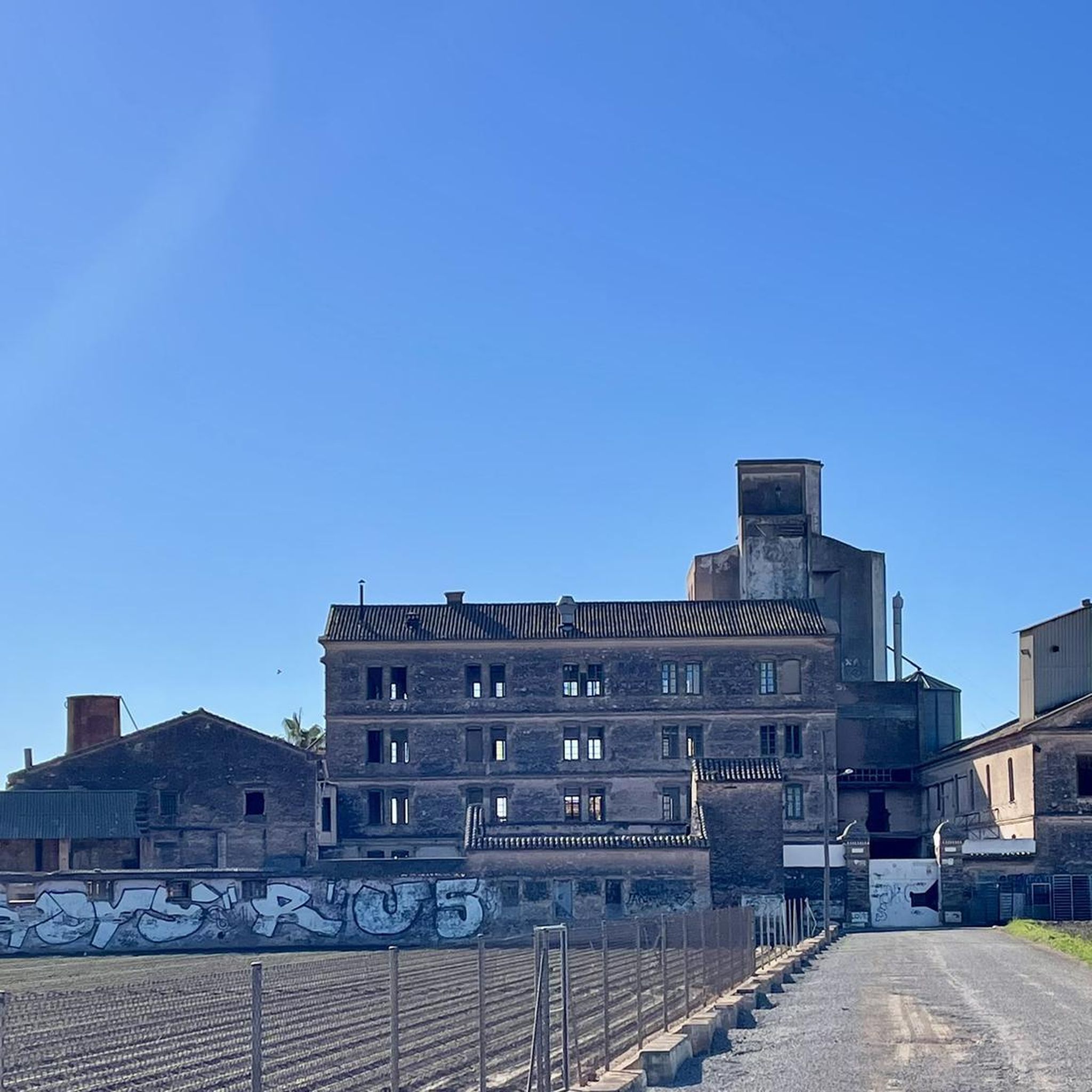
Explore the graffiti under the arches. Careful crossing... Narrow footpaths and busy road.
0
0
Frequently Asked Questions
What historical sites can I explore around Shelsley Walsh?
Shelsley Walsh is rich in history. You can visit the renowned Shelsley Walsh Speed Hill Climb, the oldest continuously used motorsport venue in the world, which has hosted events since 1905. The village also features St Andrew's Church, with origins dating back to the early 12th century, and the historic Shelsley Walsh Water Mill, which dates to 1308. Further afield, St Peter's Church, Martley, is another significant religious building with 12th-century Norman origins and notable wall paintings. Don't miss Holt Fleet Bridge, a Grade II listed cast-iron arch bridge designed by Thomas Telford.
Are there any natural beauty spots or viewpoints in the area?
Yes, the area offers several natural beauty spots. Kingswood Common is a lovely spot for walks, featuring a privately owned nature reserve and woodland with apple trees, offering beautiful views of the Teme Valley. The River Teme itself flows nearby, providing scenic riverside trails and opportunities to enjoy the natural landscape. You can also find viewpoints along various walking routes in the Teme Valley.
What outdoor activities can I do near Shelsley Walsh?
The region around Shelsley Walsh is ideal for outdoor activities. You can enjoy cycling on routes like the 'Martley & Holt Heath loop from Worcester' or 'Fresh Milk Farm Stand loop from Knightwick'. For hiking, consider the 'River Teme Riverside Walk – Kingswood Common loop from Martley' or 'View of Teme Valley – Walsgrove Hill Summit View loop from Great Witley'. Running enthusiasts can explore trails such as 'Kingswood Common – John Niklins Fault loop from Martley'. Find more routes and details on the dedicated guides for cycling, hiking, and running around Shelsley Walsh.
Are there family-friendly attractions or activities available?
Many attractions around Shelsley Walsh are suitable for families. Kingswood Common offers well-kept footpaths through woodlands, perfect for a family ramble. The historic Shelsley Walsh Speed Hill Climb can be an exciting experience for all ages, especially during events. Exploring the ancient St Peter's Church, Martley, with its Norman origins and wall paintings, can also be an engaging educational outing. The village of Knightwick, home to The Talbot, is also considered family-friendly.
Where can I find easy walking trails around Shelsley Walsh?
For easy walks, consider the paths around Kingswood Common, which offer well-kept footpaths through woodlands and along the River Teme. While many trails in the area are moderate, the riverside sections often provide gentler terrain. Always check the specific route details on komoot for difficulty ratings and terrain information to ensure it suits your needs.
What is the significance of Shelsley Walsh Speed Hill Climb?
The Shelsley Walsh Speed Hill Climb is historically significant as the oldest continuously used motorsport venue in the world, having hosted events since 1905. It features a challenging 1,000-yard course with a steep gradient, making it a key part of motorsport heritage. The venue continues to host various events, including the British Hill Climb Championship, and offers a unique glimpse into the pioneering age of speed with its historic buildings.
Can I find places to eat or drink near the attractions?
Yes, you can. For example, The Talbot in Knightwick is a 15th-century coaching inn known for its excellent food and its own selection of beers. It's situated in a great location alongside the River Teme and below Ankerdine Hill, making it a perfect stop after exploring the nearby attractions and trails.
What is the best time of year to visit Shelsley Walsh for outdoor activities?
The Teme Valley is particularly vibrant in spring when fruit trees and flowers are in bloom, making it a beautiful time for walks and enjoying the natural landscape. Summer offers pleasant weather for exploring, while autumn brings scenic foliage. Winter walks can also be rewarding, though paths might be muddier. Always check local weather conditions before heading out.
Are there any unique historical engineering feats in the area?
Beyond the historic motorsport venue, the area boasts some interesting engineering. Holt Fleet Bridge, a cast-iron arch bridge designed by Thomas Telford and opened in 1828, is a notable Grade II listed structure. Additionally, Dick Brook is thought to be the first canalised brook in England, engineered in the mid-17th century by Andrew Yarranton to transport iron ore, predating the main canal-building era.
What do visitors enjoy most about the attractions around Shelsley Walsh?
Visitors particularly appreciate the blend of historical significance and natural beauty. The historic sites, such as the Speed Hill Climb and ancient churches, offer a deep dive into the region's past. The scenic walks along the River Teme and through woodlands like Kingswood Common are highly valued for their tranquility and views of the Teme Valley. The komoot community has shared over 10 photos and given more than 10 upvotes to the attractions, highlighting their appeal.
Where can I see the River Teme and its surrounding landscape?
The River Teme flows through the area, offering numerous opportunities to enjoy its scenic beauty. You can access riverside trails from places like Kingswood Common, which is situated on its banks. The village of Knightwick, where The Talbot is located, also sits alongside the River Teme, providing a picturesque setting.
Are there any specific places for wildlife spotting?
While not explicitly detailed for specific wildlife, natural areas like Kingswood Common, with its nature reserve and woodland, and the general Teme Valley landscape, would be the best places for wildlife spotting. Keep an eye out for local birds and small mammals during your walks.
Most popular attractions around Shelsley Walsh

Get inspired with the komoot mobile app


Explore more
Still not found the Highlight you’re looking for? See guides of the top attractions in other regions:
