Attractions and Places To See around Gittisham - Top 20
Best attractions and places to see around Gittisham include a range of historical landmarks, natural features, and points of interest. The village itself is largely a conservation area, characterized by traditional cob and stone cottages and numerous listed buildings. Gittisham is situated within the East Devon Area of Outstanding Natural Beauty, offering scenic landscapes and outdoor opportunities. The area provides a mix of cultural sites and natural beauty for exploration.
Best attractions and places to see around Gittisham
- The most…
Last updated: September 26, 2026
Jacob's Ladder Beach
Highlight • Natural
Tip by

Alma Bridge
Highlight • Bridge
Tip by

Sign up now to discover places like this
Get recommendations on the best single tracks, peaks, & plenty of other exciting outdoor places.
River Sid Ford
Highlight • Bridge
Tip by

St Winifred's Church, Branscombe
Highlight • Historical Site
Translated by Google •
Tip by

Jacob's Ladder and Beach, Sidmouth
Highlight • Beach
At the top of the staircase is Connaught Gardens, a public park since 1924.
Tip by

Sign up for free to discover even more attractions around Gittisham.
Already have an account?
Start today with a free account
Your next adventure awaits.

Tips from the Community

As long as you don't mind getting your feet wet its not too bad. Had been raining all night when I got there. Can imagine its a bit different in winter.
0
0

If you enjoy a dramatic entrance, Jacob’s Ladder is Sidmouth’s version of a red carpet—just with more cardio! These iconic white wooden steps link the lush Connaught Gardens to a stunning pebble beach below. As you descend, you get a "bird’s-eye" view of the red Triassic cliffs that look like giant slices of rusty gingerbread. Reach the bottom and you’re in a world of rock pools and crashing waves. Legend says if you climb back up without stopping, you’ve earned an extra large Devon cream tea at the top. Challenge accepted?
0
0

Went through today absolutely fine just take it easy on the slopes not to much power or you will get wheel spin 😂😂
0
0

To explore the traces of the patronage of "Saint Winifred" (originally "Gwenfrewi") found here, we must geographically move away from the south coast of England to the north of Wales, and chronologically, travel to the first half of the seventh century. Anyone who would like to follow the life of the popular Welsh saint and martyr (at least virtually) in her homeland can visit the following highlight in the komoot system =>> https://www.komoot.com/de-de/highlight/5617651
1
0
The historic Alma bridge, built over 100 years ago, was damaged in severe flooding and rendered unsafe for use long term. The bridge provides access to the seafront over the River Sid and acts as a gateway to the South West Coast Path. A large project was undertaken to replace it - the new bridge was moved 40 metres inland and a nautical, contemporary design was selected. The project also undertook extensive cliff reprofiling and stabilisation work. Despite COVID restrictions hampering the project, the bridge was opened at the end of 2020. The structure was clad in our Purbeck Royal Blue stone to match the existing walling and, more fittingly, it's one of the limestone beds found on the Jurassic Coast. We supplied approx. 60 tonne of Purbeck Stone which is ideal for this type of applictaion; it's hardwearing and durable, even against some of the harshest environmental elements. Purbeck Royal Blue is a stunning natural building stone with a rich blue heart and brown border which offers a fabulous depth of colour and a lot of character, suitable for new-builds and restoration schemes alike and has been used extensively throughout the UK.
0
0
Jacob's Ladder is the name of the area at the western end of the town beach, the name comes from the wooden steps that lead up to Connaught Gardens, there have been steps at this part of the beach for as far back as anyone can remember.
2
0

Jacob's Ladder is one of Sidmouth's two large beaches. An expanse of sand and shingle, the beach gets its name from the series of wooden steps that lead down from Connaught Gardens. Whilst the beach can be accessed via the steps it is also possible to walk around from the town's main beach via a level path. At the top of the step system there is a cafe leading to the gardens, this can be a good place to visit after a coastal run
1
0

Sign says unsuitable for cyclists but I took a chance with low water after a dry spell. Use your own judgement!
1
0
Frequently Asked Questions
What are the best natural features to explore around Gittisham?
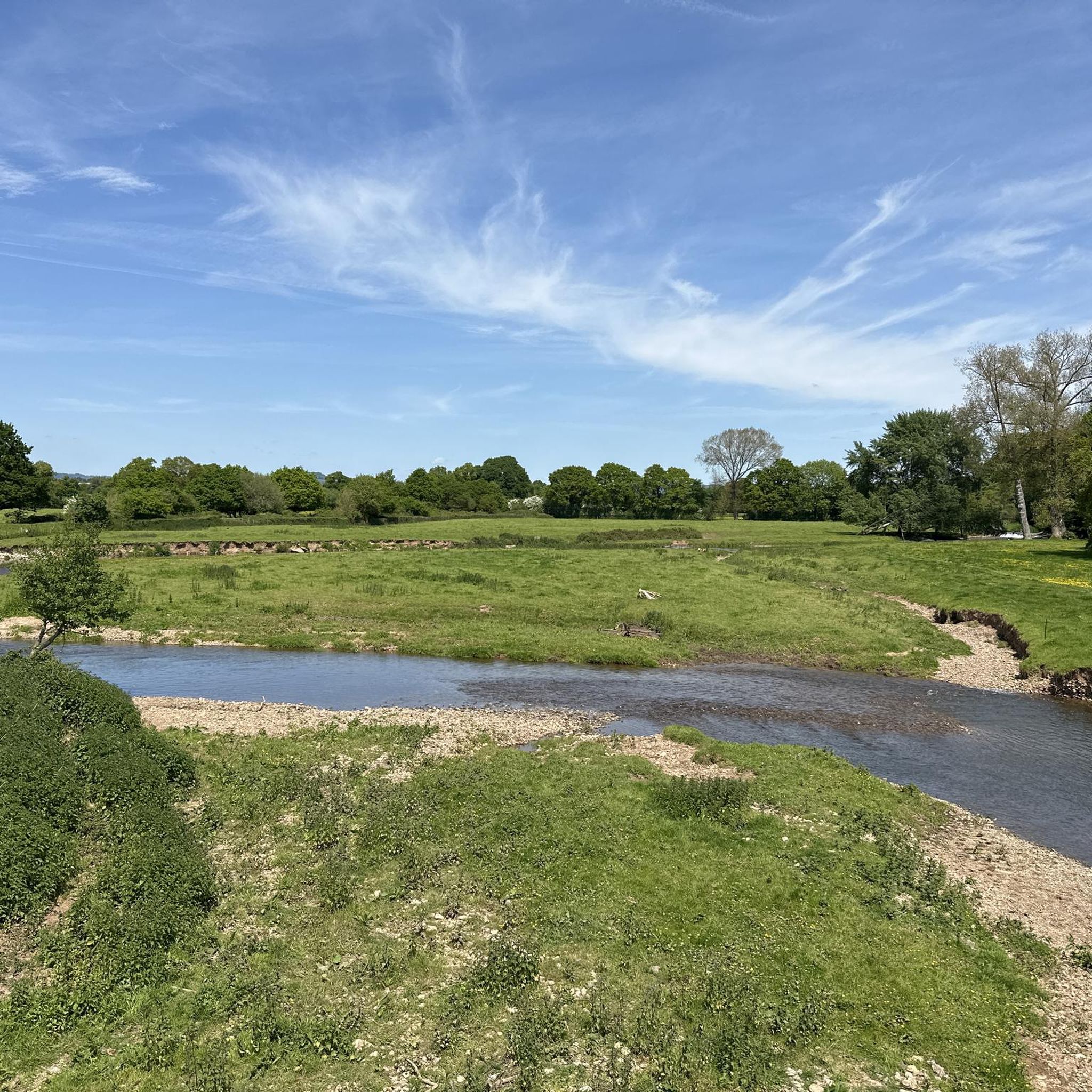
Gittisham is nestled within the East Devon Area of Outstanding Natural Beauty. You can explore Harpford Woods, a magical world of vibrant ferns and tall trees with a disused Victorian railway line. The River Sid Ford offers a unique natural crossing point, and the River Sid itself is notable as possibly the shortest complete river in England. Gittisham Hill also features ancient Bronze Age burial mounds.
Are there any historical landmarks or cultural sites in Gittisham?
Yes, Gittisham is rich in history. St Michael's Church is a Grade I-listed church showcasing Early English and Perpendicular architectural styles, with historic box pews and 16th-century glass. Combe House, an Elizabethan mansion with medieval elements, served historically as the manor house. The village itself is a conservation area, with many listed cob and stone cottages, some dating back to the Domesday Book era.
What kind of walking trails are available near Gittisham?
The area around Gittisham is excellent for walking. You can find routes like the Bellevue Plantation walk, which goes through beech woods and past thatched cottages, and the Alfington walk, offering spectacular views. For more specific routes, you can explore easy hikes around Gittisham, including loops from Honiton and Ottery St Mary.
Are there family-friendly attractions around Gittisham?
Absolutely. Jacob's Ladder Beach in Sidmouth is an expanse of sand and shingle, perfect for families, especially at low tide when rock pools appear. The Donkey Sanctuary, located near Sidmouth, is also a popular visitor attraction providing a home for rescued donkeys.
What outdoor activities can I do near Gittisham?
Beyond walking, the East Devon Area of Outstanding Natural Beauty offers opportunities for cycling and mountain biking. You can find various routes, from moderate to difficult, including those exploring the Blackdown Hills. Check out guides for MTB Trails around Gittisham and Cycling around Gittisham for detailed options.
What do visitors enjoy most about the attractions around Gittisham?
Visitors frequently praise the natural beauty and tranquility of the area. For instance, Harpford Woods is described as a 'magical world' with vibrant ferns and tall trees. The scenic coastal path near Jacob's Ladder Beach is also highly rated for its views, despite being uneven in places.
Are there any ancient sites or archaeological points of interest?
Yes, Gittisham Hill features several Bronze Age burial mounds, offering a glimpse into the region's prehistoric past. Additionally, Blackbury Camp, an Iron Age hillfort with impressive ramparts surrounded by woodland, is located about 5 miles from Gittisham.
What is the best time of year to visit Gittisham for outdoor activities?
The East Devon Area of Outstanding Natural Beauty is beautiful year-round. Spring and summer offer lush greenery and warmer weather ideal for walking and cycling. Autumn brings vibrant foliage, while winter can provide crisp, quiet walks, though some paths might be muddy. Always check local conditions before heading out.
Are there any notable bridges or unique river features?
The River Sid Ford is a picturesque crossing point over the River Sid, which can be cycled or walked across, with a footbridge available. The River Sid is also notable for being possibly the shortest complete river in England. Additionally, the Alma Bridge in Sidmouth provides vital access to the seafront and serves as a gateway to the South West Coast Path.
Can I find pubs or cafes near the walking routes in Gittisham?
While Gittisham itself is a small village, the surrounding area offers options. Many walking routes will pass through or near other villages and towns where you can find pubs and cafes. For example, the nearby town of Honiton has various establishments. It's always a good idea to check specific route details for refreshment stops.
What makes St Winifred's Church in Branscombe significant?
St Winifred's Church, Branscombe, is one of Devon's oldest and most architecturally significant parish churches, with parts dating back to approximately 995 AD. It features both Norman and later medieval elements, and is dedicated to Saint Winifred, a Welsh saint. It's often described as a 'castle-like' church due to its robust appearance.
Most popular attractions around Gittisham

Get inspired with the komoot mobile app


Explore more
Still not found the Highlight you’re looking for? See guides of the top attractions in other regions:
