The best walks and hikes around Snitterfield
4.5
(971)
8,794
hikers
19
hikes
Hikes around Snitterfield explore the rolling countryside of Warwickshire, characterized by a mix of meadows, woodlands, and nature reserves. The terrain is generally gentle, with routes following established footpaths like the Monarch's Way. Key natural features in the area include the Welcombe Hills and the Snitterfield Bushes Nature Reserve, a Site of Special Scientific Interest.
Best hiking trails around Snitterfield
- The most popular hiking route is The Farm, Snitterfield – Welcombe Hills & Clopton Park loop from Snitterfield CP, a 3.8 mile (6.1 km) trail that takes about 1 hour 40 minutes to complete. This easy route connects the village with the popular Welcombe Hills nature reserve.
- Another top favourite among local hiking enthusiasts is Welcombe Hills & Clopton Park – The Farm, Snitterfield loop from Hatton Rock, a moderate 10.9 mile (17.5 km) path. This longer hike offers a more extensive exploration of the area's parks and farmland.
- Local hiking enthusiasts also love the The Farm, Snitterfield loop from Snitterfield, a 3.4 mile (5.5 km) trail leading through the local landscape, often completed in about 1 hour 25 minutes.
- Hiking around Snitterfield is defined by gentle farmland paths, quiet woodlands, and walks through nature reserves like Welcombe Hills. The network of trails provides a variety of Snitterfield circular walks suitable for both easy and moderate ability levels.
- The routes in Snitterfield are highly rated by the komoot community with an average score of 4.5 stars from over 700 reviews. More than 7,000 hikers have used komoot to explore Snitterfield's varied terrain.
Last updated: October 8, 2026
5.0
(3)
11
hikers
4.38km
01:13
80m
80m
Easy hike. Great for any fitness level. Easily-accessible paths. Suitable for all skill levels.
5
hikers
Moderate hike. Good fitness required. Easily-accessible paths. Suitable for all skill levels.

4.0
(1)
13
hikers
Moderate hike. Good fitness required. Easily-accessible paths. Suitable for all skill levels.
1
hikers
5.54km
01:26
40m
40m
Easy hike. Great for any fitness level. Easily-accessible paths. Suitable for all skill levels.
10
hikers
4.05km
01:07
70m
70m
Easy hike. Great for any fitness level. Easily-accessible paths. Suitable for all skill levels.
Get access to more routes and recommendations from other explorers.
Already have an account?
Our route recommendations are based on thousands of hikes, rides, and runs completed by other people on komoot.
Start today with a free account
Your next adventure awaits.
Tips from the Community

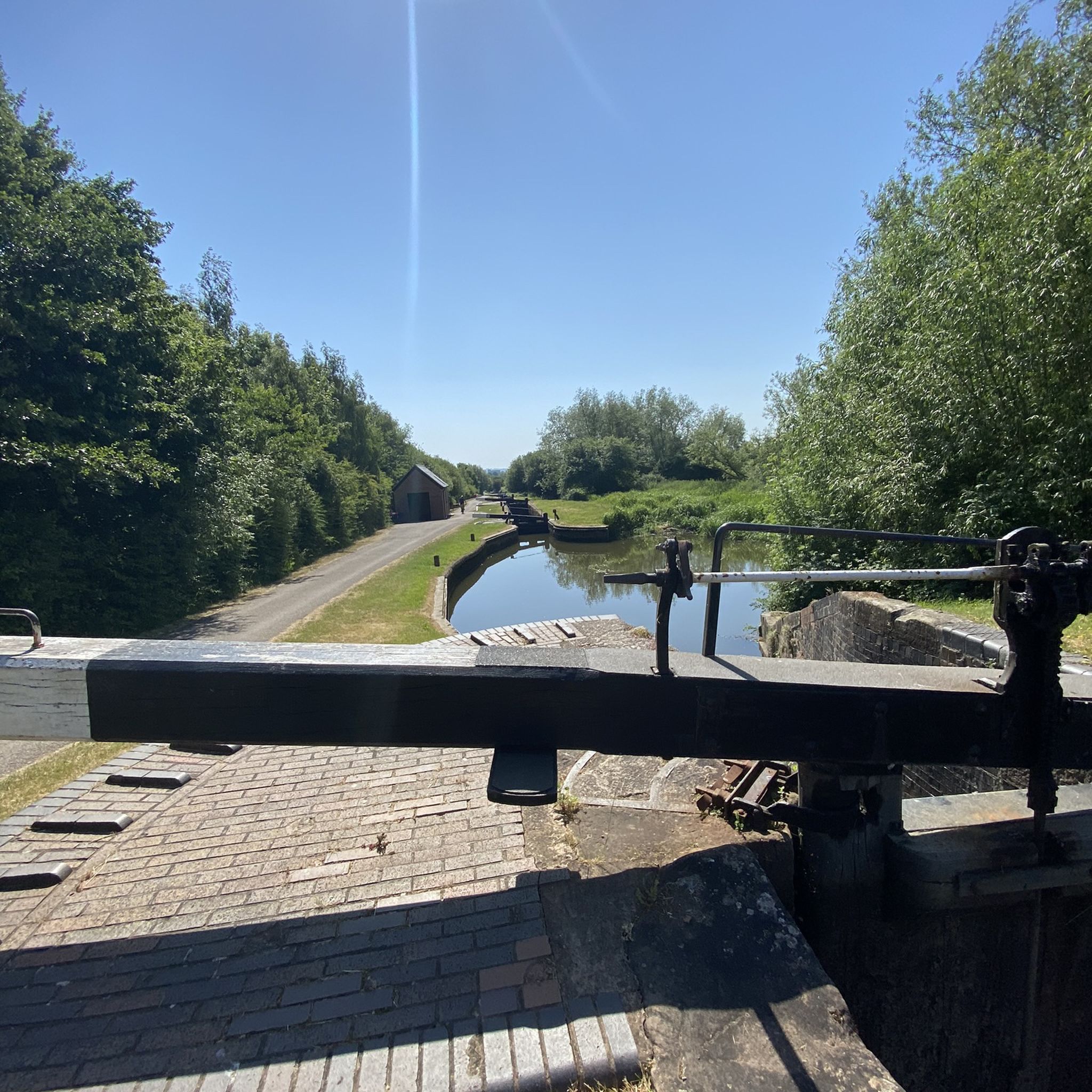
Lovely path around a newly created nature reserve in Stratford-upon-Avon. Approximately 1.5km circular route
0
0

This path was opened in 2022 and allows visitors to complete a loop North
0
0

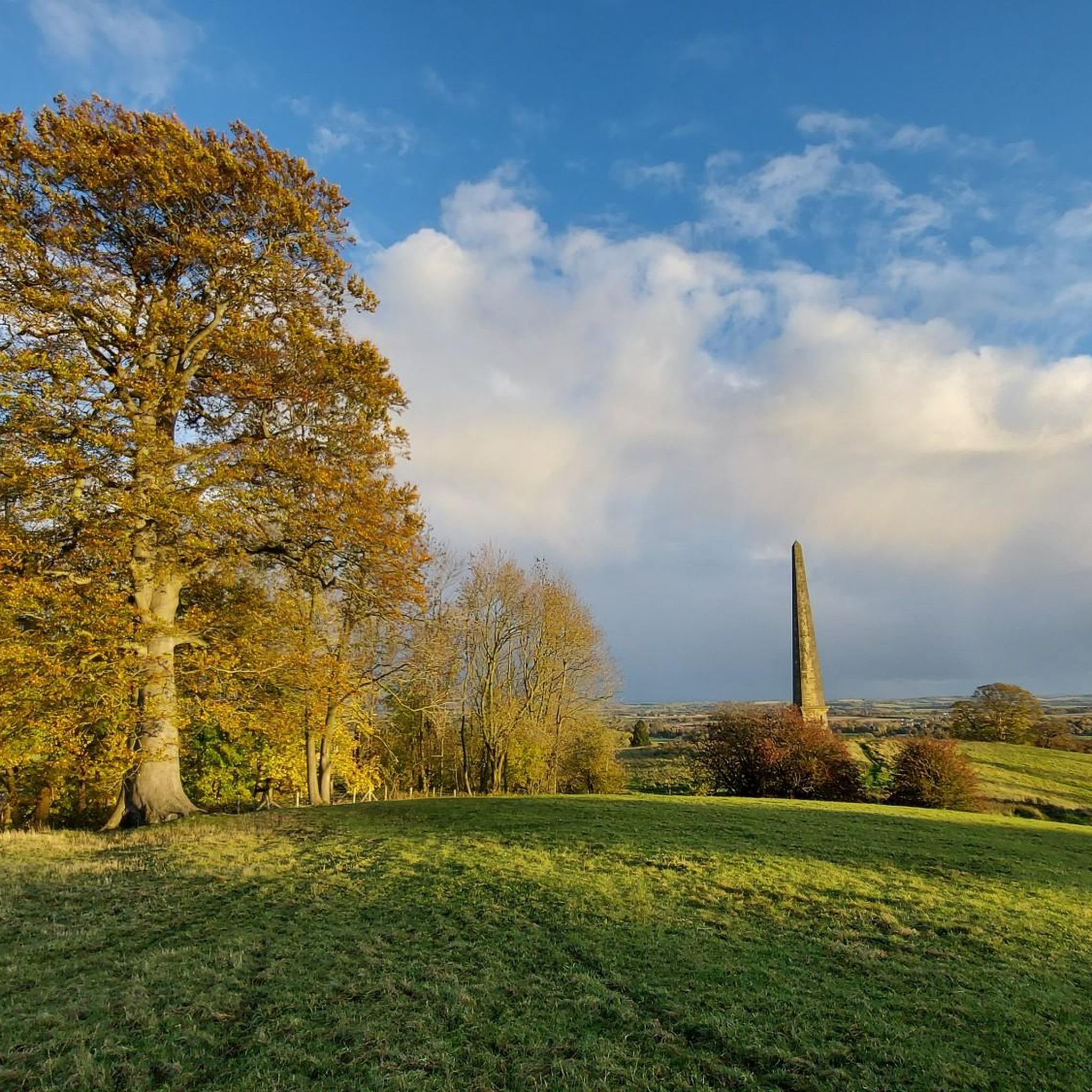
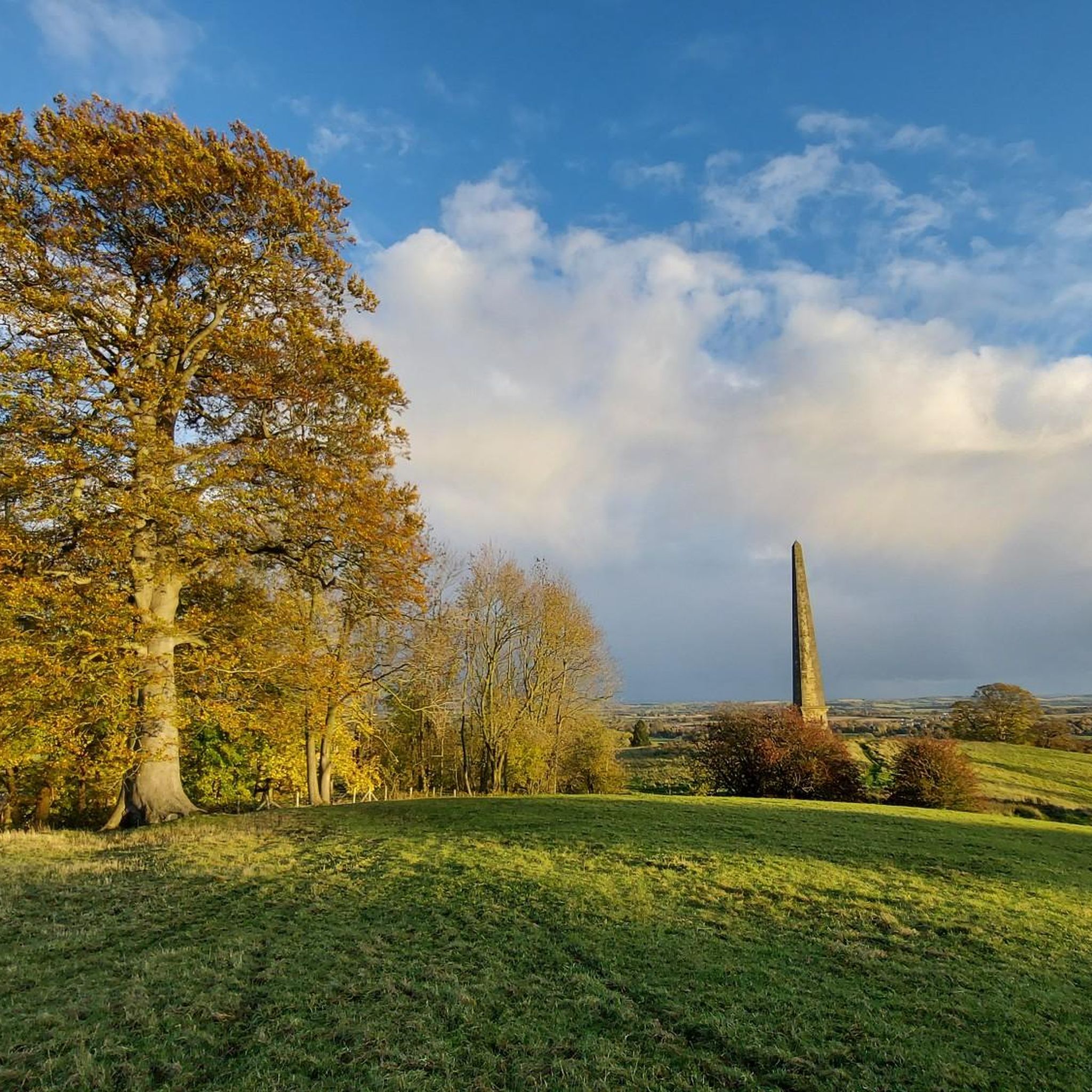
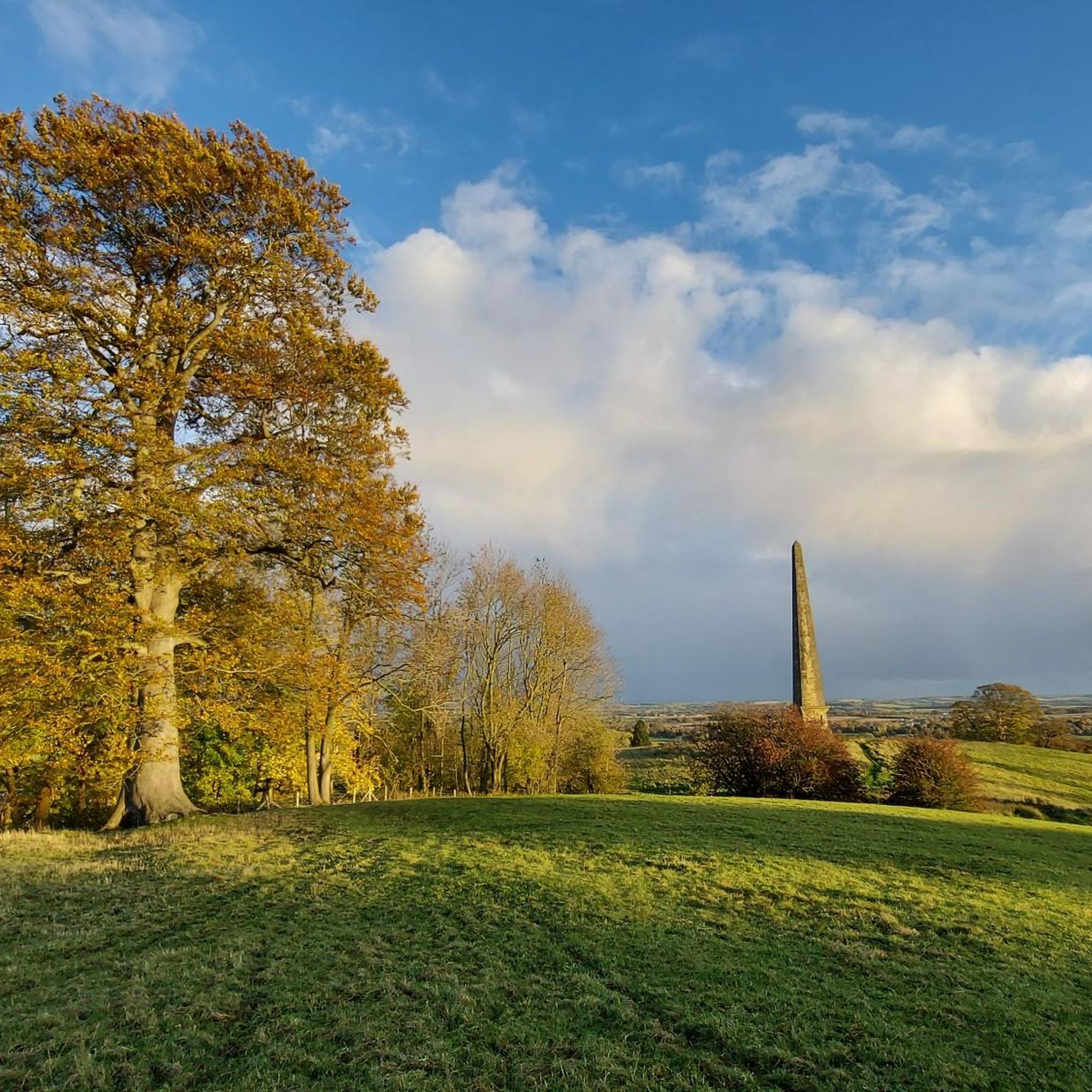
One of the best known landmarks on the hills is Obelisk or Monument Erected in 1876 by Robert Needham Philips to honour his brother Mark Philips, this obelisk on the hill above the Welcombe Hotel is visible for miles up and down the vale of the Avon. Welcombe was once part of the chief manor of Old Stratford and in Shakespeare’s time the Combes family had a considerable estate here. In 1845 Mark Philips, son of a northern industrialist purchased Welcombe Manor and in the 1860s rebuilt it as the family seat. Today this forms the Welcombe Hotel. Mark Philips was also notable as Manchester’s first Member of Parliament. About Mark Phlips Mark Philips (4 November 1800 – 23 December 1873) was an English Liberal Party politician, and one of the first pair of Members of Parliament for Manchester after the Great Reform Act. Born in Philips Park, Whitefield, Lancashire, the son of Robert Philips, a prosperous merchant and Anne Needham. He was educated at the Manchester Academy while it was in York and then at the University of Glasgow. The town of Manchester was deprived of its parliamentary representation in 1660 in reprisal for its support of the Parliamentarian faction during the English Civil War. Representation was only restored following the Great Reform Act of 1832. He and Charles Poulett Thomson were the first pair of MPs elected in that year. He represented the city in Parliament until 1847, an active member of the Anti-Corn Law League. A champion of universal education, in 1837 he chaired a meeting that led to the creation of the Lancashire Public Schools’ Association which was instrumental in establishing a system of publicly-funded schooling in the UK. He also played an important role in establishing the UK’s first free public library in 1852 and he was President of his old school Manchester Academy from 1842–1846 and from 1871 until his death in 1873. He was High Sheriff of Warwickshire in 1851. Philips donated money to many causes including £1,000 towards the fund for the provision of open spaces and parks for the City of Manchester. This resulted in many estates being purchased by the city, including Lark Hill in Salford, which became Peel Park, and the Bradford Estate which became Philips Park in east Manchester. He died, aged 73, at Welcombe House, Stratford-upon-Avon.
0
0
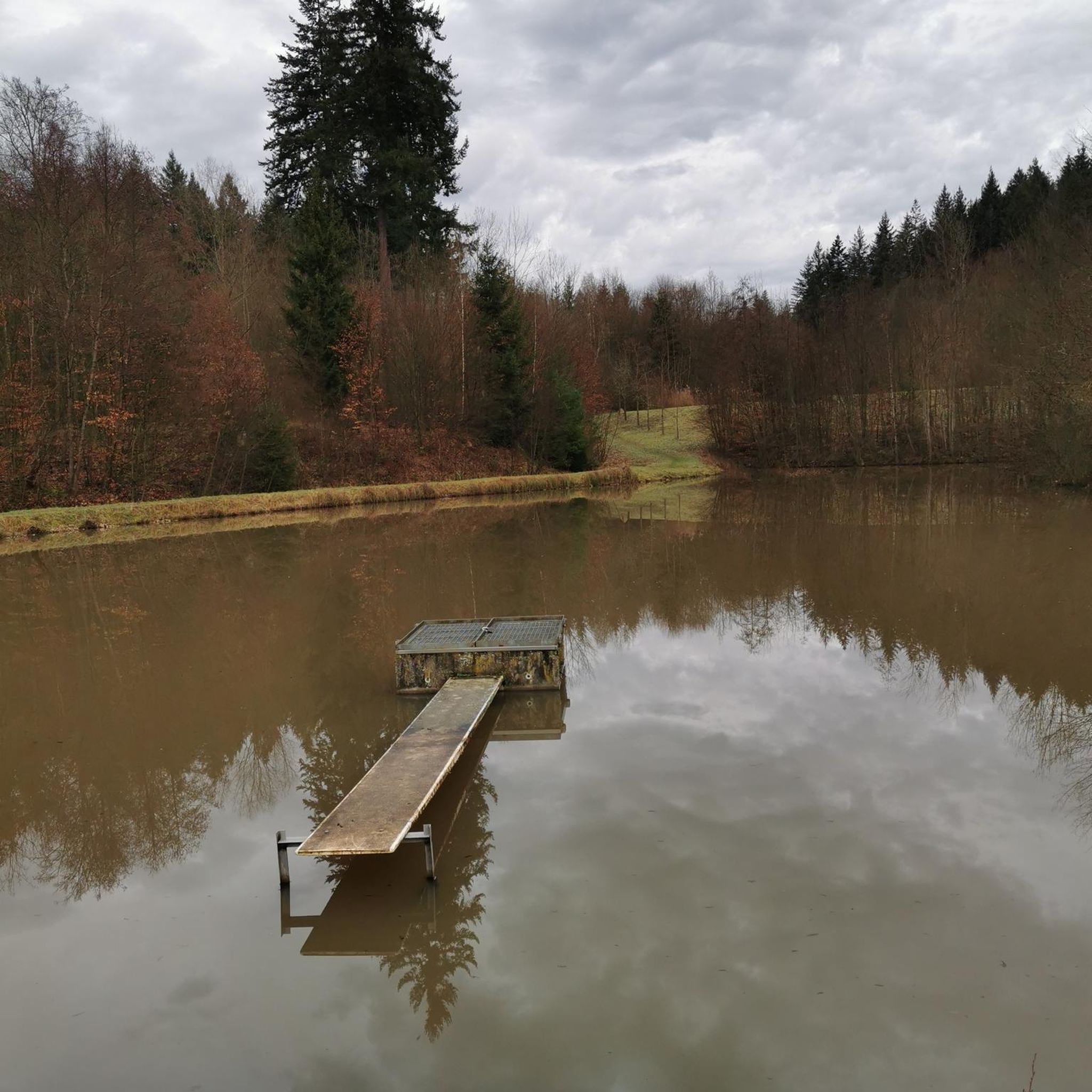
The Welcombe Hills and Clopton Park offer delightful walks through grassland and woodland. Woolly thistle, quaking-grass and the diminutive adder’s-tongue grow in the grasslands where ant hills created by yellow meadow ants are a distinctive feature. The woodland contains oak, horse-chestnut and beech with English elm. Birds are plentiful, with great spotted woodpecker, sparrowhawk, little owl, treecreeper and finches enjoying the woodland where ravens breed in spring. Brimstone butterflies are numerous in the spring sunshine. History of the Welcombe Hills: a Shakespearean tale The reserve may have got its name from a historic well found here with its inscription 'SJC 1686'. Margaret, daughter of William Clopton who died in 1592 supposedly drowned here. It was around this time that Shakespeare was writing his famous play, Hamlet, and its believed that this tragic event provided the inspiration for his 'Ophelia' and her lonely death.
0
0

Called into the deli for hot soup and nice crusty bread on a long winter mountain bike ride. The also have real gelato - perfect for summer!
0
0
The large parish church of ST. JAMES THE GREAT consists of a chancel, nave, north and south aisles, and a west tower. There are also modern vestries north of the chancel and south of the tower. The sequence of the earlier development of the building is a little uncertain owing to the proximity of the various periods, added to the marked differences in detail, and some confusion caused by later alterations. Probably the south arcade dates from the latter half of the 13th century and the north from the early 14th century, but the similarity of the windows in both aisles suggests that after the north aisle was built the south aisle was widened to 9 ft. to match the other. The chancel, built of rubble, is of severer detail and may have followed soon after the 14th-century north aisle; (fn. 54) it is of great length compared with the nave and has large windows. The west tower was evidently erected in several successive stages: the lowest 10 ft. in the early 14th century, continued up another 8 or 9 ft. about 1340 with ashlar walling, the west window having moulded jambs rather like those of the south doorway, and completed c. 1400 in ashlar of larger stones. The clearstory was added early in the 16th century: there seems to have been some trouble from weakness in the arcades, especially the northern, which shows inequalities in the arches resulting probably from partial reconstructions, and most of its capitals have been rather crudely remoulded. No important changes occurred before the 19th century, but there was some deterioration, as a description of 1858 (fn. 55) mentions that the chancel was heavily buttressed on the north side and its windows had lost their tracery. The closing of the side doorways and insertion of the west doorway were done before that time. Scars and repairs in the arcades are evidence of the damage caused to the masonry by the erection of galleries in 1841. Probably the vestry south of the tower was then added. Since then the church has been well restored, the chancel windows provided with tracery, and the north vestry and organ chamber added. The chancel (about 45 ft. by 20 ft.) has an east window of five trefoiled lights and modern intersecting tracery in a two-centred head with a hood-mould. The chamfered rear-arch also has a hood-mould with modern foliage stops. In the north wall is a similar window of three lights also with modern tracery. At the west end is a modern archway to the organ chamber and between the two a pointed doorway to the vestry; this has a chamfered order which is ancient, the reveals to the vestry being modern; probably the doorway is original but re-set inside out. In the south wall are two windows like that in the north wall; east of the second is an original priests' doorway with chamfered jambs and hollow-chamfered pointed head. In this wall is a double piscina, all of modern stonework. The fillingin below the eastern window is of ashlar (the rest of the wall being of rubble) and may indicate a former sediliarecess. The walls are of lias rubble, the east wall cemented, and have chamfered plinths and a moulded string-course below the windows. At the angles are square buttresses of ashlar, also intermediate in the south wall; the plinth and string-course pass round the buttresses. The west end of the south wall is of ashlar and seems to have been a buttress rebutting the south arcade; from the way the stones of the south-west window are fitted to the ashlar courses it is evident that the ashlar is the earlier. On the face of the south buttress is a scratched mass-dial. The roof is of the 18th century or later and of trussed rafter type covered with tiles. The chancel arch is a very plain one of two chamfered orders continued in the two-centred head, interrupted only by a kind of bonding course at the springing level that is only of one chamfered order. The north half of the arch is distorted. The nave (about 53 ft. by 20 ft.) has a north arcade of four bays with octagonal pillars and semioctagonal responds. The east respond has no base. The other bases are original, varying in height from 18 to 21 in.; they are of two round moulds and have square sub-bases with moulded stops to the octagons above. The capital of the west respond, 9 in. high, is of good normal contour of the early 14th century. That of the easternmost pillar, of an entirely different contour, may be of the same period re-tooled, but the others are of crude peculiar forms that may have replaced the original early-14th-century capitals some time in the 16th or 17th century. The arches are of two chamfered orders: they do not spring directly from the pillars, but die on to octagonal super-pillars (tas de charge); they are two-centred, but are more or less distorted; and there is little doubt that the arcade was largely rebuilt at some later medieval period; the voussoirs vary in size from the original small stones to later large ones. Assuming the clearstory wall to be in a straight line, there is a curvature in the arcade-wall to the north so that the clearstory wall overhangs it over the third and fourth arch. The walling in the haunches is of small rubble with a patch of larger stones above the west respond. The south arcade, also of four bays, is of late-13thcentury date. Each pillar is a circular group of eight round shafts and hollows; some of the shafts are filleted. The responds are half-pillars; the bases, of octofoil plan, are of two rounds and a hollow and stand on chamfered square sub-bases; in the middle base the square angles are carved with ivy-leaf spurs. The capitals of the pillars are unusually large (17 in. high); they are of circular plan with a scroll-moulded abacus, a small mould below it, and a large bell springing from the hollows, the shafts being carried up straight into it. The half-round capitals of the responds are of a more normal size (10 in.). The arches are two-centred and of two hollow-chamfered orders, the outer small, with medium to large voussoirs. The masonry between and above the arches is of ashlar of different periods: the western half is of small courses, but in the eastern half the courses are larger and of two dates. This may be the result of partial rebuilding to straighten the wall before the clearstory was added. The clearstory is built of ashlar in large courses and is lighted on each side by four early-16th-century windows of two trefoiled fourcentred lights under three-centred main heads, partly restored. Above are plain parapets with moulded string-courses. The roof is of almost flat pitch and is divided into four bays by main horizontal beams that are supported under the ends by battering wall-posts and curved braces, on modern wood corbels: the wall-posts are packed behind by modern posts. All the main timbers are chamfered. The roof is probably of the early 16th century; as the trusses are shorter than the space between the walls it is said that the roof was brought from elsewhere, probably from Fulbrook Castle. It is covered with slates. On the east and west walls of the nave are the lines of the earlier high-pitched gabled roof antedating the clearstory. The north aisle (8 ft. wide) has three north windows of the early 14th century: the first and third are each of two pointed lights and plain spandrel in a twocentred head with an external hood-mould and moulded rear-arch. The mullions and jambs are moulded, the latter rather elaborately in three orders with filleted rolls, &c. The middle window is a modern adaptation of the original north door-head raised to a higher level: below the modern sill are the straight joints of the original doorway. There is no west window. The walls are of rubble of rather thin stones. Two north buttresses are modern, the north-west diagonal buttress is of old ashlar. The north wall has an original moulded stone eaves-course. The south aisle (9 ft. wide) has an east window very similar to those in the north aisle. The eastern of the three south windows is similar, but the sill has been heightened. The second is the old south doorway lifted higher and fitted with a modern mullion, &c.; and below are the straight joints of the former door-opening. The third window resembles the east window, with slightly different mouldings. In the west wall is a lancet window with wide splays and hollow-chamfered segmental-pointed rear-arch. Its exterior, covered by the modern vestry, is hidden by plaster. The walls are of coursed ashlar and have chamfered plinths and hollow-chamfered eaves-course. At the south-east angle is a pair of square buttresses, another intermediate east of the (former) south doorway, and one at the west end: the last retains the original tabling or capping of two courses, but on the others they are cemented. Equidistant west of the south doorway was another buttress, now indicated only by a break in the masonry. The aisles have lean-to roofs of uncertain date covered with lead. At the east end of the south wall is a former locker or reliquary 2 ft. deep and 2 ft. wide recessed behind to the east, the rebated doorway being 1 ft. 7 in. wide. The west tower (about 15 ft. square internally) is divided externally by a string-course into two stages, the lower including the clock-chamber. It has a plinth 6 ft. high of four chamfered stages. At the north-west angle is a pair of square buttresses of ashlar. The southwestern stair-turret is of unusual treatment; it projects from the angle as three sides of a large irregular hexagon and is splayed across the angle inside, with a pointed doorway: near the top of the lower main stage it is tabled back. The lofty archway from the nave is of three continuous chamfered orders towards the nave, and of two orders, in the pointed head only, towards the tower. The west doorway has a four-centred arch and is said to be a modern insertion, presumably made when the side doorways were blocked. The west window is of three lights and late-14th-century tracery in a twocentred head. It has a transom, below which the jambs are of early-14th-century mouldings, but above the transom they change to plain chamfered orders. These details and the masonry of the walls indicate that the lower stage of the tower is of at least three periods. Up to about 3 or 4 ft. above the plinth the walls are of rubble, probably, with the plinth, of early14th-century date. Above that up to the level of the tops of the square buttresses and the moulded windowjambs they are of coursed rough ashlar in fairly small stones of slightly later date. Above that level up to the parapet the masonry is of more even ashlar in larger stones, probably of c. 1400. At the same level also the north-west angle is provided with a diagonal buttress in place of the lower square buttresses and there are also diagonal buttresses to the other angles. The projecting stair-turret has the same changes of masonry, but is carried up a little higher. In the earlier ashlar it has two trefoiled loop-lights; in the later a shorter and wider ogee-headed loop-light. About 6 ft. below the clock-chamber floor it decreases in internal width and changes to the more normal stair-vice contained within the bounds of the square angle up to the bell-chamber. The clock-chamber has a tiny south light with an ogee head, below the string-course. The bell-chamber has an embattled parapet with a moulded string-course having gargoyles at the angles, now perished. The diagonal buttresses reach nearly to the string-course and carry angle pinnacles, restored above the parapet. In each wall is a pair of windows, each of two trefoiled lights and late-14th-century form of quatrefoil in a two-centred head with hood-mould and carved defaced stops. The roof, of low pyramidal form, has massive cross-beams, &c. The lower ceiling is of modern pitchpine. The font is of the early 14th century; it is octagonal; the bowl has upper and lower mouldings and a hollow below in which are projecting carved heads at the angles; these are of men of various callings: one has a bishop's mitre, another is a knight, others have caps, probably academic and legal, and another a close-fitting hood. The stem and chamfered base are plain. The communion table to the altar of the south aisle has thin turned legs, &c., of c. 1700. The communion rails in the chancel are of c. 1630 and have turned balusters: the gate-posts have flat ornament and moulded upstanding heads: the top rails are carved with incised running foliage. The pulpit of c. 1730 has five sides of a hexagonal tub, with oval panels having raised key-blocks to the four arcs and jewelled spandrels; above these are open frieze-panels. In the quire stalls are incorporated two carved standards and panelled desk-fronts of c. 1500, perhaps brought from elsewhere. The standards differ a little: the northern is faced with an elaborate window-tracery design and has a shouldered head and a vine leaf and grape poppy-head. On the front (south) vertical edge is a carved post (showing Italian Renaissance influence) on which stands a small figure of an ecclesiastic holding a rounded object in his hands: in the crook of the right arm is a long staff with a foliated head. Over it is a canopy with a demi-rose soffit. On the back edge, just below the shoulder, is a half-angel with a shield. On the inner face are the initials IN (in Tudor-Roman style) in a knot suspended from an open hand above, and on either side is a small female figure with a foliage tail. The southern has similar tracery and a shield with the crowned arms and supporters of Henry VII. The figure on the front post is that of a bishop. At the back is the half-angel with a shield, and on the inner face the letters IN as a monogram in Lombardic letters, and foliage. The poppy-head is carved with roses and foliage. The remainder of the two blocks of seats is modern, but east of them are a shorter seat and desk on either side. The desk-fronts each incorporate four bays of panelling: each bay has subcusped trefoiled heads with crockets and finial and foiled tracery above. The muntins have posts carrying small figures mostly winged, some draped and some apparently nude, and holding objects intended perhaps for musical instruments. A framed board in the quire vestry recording charities up to 1682 is probably of that date. In the tower are two painted hatchments of the Earl of Coventry's arms; 18th century. There are six bells, one of 1758 by Abel Rudhall, the others of 1874 and 1887. The communion plate includes a large cup and cover of 1735, and a large flagon and salver of 1751 given by the Dowager Lady Coventry. The registers begin in 1561.
0
0
Great place to stop if you are walking this section of the Monarch’s Way. Good range of food and drinks and if you mention Monarch’s Way you can get a small discount.
1
0
Great for dogs and nice views from the obelisk
0
1
Frequently Asked Questions
Are the hiking trails in Snitterfield suitable for dogs?
Yes, the rolling countryside and woodland paths around Snitterfield are generally great for walking with dogs. Many trails, including those through the popular Welcombe Hills, are enjoyed by dog walkers. Please keep your dog under control, especially near farmland with livestock and within the Snitterfield Bushes Nature Reserve to protect the local wildlife.
Where can I find an easy, family-friendly walk?
There are several easy walks perfect for a family outing. A great option is the Welcombe Hills & Clopton Park loop from Stratford-upon-Avon. It's a relatively short walk of about 4.6 km that explores the well-regarded nature reserve, offering lovely views without being too strenuous.
What is the best time of year to hike in Snitterfield?
Hiking in Snitterfield is rewarding year-round, but spring is particularly special. This is when the woodlands, especially in the Snitterfield Bushes Nature Reserve, are carpeted with bluebells and primroses. Autumn also offers beautiful colours across the rolling countryside.
Are there many circular walks available?
Yes, the majority of routes in the area are circular, allowing you to start and end in the same place without retracing your steps. For a moderately challenging loop that covers varied terrain, consider the Hiking loop from Snitterfield CP, which is about 11 km long.
What is the terrain like on the trails?
The terrain is generally gentle, consisting of well-trodden footpaths, grassy fields, and woodland tracks. Some routes, particularly those entering the Welcombe Hills, involve some moderate inclines. Trails can become muddy after rain, so waterproof footwear is recommended.
Where can I find a good pub or café after a walk?
Many walks are conveniently located near village amenities. A popular stop for hikers is The Farm, which has a café and shop. You can reach it via a pleasant 5.5 km walk like The Farm, Snitterfield loop from Snitterfield. The village of Snitterfield itself also has traditional pubs for refreshments.
What kind of wildlife might I see at Snitterfield Bushes?
The Snitterfield Bushes Nature Reserve is a Site of Special Scientific Interest (SSSI) and a haven for wildlife. You can expect to see a variety of butterflies, including the Grizzled Skipper and White Admiral. The woodland is also home to roe and fallow deer, and it boasts over 250 plant species, including rare orchids.
Is there parking available for the main walking routes?
Yes, parking is available for many of the popular trails. Some routes start from car parks in Snitterfield village or nearby Hatton Rock. For walks exploring the Welcombe Hills, free parking is often available at the Welcombe Hotel golf club, which provides direct access to the paths.
What do other hikers enjoy most about the trails around Snitterfield?
The area is highly rated by the komoot community, with an average score of 4.5 stars. Reviewers frequently praise the peaceful woodlands, the excellent views from the Welcombe Hills, and the well-maintained paths that make for a relaxing hiking experience through classic Warwickshire countryside.
How many hiking trails are there to choose from?
You can explore over 15 curated hiking routes around Snitterfield on komoot. These range from short, easy loops perfect for an afternoon stroll to more moderate, longer treks that provide a full day of exploration.
Are there any routes with historical interest?
Yes, the area is rich in history. Snitterfield has connections to William Shakespeare's family, and some local walks follow parts of long-distance historical paths like the Monarch's Way. You can also find remnants of a World War II airfield within the Snitterfield Bushes Nature Reserve, adding a unique historical element to your hike.
Most popular routes around Snitterfield
Most popular attractions around Snitterfield

Get inspired with the komoot mobile app


Explore more
Browse the best Hikes in other regions.
