The best road cycling routes around Wolston
4.5
(285)
6,489
riders
17
rides
Road cycling routes around Wolston offer varied terrain, primarily on well-maintained paved surfaces, suitable for different fitness levels. The region features a mix of rural landscapes and views of local landmarks such as St Margaret's Church and Draycote. Routes often include gentle undulations, providing an engaging experience without significant mountainous climbs. The area's accessibility and diverse paths make it a compelling destination for road cyclists.
Best road cycling routes around Wolston
- The most popular road cycling route is The Red…
Last updated: October 15, 2026
5.0
(2)
108
riders
63.5km
02:40
360m
360m
Moderate road ride. Good fitness required. Some segments of this route may be unpaved and difficult to ride.
5.0
(1)
27
riders
53.9km
02:21
320m
320m
Moderate road ride. Good fitness required. Mostly well-paved surfaces and easy to ride.

3.0
(1)
20
riders
36.0km
01:42
220m
220m
Easy road ride. Great for any fitness level. Mostly well-paved surfaces and easy to ride.
19
riders
36.2km
01:47
230m
230m
Easy road ride. Great for any fitness level. Mostly well-paved surfaces and easy to ride.
3.0
(1)
14
riders
34.9km
01:40
210m
210m
Easy road ride. Great for any fitness level. Mostly well-paved surfaces and easy to ride.
Get access to more routes and recommendations from other explorers.
Already have an account?
Our route recommendations are based on thousands of hikes, rides, and runs completed by other people on komoot.
Start today with a free account
Your next adventure awaits.

Tips from the Community

Very nice village of Brinklow.
1
0

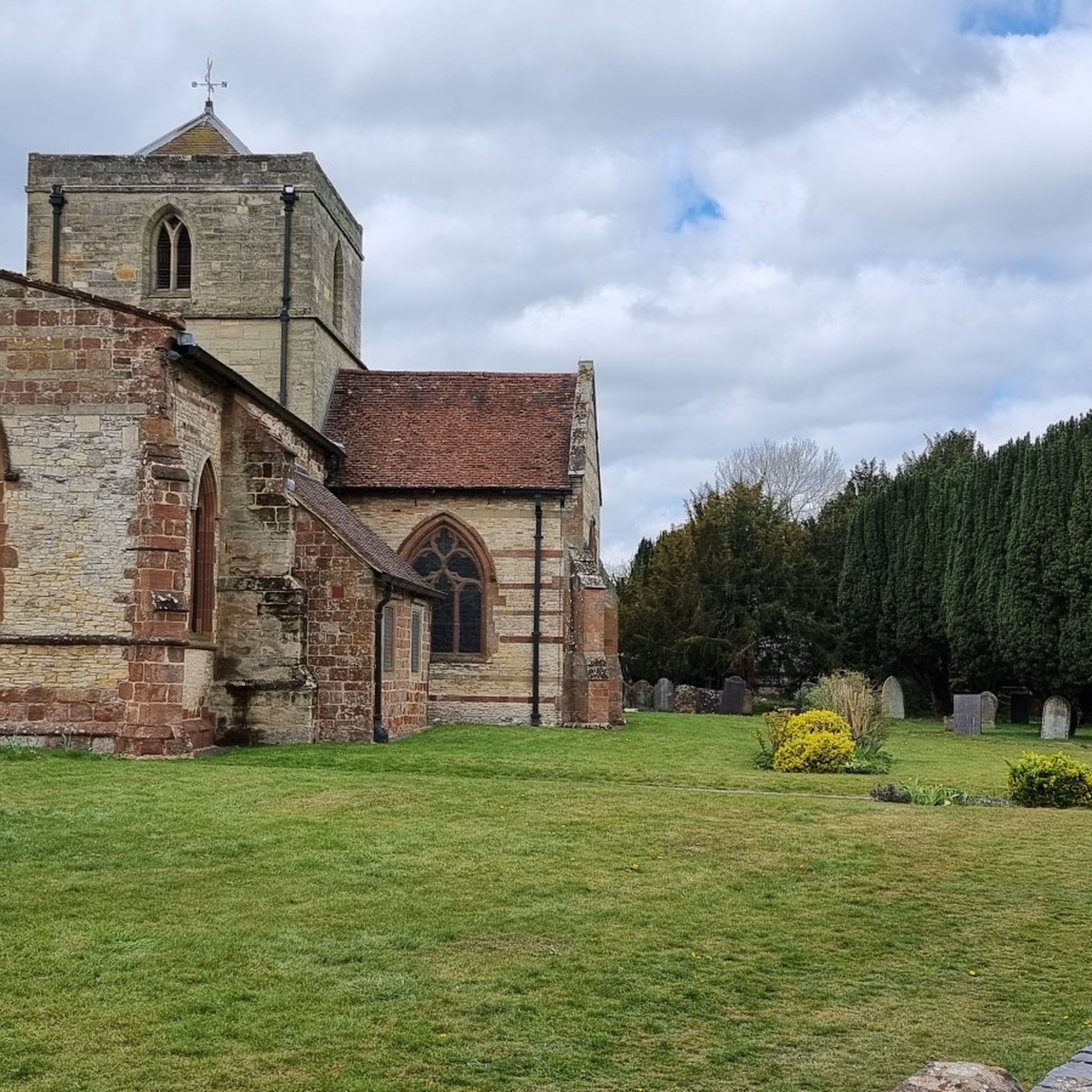
Holy Trinity Church has its origins in the 1100s, undergoing modifications over the following years, with notable improvements undertaken during the 1400s. The Millennium route runs alongside this church, which we can follow if we want to enjoy a pleasant run in the area.
1
0

St John the Baptist church, a beautiful place to take a moment mid-ride. You can walk all around the church and marvel at the architecture.
2
0

Nice view of the Oxford Canal from the brick built Brinklow Road bridge.
0
0
Brinklow Castle is known locally as the Tump. It's a medieval motte and bailey castle based on a prehistoric long barrow and modified in the 11th century. It's quite large for this period with a 12m high motte and a 121m by 152m bailey. The grass mounds are still clearly visible.
0
0

CommemorationFirst World War (1914-1918), Second World War (1939-1945). Two shallow steps plus one taller step form the granite base surmounted by a rectangular tapering flat granite pillar, all set within a paved and low brick-walled area. A sword in relief is on front face of pillar with inscriptions to either side. Inscription: PEACE AND RECONCILIATION / (Central Sword) / (Left Column) 1914 -1918 (20 names) / (Right Column) 1939 - 1945 (4 names) / OTHER CONFLICTS / 2008 (one name).
0
0
Lower Shuckburgh Bridge No 104 is a place on the waterways on the Grand Union Canal (Oxford Canal Section) between Napton Junction (Junction of Grand Union and Oxford Canals) (1 mile and 4½ furlongs to the west) and Flecknoe Bridge No 102 (Flecknoe village half a mile southeast) (1 mile and 2 furlongs to the northeast). The nearest place in the direction of Napton Junction is Dunks Footbridge No 105; 1 furlong away. The nearest place in the direction of Flecknoe Bridge No 102 is New Bridge No 103; 4½ furlongs away.
0
0
The church of the HOLY TRINITY is on the west side of the SouthamCoventry road, in a small churchyard at the western end of the village. It consists of a chancel, nave, south aisle, west tower, north porch, and a vestry. The oldest part of the building is the south aisle, dating from early in the 13th century; the chancel, nave, and tower were built early in the 14th century, a clearstory was added to the nave in the 15th century and at the same time the nave arcade was rebuilt; the porch and vestry are modern. The church was restored in 1928. It is built of small roughly coursed limestone rubble with occasional squared blocks of red sandstone and red sandstone dressings. The chancel has a steep-pitched tiled roof, a plinth of one splay, and a moulded string-course at the sill level of the windows. On the east there is a large tracery window with a pointed arch of two splays, hood-mould, and five ogee-headed lights; the tracery and mullions are all modern. The south side is divided into three bays by buttresses with gabled heads, the centre bay having a pointed doorway with a hoodmould and head-stops, the arch mouldings being continued down the jambs. Each bay has a window with pointed arches of two splayed orders and three lights, the centre window has uncusped lights, the others cinquefoil. The north side is similar, but has a modern vestry built against it which encloses the door to the chancel; it is built of squared limestone with a steeppitched tiled roof, is lighted by pointed trefoil windows with hood-moulds, and has an entrance with a pointed arch on the west side. The south aisle roof is of steep pitch with modern copings and finials to the gables and at each end wide modern buttresses have been added. In the east wall there is a 14th-century window of three lights, similar to those in the chancel, but of one splay. The south side retains the coved string-course, with one gargoyle of the earlier low-pitched roof below the present eaves gutter; there is a similar cove to the nave, which also had a low-pitched roof, both contemporary with the clearstory. There are three windows; that to the east is similar to the one in the east wall, but of two lights, the others are lancets having hood-moulds with head-stops. The south door is between the lancets and has a semicircular arch of two moulded orders, the inner continued to the ground and the outer supported on attached shafts with foliated capitals; no bases are visible. The west end has a lancet window and above is the line of the earlier low-pitched roof. The north wall of the nave has been strengthened by a modern buttress in two stages at the west end and is partly built over the original one. To the east is a window of three lights with a segmental-pointed arch of two orders, the inner moulded, the outer a splay, the mullions being carried up to the arch without heads; it has a hood-mould with return ends. West of the window there is a buttress which terminates at the level of the original wall-head. Between the buttress and the porch is a modern pointed window with two trefoil lights. The porch is modern, with a tiled roof and a pointed entrance of two moulded orders supported on detached shafts with floriated capitals and moulded bases. The doorway has a richly moulded pointed arch, hood-mould with head-stops, and the mouldings continued down the jambs to splayed stops. West of the porch there is a window similar to the one to the east but with a pointed arch and two hollowsplayed orders. The clearstory has three windows on the north and south, placed towards the centre of the nave, each of two ogee trefoil lights of two hollow splays, with square heads and hood-moulds with returned ends. The tower, which is not divided into stages, has a plinth of one wide splay, diagonal buttresses on the west in four stages, terminating at the string-course of an embattled parapet with the bases of broken pinnacles at the angles, central gargoyles on each face, and crowned by the base of a destroyed octagonal spire. Both the buttresses to the east wall have had later buttresses added to their lower stages. The west face has a pointed tracery window of two splayed orders, the outer a deep one, two pointed trefoil lights, and a hood-mould with head-stops. Immediately above the apex of the window arch is a red sandstone band of sunk quatrefoils, which is carried round the north and east sides but omitted from the south, and a band of red sandstone at the sill level of the belfry windows. The belfry windows on all four faces have pointedsegmental arches, and two trefoil lights with transoms. The ringing-chamber has loop-lights on the north, west, and east, the one on the east now looking into the nave; on the north side there is a clock face. The chancel (47 ft. 10 in. by 21 ft. 7 in.) has plastered walls, modern open king-post roof, and stone paving, with two steps to the altar. On the east wall there are stone brackets, one on each side of the window, one carved, the other a plain splay. The window has a moulded, segmental-pointed rear-arch, and hood-mould with head-stops. The altar table, which dates from early in the 17th century, has four massive turned and carved legs, carved framing, and table top with a gadroon edge; behind it is a modern stone reredos. The south wall has a beak-moulded string-course at sill level, and the doorway a segmental rear-arch; the three windows have chamfered pointed rear-arches and hood-moulds with head-stops, and splayed reveals. Near the east wall there is a double piscina and sedilia under one hood formed by the string-course carried down at each end and finished with head-stops. The piscina has pointed moulded trefoil heads supported on a mullion with moulded capital and base under a pointed arch pierced with a trefoil. The three sedilia seats have pointed cinquefoil heads, pierced spandrels, crocketed gables with floriated finials, trefoil panels and headstops, supported on moulded shafts having floriated capitals and moulded bases. On the north side the string-course is continued and the windows follow those on the south side. To the east there is an Easter sepulchre with a trefoil pointed arch, its mouldings continued down the jambs; crocketed gable, floriated finials, and head-stops. Springing from the head-stops are plain pilasters with crocketed pinnacles and floriated finials. The doorway, now leading to the vestry, has, for no obvious reason, been reversed; it has a moulded pointed arch, the mouldings dying out on plain splayed jambs, and a hood-mould with head-stops. Above the doorway there is a monument with columns supporting an entablature with a semicircular pediment containing a square incised brass to John Bosworth, died 1674. At the top in the centre is the figure of a man kneeling in prayer with the initials J. B., to the left a woman and the name Ellinor, to the right a woman with the name Isabel. Below is an inscription recording his bequest of lands to provide 12 twopenny loaves every Sunday for poor inhabitants, and 10 yearly for a schoolmaster to teach the sons and daughters of the poor. The nave (57 ft. by 22 ft. 7 in.) has a modern tiled floor and a modern hammer-beam roof supported on 15th-century carved head corbels. The walls are plastered, except those below the sill level of the clearstory windows above the arcade. The original arcade was of four bays and in the 15th-century rebuilding the west bay was blocked and the walls reduced in thickness, leaving a springer and part of an arch in position against the west wall. At the eastern end part of the thicker arcade wall is visible below the corbel of the later arcade. The present arcade has three bays of pointed arches of two splayed orders, the inner splay hollow, supported on octagonal pillars with moulded capitals and bases on square pedestals with chamfered corners, at the east end on a corbel with paterae in a hollow moulding resting on a carved head; at the west end on a respond of half a pillar. There are paterae on the outer splay just above the capitals and at the apex of the arches. The clearstory windows on both sides of the nave have chamfered segmental reararches over wide-splayed jambs and sills. On the north the windows and the doorway have segmentalpointed rear-arches. The tower arch is pointed, of two splayed orders, the inner dying out on the wall, the outer continued to the floor on the nave side, and on the tower side both die out on the walls. Above the arch is a loop-light to the ringing-chamber and the band of quatrefoils continued from outside, level with the apex of the arch. There is a wide pointed arch of three moulded orders to the chancel, supported on three half-round shafts with moulded capitals and bases standing on dwarf walls 4 ft. high; on the chancel side the outer order stops on grotesque beasts crouching on the capitals. On the south side of the arch there is a squint with a trefoil head. A carved and traceried oak screen of 15th-century date, with double doors, has been cut and made up with modern work to fit the arch. Its mullions have been replaced with slender turned balusters, probably in the 17th century. The pulpit, placed on the north side of the chancel arch, is a large modern one of stone and coloured marble; and the font, which stands at the west end of the nave, is also modern, with a plain octagonal basin on a coloured marble shaft with a moulded capital and base. The south aisle (58 ft. 2 in. by 14 ft. 8 in.) has a modern open pitched roof, supported on earlier carved head corbels on the south wall and modern moulded corbels on the arcade. The window in the east wall has a semicircular rear-arch of one splay, hood-mould with head-stops, and wide-splayed reveals. The remaining windows have segmental-pointed arches over square jambs. At the east end of the south wall there is a piscina with a pointed trefoil head, the projecting quatrefoil basin and hood-mould have been cut away. In the south wall are two tomb recesses with pointed arches of two orders, the inner a trefoil of one splay supported on short shafts with moulded capitals and bases, the moulded outer order continues to the floor at the ends and the arches mitre in the centre. The tower (9 ft. 4 in. by 9 ft. 4 in.) has a modern tiled floor. In the centre of the north and south walls, about 5 ft. above the floor, there are incised crosses, partly concealed by a matchboarded dado. The west window has a segmental-pointed rear-arch, splayed jambs and sill. The ringing-chamber and belfry floors are supported on continuous projecting splayed strings instead of the more usual corbels or offsets. The plate consists of a silver flagon inscribed: 'Francis and Thermuthis Fauquier of Stoneythorpe 1795', a silver chalice and cover 1587, and a paten 1761. There are two bells by Hugh Watts, 1623 and 1636, and two others by Henry Bagley, 1649 and 1670.
0
0
Frequently Asked Questions
What kind of terrain can I expect on road cycling routes around Wolston?
Road cycling routes around Wolston primarily feature mostly paved surfaces, making them ideal for road bikes. The terrain often includes gentle undulations rather than significant mountainous climbs, providing an engaging experience for various fitness levels. You'll find a mix of rural landscapes and views of local landmarks.
How many road cycling routes are available in the Wolston area?
There are over 18 road cycling routes available around Wolston, catering to different preferences and fitness levels. These include a good mix of easy and moderate trails, ensuring there's something for everyone.
Are there any easy road cycling routes suitable for beginners in Wolston?
Yes, Wolston offers several easy road cycling routes perfect for beginners or those looking for a more relaxed ride. For example, the St Peter's Church, Bourton – The Red Lion, Hunningham loop from Wolston CP is an easy 36 km trail that takes just over an hour and a half to complete.
What are some notable landmarks or points of interest I can see along the road cycling routes?
Many routes offer picturesque scenery, including views of St Margaret's Church and Draycote. You can also explore natural features like Draycote Water, or visit Ryton Pools Country Park. Some routes pass by historical sites such as Brinklow Castle.
Are there any cafes or refreshment stops along the road cycling routes?
Yes, some routes incorporate convenient stops. For instance, the Ryton Pools Country Park – Gusto Ricco Café loop from Wolston CP specifically includes a stop at Gusto Ricco Café. Other routes may pass near villages with pubs or farm shops, such as the Ford Near Little Lawford – Malt Kiln Farm Shop loop from Wolston CP.
What is the best time of year to go road cycling in Wolston?
While specific seasonal conditions are not detailed, the generally well-maintained paved surfaces make road cycling enjoyable for much of the year. Spring and autumn typically offer pleasant temperatures and vibrant scenery, while summer provides longer daylight hours. Always check local weather forecasts before heading out.
Are there any circular road cycling routes starting from Wolston?
Yes, many of the road cycling routes around Wolston are designed as circular loops, allowing you to start and finish in the same location. Examples include the popular The Red Lion, Hunningham – St John the Baptist Church loop from Wolston CP and the Cows in Barn – Brinklow Castle loop from Wolston CP.
What do other road cyclists think about the routes in Wolston?
The road cycling routes in Wolston are highly rated by the komoot community, with an average score of 4.5 stars from over 50 reviews. Cyclists often praise the varied terrain, well-maintained surfaces, and scenic views of the countryside and local landmarks.
Are there any routes that offer views of lakes or water features?
Yes, some routes provide views of local water features. For example, the area is close to Draycote Water, a significant lake that can be seen from various points. You might also encounter smaller ponds or rivers along your ride.
Where can I park my car when starting a road cycling route in Wolston?
Many routes, such as the The Red Lion, Hunningham – St John the Baptist Church loop from Wolston CP, indicate starting from 'Wolston CP', which refers to a car park in Wolston. This suggests convenient parking options are available for cyclists beginning their tours in the village.
What is the typical elevation gain on road cycling routes around Wolston?
The routes around Wolston generally feature moderate elevation gains, with many popular trails having between 200 to 400 meters (approximately 650 to 1300 feet) of ascent. This provides an engaging ride without overly strenuous climbs, suitable for a wide range of cyclists.
Most popular routes around Wolston
Most popular attractions around Wolston

Get inspired with the komoot mobile app


Explore more
Browse the best Road cycling routes in other regions.
