The best walks and hikes around Akeley
4.4
(184)
2,352
hikers
136
hikes
Hiking around Akeley, Minnesota, offers diverse experiences within the Northwoods and Heartland Lakes region. The area is characterized by extensive trail networks, including major multi-use paths like the Heartland State Trail and connections to the Paul Bunyan State Trail. Hikers will find varied terrain within the vast Paul Bunyan State Forest, featuring northern hardwoods, spruce/pine forests, and numerous lakes. The landscape provides options for both easy walks and more challenging trails with inclines.
Best hiking trails around Akeley
- The most…
Last updated: July 6, 2026
4.9
(37)
408
hikers
6.93km
01:48
50m
50m
Embark on an easy hike along The Path of the Brave, Stowe, a gentle route that winds through the historic Stowe Gardens. This trail spans 4.3 miles (6.9 km) with…
4.3
(3)
58
hikers
Moderate hike. Good fitness required. Easily-accessible paths. Suitable for all skill levels.

Sign up for free
5.0
(1)
16
hikers
Easy hike. Great for any fitness level. Easily-accessible paths. Suitable for all skill levels.
2
hikers
Moderate hike. Good fitness required. Easily-accessible paths. Suitable for all skill levels.
2
hikers
7.61km
01:59
50m
50m
Easy hike. Great for any fitness level. Easily-accessible paths. Suitable for all skill levels.
Get access to more routes and recommendations from other explorers.
Sign up for free
Already have an account?
Our route recommendations are based on thousands of hikes, rides, and runs completed by other people on komoot.
Start today with a free account
Your next adventure awaits.
Login or Signup
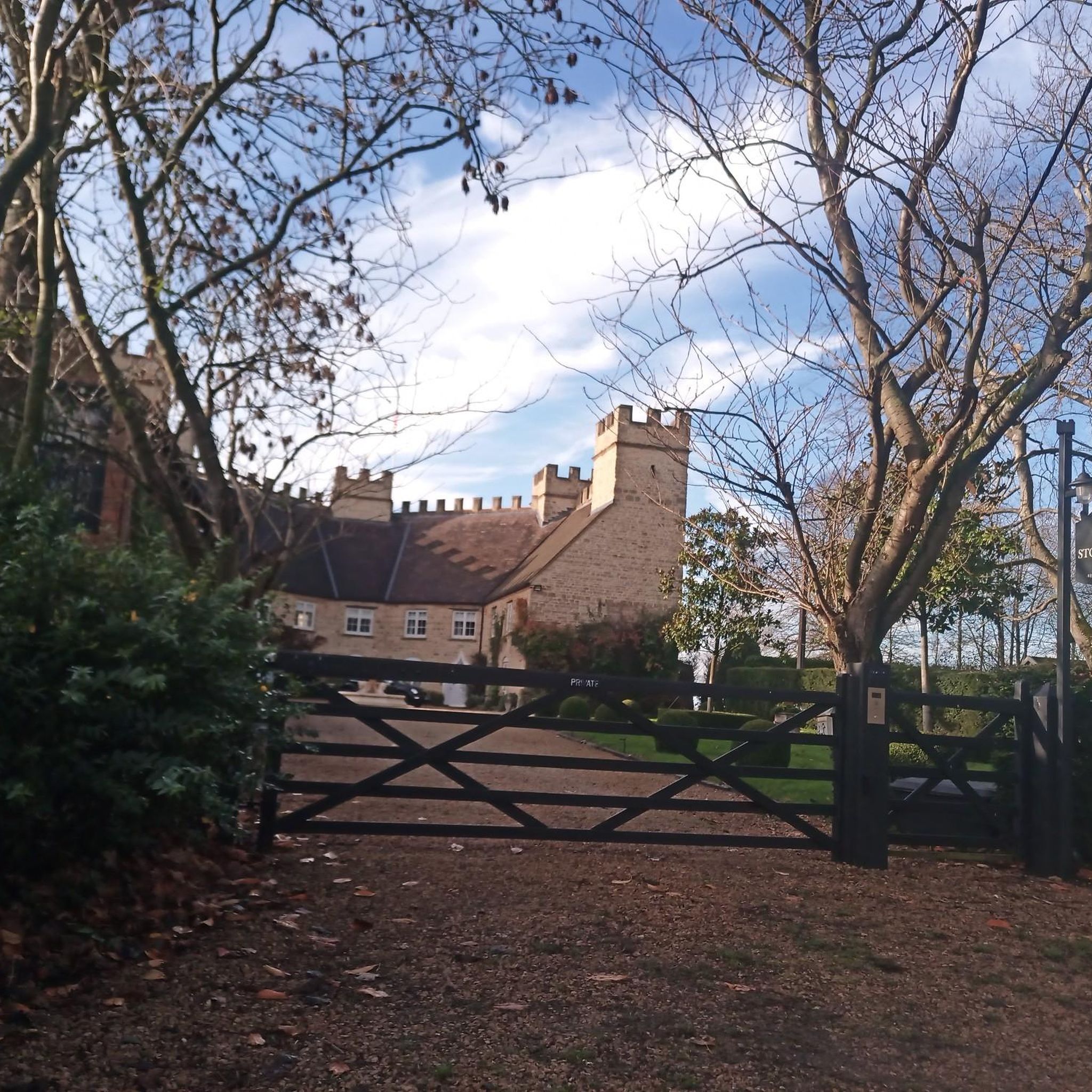
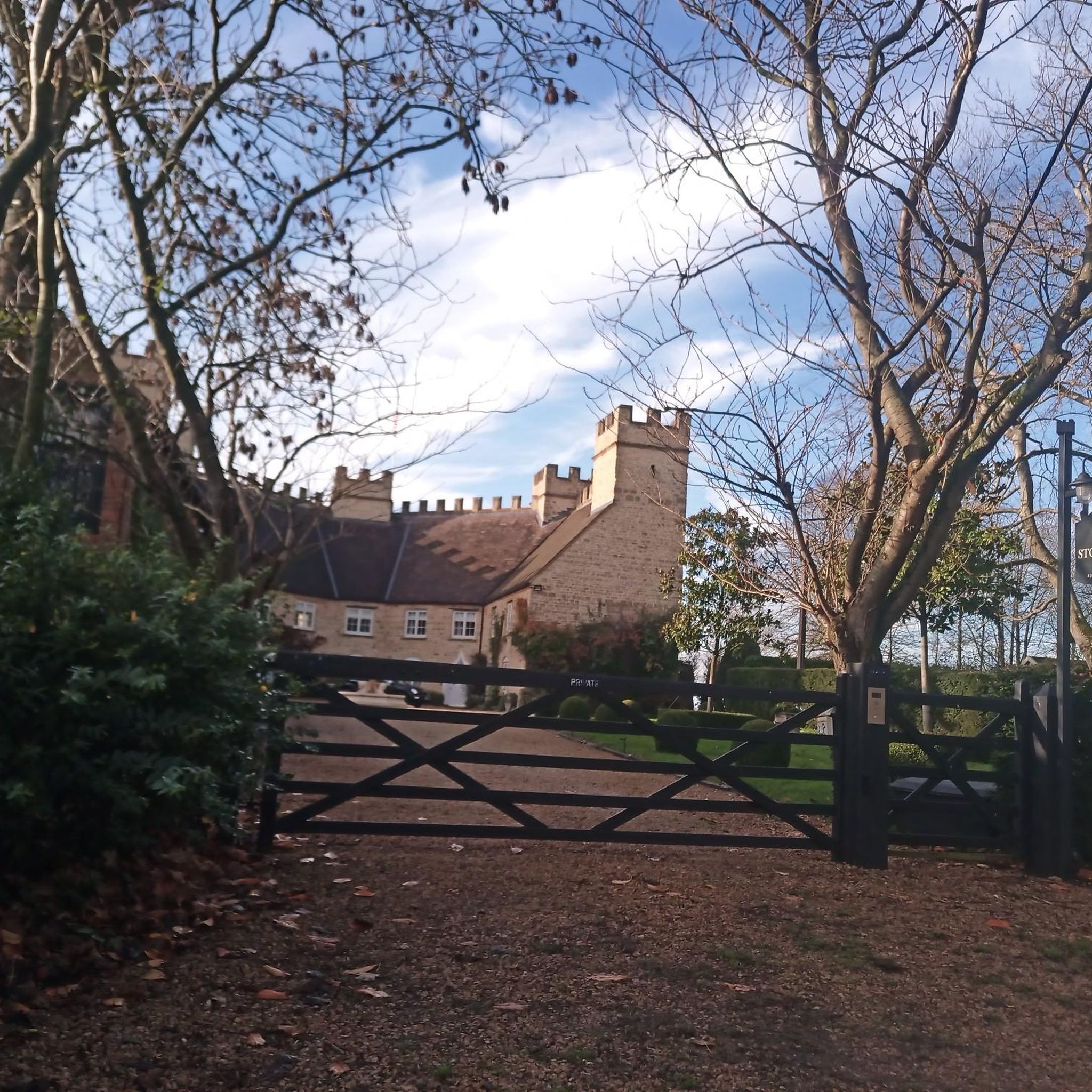


Tips from the Community

The Fane of Pastoral Poetry is a small octagonal temple of ashlar stone, four sides pierced by semi-circular headed arches. The building originally had a steeply domed roof it is now maintained as a roofless ruin. The temple was built by Gibbs in about 1726-7 on the site now occupied by Queen Caroline's Monument and was known as the Gibbs building. It was originally surrounded by the eight Rysbrack British Worthies. Plans were prepared by Borra to convert it to a Temple of Diana but this was never carried out. It was demolished and re-erected in a simpler form on its present site in the mid 1760's. Also known as the Belvedere and in the sale catalogues as the Egyptian Building. Small roofless structure 1727/3 by Gibbs, as The Belvedere. Re-erected on present site 1760's. Ashlar stone with moulded cornice. Octagonal, 4 sides pierced by semi-circular headed arches, with keyblocks, stepped architraves and impost mouldings. Blank oculi in angled faces. In a glade in the wood at the far end of the Grecian Valley is the small open-sided temple or belvedere designed by Gibbs for Lord Cobham, and first set up as part of the early, western phase of the garden in September 1729. It was originally known simply as ‘Gibbs’s Building’ and stood on a mound (accommodating an ice-house) in an almost exactly opposite relationship to the house, to the south-west, where it provided a viewpoint towards the Rotondo and the Queen’s Theatre, and housed the series of busts by Rysbrack (Bacon, Hampden, Locke, Milton, Newton, Shakespeare, Queen Elizabeth and William III) which were later transferred to the Temple of British Worthies in the Elysian Fields. Gibbs’s Building was repositioned by Earl Temple in the 1760s to frame a view of Wolfe’s Obelisk, which he had recently set up outside the gardens to the north, and was rechristened the Fane of Pastoral Poetry. The building also provided framed prospects over the surrounding park, reached via the shady groves of the Grecian Valley. Van Nost’s lead figure of Thalia, the Muse of Pastoral Poetry, was placed just to the north of it. The statue was one of his series of Apollo and the Nine Muses which was removed from the South Vista in the 1740s (see p. 24), but she no longer survives at Stowe. The four terms once outside the Fane are now at Port Lympne. Statue - Muse of Pastoral Poetry - was installed on Tuesday the 4th December 2018. This statue is a direct copy of the c18th lead statue of Heroic Poetry located on the Grenville Column which is attributed to van Nost. Originally (1720s) this statue was locatd on the south front parterre. Source: https://heritagerecords.nationaltrust.org.uk/HBSMR/MonRecord.aspx?uid=MNA130213
0
0
Situated about 330 ft (100 m) to the east of the Corinthian Arch, the inn was built in 1717 specifically to provide accommodation for visitors to the gardens. It was expanded and rebuilt in several phases. The inn housed a small brewery, a farm and dairy. It closed in the 1850s, then being used as a farm, smithy and kennels for deer hounds. The building was purchased in a ruinous condition by the National Trust in 2005. In 2010 work started on converting it into the new visitor centre, and since 2011 this has been the entrance for visitors to the gardens.[49] Visitors had formerly used the Oxford Gates. The New Inn is linked by the Bell Gate Drive to the Bell Gate next to the eastern Lake Pavilion, so called because visitors used to have to ring the bell by the gate to gain admittance to the property. Source: Wikipedia
0
0
The Temple of Ancient Virtue is a circular peripteral ionic temple with a domed cella on a podium, approached by two flights of steps. The Temple of Ancient Virtue is a circular peripteral ionic temple with a domed cella on a podium, approached by two flights of steps. Built in the 1730's to a design probably by Kent. The design is inspired by the Temple of Sibyl at Tivoli. Copies of the original four statues of greek heroes representing the enlightened ideals of Lord Cobham and his Whig friends have been reintroduced. Although now largely obscured from the west, the Temple of Ancient Virtue, completed in 1737 to Kent’s designs, was intended to close the long vista known as the Great Cross Walk which passed at a slight angle across the south front of the house. This arrangement followed Joseph Addison’s vision of a ‘great road’ along which ‘the middle-aged party of mankind ... marched behind the standard of Ambition’. The temple was raised on a grass mound, and its site was far more open than it is now. The design was based on the ancient Temple of Vesta at Tivoli, which Kent knew at first hand from his extended sojourn in Italy in the 1710s, and from Book IV of Palladio’s Quattro Libri, here translated from the Corinthian to the Ionic order. The temple is inscribed on the outside ‘Priscae virtuti’ (‘To Ancient Virtue’) and was devised as a cenotaph to four Ancient Greeks who embodied the virtues that Lord Cobham found so lacking in the public figures of his own day: Socrates, Homer, Lycurgus and Epaminondas. The circular temple form has a solemnity and nobility well suited to memorial buildings, from Hawksmoor’s great mausoleum at Castle Howard (1729) to John Russell Pope’s Jefferson Memorial in Washington (1939). Bordered by laurel and elevated both by the grass mount and its own basement, with narrow stairs cut into it, this is an overtly exclusive building worthy only of a select few. The four Ancient Greeks are represented by life-size Portland stone statues signed by Peter Scheemakers, and for which he was paid in 1737. These were sold in 1921, but have recently been replaced in the form of casts taken from the originals. The chosen individuals represent four of the five branches of public life referred to in Addison’s essay – a general (Epaminondas), a legislator (Lycurgus), a poet (Homer) and a philosopher (Socrates). Above the niches are the following inscriptions (with translations taken from Defoe and Richardson’s Tour of 1742): I. EPAMINONDAS Cujus a virtute, prudentia, verecundia, Thebanorum respublica Libertatem simul & imperium, Disciplinam bellicam, civilem & domesticam, Accepit; Eoque amisso, perdidit. From whose Valour, Prudence, and Moderation, the Republick of Thebes received both Liberty and Empire, its military, civil, and domestick Discipline; and, with him, lost them. II. LYCURGUS Qui summo cum consilio, inventis legibus, Omnemque contra corruptelam munitis optime, Pater patriae, Libertatem firmissimam, Et mores sanctissimos, Expulsa cum divitiis, avaritia, luxuria, libidine, In multa secula Civibus suis instituit. Who having invented Laws with the greatest Wisdom, and most excellently fenced them against all Corruption, as a Father of his Country, instituted for his Countrymen the firmest Liberty, and the soundest Morality, which endured for many Ages, he having, together with Riches, banished Avarice, Luxury, and Lust. III. SOCRATES Qui corruptissima in civitate innocens, Bonorum hortator, unici cultor DEI, Ab inutili otio, & vanis disputationibus, Ad officia vitae, & societatis commoda, Philosophiam avocavit, Hominum sapientissimus. Who being innocent in a most corrupt State, an Encourager of the Good, a Worshipper of One only god, as the wisest of Men, reduced Philosophy from useless Indolence, and vain Disputations, to the Duties of Life, and the Advantages of Society. IV. HOMERUS Qui poetarum princeps, idem & maximus, Virtutis praeco, & immortalitatis largitor, Divino carmine, Ad pulcre audendum, & patiendum fortiter, Omnibus notus gentibus, omnes incitat. Who being the First of Poets, as he was the greatest, the Herald of Virtue, and Bestower of Immortality, known to all Nations, incites all, in a Divine Poem, honourably to dare, and resolutely to suffer. The inscriptions placed above the doorways invite the visitor to reflect on the qualities represented by these four men, but also on their counterparts and opposites in modern life, as represented by neighbouring buildings on which the doorways were aligned: Charum esse civem, bene de republica mereri, laudari, coli, diligi, gloriosum est: metui vero, & in odio esse, invidiosum, detestabile, imbecillum, caducum. To be dear to our Country, to deserve well of the State, to be praised, honoured, and beloved, is glorious; but to be dreaded, and hated, is a matter of Ill-will, detestable, weak, ruinous. Justitiam cole & pietatem, quae cum sit magna in parentibus & propinquis, tum in patria maxima est. Ea vita est in coelum, & in huc coetum eorum, qui jam vixerunt. Maintain Justice, and thy relative Duty; which, as it is great, when exercised toward our Parents and Kindred, so is greatest towards our Country. That life is the Way of Heaven, and to this Assembly of those, who have already lived. (MOLA survey 2019 Clearly visible in the SUA data and is situated on top of a well defined mound overlooking Worthy River to the east. Source: nationaltrust.org.uk
1
0
A small classical facade of carrara marble probably built about 1800, perhaps part of a reused chimneypiece with a dolphin head spout and a stone basin below. Probably built about 1800. The Seasons Fountain is a small classical facade of carrara marble, perhaps part of a reused chimneypiece with a dolphin head spout and a stone basin below. Probably built about 1800 for the Marquis of Buckingham. This feature uses the water supply of the Temple of Contemplation which included a cold bath and stood slightly to the north of this feature. Circa 1800 small classical facade of Carrara marble, evidently made up of the parts of a chimneypiece, with lines from Thompson's 'Seasons' inscribed. Lionhead spout and stone basin. Among the last additions to the garden, the Seasons Fountain is thought to be one of the monuments erected in honour of the visit of the Prince of Wales to Stowe in 1805. It is named after James Thomson’s The Seasons (1746), one of the most influential and universally popular poems of the eighteenth century, and inscribed with extracts from it. The fountain is unusual in being constructed in statuary marble, a material all too obviously unsuited to English gardens and to the iron-rich spring water it dispenses, and its origin as an eighteenth-century chimneypiece is not hard to discern (it is not known whether it came from Stowe or another house). Originally the façade of the fountain was decorated with Wedgwood plaques of the Four Seasons, and silver drinking cups were suspended on either side from chains. Source: nationaltrust.org.uk
1
0
At Stowe you can discover an 18th century grotto and cave set in a Grade I World Heritage Site. The grotto was designed by William Kent in the 1730s with a neo-classical appearance. It was later restyled in the eighteenth century with tufa and rockwork to give a rustic, subterranean look, as was the fashion at that time. Lord Cobham, whose family name was Temple coincidentally, took liberty and tyranny as the two key themes reflecting his views on contemporary politics. As a result temples abound throughout the estate. In the 1730s he hired William Kent, the landscape artist to design the grotto at the head of the Serpentine River. In it a statue of Venus overlooks water flowing in to a basin and then into the river in the manner of early Roman grottoes. The finished grotto was then used as a banqueting house for light refreshment and entertainments. Within a few years the Grotto was flanked just to the south on both sides by small rotundas, one decorated with shells and the other with pebbles. Unfortunately these are now no longer there. Today the grotto is open to visitors to inspect but still needs some restoration work to the interior of the roof where rocks have become dislodged and fallen. Source: Osborne.house
0
0

From here it is not far to the Palladian Bridge.
1
0
From here you have a beautiful view of the landscape.
1
0
A very prominent Palladian bridge in the park, it is one of the highlights of this property.
1
0
Frequently Asked Questions
How many hiking trails are available around Akeley?
There are over 130 hiking routes available around Akeley, offering a wide range of experiences from easy strolls to more moderate adventures. The komoot community has explored these trails over 2,300 times.
What kind of terrain can I expect on hikes near Akeley?
Hiking trails around Akeley traverse diverse landscapes, primarily featuring northern hardwoods and spruce/pine forests. You'll encounter varied terrain, including flowy sections, some rocky and rooted paths, and trails with gentle inclines and declines, particularly within the Paul Bunyan State Forest. Many trails also offer scenic views of the numerous lakes in the region.
Are there any family-friendly hiking options in Akeley?
Yes, Akeley offers many family-friendly hiking options. A significant portion of the trails, over 90 routes, are rated as easy, making them suitable for families. These trails often feature gentle elevation changes and pass through wooded landscapes, providing an enjoyable experience for all ages.
Are dogs allowed on hiking trails in Akeley?
Many trails in the Akeley area, including sections of the extensive Heartland State Trail and Paul Bunyan State Trail, are generally dog-friendly. However, it's always recommended to keep dogs on a leash and check specific trail regulations before heading out, especially within state parks or protected areas.
What natural features or landmarks can I see while hiking near Akeley?
While hiking near Akeley, you can explore several natural features and landmarks. The region is rich with lakes, such as Octagon Lake, and you might encounter unique structures like the Palladian Bridge at Stowe or the Octagon Lake Cascade and Artificial Ruins. The vast Paul Bunyan State Forest itself offers beautiful evergreen sections and diverse forest environments.
Are there any circular hiking routes around Akeley?
Yes, there are several circular hiking routes available. For example, you can explore the New Inn Visitor Centre – Stowe House loop from Stowe, a moderate 5.4-mile path, or the easier New Inn Visitor Centre – Temple of British Worthies loop from Stowe, which is about 3.2 miles long.
What is the best time of year to hike in Akeley?
Akeley offers enjoyable hiking experiences across multiple seasons. Spring and fall provide pleasant temperatures and vibrant foliage, while summer is ideal for combining hiking with water activities on the numerous lakes. Winter also offers opportunities for snowshoeing or cross-country skiing on many of the multi-use trails.
Are there any permits required for hiking in the Paul Bunyan State Forest?
Generally, no specific hiking permits are required for day-use hiking within the Paul Bunyan State Forest. However, if you plan on camping or engaging in other specific activities, it's always best to check the latest regulations from the Minnesota Department of Natural Resources.
What is the average length and difficulty of hikes in Akeley?
The hikes around Akeley vary in length and difficulty. Many routes are considered easy, with distances often ranging from 3 to 5 miles. For instance, an easy 4.3-mile trail can typically be completed in under two hours, while a moderate 5.4-mile path might take a bit longer. There are no routes rated as difficult in the immediate area.
Where can I find parking for hiking trails in Akeley?
Akeley is well-equipped for outdoor enthusiasts, and parking is generally available at trailheads for major networks like the Heartland State Trail and within the Paul Bunyan State Forest. Many routes are accessible directly from the town or nearby roads, often with designated parking areas.
What do other hikers enjoy most about hiking in Akeley?
The area is highly rated by the komoot community, with an average score of 4.5 stars from over 160 reviews. Reviewers often praise the extensive, well-maintained multi-use trail systems, the serene lake views, and the peaceful immersion in the northern hardwoods and spruce/pine forests.
Are there any trails suitable for wheelchairs or strollers in Akeley?
The Heartland State Trail, which passes directly through Akeley, is a 49-mile paved trail. Its paved surface makes it suitable for wheelchairs and strollers, offering an accessible way to experience the region's natural beauty. This trail also connects to the Paul Bunyan State Trail, another extensive paved rail-trail.
Most popular attractions around Akeley

Get inspired with the komoot mobile app


Explore more
Browse the best Hikes in other regions.
