Attractions and Places To See around Burrington - Top 9
Best attractions and places to see around Burrington, North Devon, include historical landmarks and natural features. This region offers a variety of sites, from ancient fortifications to tranquil woodlands. The area is characterized by its historical significance and diverse landscapes. There are 9 hidden gems waiting to be explored and visited.
Best attractions and places to see around Burrington
- The most popular attractions is Heywood Castle Motte and Bailey, a historical site that features the remains of an early…
Last updated: May 4, 2026
Heywood Castle Motte and Bailey
Highlight • Historical Site
Tip by

Eggesford Forest
Highlight • Forest
Tip by

Sign up now to discover places like this
Get recommendations on the best single tracks, peaks, & plenty of other exciting outdoor places.
Sign up for free
All Saints Church, Eggesford
Highlight • Historical Site
Tip by
South Molton Market Square
Highlight • Settlement
Tip by

Castle Hill Estate
Highlight • Monument
Tip by
Sign up for free to discover even more attractions around Burrington.
Sign up for free
Already have an account?
Start today with a free account
Your next adventure awaits.
Login or Signup
Tips from the Community


South Molton is a market town centred round a market square. It was a major part of the UK's wool trade and markets still thrive twice a week, although no longer just the domain of wool. There are plenty of cafes in South Molton for mid-ride nourishment
0
0
Castle Hill was built in 1730 by the Fortescue family and reconstructed following a large fire in 1934. It was caused by the boiler for the newly installed central heating and tragically killed both the housekeeper and a maid. On top of the hill behind the house is Sham Castle. The family still live on the estate which is now also used as a wedding and conference venue and the gardens are open to the public. For more information visit their website https://www.castlehilldevon.co.uk/
0
0

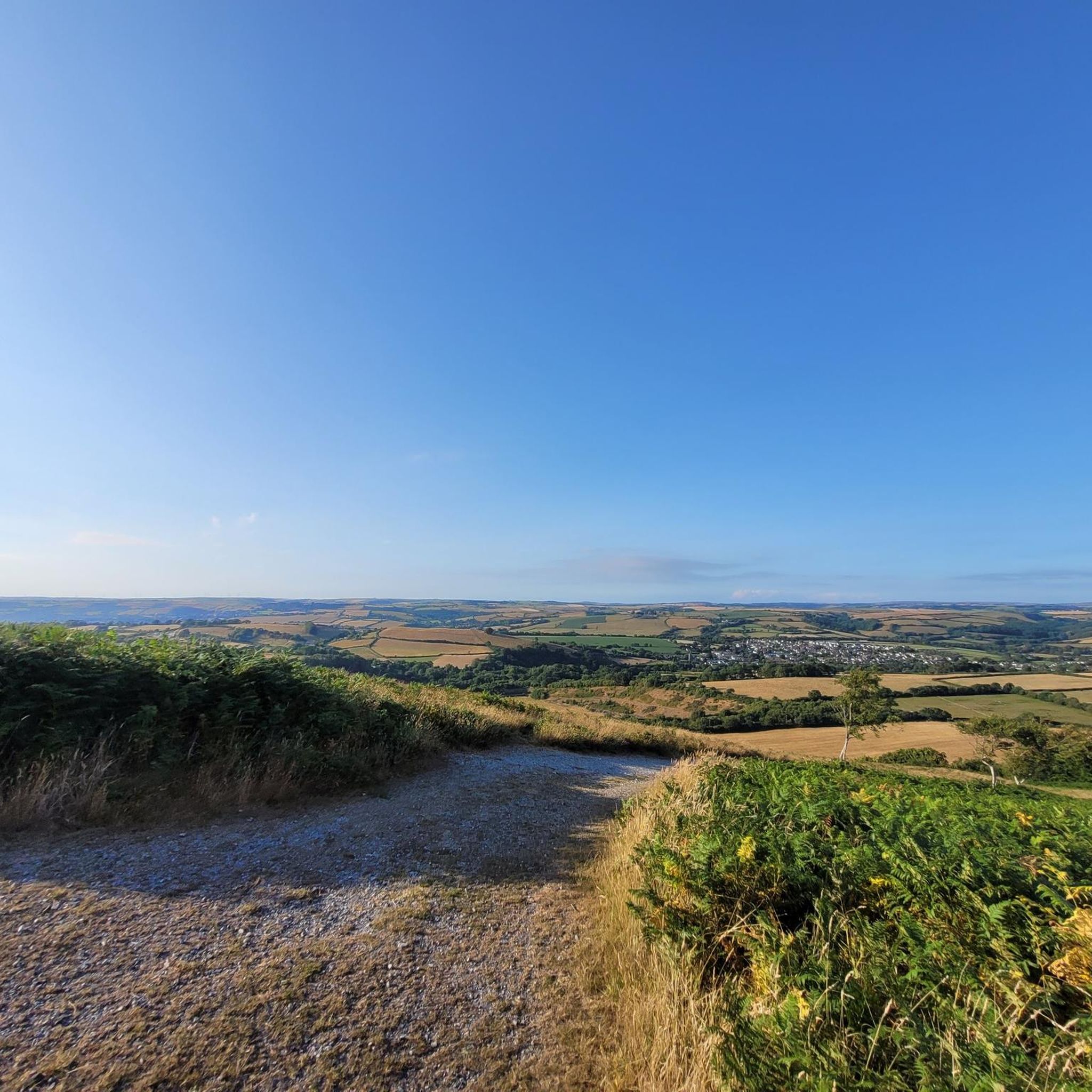
Overlooking the TawValley, at the northern end of Heywood Wood, stand the remains of an early medieval motte and bailey castle. Motte and bailey castles are medieval fortifications introduced into Britain by the Normans. This type of castle was made up of an artificial mound, or motte, on which was built a wooden or stone structure known as a keep. Next to this at least one bailey, a fortified embanked enclosure containing additional buildings, would be built. Although many were occupied for only a short period of time, motte and bailey castles continued to be built and occupied from the 11th to the 13th centuries, after which they were superseded by other types of castle. Heywood CastleAt Heywood the circular motte is about 8 metres high and almost 50 metres in diameter, surrounded by a rock-cut ditch 4 metres wide and 2 metres deep. Around the top of the motte is a bank, up to 4 metres high in places. The crescent shaped bailey which lies to the north-east of the motte is 60 metres long and 40 metres wide and bounded on all sides by a bank 2 metres rising to about 4 metres on the eastern side, where there is an entrance with a causeway across the ditch which extends to the outer bank, which surrounds both the motte and bailey. From the bailey to the motte on the north east side there is the possibility of a bridgeway. On the north side of the bailey a more modern entrance has been formed. https://www.devon.gov.uk/historicenvironment/explore-devons-heritage/heywood-castle-eggesford/
4
0
This place is well worth a visit, it is a huge Norman castle mound. No structures are visible (Probably only a wooden keep now long gone) but really worth seeing, it is still quite imposing 1000 years on. "At Heywood the circular motte is about 8 metres high and almost 50 metres in diameter, surrounded by a rock-cut ditch 4 metres wide and 2 metres deep. Around the top of the motte is a bank, up to 4 metres high in places. The crescent shaped bailey which lies to the north-east of the motte is 60 metres long and 40 metres wide and bounded on all sides by a bank 2 metres rising to about 4 metres on the eastern side, where there is an entrance with a causeway across the ditch which extends to the outer bank, which surrounds both the motte and bailey. From the bailey to the motte on the north east side there is the possibility of a bridgeway. On the north side of the bailey a more modern entrance has been formed. The castle at Heywood possibly took the place of an earlier castle some 500 metres to the south in the grounds of Heywood House, on the steep valley side above the River Taw. An alternative theory is that both date to the 1130s and 1140s, and were built during the civil war between Matilda, daughter of Henry I, and his nephew Stephen." https://www.devon.gov.uk/historicenvironment/explore-devons-heritage/heywood-castle-eggesford/
1
0

With a network of paths, this diverse woodland is a lovely place to explore. Keep a look-out for wildlife, wildflowers, and interesting fungi. Visit throughout the year; it's different in every season.
1
1
This remote church has a peaceful atmosphere and is steeped in history. Whilst parts of the church date to the 15th century, much of it was restored and rebuilt in 1867. Inside the church, there are two 17th century monuments to the Chichester family and a large 18th century monument to William Fellowes in Italian marble.
1
0
Frequently Asked Questions
What historical sites can I explore around Burrington?
Burrington, North Devon, offers several historical sites. You can visit Heywood Castle Motte and Bailey, the remains of an early medieval fortification overlooking the Taw Valley. Another notable site is Castle Hill Estate, a historic building from 1730 with a fascinating past and a Sham Castle on its grounds. Additionally, All Saints Church, Eggesford, offers a glimpse into 15th-century architecture and contains 17th and 18th-century monuments.
Where can I find natural areas or forests to explore near Burrington?
For natural exploration, Eggesford Forest is a diverse woodland with a network of paths. It's an excellent place to observe wildlife, wildflowers, and fungi, offering a different experience in every season.
Are there family-friendly attractions around Burrington?
Yes, several attractions are suitable for families. Eggesford Forest is family-friendly, offering paths for exploration. All Saints Church, Eggesford, is also considered family-friendly, providing a peaceful historical experience. The grounds of Castle Hill Estate, with its gardens and Sham Castle, can also be enjoyed by families.
What outdoor activities can I do near these attractions?
The area around Burrington offers various outdoor activities. You can find numerous running trails, including moderate loops from Chulmleigh and High Bickington. For hiking, there are easy routes like the Riverside Path loop from Wembworthy or the Eggesford Forest loop. Cycling enthusiasts can explore longer, more challenging routes such as the Chulmleigh to Barnstaple or Exmoor loops. You can find more details on these activities in the respective guides: Running Trails around Burrington, Easy hikes around Burrington, and Cycling around Burrington.
Are there hiking trails near Burrington?
Yes, there are several hiking trails available. You can find easy hikes such as the Riverside Path – Eggesford Castle loop from Wembworthy (5.6 km), the Heywood Forest Parking loop (2 km), or the Eggesford Forest loop (4.3 km). These routes offer a chance to explore the local landscape. For more options, refer to the Easy hikes around Burrington guide.
What is the best time of year to visit Burrington?
Burrington, North Devon, can be enjoyed throughout the year, as its natural areas like Eggesford Forest offer different experiences in every season. Spring and summer are ideal for enjoying wildflowers and longer daylight hours for outdoor activities. Autumn brings beautiful foliage, while winter can offer a peaceful, crisp atmosphere for exploring historical sites.
What kind of historical fortifications can I see?
You can visit Heywood Castle Motte and Bailey, which are the remains of an early medieval Norman fortification. The site features a circular motte, approximately 8 meters high and 50 meters in diameter, surrounded by a rock-cut ditch, and a crescent-shaped bailey. Although no structures remain, the imposing earthworks are still impressive.
Are there any market towns or settlements with facilities nearby?
Yes, South Molton Market Square is a market town that was historically significant in the UK's wool trade. It still hosts thriving markets twice a week and offers various cafes, making it a good stop for refreshments.
What are the notable religious buildings in the Burrington area?
The area is home to significant religious buildings. All Saints Church, Eggesford, is a remote historical site with parts dating back to the 15th century, featuring 17th and 18th-century monuments. Additionally, the village of Burrington itself has Holy Trinity Church, a Grade I listed parish church with parts from the 16th century, known for its granite arcade, wagon roof, and Norman font.
What do visitors enjoy most about the attractions around Burrington?
Visitors appreciate the blend of historical significance and natural beauty. The ancient fortifications like Heywood Castle Motte and Bailey offer a glimpse into the past, while tranquil woodlands such as Eggesford Forest provide opportunities for peaceful exploration. The historic churches, like All Saints Church, Eggesford, are valued for their atmosphere and heritage.
Can I find viewpoints or scenic spots in the area?
Yes, Heywood Castle Motte and Bailey offers views overlooking the Taw Valley. The Castle Hill Estate also features a Sham Castle on a hill behind the main house, which likely provides scenic perspectives of the estate and surrounding landscape.
Are there any places with wheelchair accessibility?
While specific accessibility details for all attractions vary, South Molton Market Square is noted as being wheelchair accessible, offering a place to visit with facilities.
Most popular routes around Burrington

Get inspired with the komoot mobile app


Explore more
Still not found the Highlight you’re looking for? See guides of the top attractions in other regions:
