Attractions and Places To See around Gotland - Top 20
Best attractions and places to see around Gotland include a captivating blend of Viking-era history, well-preserved medieval architecture, and unique natural beauty. As Sweden's largest island, Gotland offers diverse landscapes from dramatic sea stacks to lush nature reserves. The island is known for its rich cultural heritage, including a UNESCO World Heritage Site, and its distinctive geological formations. Visitors can explore ancient ruins, medieval towns, and unique natural features across the region.
Best attractions and places to see around Gotland
…Last updated: August 30, 2026
Visby Cathedral (St. Mary's Cathedral)
Highlight • Religious Site
Translated by Google •
Tip by

St. Lars Ruin (St. Lawrence’s Church), Visby
Highlight • Religious Site
Source: weites.land/gotland-entdecken-kirchenruine-hl-dreifaltigkeitskirche-drottenkyrka
Translated by Google •
Tip by
Sign up now to discover places like this
Get recommendations on the best single tracks, peaks, & plenty of other exciting outdoor places.
Sign up for free
Saint Catherine's Church Ruins (Sankta Katarina Kyrkoruin), Visby
Highlight • Historical Site
Translated by Google •
Tip by
Ruins of the St. Peter and St. Hans Churches, Visby
Highlight • Historical Site
What's special about it:
Chairs and tables have been set up and the whole place …
Translated by Google •
Tip by
Dalman Tower
Highlight • Monument
The name Dalmanstor goes back to one of the Lieutenant Governors of Gotland, LR Dalman.
Translated by Google •
Tip by
Sign up for free to discover even more attractions around Gotland.
Sign up for free
Already have an account?
Start today with a free account
Your next adventure awaits.
Login or Signup

Other adventures around Gotland

Tips from the Community

A medieval Christmas market always takes place on the second weekend of Advent. It was a different kind of Christmas market, definitely worth a visit.
1
0

The church ruins are located in Visby. The church and the associated monastery were founded in 1233 by the Franciscan order, founded in 1210, and completed around 1250. After its conquest by the Lübeckers in 1525, the church fell into disrepair. The monastery remained relatively modest. The number of monks probably hovered around the required number of thirteen.
3
0
The complex received the name Dalmanstornet in 1784, when the tower was converted into a granary on the orders of the local lieutenant governor Dalman.
2
0


One of the many ruins, I find very exciting.
1
0
There are many church ruins in the city, but this beautiful cathedral has been preserved.
4
0
For me, the old city wall is the absolute highlight, although the city itself with its small alleys is also beautiful.
1
0

During the summer months, the church is open during the day. There are still some preserved steps in the ruins that are accessible.
1
0
Frequently Asked Questions
What unique natural landscapes can I explore on Gotland?
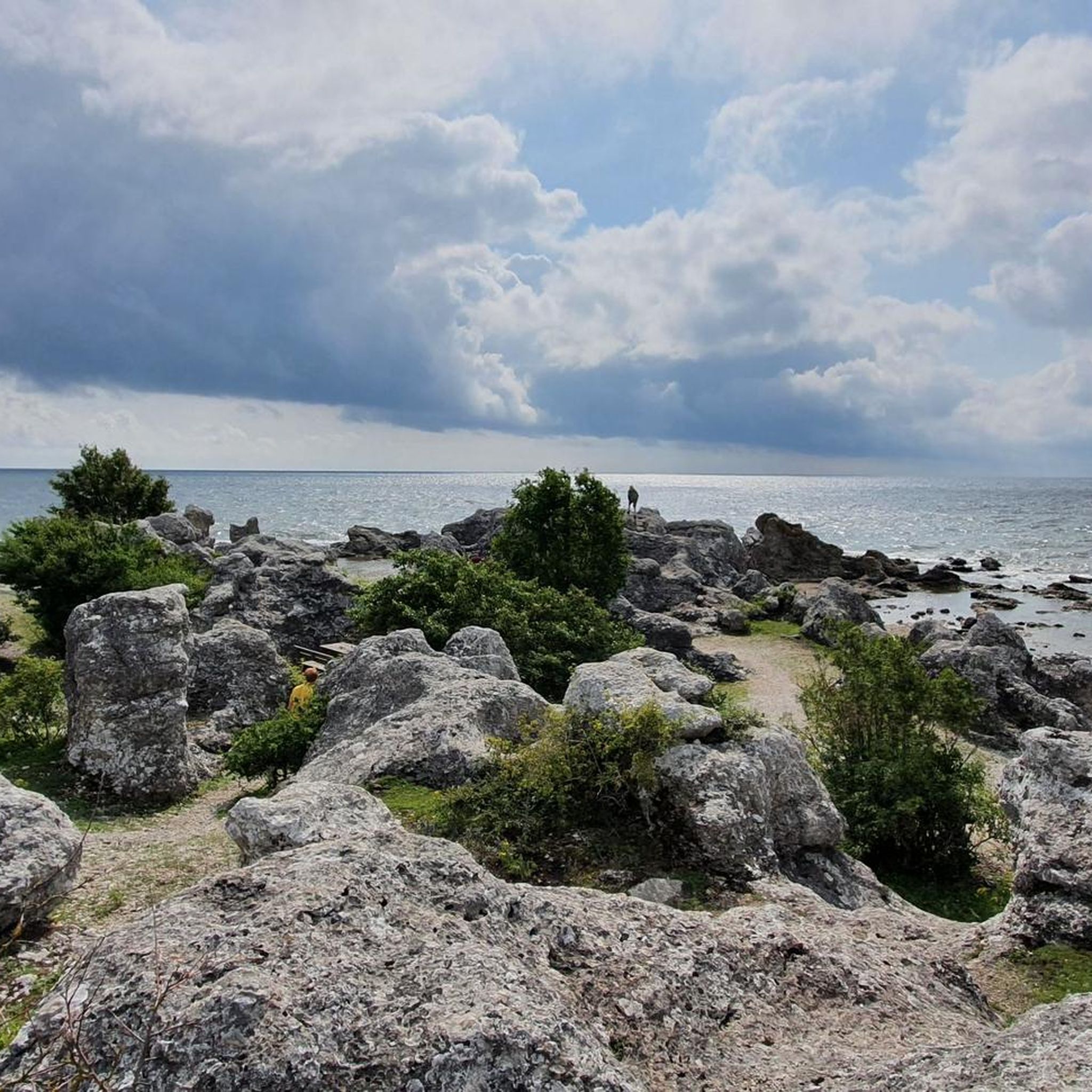
Gotland is renowned for its distinctive natural features. You can visit the impressive Raukar (Sea Stacks), limestone monoliths sculpted by erosion, particularly at Langhammars on Fårö, Folhammar, and Hoburgen. Don't miss the Lummelunda Cave, one of Sweden's longest cave systems with stalagmites and fossils. The island of Fårö itself offers unique raukar and sandy beaches like Sudersand. For birdwatching and diverse flora, explore the Närsholmen peninsula or the Ekstakusten Nature Reserve.
Are there any UNESCO World Heritage Sites on Gotland?
Yes, the Hanseatic Town of Visby is a UNESCO World Heritage Site. Its well-preserved medieval city wall, cobblestone streets, and over 200 medieval buildings, including numerous church ruins, offer a captivating glimpse into its past as a major center of the Hanseatic League. You can learn more about its heritage on the UNESCO website.
What family-friendly attractions are available on Gotland?
Families visiting Gotland can enjoy several attractions. Kneippbyn Resort near Visby offers both a water park and an amusement park, featuring the original Villa Villekulla house from the Pippi Longstocking TV series. Many of the historical sites, such as the Visby Cathedral (St. Mary's Cathedral) and the Saint Catherine's Church Ruins, are also considered family-friendly for exploration.
What kind of historical sites can I visit beyond Visby's city walls?
Beyond Visby, Gotland offers a rich tapestry of historical sites. You can explore the ruins of Roma Cloister, a Cistercian monastery founded in the 12th century. The island is also known for its 'island of 100 churches,' with many medieval churches still in use, such as Lye, Bro, and Lau. For a glimpse into the Viking era, visit Stavgard Vikingagård, a reconstructed Viking village in southern Gotland.
What outdoor activities, like hiking or cycling, can I do around Gotland's attractions?
Gotland offers numerous opportunities for outdoor activities. For hiking, consider trails like the easy Närsholmen Naturreservat trail or the Visby Health Trail. Cyclists can explore routes such as the Fårö Lighthouse – Langhammars Sea Stacks loop or the Gnisvärd – Tofta Church loop. Runners have options like the challenging East Coast Trail: Ljugarn to Östergarn. Many of these routes pass by or are close to various natural and historical attractions.
Where can I find unique cultural experiences on Gotland?
For unique cultural experiences, visit the Gotland Museum (Fornsalen) in Visby, which showcases 8,000 years of the island's history, including Viking treasures and medieval artifacts. On Fårö, the Bergmancenter is dedicated to film director Ingmar Bergman. You can also experience Bungemuseet, one of Sweden's largest open-air museums, offering insights into historical life, or enjoy the rock 'n' roll aesthetic of Kutens Bensin, a unique restaurant on Fårö.
What is the best time of year to visit Gotland for sightseeing?
The best time to visit Gotland for sightseeing and enjoying its natural beauty is typically during the late spring (May-June) and summer (July-August) months. During this period, the weather is generally mild and pleasant, ideal for exploring the medieval town of Visby, the raukar, and the beaches. Many attractions and facilities are fully open, and the island comes alive with events and activities. Early autumn (September) can also be beautiful with fewer crowds.
Are there any islands near Gotland worth visiting?
Yes, the island of Fårö, accessible by a short ferry ride, is a must-visit for its unique raukar, sandy beaches like Sudersand, and barren landscapes. Another significant island is Stora Karlsö, the world's second oldest conservation area, known for its thousands of seabirds, diverse flora, fossils, and historical remains. Both offer distinct natural beauty and are easily reachable from Gotland.
Can I find any ancient monuments or runestones on Gotland?
Gotland is rich in ancient history, boasting over 90 ancient forts, runestones, and picture stones. These monuments bear witness to the island's long history, dating back to the Viking Age and beyond. A notable example is Tjelvar's grave. The Gotland Museum in Visby also houses an impressive collection of these artifacts, including unique picture stones.
What are some charming fishing villages to visit on Gotland?
Gotland's coastline is dotted with numerous charming fishing villages that offer a glimpse into traditional island life. You can visit picturesque spots like Djupvik and Kronvall along the Ekstakusten Nature Reserve, or explore Kovik, Lickershamn, and Vastergarns. These villages often feature small harbors, traditional fishing huts, and a tranquil atmosphere.
Are there any unique gardens or green spaces in Visby?
Yes, Visby is home to the beautiful Botanical Gardens (Botaniska Trädgården), also known as Bonisca Trad. Established in 1855, these gardens are a haven for nature lovers and contribute to Visby's nickname 'City of Roses.' Due to the protective city wall, they feature diverse plant life, including species usually found in warmer climates.
What is the Gotland Train and where can I experience it?
The Gotland Train (Gotlandsänget) is a museum railway that offers a unique historical experience. Enthusiasts run a steam train between Hesselby and Roma, providing visitors with a nostalgic journey and a glimpse into the island's agricultural history. It's a charming way to experience a different side of Gotland's heritage.
Most popular routes around Gotland
Most popular attractions around Gotland

Get inspired with the komoot mobile app


