Attractions and Places To See around Fontaine-Les-Bassets - Top 6
Attractions and places to see around Fontaine-Les-Bassets, a commune in the Orne department of Normandy, offer insights into rural French life and historical heritage. The area features a landscape characterized by bocage, with several waterways including the Dives River. Visitors can explore historical sites and natural features within this quiet region.
Best attractions and places to see around Fontaine-Les-Bassets
- The most popular attractions is Donjon de Chambois, a castle that is a 12th-century Romanesque building. It is considered one…
Last updated: July 8, 2026
Camp Celtique de Bierre
Highlight • Historical Site
Translated by Google •
Tip by

Montormel Memorial
Highlight • Monument
Translated by Google •
Tip by

Sign up now to discover places like this
Get recommendations on the best single tracks, peaks, & plenty of other exciting outdoor places.
Sign up for free
Donjon de Chambois
Highlight • Castle
Visible from the outside. Free
Translated by Google •
Tip by
Vaudobin and the Meillon Gorges
Highlight • Other
Translated by Google •
Tip by

Polish Memorial at Hill 262 North (Maczuga), Coudehard
Highlight • Monument
Translated by Google •
Tip by
Sign up for free to discover even more attractions around Fontaine-Les-Bassets.
Sign up for free
Already have an account?
Start today with a free account
Your next adventure awaits.
Login or Signup



Tips from the Community

Contrasting with the surrounding limestone plains, the Vaudobin site offers a wild and rugged landscape with its deep gorge cut into a high plateau of Armorican sandstone. Arid lands, where heather and gorse moors alternate, and woods covered with hyacinths, give way to cool woods along the Meillon stream dotted with varied flora. This site offers the discovery of “ox steps” dating back 500 million years, at the origin of one of the oldest local legends. Indeed, this particular place would be the refuge of a mysterious fairy...
0
0

The Stele of the Poles in Coudehard is a memorial which commemorates the end of the Battle of the Falaise Pocket, which took place in August 1944 during the Second World War. A group of Polish soldiers from the 1st Armored Division resisted attacks by German troops trying to escape encirclement by Allied forces. The Polish soldiers suffered heavy losses, but held their position until relieved by Canadian troops.
3
0

At this point, the hiking trail leads back seven or eight millennia into the history of the European continent and its settlement. The people of that era were able to build amazing buildings using only the work of their hands - and with (from today's perspective) seemingly primitive tools. So this ring wall - partly brick, partly made of stones - that protectively surrounded the "Camp Celtique de Bierre".
3
0
This fortified site was built in the Middle Neolithic (5300-4400 BC), when agricultural practices were beginning to take hold. The camp is one of the largest in western France.
4
0

Opposite, a bakery with very good products for picnics or snacks.
0
0
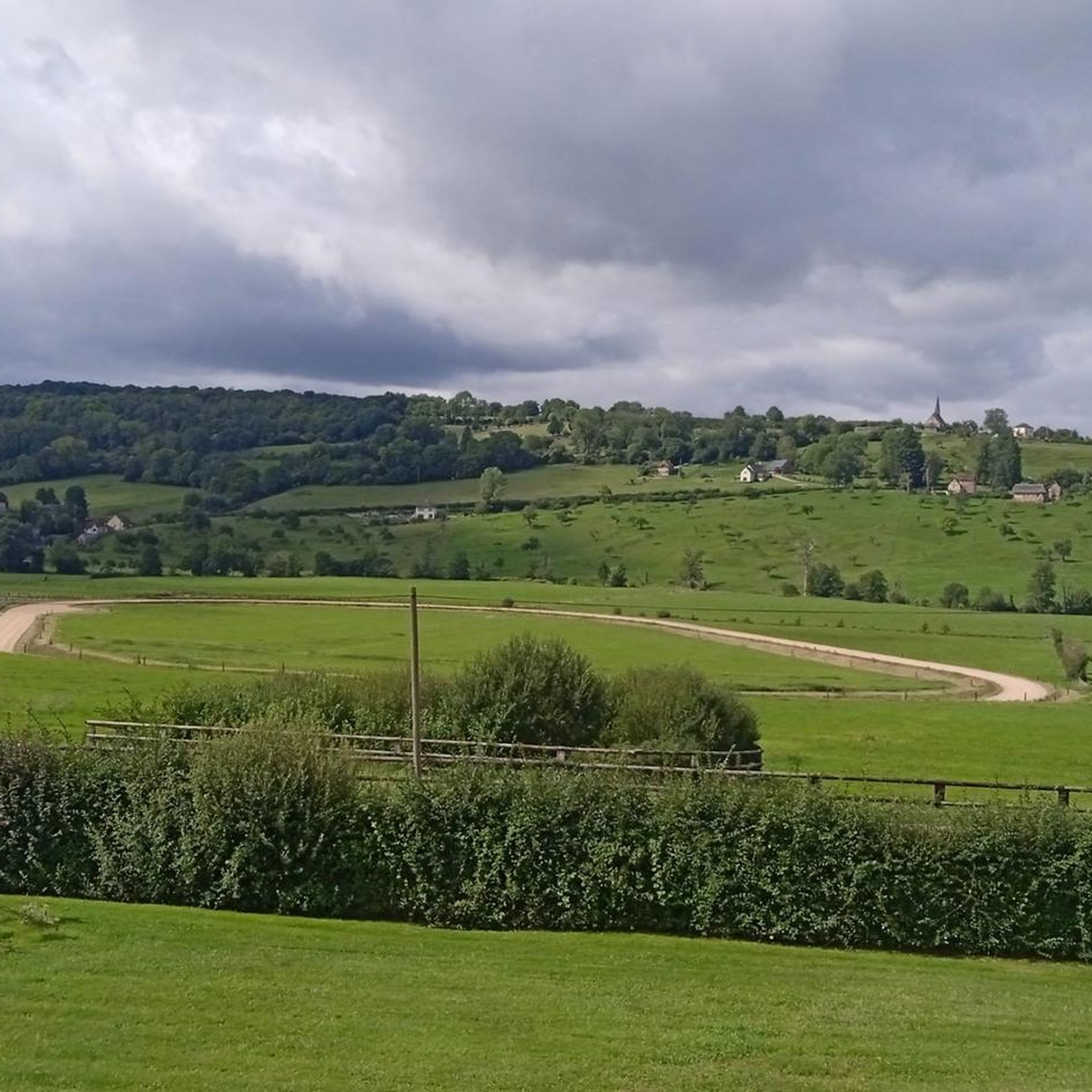
A place of memory but also a very beautiful point of view on the surroundings.
0
0

12th century Romanesque building, one of the best preserved in France. Similar to the Anglo-Norman dungeon family. Visible from the outside. Free
1
0

Commemorating the last battle of Normandy
1
0
Frequently Asked Questions
What historical sites can I explore around Fontaine-les-Bassets?
The region offers several significant historical sites. You can visit the impressive Donjon de Chambois, a well-preserved 12th-century Romanesque castle. Another must-see is the Camp Celtique de Bierre, a fortified site dating back to the Middle Neolithic period, considered one of the largest in western France. Within Fontaine-les-Bassets itself, the 18th-century Château de Fontaine-les-Bassets and the ancient Dolmen de la Pierre Levée are notable heritage sites.
Are there any natural attractions or scenic spots to visit?
Yes, the area boasts natural beauty, particularly at Vaudobin and the Meillon Gorges. This site features a wild and rugged landscape with a deep gorge, contrasting arid lands with cool woods along the Meillon stream. The wider region is characterized by a pleasant bocage landscape, offering opportunities to enjoy the rural charm of Normandy.
What outdoor activities are available near Fontaine-les-Bassets?
The surrounding bocage landscape and waterways like the Dives River provide excellent opportunities for outdoor activities. You can find various hiking trails, including easy and moderate options around the Camp Celtique de Bierre. For cycling enthusiasts, there are numerous routes for touring bicycles and road cycling. Explore more options on the Hiking around Fontaine-Les-Bassets and Cycling around Fontaine-Les-Bassets guide pages.
Are there family-friendly attractions in the area?
Absolutely. Historical sites like the Donjon de Chambois and the Polish Memorial at Hill 262 North (Maczuga), Coudehard are noted as family-friendly. The natural landscapes, such as the Meillon Gorges, also offer engaging outdoor experiences for families.
Where can I find information about local history and wartime memorials?
The region played a significant role in World War II. You can visit the Polish Memorial at Hill 262 North (Maczuga), Coudehard, which commemorates the end of the Battle of the Falaise Pocket. Another unique historical destination is the M16 Half-Track Memorial, Tournai-sur-Dives, featuring a rare American WWII anti-aircraft vehicle.
What is the best time of year to visit Fontaine-les-Bassets?
The Normandy region generally enjoys pleasant weather from spring through early autumn (April to October), making these months ideal for exploring historical sites and engaging in outdoor activities like hiking and cycling. The bocage landscape is particularly beautiful during spring and summer.
Are there any easy walking trails near Fontaine-les-Bassets?
Yes, there are easy walking trails available. For instance, the 'Sentier du camp celtique de Bierre' offers an easy 4.3 km loop within the natural sensitive area. You can find more details and other easy routes on the Hiking around Fontaine-Les-Bassets guide page.
Can I bring my dog to the trails and attractions?
Many outdoor trails in the bocage landscape are suitable for dogs, especially those in natural areas. For specific attractions like historical sites or châteaux, it's advisable to check their individual policies regarding pets before your visit.
What kind of local heritage sites are there within Fontaine-les-Bassets itself?
Within the commune, you can discover the Église Saint-Rémi, the Château de Fontaine-les-Bassets (an 18th-century edifice with historical monument status), and the prehistoric Dolmen de la Pierre Levée. Other local points of interest include Le Pont d'Ommoy, a Plaque de Cocher, Ferme au lieu-dit Le Refour, and Le Moulin de Fontaine, offering glimpses into rural French life and history.
Where can I find cafes or places for a break near the attractions?
While Fontaine-les-Bassets is a small commune, some attractions have nearby amenities. For example, near the Donjon de Chambois, you can find small shops and a bakery offering coffee and pastries, perfect for a break or picnic supplies.
What is the typical duration needed to visit the main attractions?
The time needed varies by attraction. For historical sites like the Donjon de Chambois or the Camp Celtique de Bierre, you might spend 1-2 hours exploring. Natural sites like Vaudobin and the Meillon Gorges could involve longer walks or hikes, taking several hours. Planning a full day allows for a relaxed exploration of a few key sites.
Are there any viewpoints offering panoramic views of the region?
The Polish Memorial at Hill 262 North (Maczuga), Coudehard is also recognized as a viewpoint, offering significant historical context along with potential scenic vistas of the surrounding landscape.
Most popular routes around Fontaine-Les-Bassets

Get inspired with the komoot mobile app


Explore more
Still not found the Highlight you’re looking for? See guides of the top attractions in other regions:
