Attractions and Places To See around Bonsmoulins - Top 5
Best attractions and places to see around Bonsmoulins include historical ruins and diverse natural landscapes. This village in the Orne department of Normandy, France, offers a glimpse into its past with notable landmarks. The surrounding region provides a range of cultural sites, natural features, and points of interest. Visitors can explore religious buildings, historical towns, and extensive forests.
Best attractions and places to see around Bonsmoulins
- The most popular attractions is Saint Bernard Fountain of La Trappe Abbey, a…
Last updated: May 3, 2026
Saint Bernard Fountain of La Trappe Abbey
Highlight • Religious Site
Translated by Google •
Tip by

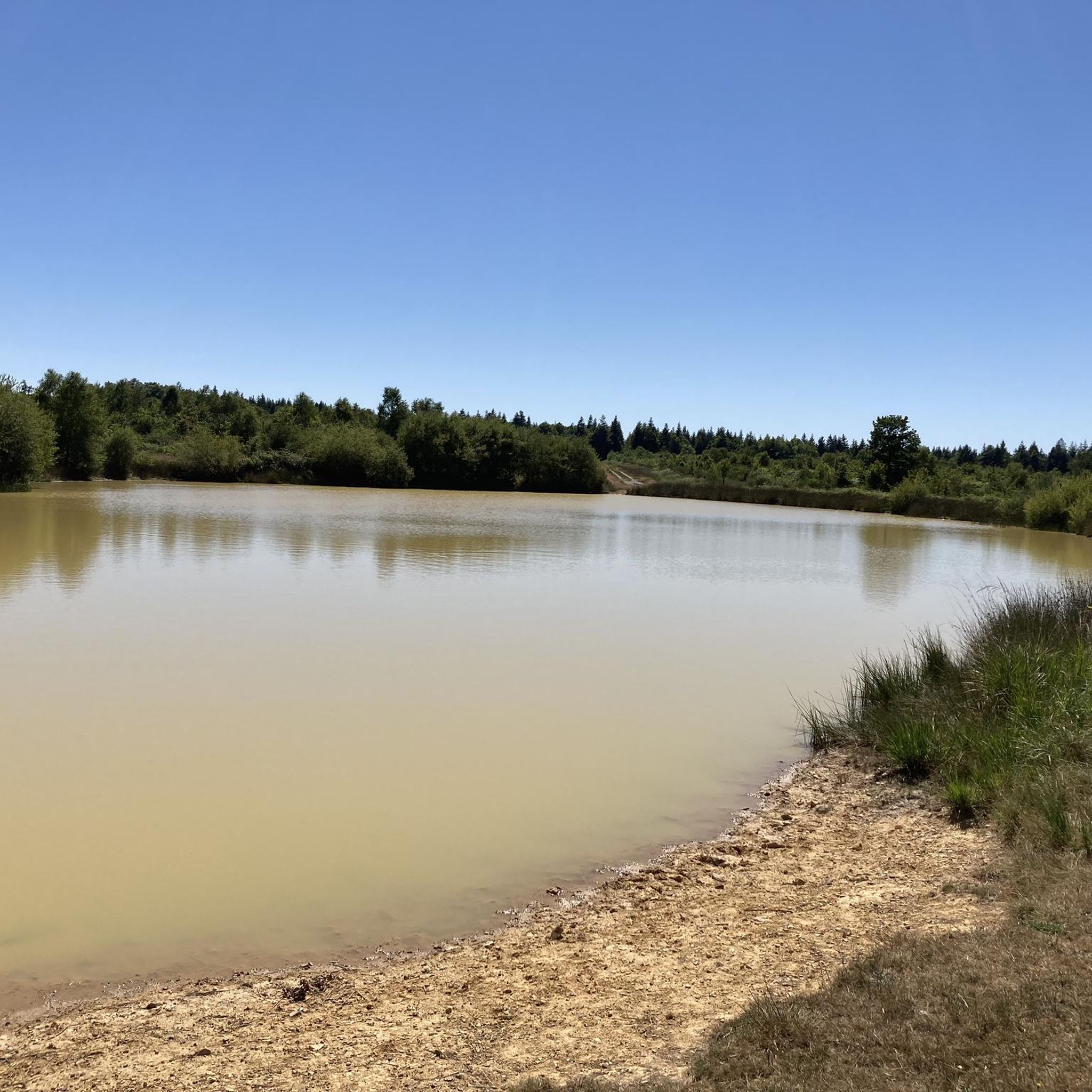
Conturbie Pond
Highlight • Other
Translated by Google •
Tip by

Sign up now to discover places like this
Get recommendations on the best single tracks, peaks, & plenty of other exciting outdoor places.
Sign up for free
Soligny-la-Trappe Abbey
Highlight • Religious Site
Translated by Google •
Tip by

Champs church and manor
Highlight • Other
Translated by Google •
Tip by
Saint Malo Church
Highlight • Other
Translated by Google •
Tip by

Start today with a free account
Your next adventure awaits.
Login or Signup


Tips from the Community

In the center of Randonnai, the 16th-century Saint-Malo church, enlarged in 1836, houses several works classified as Historic Monuments, including a classical altarpiece with paintings of Saint Andrew and Saint Sebastian. Funeral slabs serve as threshold steps. Inside, a plaque commemorates the departure of Pierre Tremblay (whose birthplace is in La Filonnière) in 1647 for New France. He is the ancestor of the Tremblays of Quebec and North America.
0
0

Called La Trappe, this abbey from 1122 was the cradle of a reform of the Cistercian order in 1664, creating the Trappist order.
0
0

A very beautiful abbey where the Trappist monks are still active. Cyclists and hikers can fill their canisters and water bottles at the available and free water point.
0
0

The Abbey of Notre-Dame de la Trappe is a working monastery, located in Soligny-la-Trappe. Born in the 11th century in the short-lived congregation of Savigny, he joined the Cistercian order like his mother abbey in 1147.
0
0

Spiritual home of Trappist monks, this abbey and monastery have had a tumultuous history. You will appreciate the most beautiful doors of the monastery when you pass by.
2
0

Active monastery founded in the 11th century which is home to the famous Trappist monks. While the abbey of La Trappe was faced, like most monasteries, with a decline in monastic fervor, it was refounded in 1660, following a stricter reading of the rule. This reform is originally called “of the Strict Observance”, but more commonly called “Trappist” in homage to the abbey which gave birth to it. Trappist life is a form of monastic-type religious life, lived under the rule of Saint Benedict (5th century), father of monks in the West. It is characterized mainly by a life voluntarily led apart from the world, in order to favor prayer. This punctuates the day of the monk who goes to church seven times a day. It is also a life of work, rather manual (about six to eight hours a day). It is also a path of asceticism marked by obedience to an abbot or a prior. In addition to obedience, celibacy, sharing of goods, silence, vigils, and fasts, the path of the Trappist monk is shaped by the community where he chooses to put down roots. This Trappist life combines solitude and community life. Everything the monk lives, he lives in the same momentum with other brothers with whom he prays, eats, works, reads and meditates on the Word of God. Note: to refresh yourself, you can take advantage of the presence of a fountain offering excellent quality spring water offered by the monks.
1
0
This pond bears the name of the old village of about fifteen inhabitants which disappeared during the 19th century. Of the original church there remains only a section of ruin which stands in the middle of the undergrowth
0
0
Frequently Asked Questions
What historical sites are there to explore in and around Bonsmoulins?
Bonsmoulins itself features the intriguing Bonsmoulins Medieval Castle Ruins, with vestiges of a dwelling, a high wall, a tower, and a deep well. Nearby, you can visit the historic Saint Bernard Fountain of La Trappe Abbey and Soligny-la-Trappe Abbey, both significant religious sites. The 12th-century Église Notre-Dame d'Autheuil in Tourouvre is a remarkable example of Romanesque art, and the Champs church and manor also offer a glimpse into the region's past.
Are there any natural attractions or outdoor spaces near Bonsmoulins?
Absolutely. The tranquil Conturbie Pond is a unique spot, named after a vanished village, with a ruined church wall adding to its character. You can also explore the vast Forêt domaniale de Moulins-Bonsmoulins, known for its ancient metallurgical sites. Further afield, the Forêt de Perseigne, Forêt d'Écouves, and the expansive Le Perche Natural Regional Park offer beautiful landscapes and opportunities for outdoor activities.
What kind of outdoor activities can I do near Bonsmoulins?
The area around Bonsmoulins is excellent for outdoor enthusiasts. You can find numerous routes for cycling, running, and hiking. For cycling, explore routes like the 'Soligny-la-Trappe Abbey – Abbey of La Trappe loop' which is about 27 km. If you prefer running, consider the 'Abbaye de la Grande Trappe Loop' (around 8.5 km). Hikers can enjoy easy trails such as the 'Abbey of La Trappe – Soligny-la-Trappe Abbey loop' (around 4 km). You can find more detailed information and routes on the respective guide pages: Cycling around Bonsmoulins, Running Trails around Bonsmoulins, and Hiking around Bonsmoulins.
Are there any family-friendly attractions in the Bonsmoulins area?
Yes, several attractions are suitable for families. The Saint Bernard Fountain of La Trappe Abbey and Soligny-la-Trappe Abbey are listed as family-friendly, offering a historical and cultural experience. Exploring the natural beauty of Conturbie Pond or the various forests like Forêt domaniale de Moulins-Bonsmoulins can also be enjoyable for families who appreciate nature and gentle walks.
What do visitors enjoy most about the attractions near Bonsmoulins?
Visitors particularly appreciate the historical depth and spiritual atmosphere of sites like the Saint Bernard Fountain of La Trappe Abbey, noting its beautiful gates and the rich history of the Trappist monks. The unique character of Conturbie Pond, with its ruined church wall, also captivates those looking for a blend of nature and history. The komoot community has shared over 19 photos and given more than 30 upvotes to the attractions in the area, highlighting their appeal.
Are there any notable towns or villages to visit near Bonsmoulins?
Yes, several charming towns and villages are within easy reach. Mortagne-au-Perche, about 14 km south, offers historical interest. Sées, 27 km west, is known for its cathedral. Bellême, 30 km south, is an attractive village within the Perche Natural Regional Park. Further out, Alençon (41 km west-south-west) is famous for its lace, and Saint-Céneri-le-Gérei (52 km west-south-west) is recognized as one of France's 'Most Beautiful Villages'.
Where can I find unique cultural sites or gardens in the region?
Beyond historical buildings, the region offers unique cultural experiences. The Jardin de la petite Rochelle, 30 km away, is a remarkable garden. Another lovely garden is Les Jardins de la Mansonière, located about 52 km west-south-west. For a grand architectural experience, the Baroque-style Château de Beaumesnil, with its park and gardens, is about 43 km north-north-east.
What is the highest point in Normandy near Bonsmoulins?
The highest point in Normandy, Signal d'Écouves, is located approximately 38 km from Bonsmoulins. It offers scenic views and is situated within the Forêt d'Écouves, providing a great destination for those seeking panoramic vistas and natural beauty.
Are there any specific churches of historical significance to visit?
Beyond the abbeys, the Église Notre-Dame d'Autheuil in Tourouvre (18 km away) is a magnificent 12th-century Romanesque church, considered the oldest and best-preserved in the Perche region. The Champs church and manor, with its 11th-century Romanesque church, is also historically significant. Additionally, the 16th-century Saint Malo Church in Randonnai houses several works classified as Historic Monuments.
What is the Haras du Pin and how far is it from Bonsmoulins?
The Haras du Pin, often called the 'Versailles for horses,' is the oldest national horse training center in France. It is located approximately 30 km west-north-west of Bonsmoulins and is a significant site for equestrian heritage and culture.
Can I find any hidden gems or less-known spots around Bonsmoulins?
Beyond the main attractions, the region holds several hidden gems. The Bonsmoulins Medieval Castle Ruins themselves are a less-frequented historical site within the village. The Forêt domaniale de Moulins-Bonsmoulins, with its ancient metallurgical sites, offers a unique historical and natural exploration. The tranquil Conturbie Pond, with its ruined church wall, also provides a distinctive and somewhat secluded experience.
What is the best time to visit the Perche Natural Regional Park?
While specific data on the best time to visit the Perche Natural Regional Park is not provided, regional parks in Normandy generally offer pleasant conditions for outdoor activities from spring through early autumn (April to October). During these months, the weather is typically mild, and the natural landscapes are vibrant, making it ideal for hiking, cycling, and exploring the peaceful countryside.

Get inspired with the komoot mobile app


Explore more
Still not found the Highlight you’re looking for? See guides of the top attractions in other regions:
