Attractions and Places To See around Thin-Le-Moutier - Top 17
Best attractions and places to see around Thin-Le-Moutier offers a blend of historical sites, distinctive architecture, and natural landscapes in the Ardennes department of France. The village is characterized by its white stone houses and features historic laundries, one fed by natural springs. Surrounding forests like Froidmont and Hailly provide natural settings for exploration. The area presents opportunities for discovering local heritage and outdoor activities.
Best attractions and places to see around Thin-Le-Moutier
- The most popular attractions is Signy-l'Abbeye,…
Last updated: July 2, 2026
Château de l'Échelle
Highlight • Castle
Translated by Google •
Tip by

Signy-l'Abbeye
Highlight • Other
Translated by Google •
Tip by

Sign up now to discover places like this
Get recommendations on the best single tracks, peaks, & plenty of other exciting outdoor places.
Sign up for free
Saint Martin Church
Highlight • Other
Aubigny-les-Pothées …
Translated by Google •
Tip by
Forest Road Crossing
Highlight • Trail
Tip by

Kasteel van Remilly-les-Pothées
Highlight • Other
Since its foundation, the castle has been owned by the same family, the Rimberts or Rymberts, although the surname has been passed …
Translated by Google •
Tip by

Sign up for free to discover even more attractions around Thin-Le-Moutier.
Sign up for free
Already have an account?
Start today with a free account
Your next adventure awaits.
Login or Signup

Tips from the Community

The date 1577 is engraved above the door. Since its foundation, the castle has been owned by the same family, the Rimberts or Rymberts, although the surname has been passed down from father to daughter. Because this family did not emigrate, it survived the French Revolution without losing its property. Although citizen Rimbert, a former nobleman, was ordered to remove part of the fortifications, loopholes, battlements and gun ports from the fortified house during its most turbulent period, in 1794, Robert de Rimbert, a former soldier and invalid pensioner, was before the Revolution of 1789, at the beginning of the Revolution even asked by the inhabitants to command the National Guard. The castle originally had two towers on opposite corners and two rectangular watchtowers. In 1925, restoration work resulted in the widening of the windows and the creation of a second floor, with pedimented windows recessing into the base of the roof. The building was placed on the monument list in 1927. The house is now a private residence and is open to the public by appointment.
0
0

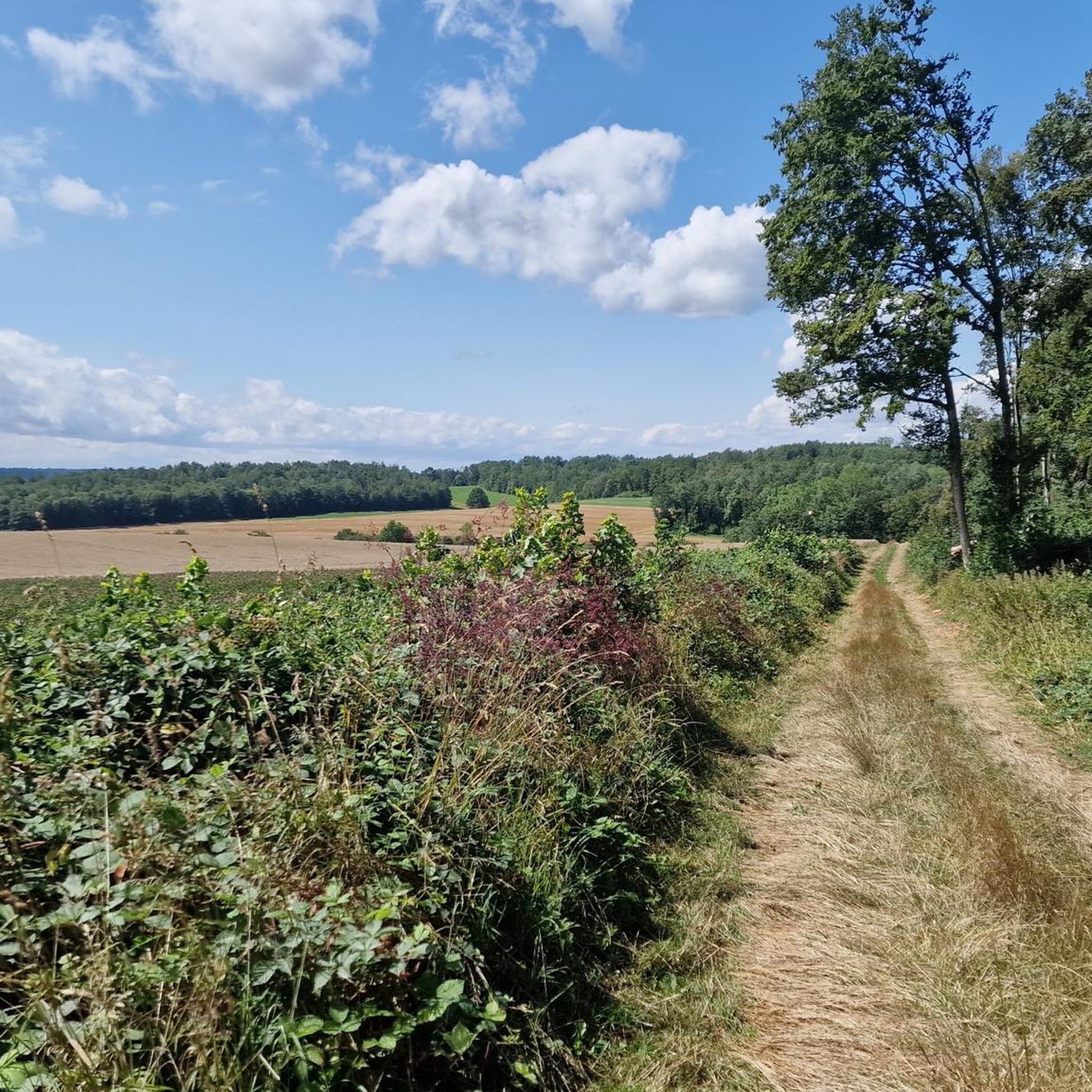
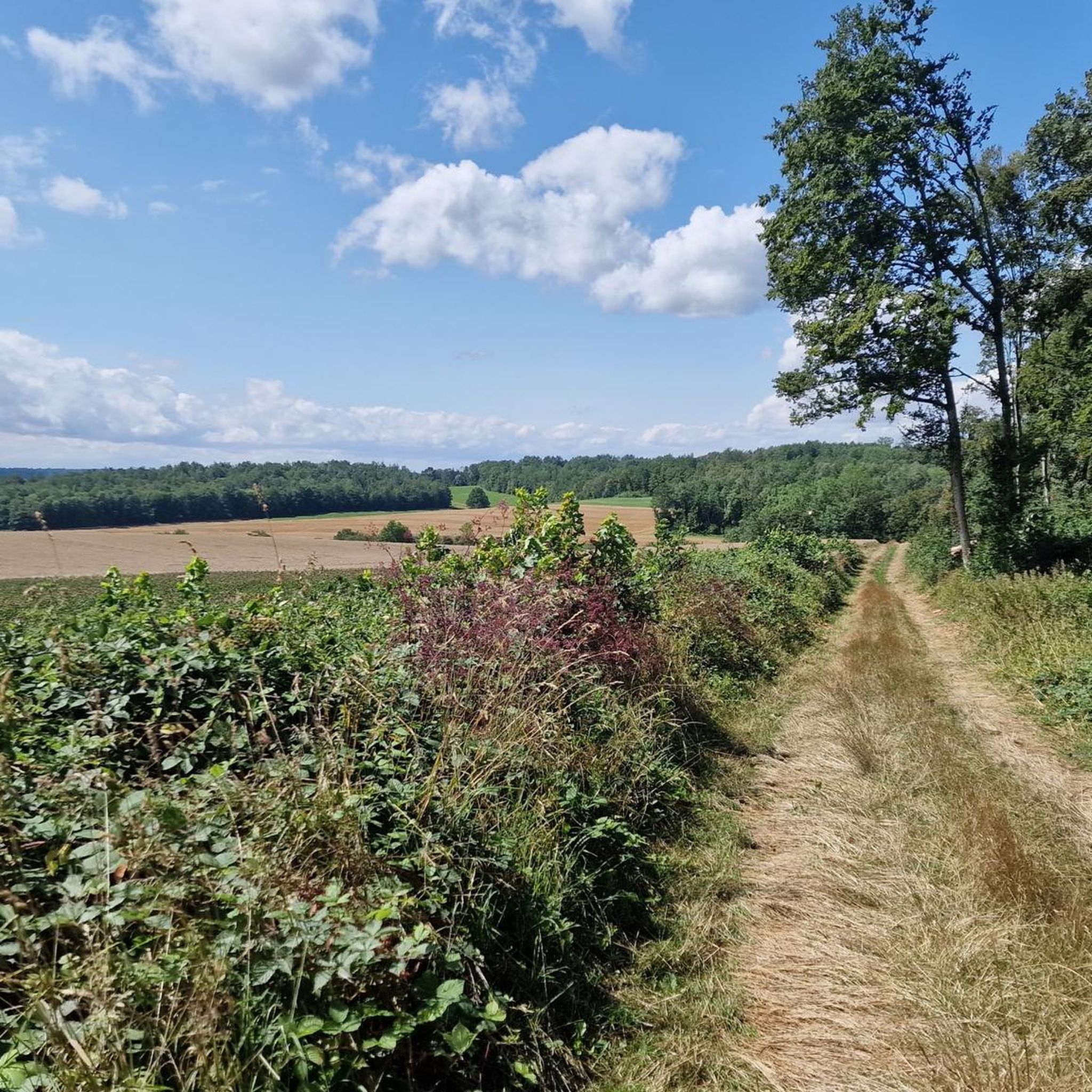
After a few days of heavy rain we could no longer find the path, which suddenly turned into a tough walk. The first and last third are very doable (asphalt and cart track). Middle section muddy and impassable. Very nice and beautiful.
1
0

Signy-l'abbeye is a pleasant town with two hotels and, for the region, quite a few amenities, an ATM and a small supermarket. There is a large (walking) forest to the west and you will also find a campsite there. The church was built in 1900 on the site of a 16th century shrine. There was a Cistercian abbey here between 1135 and 1793.
5
0
Signy-l'Abbeye is a pleasant town with two hotels, and for the region, quite a few amenities, an ATM and a small supermarket. To the west is a large (walking) forest and you will also find a campsite.
3
0

It is a very beautiful forest and right next to the crossing is a forester’s house.
3
0

Saint Martin, to whom the church of Aubigny-Les-Pothees is dedicated, is - next to Saint Nicholas - probably one of the most popular saints of all. The memorial day of the former officer in the Roman army is November 11th. On the night after the famous “coat sharing”, when he surrendered half his army cloak to a freezing beggar, Jesus Christ appears to him in a dream. He then converted to Christianity and was later elected Bishop of Tours (France) - initially against his will.
3
0

Two Merovingian cemeteries from the sixth and seventh centuries were discovered on the territory of the municipality. During the Hundred Years War the village was besieged by the Armagnaks. Aubigny-les-Pothées was burned to the ground in 1643 at the Battle of Rocroi. At the beginning of the First World War in 1914, the village church served as a simple hospital. The church was built in 1851. Source: Wikipedia
4
1
A first castle, probably founded in the 13th century, adjoined the Potées estate, which belonged to the Reims cathedral chapter. A group of Armagnacs settled there in the 15th century and over time spread across the region. Duke Antoine de La Marche, who was governor of Sedan from 1599 to 1640, became lord of L'Echelle through his marriage to Anne de Maucourt in 1594. He rebuilt the castle to give it a more up-to-date appearance. The square stilt in the northwest corner dates from this period. Antoine de La Marche des Contes died in September 1740 at the age of 74. On September 28, 1642, at dawn, Spanish troops sacked the village and attacked the castle. The walls of the castle still show the traces of the cannon balls. In 1730, L'Échelle Castle was acquired by the Reims Cathedral Chapter, and the building was subsequently rededicated as a farm. During the French Revolution, the building was sold to Simon Pottier, the hat maker from L'Echelle. He then handed over a large part of it to the community, installed the town hall as well as the school and the teachers' accommodation. Part of the residential buildings of the north wing have been converted into a school history museum, for the nostalgic community (the elementary school from the 1900s to 1960s), with the inkwell, the sergeant major pens (which preceded the pens), the slates, etc. Source: according to Wikipedia
4
1
Frequently Asked Questions
What historical landmarks can I explore in and around Thin-Le-Moutier?
Thin-Le-Moutier and its surroundings offer several historical sites. Within the village, you can visit the historic Saint Quentin Church, which dates back to the 12th century and houses the rare 12th-century Edicule de Sainte BELANDE. The village also features distinctive white stone houses and historic laundries. Nearby, you can discover Château de l'Échelle, a castle with origins in the 13th century that now hosts a school history museum. The town of Signy-l'Abbeye, a short distance away, is known for its historical significance, including a church built on the site of a 16th-century shrine and a former Cistercian abbey.
Are there good hiking opportunities near Thin-Le-Moutier?
Yes, the area around Thin-Le-Moutier is well-suited for hiking. The local "Sur les terres de Thin le Moutier" (Sentier n°66) trail offers scenic views of the village and its valley along agricultural paths. For more options, you can explore various routes, including a 9.5 km moderate hiking loop from Thin-le-Moutier itself, or a 9.3 km moderate loop from Signy-l'Abbaye that passes through the Forest Road Crossing. You can find more hiking routes in the Hiking around Thin-Le-Moutier guide.
What cycling routes are available around Thin-Le-Moutier?
Thin-Le-Moutier is a great base for cycling. You can find various routes for different types of bikes. For touring bicycles, options include a moderate 23.8 km loop from Clavy-Warby or a more challenging 45.1 km loop from Signy-l'Abbaye that visits Saint Martin Church. Road cyclists can enjoy routes like a moderate 44.8 km loop from Forge Maillard or a 42.2 km loop from Clavy-Warby that passes by Saint Peter's Church and Château de l'Échelle. Explore more options in the Cycling around Thin-Le-Moutier guide and the Road Cycling Routes around Thin-Le-Moutier guide.
What natural features can I explore near Thin-Le-Moutier?
The area around Thin-Le-Moutier is rich in natural beauty, primarily characterized by its forests. You can explore the nearby Forest of Froidmont and the Forest of the Hailly, which offer tranquil settings for walks and outdoor activities. The Forest Road Crossing is a highlight that takes you through a beautiful forest, with a forester's house nearby. The village itself is also known for its natural springs, which feed one of its historic laundries.
What is unique about Thin-Le-Moutier's village architecture?
Thin-Le-Moutier is distinctive for its beautiful white stone houses, which contribute significantly to the village's charm. This white stone was historically sourced from the former Thin-le-Moutier Quarry, actively exploited over a century ago. The village also features three historic laundries, one of which is fed by natural springs, adding to its unique architectural character.
Are there any religious sites or oratories to visit in Thin-Le-Moutier?
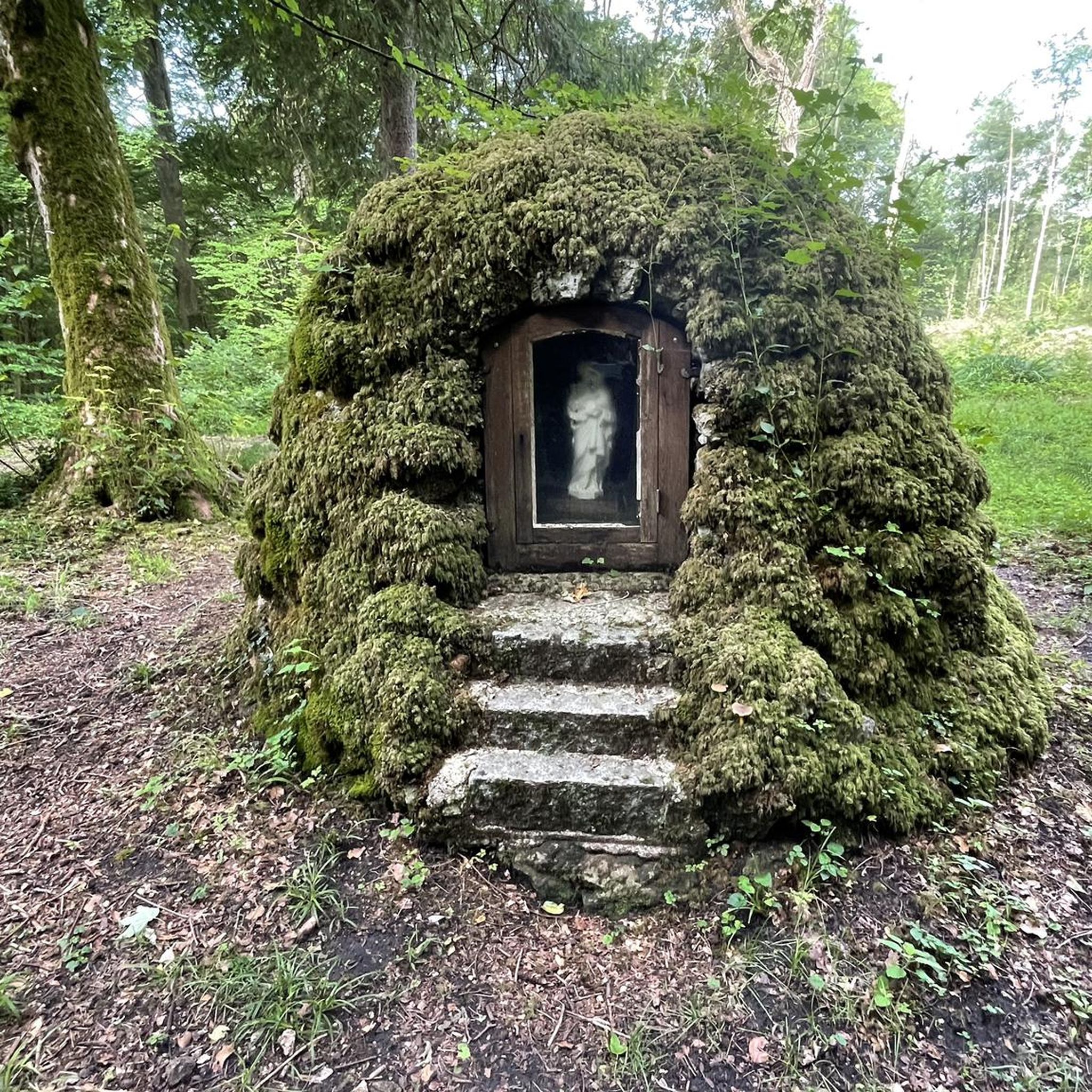
Yes, Thin-Le-Moutier has significant religious sites. The Saint Quentin Church is a central historical landmark, with origins potentially dating back to 400 AD and a primitive church from the 12th century. It was consecrated in 1512 and contains the rare 12th-century Edicule de Sainte BELANDE. Additionally, on the heights of the Hailly forest, you can find the Oratoire du Hailly, a site where locals gather annually to worship the Virgin of Hailly and the Virgin of Froidmont.
What kind of amenities can I find in the Thin-Le-Moutier region?
While Thin-Le-Moutier is a charming village, for more extensive amenities, the nearby town of Signy-l'Abbeye is a good option. It offers two hotels, an ATM, and a small supermarket. There is also a campsite located in the large forest to the west of Signy-l'Abbeye, providing accommodation options for visitors.
Is Thin-Le-Moutier suitable for family-friendly activities?
The natural surroundings of Thin-Le-Moutier, particularly its forests and hiking trails, offer opportunities for family-friendly outdoor activities. Easy and moderate hiking loops, such as the 5.4 km easy loop from Signy-l'Abbaye to the Perched Oak, can be enjoyable for families. Exploring the village's unique architecture and historic laundries can also be an engaging activity for all ages.
What is the best time to visit Thin-Le-Moutier for outdoor activities?
The Ardennes region, including Thin-Le-Moutier, is generally pleasant for outdoor activities during spring, summer, and early autumn. These seasons offer milder weather, making hiking and cycling more enjoyable. Spring brings blooming nature, while autumn showcases beautiful fall foliage in the surrounding forests.
What is the significance of the former Thin-le-Moutier Quarry?
The former Thin-le-Moutier Quarry holds historical significance as it was the source of the distinctive white stone used in the construction of many of the village's houses. This stone was also utilized for certain buildings in the Relay de la Poste aux Chevaux in Launois-sur-Vence, highlighting its importance to the local architecture and heritage over a century ago.
Are there any other notable churches in the wider Thin-Le-Moutier area?
Beyond the Saint Quentin Church in Thin-Le-Moutier, the surrounding area features other notable churches. You can visit Saint Martin Church in Aubigny-les-Pothées, built in 1851, which has a rich history including serving as a hospital during WWI. Another significant site is Saint Peter's Church, known for its striking tower and architectural elements dating back to the 13th and 17th centuries.
Most popular routes around Thin-Le-Moutier

Get inspired with the komoot mobile app


Explore more
Still not found the Highlight you’re looking for? See guides of the top attractions in other regions:
