Attractions and Places To See around Charentenay - Top 20
Attractions and places to see around Charentenay include historical landmarks and natural features within the Ru Genotte valley. The village is situated amidst a picturesque rural landscape, bordered by hills adorned with old vines. Key historical sites in the area include the Saint-Laurent Church, known for its 15th-century steeple, and a historic 15th-century house that served as a Benedictine refuge.
Best attractions and places to see around Charentenay
- The most popular attractions is The Saussois Rocks, a cliff popular…
Last updated: July 7, 2026
The Saussois Rocks
Highlight • Other
Translated by Google •
Tip by

Church of Saints Peter and Paul, Cravant
Highlight • Religious Site
Its impressive dimensions remind us that Cravant was a city of more than …
Translated by Google •
Tip by

Sign up now to discover places like this
Get recommendations on the best single tracks, peaks, & plenty of other exciting outdoor places.
Sign up for free
Belombre Castle
Highlight • Other
Translated by Google •
Tip by
Pierre Merlier Museum
Highlight • Monument
Translated by Google •
Tip by
Cravant Keep
Highlight • Structure
Translated by Google •
Tip by
Sign up for free to discover even more attractions around Charentenay.
Sign up for free
Already have an account?
Start today with a free account
Your next adventure awaits.
Login or Signup
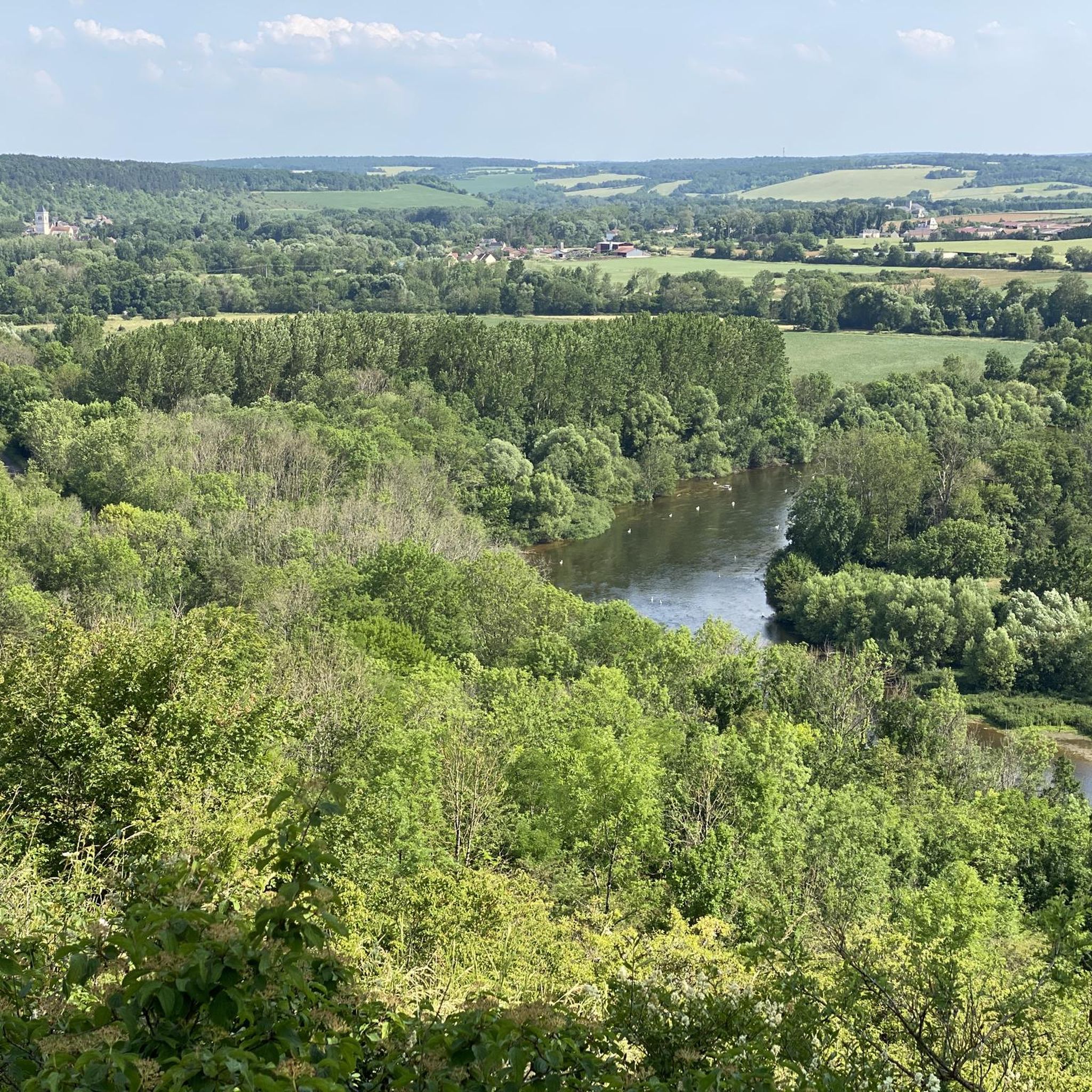
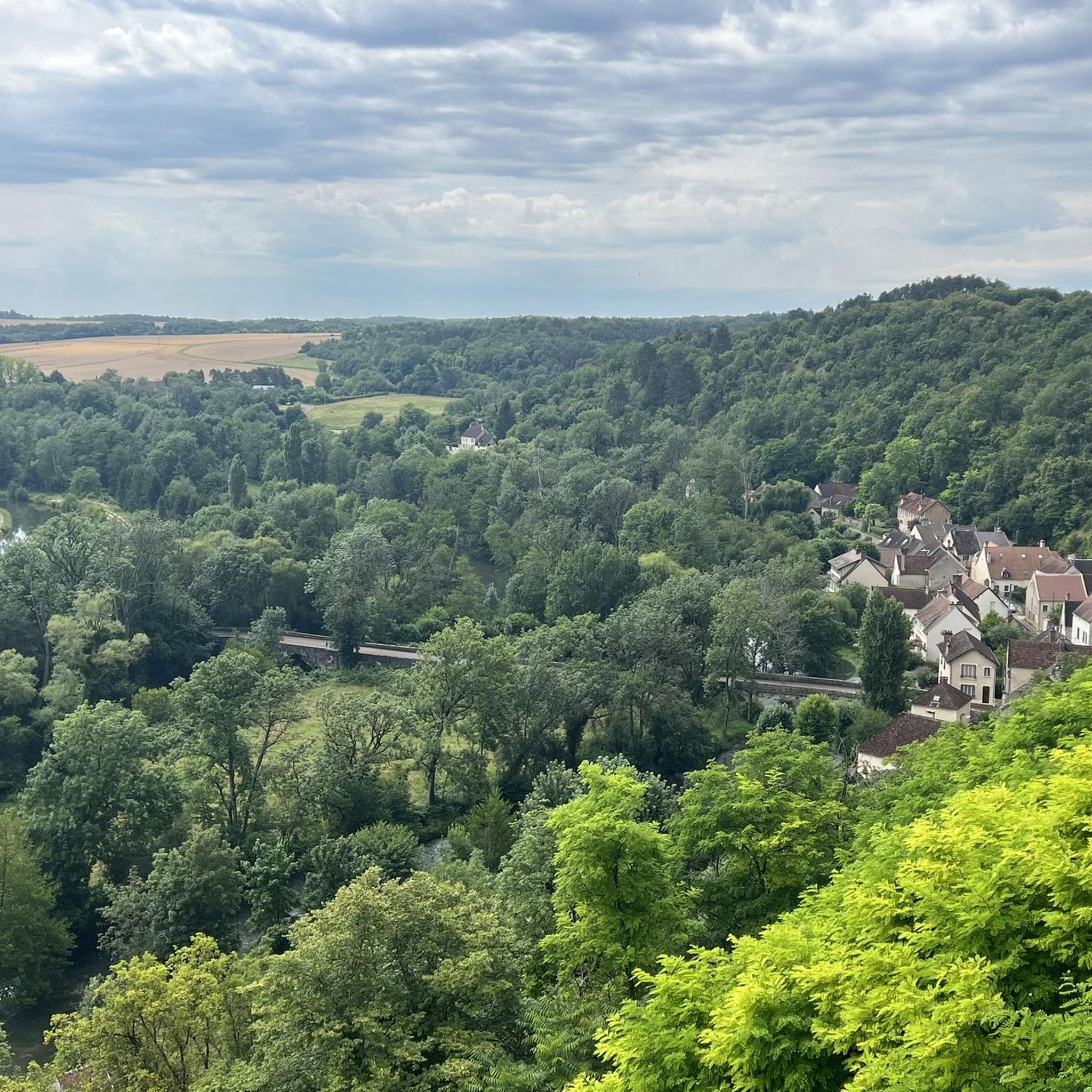


Tips from the Community

The woman who lives next door in the keep even washes her laundry here.
0
0

How I love bathing my feet in a washhouse!
0
0

The extremely impressive church in Cravant was dedicated to the two SAINTS "PIERRE et PAUL". They are also known as the "Princes of the Apostles" and their common feast day in the calendar of saints is June 29th. * Simon, nicknamed Peter (Rock), was a fisherman on Lake Genesareth when he - together with his brother Andrew - was called by Jesus Christ to be a "fisher of men". According to Catholic understanding, he is the highest apostle and the two thousand year long line of popes - currently Francis - are his successors. In statues and paintings, Peter is almost always depicted with two keys in his hand; this attribute refers to the Bible verse in Matthew: "I will give you the keys of the kingdom of heaven; whatever you bind on earth will be bound in heaven, and whatever you loose on earth will be loosed in heaven." (Chapter 16, Verse 19). * Paul was initially an opponent of the Christian movement and was not called to the apostleship of Jesus Christ during his lifetime like the other apostles, but was only converted later with the famous "Damascus experience". His attribute is the sword with which he was executed. According to the Roman law of the time, such a sentence was a "privilege" (quick death and not, like other types of execution, associated with a long, painful death struggle) that was available to the citizens of Rome.
0
0

The stronghold of Belombre was the seat of part of the lordship of Escolives held, in 1507, by the lieutenant general of Auxerre, Blanchet David. Marie David brought it to Jacques de Meung dit de La Ferté, who died on June 4, 1589, massacred by the Leaguers of Auxerre. Madeleine de La Ferté Meung, her granddaughter, transmitted Bellombre to the La Bussière family and Catherine de La Bussière brought it to the Girard d'Azy family. The children of Paul de Girard sold it, around 1656, to François de Chastellux, who ceded this first half of Escolives in 1670, to Robert Chaponnel, Receiver General of Finances. He died on October 28, 1678 without issue, while he was undertaking the reconstruction of the castle. Anne Robineau, receiver general of Finances in Provence, who carried out the project developed by Chaponnel and built a new castle on the land surrounded by a moat on the site of the medieval manor. In 1709, Louis Gayot, buyer, united the two shares of the land of Escolives before selling the Château de Bélombre in November 1726, to Joseph Le Muet, King's attorney in the bailiwick of Auxerre. Rosalie Le Muet married in 1804, Jean Jacques Claude Baudenet d'Annoux. Their son, Louis-Hugues, who feared the dangerous invasions of the waters of the Yonne, decided to demolish the castle which he rebuilt on vast basements around 1870. The estate is located on the left bank of the canal. It is a large single-story building. Corner chains and harped stone legs support the entablature and an attic floor in the overhang of the broken roof. The moat and the stone bridge decorated with elegant 18th century ironwork have been preserved. (1) MH protected elements: facades and roofs; water pit ; the pillars of the entrance gate; the vestibule and the interior staircase with its wrought iron banister: registration by decree of December 6, 1977. The facades and roofs of the outbuildings; the terrace located to the southwest of the castle and the sleeping bridge; the bridge thrown over the moat, in front of the northeast facade of the castle; the gardens surrounding the castle; the perspective alley and the double water alley: registration by decree of June 7, 1993 The Chateau de Belombre 89290 Escolives-Sainte-Camille, private property, cannot be visited.
0
0

View of the 18th century castle from the cycle path.
2
1
In 2019 a former outbuilding and the former studio of Pierre Merlier were fitted out in order to present and highlight different periods of the work of this artist. In 2020 a 3rd room offered visitors a larger number of wood sculptures, terracotta and polyurethane bas-reliefs, bronzes, paintings. The surprise is total, provoked by the quantity, the diversity, the themes tackled, the materials used, the theatrical and not museum staging of a unique and singular work. The buildings, the proximity of the Canal du Nivernais bordered by the towpath make this Museum an attractive place. https://www.ot-auxerre.fr/offres/musee-pierre-merlier-escolives-sainte-camille-fr-2643474/
3
0
The Saint Pierre Saint Paul church is a remarkable building. It has a unique architecture in Burgundy. Its impressive dimensions remind us that Cravant was a city of more than 3000 inhabitants. The church then belonged to the bishops of Auxerre who came there regularly and did everything to make it beautiful and imposing. The interior of the church, with its nave, its Renaissance choir, its chapels, its keystones and its vaulted ceilings, bears witness to its prestigious past. It was built in the 9th century, enlarged in the 12th century then rebuilt at the end of the 16th century. https://www.bourgogne-tourisme.com/abbayes-et-autre-edifices-religieux/eglise-de-saint-pierre-et-saint-paul-de-cravant-3
3
0
The Cravant property is a fortified building built in the 14th century to protect the property of the Bishop of Auxerre. The rest of the mighty outer wall is reminiscent of a castle. The building is now privately owned. The old public washhouse is right next to it. A monument is erected facing the street. The 4,500 soldiers who fell here in a historic battle defending France in 1423 are remembered there.
4
0
Frequently Asked Questions
What historical and cultural sites can I visit around Charentenay?
Charentenay and its surroundings are rich in history. You can explore the Saint-Laurent Church in Charentenay, known for its 15th-century steeple and successive reconstructions. Another significant site is a 15th-century house that once served as a Benedictine refuge. Further afield, consider visiting the Church of Saints Peter and Paul, Cravant, which boasts unique architecture and a history dating back to the 9th century. The Belombre Castle, rebuilt in the 19th century, also offers a glimpse into the region's past, with its 18th-century structure and moat visible from the cycle path.
Are there any natural attractions or viewpoints near Charentenay?
Yes, the region offers beautiful natural landscapes. The village of Charentenay itself is nestled in the picturesque valley of the Ru Genotte, with hills adorned with old vines. A prominent natural attraction is The Saussois Rocks, a cliff popular with climbing enthusiasts. It provides impressive views of the Yonne river and opportunities to observe climbers in action.
What outdoor activities, like hiking or cycling, are available near Charentenay?
The area around Charentenay is excellent for outdoor activities. For hiking, you can find trails like the 'Around the Ponds loop from Vincelles' (easy, 6.4 km) or the more challenging 'Saussois Rocks – Saussois Rock loop from Mailly-le-Château' (22.9 km). Cyclists can enjoy routes such as the 'Mailly-le-Château Bridge – Vincelles Lock loop from Vincelles' (easy, 39.4 km) or the 'Nivernais Canal Cycle Route loop from Vincelles' (moderate, 72.3 km). Mountain biking enthusiasts have options like the 'Saint-Germain d'Irancy church loop from Vincelles' (moderate, 21.2 km). You can find more details on these and other routes in the dedicated guides for Hiking around Charentenay, Road Cycling Routes around Charentenay, and MTB Trails around Charentenay.
Are there any family-friendly attractions or activities in the Charentenay area?
While specific 'family-friendly' categories are not extensively listed for all attractions, historical sites like the Church of Saints Peter and Paul, Cravant and the Sainte-Reine Chapel can be interesting for older children with an interest in history. The Pierre Merlier Museum is also noted as family-friendly, offering a unique artistic experience. Additionally, the natural setting of the Ru Genotte valley and the opportunity to observe climbers at The Saussois Rocks can be engaging for families.
What do visitors particularly enjoy about the attractions near Charentenay?
Visitors frequently praise the impressive natural beauty and historical significance of the area. For instance, The Saussois Rocks are highly regarded for their imposing limestone walls and the opportunity to watch climbers, with many describing it as a 'wonderful area' and a 'pleasant trip along the river.' The Church of Saints Peter and Paul, Cravant is admired for its 'unique architecture' and 'impressive dimensions.' The Pierre Merlier Museum is also a 'real highlight' for its diverse and singular artwork.
Is there a museum to visit in the vicinity of Charentenay?
Yes, the Pierre Merlier Museum is located nearby. It is housed in a former outbuilding and studio of the artist, showcasing his diverse work including wood sculptures, terracotta, bas-reliefs, bronzes, and paintings. Visitors often find the quantity, diversity, and unique staging of his work to be impressive.
Can I visit any castles or châteaux around Charentenay?
While not directly in Charentenay, the Belombre Castle is a notable historical site in the area. Although it is private property and cannot be visited inside, its 18th-century structure, surrounding moat, and elegant 18th-century ironwork on the stone bridge can be admired from the cycle path.
What is the best time of year to visit Charentenay for outdoor activities?
The Bourgogne-Franche-Comté region generally experiences pleasant weather from spring through early autumn, making these seasons ideal for outdoor activities like hiking and cycling. The hills covered with old vines suggest a beautiful landscape during the growing season and harvest. Always check the local weather forecast before planning your visit.
Are there any religious buildings of note besides the Saint-Laurent Church in Charentenay?
Beyond Charentenay's Saint-Laurent Church, you can visit the Church of Saints Peter and Paul, Cravant, which is a remarkable building with a long history and unique architecture. Another significant religious site is the Sainte-Reine Chapel, which was constructed in several stages from the late 15th to the early 17th century and has been restored.
Are there easy hiking trails available near Charentenay?
Yes, there are easy hiking options. For example, the 'Around the Ponds loop from Vincelles' is an easy 6.4 km route. You can find more details and other easy trails in the Hiking around Charentenay guide.
What are the options for parking when visiting attractions around Charentenay?
While specific parking facilities for each attraction are not detailed, many villages and popular outdoor sites in rural France typically offer public parking areas. For attractions like The Saussois Rocks, there are often designated parking spots for visitors and climbers. It's advisable to check local signage upon arrival or consult specific attraction websites for detailed parking information.
Can I bring my dog to the trails and natural areas near Charentenay?
Many natural areas and hiking trails in France are generally dog-friendly, provided dogs are kept on a leash and owners clean up after them. The picturesque Ru Genotte Valley and the trails around The Saussois Rocks are suitable for walks with dogs. Always be mindful of local regulations and respect any signage regarding pets in specific areas.

Get inspired with the komoot mobile app


Explore more
Still not found the Highlight you’re looking for? See guides of the top attractions in other regions:
