Attractions and Places To See around Aubréville - Top 19
Best attractions and places to see around Aubréville, a commune in the Meuse department of northeastern France, offer a blend of historical significance and natural beauty. Situated within the Argonne region, the area is characterized by forests and a landscape deeply marked by World War I. Visitors can explore numerous historical sites and enjoy the preserved natural environment.
Best attractions and places to see around Aubréville
- The most popular attractions is War monument, a memorial that honors American soldiers…
Last updated: July 15, 2026
World War I memorial
Highlight • Other
Inaugurated in 1922, this impressive monument commemorates the thousands of fallen soldiers of the Argonne during WWI. The ossuary contains the …
Translated by Google •
Tip by

Mort-Homme Memorial
Highlight • Monument
Translated by Google •
Tip by

Sign up now to discover places like this
Get recommendations on the best single tracks, peaks, & plenty of other exciting outdoor places.
Sign up for free
Ravin du Génie Open-Air World War I Museum
Highlight • Historical Site
Translated by Google •
Tip by
War monument
Highlight • Other
Erected in 1927 by the state of Pennsylvania, this neoclassical monument honors the American soldiers from Pennsylvania who helped liberate Varennes in 1918. Designed in …
Translated by Google •
Tip by
Montfaucon American Monument
Highlight • Other
Translated by Google •
Tip by
Sign up for free to discover even more attractions around Aubréville.
Sign up for free
Already have an account?
Start today with a free account
Your next adventure awaits.
Login or Signup



Tips from the Community

This impressive American WWI memorial was dedicated in 1937 to commemorate the victory of the American First Army during the Meuse-Argonne Offensive (26 September – 11 November 1918). The 54-metre-high Doric granite column, designed by John Russell Pope, is topped by a statue symbolising liberty. The monument stands on the hill of Montfaucon, where a medieval monastery once stood and where the Americans achieved a strategic victory in 1918.
9
0
Tips: Climb the 234 steps to the viewing platform for a panoramic view of the former battlefield. Read the inscriptions at the foot of the monument with the names of the participating divisions.
1
0
This impressive American WWI memorial was dedicated in 1937 to commemorate the victory of the American First Army during the Meuse-Argonne Offensive (26 September – 11 November 1918). The 54-metre-high Doric granite column, designed by John Russell Pope, is topped by a statue symbolising liberty 1 2. The monument stands on the hill of Montfaucon, where a medieval monastery once stood and where the Americans achieved a strategic victory in 1918.
1
0
Freely accessible and located along the Route de la Haute Chevauchée. Climb the stairs for an impressive view and to admire the monument up close. Behind the monument is the entrance to the ossuary and a cross of reconciliation.
6
0
A silent tribute in the heart of the Argonne Inaugurated in 1922, this impressive monument commemorates the thousands of fallen soldiers of the Argonne during WWI. The ossuary contains the remains of approximately 10,000 unknown soldiers of various nationalities. The obelisk-shaped structure, topped with a soldier's head and sword, is a powerful symbol of sacrifice. In 2023, the monument was included on the UNESCO World Heritage List.
7
0
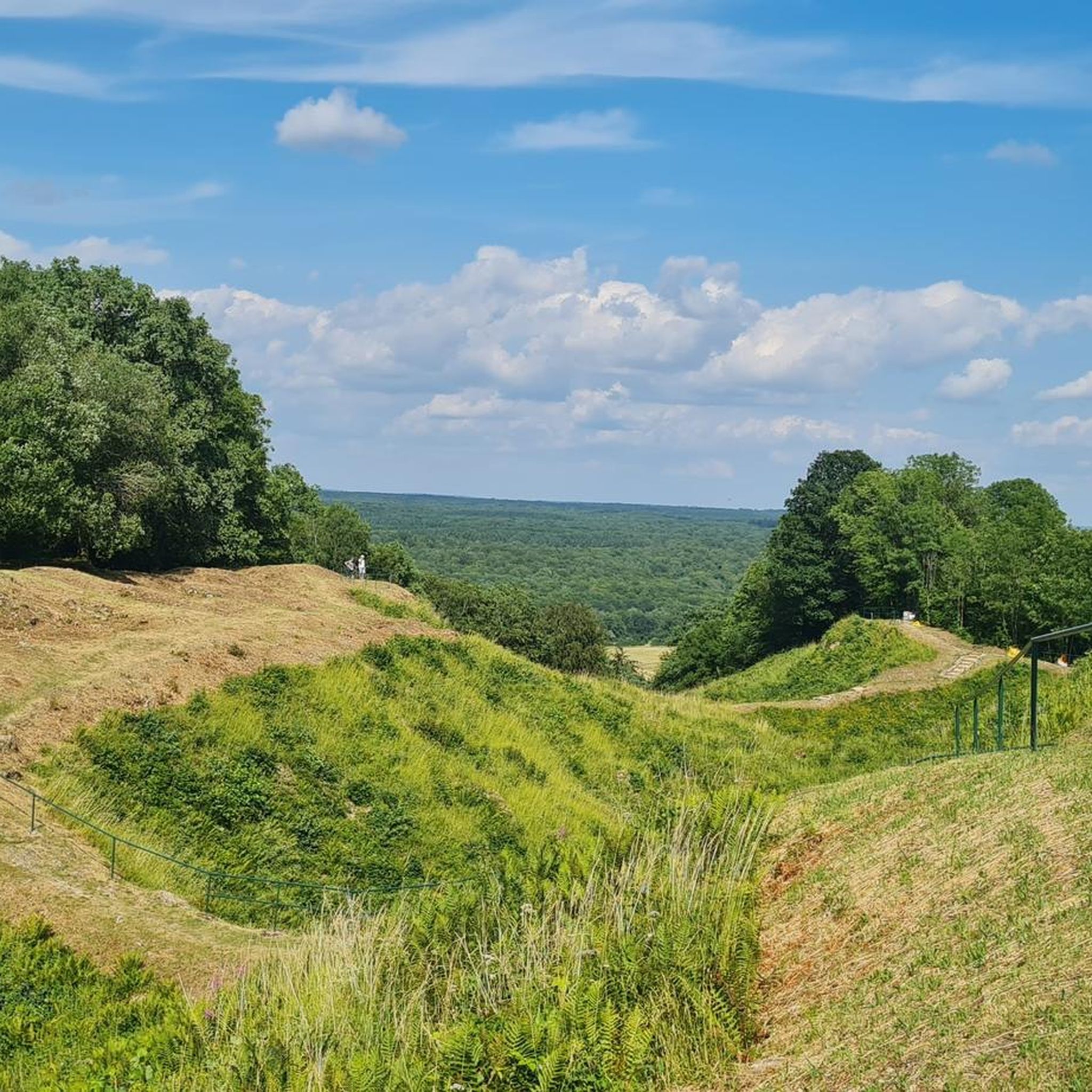
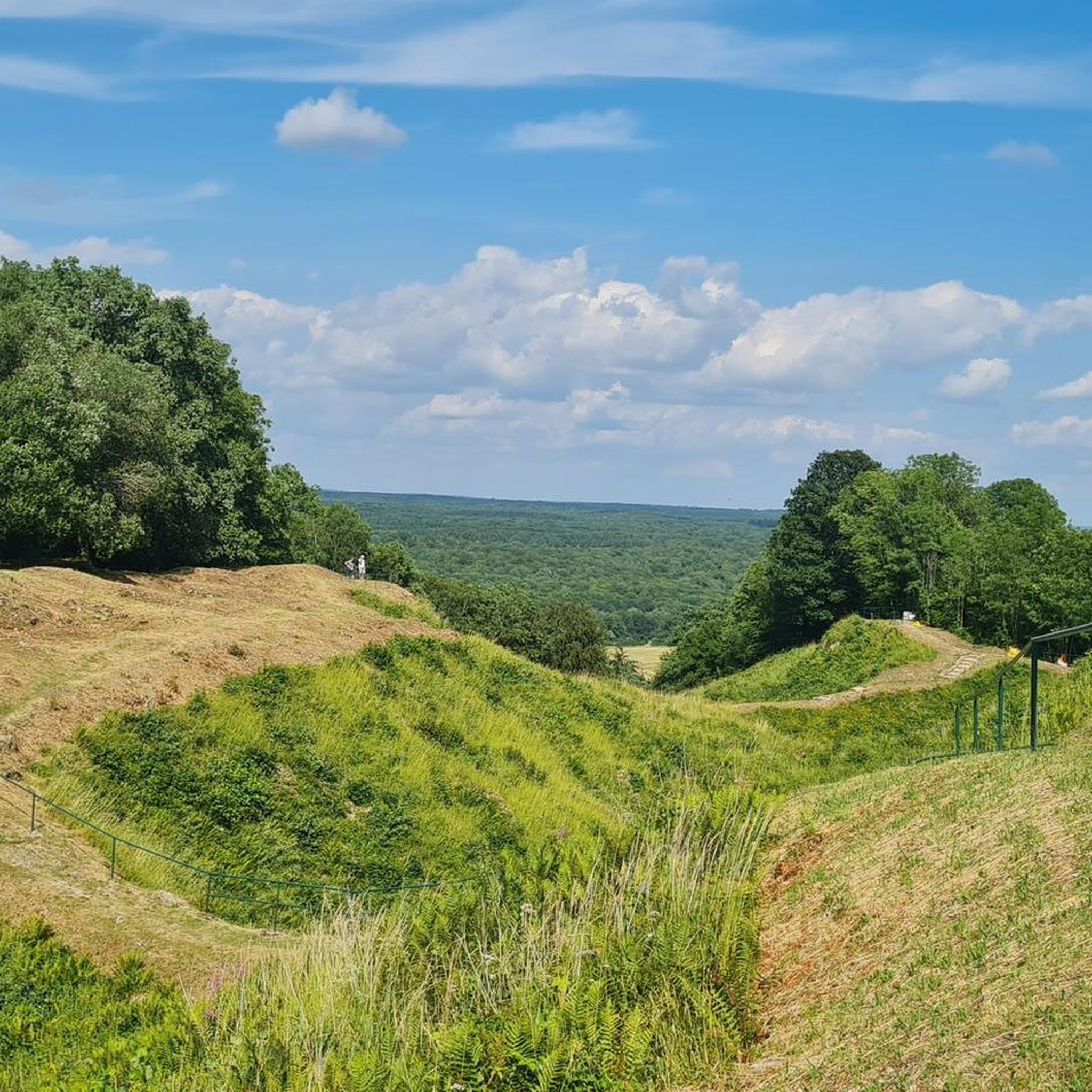
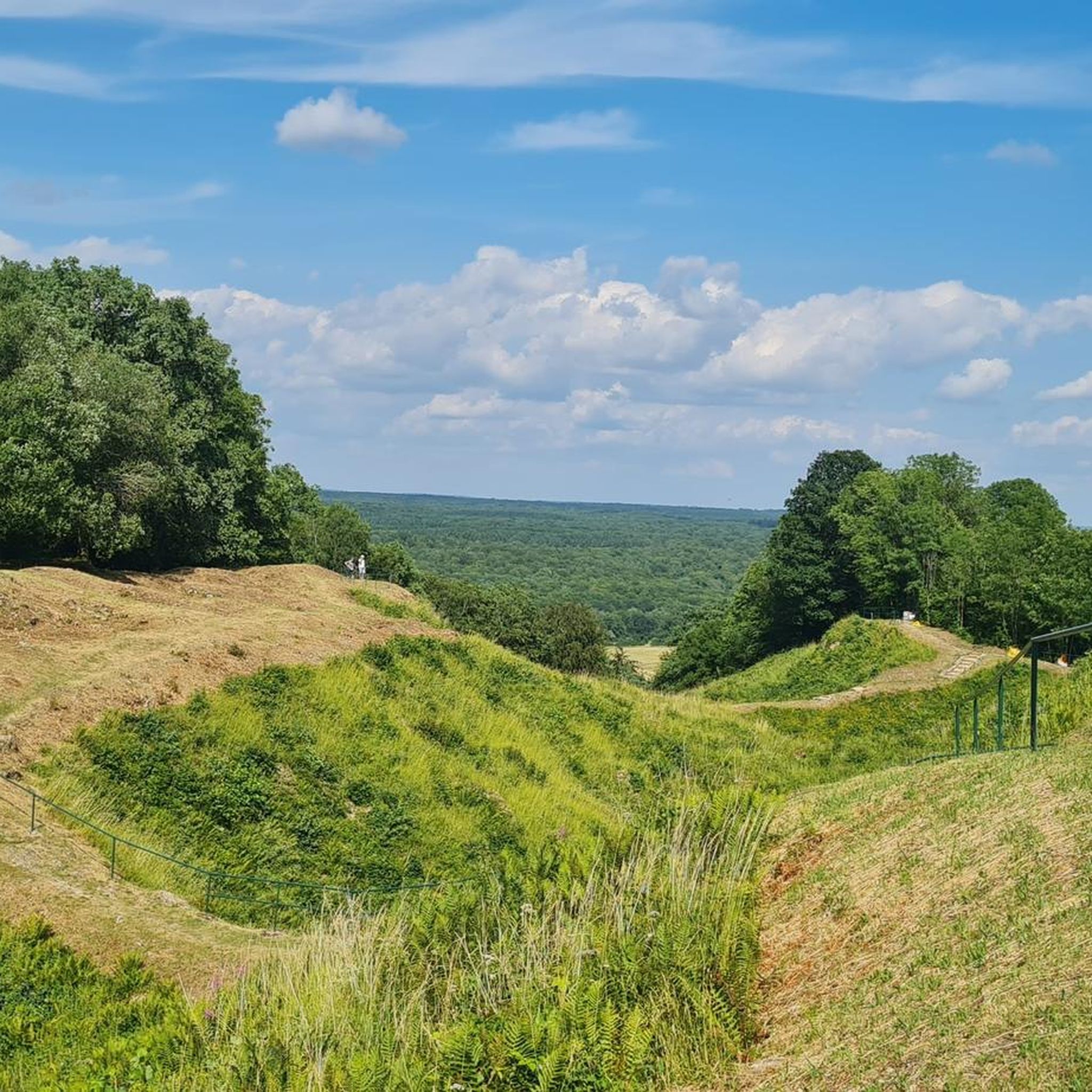
Ravin du Génie: Located in the woods of Lachalade, less than 1.2 km from the front line, this ravine was an important logistical camp for the French engineers during WWI. Soldiers found rest there, and equipment was stored for mine warfare in the Argonne. Today it is an open-air museum with the remains of barracks, warehouses and trenches – a tangible reminder of daily life behind the front. Free access with information panels.
7
0
Mémorial de Pennsylvania – Varennes-en-Argonne Erected in 1927 by the state of Pennsylvania, this neoclassical monument honors the American soldiers from Pennsylvania who helped liberate Varennes in 1918. Designed in the Greek style, the monument offers impressive views over the Aire Valley and bears the words of President Wilson: “The right is more precious than peace”.
7
0

The German offensive to conquer Verdun began in February 1916. In early March, the fighting took place on the heights of Mort-Homme. The French put up a heroic resistance under a torrent of fire. In this sector, 10,000 poilus died. Monument du Mort-Homme, by sculptor Jacques Froment-Meurice. The soldier's skeleton detaches itself from its shroud and lets out its cry of victory. On one arm, he carries a flag, the symbol of the nation for which he sacrificed himself, and on the other arm, he waves the torch of victory. At the foot of the monument, the phrase "They have not passed" recalls the sacrifice of French fighters for the possession and preservation of this observation hill on the left bank of the Meuse. The village of Cumières, declared a "dead village for France", became Cumières le Mort-Homme in 1922. In memory of the village, the Saint-Rémi chapel was built with the stones of the old church, in the middle of an enclosure, preceded by a monument to remind us that there was a peaceful village here. More information on https://www.tourisme-verdun.com/decouverte/post/site-du-mort-homme
1
0
Frequently Asked Questions
What historical sites related to World War I can I visit near Aubréville?
The region around Aubréville is deeply marked by World War I. You can visit several significant sites, including the War monument, which honors American soldiers from Pennsylvania, and the World War I memorial, an impressive monument and ossuary commemorating thousands of fallen soldiers. Another key site is the Ravin du Génie Open-Air World War I Museum, an important logistical camp for French engineers during the war, now an open-air museum with remains of barracks and trenches. The Mort-Homme Memorial also commemorates French soldiers who fell in 1916.
What natural features can I explore in the Aubréville area?
Aubréville is situated within the natural region of Argonne, characterized by its extensive forests and ponds. The Argonne Forest offers a green environment ideal for nature lovers, with many marked trails for hiking and mountain biking. This preserved landscape provides a tranquil setting to enjoy the outdoors.
Are there hiking trails suitable for different skill levels near Aubréville?
Yes, the area offers many marked hiking trails within the Argonne Forest and leading to nearby towns. While specific difficulty levels for all hiking trails aren't detailed, the presence of various routes suggests options for different abilities. For structured routes, you can explore guides like Gravel biking around Aubréville, which includes routes like the 'Cumières-le-Mort-Homme – Memorial trench loop' rated as moderate.
Where can I go cycling or mountain biking near Aubréville?
The region is excellent for cycling and mountain biking. You can find numerous routes, including gravel biking options like the 'Gravel loop from Dombasle-en-Argonne' or the 'Clermont-en-Argonne – Aubréville loop' which are moderate. For mountain biking, guides such as MTB Trails around Aubréville offer routes like the 'Mountainbike loop from Nixéville-Blercourt' which is easy. Road cycling enthusiasts can also find routes in guides like Road Cycling Routes around Aubréville.
Are there any significant churches or cultural landmarks in Aubréville itself?
In Aubréville, the Saint Martin Church (Église Saint-Martin) is a central heritage site. Originally dating from the 14th and 18th centuries, it was rebuilt after World War I and restored after World War II. Its interior features numerous statues and noteworthy stained glass windows, including one depicting Saint Martin sharing his cloak.
What do visitors enjoy most about the attractions around Aubréville?
Visitors particularly appreciate the profound historical significance of the World War I sites, which offer a silent tribute to the past. The impressive views from monuments like the War monument over the Aire Valley are also highly regarded. The tangible reminders of daily life behind the front at places like the Ravin du Génie Open-Air World War I Museum provide a powerful and educational experience.
When is the best time of year to visit Aubréville for outdoor activities and historical sites?
The region is generally pleasant for outdoor activities from spring through autumn. These seasons offer favorable weather for exploring the historical sites and enjoying hiking or cycling in the Argonne Forest. While specific seasonal activities aren't detailed, the preserved natural landscape is enjoyable during these months.
Are there any scenic viewpoints in the Aubréville area?
Yes, the War monument, also known as the Varennes Pennsylvania Monument, offers impressive views over the Aire Valley. Additionally, the general landscape of the Argonne region, with its forests and hills, provides many opportunities for scenic vistas, especially along its marked trails.
Are there family-friendly attractions or activities in the area?
Many of the outdoor activities, such as easy hiking and cycling trails in the Argonne Forest, can be enjoyed by families. While the World War I sites are historically significant, some, like the Mort-Homme Memorial, are categorized as family-friendly, offering educational experiences for older children.
Do I need permits for hiking trails in the Aubréville region?
Generally, no specific permits are required for hiking on the many marked trails within the Argonne Forest and surrounding areas. These trails are freely accessible, allowing visitors to enjoy the preserved landscape without special permissions.
What is the <a href="https://www.komoot.com/highlight/4301011" target="_blank" rel="noopener">Kronprinz Shelter</a> and where is it located?
The Kronprinz Shelter is a historical site from World War I, one of several elaborately built bunkers constructed deep underground. It served as a shelter, potentially for Crown Prince Wilhelm of the German Empire. It is located in the Argonne forest and represents a fascinating piece of wartime infrastructure.
Are there any specific tips for visiting the <a href="https://www.komoot.com/highlight/5495722" target="_blank" rel="noopener">World War I memorial</a>?
When visiting the World War I memorial, it's recommended to climb the stairs for an impressive view and to admire the monument up close. Behind the obelisk-shaped structure, you'll find the entrance to the ossuary, which contains the remains of approximately 10,000 unknown soldiers, and a cross of reconciliation. The site is freely accessible along the Route de la Haute Chevauchée.

Get inspired with the komoot mobile app


Explore more
Still not found the Highlight you’re looking for? See guides of the top attractions in other regions:
