The best walks and hikes around Vassogne
4.3
(426)
1,725
hikers
81
hikes
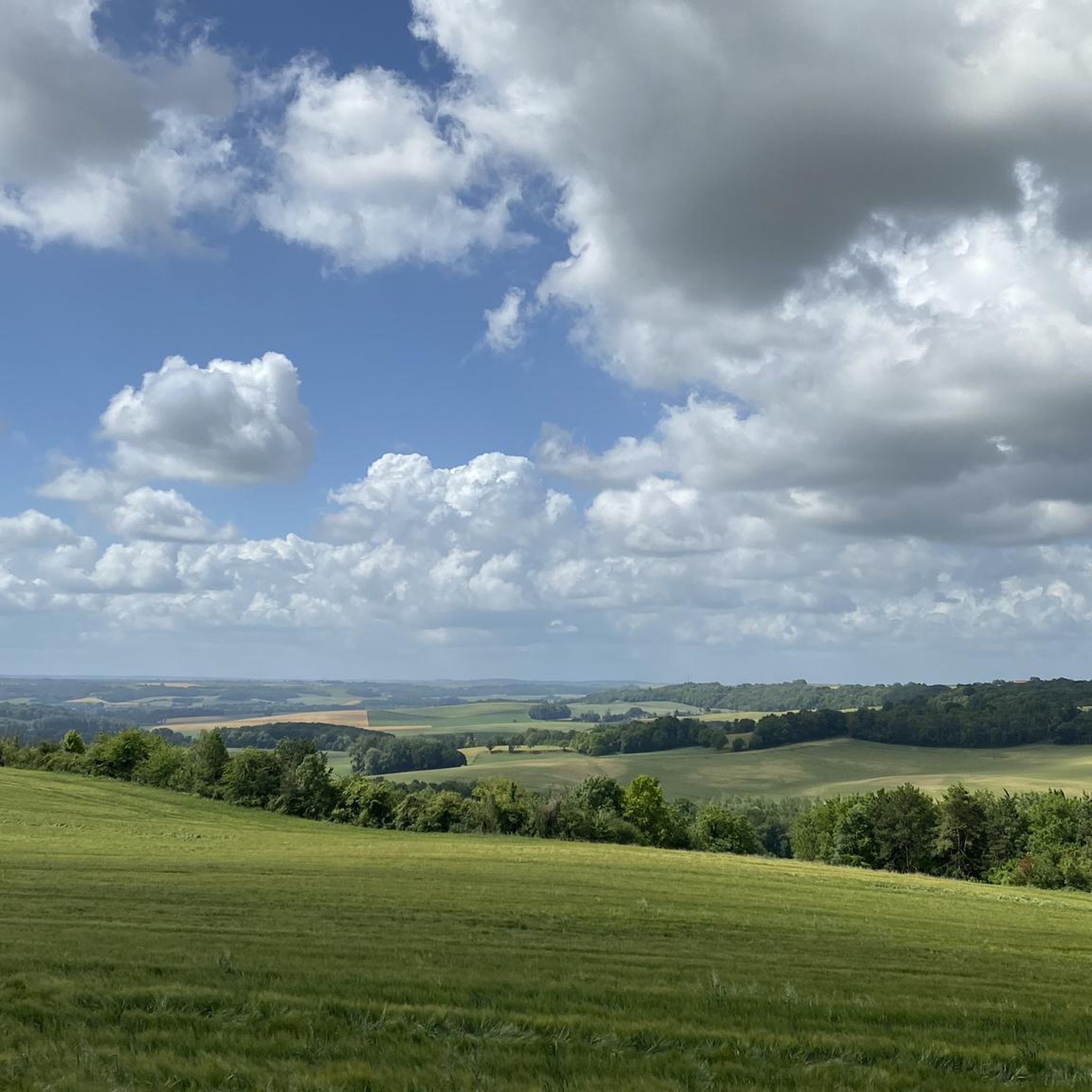
Hiking around Vassogne offers a diverse landscape characterized by the tranquil waters of Lake Ailette and historical sites such as Vauclair Abbey. The region features gentle elevations, with routes traversing plateaus and passing through unique locations like the Troglodyte Village of Paissy. This area provides a mix of natural beauty and cultural interest, suitable for various hiking experiences.
Best hiking trails around Vassogne
- The most popular hiking route is Vauclair Abbey and Lake Ailette Loop, a 7.1 miles (11.5…
Last updated: October 22, 2026
4.5
(19)
72
hikers
11.5km
03:06
150m
140m
Moderate hike. Good fitness required. Mostly walkable paths. Sure-footedness required.
4.5
(33)
89
hikers
10.2km
02:41
90m
90m
Moderate hike. Good fitness required. Easily walkable paths.

3.8
(4)
30
hikers
5.17km
01:24
70m
70m
Easy hike. Easily walkable paths.
4.6
(8)
31
hikers
17.4km
04:44
250m
250m
Moderate hike. Good fitness required. Easily walkable paths.
4.2
(11)
55
hikers
11.7km
03:07
120m
130m
Moderate hike. Good fitness required. Easily walkable paths.
Get access to more routes and recommendations from other explorers.
Already have an account?
Our route recommendations are based on thousands of hikes, rides, and runs completed by other people on komoot.
Start today with a free account
Your next adventure awaits.
Tips from the Community

The Vauclair Abbey near Bouconville-Vauclair in the Aisne department was founded in 1134 by Bernard of Clairvaux as a Cistercian monastery. In the Middle Ages, it developed into an important monastic complex; it was significantly expanded, particularly in the 13th century. During the First World War, Vauclair was located directly in the combat zone of the Chemin des Dames and was almost completely destroyed by artillery fire in 1917. The ruins visible today have been archaeologically investigated, excavated, and partially secured since the 1960s. Directly next to the ruins, there is now a medicinal herb garden with around 400 species and a conservation orchard. This verger conservatoire preserves old regional apple and pear varieties; according to the French Garden Association, there are about 84 different varieties represented there. Together with the monastery ruins, the site thus commemorates not only the history of the Cistercians but also their close connection to agriculture, horticulture, and botany.
1
0

In 1914, the peasant village of Ailles covered about 340 hectares, one third of which was forest. 61 houses were grouped around the church of Saint-Martin. The population was declining: in the 1901 census there were still 147 inhabitants, while in 1911 there were only 118. In honor of the Battle of Craonne, a magnificent elm had been planted on March 7, 1814. A century later, it witnessed a new battlefield as French and German shells wiped the village off the map...
1
0
Hidden in the middle of the forest, this Cistercian abbey, founded in 1134 by Bernard of Clairvaux, appears like a mirage. Its majestic ruins bear witness to a turbulent past. From the Hundred Years' War and the French Revolution to the First World War, the abbey suffered considerable destruction. In the 1960s, the site was overgrown with brambles and forgotten. Thanks to the archaeological excavation group "Sources" led by Father Courtois, it experienced a rebirth.
2
0
The observation tower, inaugurated on April 16, 2013, overlooks the Plateau de Californie, a strategic site of the battles of the Chemin des Dames. The 20-meter-high, freely accessible tower offers a historical insight into the landscape and recalls the importance of the heights during the war. It also offers visitors who climb it an unparalleled view of the village of Craonne below, but also of the Chemin des Dames and the Champagne plain... The observation tower is topped with a blue beacon that is activated at night, thus forming a monument in the landscape. During the day, it allows one to survey the plain of Reims, while at night, conversely, it is visible from this plain. The structure of the tower consists of a spatially modular wooden Mikado, whose arrangement has been chosen according to the configuration of the terrain and the orientation of the viewpoints. The dimensions of the steps and handrails facilitate the climb and mitigate the feeling of vertigo that may arise. For this structure built amidst trees, wood was the obvious material. Renewable materials were selected: glued laminated timber from pine for the long supports, posts and beams from larch, larch wood for the steps, and tropical woods (Massaranduba, Cumaru, Ipé, Doussié…) for the platforms and railings. These woods, originating from French Guiana, are certified and their extraction is controlled. Source and further information: https://www.chemindesdames.fr/
1
0
The Plateau de Californie in the heart of the Chemin des Dames is, like Verdun, a symbolic site of the First World War. However, while Verdun was quickly elevated to a national symbol of victory, the Plateau de Californie and the Chemin des Dames were long associated with the bitter failure of the Nivelle Offensive in April 1917, the subsequent mutinies, and the collapse in the summer of 1918, and were subjected to a process of exclusion, forgetting, and repression after the First World War. Before 1914, the Plateau de Californie, above the former village of Craonne, was a place for walks and recreation. After the war, pine trees were planted on the plateau, classified as a "red zone", as the land could no longer be cultivated. Today's visitors can follow the marked paths, discovering remnants of trenches and shell craters. Thematic information panels on the First World War, reading panels, and panoramic views of the Aisne valley now line the plateau along this marked hiking trail. Source: https://www.chemindesdames.fr
1
0

Beautiful quiet place for a walk
0
0

This stone statue of Napoleon I , sculpted by Georges Thurotte in 1974, commemorates the victory of the French armies at Craonne against the Russian and Prussian armies of General Blücher on March 7, 1814 . It was built on the site of the Vauclair mill which served as an observation post during this battle...
0
0
Inaugurated on April 16, 2013, the observation tower overlooks the Plateau de Californie, a strategic location during the war on the Chemin des Dames. Standing at a height of 20 meters and freely accessible, it offers a historical perspective on the landscapes and serves as a reminder of the importance of high points during the war. It also offers visitors who climb it an incomparable view of the village of Craonne below, as well as the Chemin des Dames and the Champagne plain. Equipped at its summit with a blue lighthouse, put into operation at night, the observation tower constitutes a beacon of memory in the landscape. Allowing a view of the plain of Reims during the day, it is, in a reverse movement, visible at night from this plain.
0
0
Frequently Asked Questions
How many hiking trails are available in Vassogne?
Vassogne offers a wide selection of hiking opportunities, with over 70 trails available. These range from easy strolls to more challenging moderate hikes, catering to various experience levels.
How challenging are the hikes around Vassogne?
The hiking trails around Vassogne are generally accessible. You'll find a good mix, with about 33 easy routes perfect for a relaxed walk, 38 moderate trails for those seeking a bit more effort, and a few more difficult options for experienced hikers.
Are there family-friendly hiking trails in Vassogne?
Yes, Vassogne has several family-friendly options, particularly among its easy routes. These trails often feature gentle terrain and scenic views, making them suitable for all ages. For example, the Paissy Troglodyte Village loop from Paissy is an easy 3.2-mile (5.1 km) trail that offers an interesting cultural experience.
Can I bring my dog on the hiking trails near Vassogne?
Many of the trails around Vassogne are suitable for dogs, especially those traversing natural landscapes and less crowded areas. It's always recommended to keep your dog on a leash, respect local wildlife, and clean up after your pet to ensure a pleasant experience for everyone.
What historical sites or natural landmarks can I explore while hiking?
The Vassogne area is rich in both natural beauty and historical significance. You can explore sites like the Vauclair Abbey Ruins, which are often incorporated into hiking routes. The Monks' Pond is another serene natural highlight. For a unique cultural experience, consider a hike that passes through the Troglodyte Village of Paissy.
Are there many circular hiking routes available?
Yes, Vassogne is well-suited for circular hikes. Many routes are designed as loops, allowing you to start and end at the same point. A popular option is the Ailette Lake – Lake Ailette loop from Bouconville-Vauclair, which offers continuous lakeside views.
What is the best time of year to hike in Vassogne?
The best time to hike in Vassogne is typically from spring through autumn (April to October). During these months, the weather is generally mild and pleasant, perfect for enjoying the diverse landscapes, from lakeside paths to forest trails. Spring brings blooming flora, while autumn offers vibrant foliage.
Where can I find parking for hiking trails in Vassogne?
Parking is generally available near the starting points of many popular trails and in the villages surrounding Vassogne, such as Bouconville-Vauclair or Paissy. Look for designated parking areas or roadside spots where permitted. It's advisable to check specific route details on komoot for more precise parking information.
What do other hikers appreciate most about Vassogne's trails?
The komoot community highly rates the trails in Vassogne, with an average score of 4.3 stars from over 300 reviews. Hikers often praise the region's diverse landscape, which combines tranquil lakeside paths, historical sites like Vauclair Abbey, and unique cultural spots such as the Troglodyte Village of Paissy. The well-maintained paths and varied scenery are frequently highlighted.
Are there opportunities for wild swimming near Vassogne?
While Lake Ailette is a prominent feature of the region and offers beautiful views, designated swimming areas are typically found at specific recreational spots around the lake. Wild swimming in undesignated areas may not be permitted or safe, so it's best to check local regulations and look for official swimming locations.
What are the typical durations for hikes in Vassogne?
Hikes in Vassogne vary in duration. Shorter, easy trails can take around an hour, while moderate routes often range from 2.5 to 4 hours. For example, the Vauclair Abbey and Lake Ailette Loop typically takes about 3 hours, while the longer Troglodyte Village of Paissy loop can take around 4 hours 45 minutes.
Are there any less-known or 'hidden gem' hikes in the Vassogne area?
Beyond the most popular routes, Vassogne's extensive network of over 70 trails means there are many opportunities to discover quieter paths. Exploring the smaller village loops or trails that venture deeper into the plateaus can reveal serene natural beauty away from the main attractions. The California Plateau – Vauclair Abbey Ruins loop offers a blend of historical interest and varied terrain that might feel like a discovery.
Most popular attractions around Vassogne

Get inspired with the komoot mobile app


Explore more
Browse the best Hikes in other regions.
