Attractions and Places To See around Canaveilles - Top 20
Best attractions and places to see around Canaveilles, a commune in the Pyrénées-Orientales department of France, offers a blend of natural beauty and historical landmarks. Situated in the western Pyrenees, the area is characterized by dramatic mountain scenery and a tranquil atmosphere. Visitors can explore significant natural features like gorges and mountains, alongside cultural sites such as Romanesque churches and fortified towns. The region provides an authentic glimpse into rural French life and its preserved Catalan traditions.
Best attractions and…
Last updated: July 6, 2026
Carança Corniche
Highlight • Gorge
Translated by Google •
Tip by

The Footbridges of the Carançà Gorge
Highlight • Gorge
Translated by Google •
Tip by

Sign up now to discover places like this
Get recommendations on the best single tracks, peaks, & plenty of other exciting outdoor places.
Sign up for free
Suspension bridge over the Carança Gorge
Highlight • Bridge
Translated by Google •
Tip by
Chemin de la Corniche
Highlight (Segment) • Trail
Translated by Google •
Tip by

Gorges de la Carança
Highlight • Gorge
Translated by Google •
Tip by
Sign up for free to discover even more attractions around Canaveilles.
Sign up for free
Already have an account?
Start today with a free account
Your next adventure awaits.
Login or Signup
Tips from the Community

Take your time and respect the two-person-at-a-time rule.
0
0

Difficult hike, lack of markings in some places.
1
1

@daniel: There's no dam in the gorge, though. Was the project scrapped again?
3
0

It looks spectacular, but it's not that bad. The footbridges and suspension bridges in the gorge offer similar "thrills".
2
1

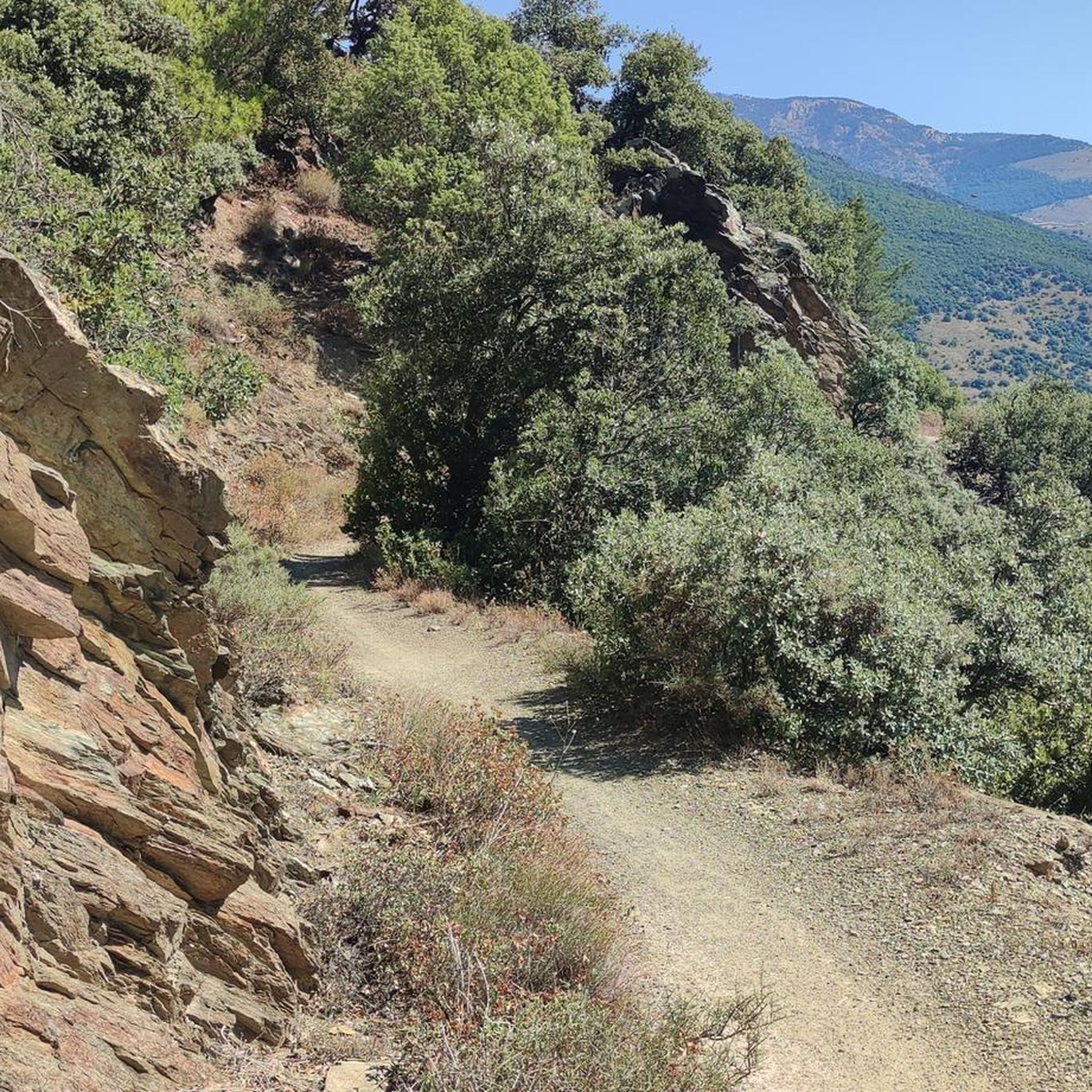
Here a breathtaking path was cut into the rock for the construction of a dam.
1
0

Beautiful point, but watch your head because of the rock points and where you put your feet. Here you can easily pass each other
20
0
Look at your feet, watch the rocks in front of your head if you are tall, don't look into the depths but enjoy the views far ahead.
20
1
Breathtaking gorge, great parking 5 euros, just follow komoot for the most beautiful route, fear of heights? Do not look into the depths, but especially where you put your feet. If you are Dutch tall, then also pay attention to the rocky points at head height. What a great trip😀
22
0
Frequently Asked Questions
What natural wonders can I explore near Canaveilles?
Canaveilles is surrounded by stunning natural features. The most prominent is the Carança Gorge, offering adventurous hiking with hanging bridges and metal ladders, particularly at The Footbridges of the Carançà Gorge and the Carança Corniche. You can also discover natural hot springs with therapeutic properties, and the majestic Pic du Canigou, a significant landmark 17 km away. The Réserve Naturelle Régionale de Nyer is just 2 km from the village, and other scenic gorges like Gorges de la Fou and Gorges de la Pierre-Lys are within reach.
Are there any historical sites or cultural landmarks to visit around Canaveilles?
Yes, the region is rich in history and culture. Canaveilles and its hamlets feature several historic Romanesque churches, including the beautifully restored Église Saint-Martin de Canaveilles in the village. Nearby, you can explore impressive Vauban fortifications such as the Mont-Louis Citadelle and the charming fortified village of Villefranche-de-Conflent, both about 11 km away. Significant abbeys like Abbaye Saint Martin du Canigou and Abbaye Saint Michel de Cuixa are also within a short drive.
What kind of outdoor activities are available near Canaveilles?
The area around Canaveilles is ideal for outdoor enthusiasts. Hiking is very popular, especially in the Carança Gorges, which offer challenging trails with spectacular views. You can find various hiking routes, including those around the Gorges de la Carança. For runners, there are numerous running trails, and gravel biking enthusiasts can explore routes around scenic lakes like Lac des Bouillouses, with options available in the gravel biking guide.
Are the Carança Gorges suitable for families or those with vertigo?
The Carança Gorges offer an adventurous experience, particularly sections like The Footbridges of the Carançà Gorge with ladders and suspension bridges, and the Carança Corniche with dizzying passages. While exciting, caution is advised for those with vertigo or when bringing young children due to the narrow, vertiginous paths carved into rock faces. It's recommended to assess individual comfort levels before embarking on these more challenging sections.
Where can I experience natural hot springs in the area?
Canaveilles is known for its natural hot springs, where geothermal waters emerge at high temperatures, rich in minerals. These uncrowded natural baths offer a therapeutic experience. One popular easy hiking route, "Hot springs – Warm Waterfall loop from Thuès-Entre-Valls," is available in the hiking guide, allowing visitors to access these unique spots. Remember to respect safety guidelines and come prepared with appropriate gear.
What are some notable Romanesque churches in Canaveilles and its surroundings?
Canaveilles and its nearby hamlets are home to several beautiful Romanesque churches. In the village itself, you'll find the parish church, Église Saint-Martin de Canaveilles, which has been beautifully restored. Other examples include Église Saint-André de Llar in the hamlet of Llar, and the remains of Église Saint-Pierre des Graus (also known as Serola or Eixalada) north of the Graus defile.
Can I find any fortified towns or castles nearby?
Absolutely. The region boasts impressive examples of Vauban fortifications. Just 11 km from Canaveilles, you can visit the formidable Mont-Louis Citadelle. Also 11 km away is Villefranche-de-Conflent, recognized as a 'Most Beautiful Village' of France, featuring a fascinating fortified ancient village with an enceinte/fort, another testament to Vauban's architectural genius.
What do visitors enjoy the most about the attractions around Canaveilles?
Visitors frequently praise the breathtaking scenery and the adventurous nature of the trails. Many highlight the spectacular passages along the Carança Corniche and the exciting experience of The Footbridges of the Carançà Gorge. The varied and constantly changing views, along with the unique sections carved into the rock, are often mentioned as highlights. The area is appreciated for its blend of challenging hikes and stunning natural beauty.
What is the best time of year to visit Canaveilles for outdoor activities?
While specific recommendations vary, the region's climate suggests that spring, summer, and early autumn are generally the best times for outdoor activities. It's advisable to avoid hiking in the Carança Gorges during rain or snow due to safety concerns on the narrow paths. Checking local weather conditions before your visit is always recommended to ensure a pleasant and safe experience.
Are there options for hiking with dogs near Canaveilles?
Many trails in the Pyrénées-Orientales are dog-friendly, but specific restrictions may apply in certain protected areas or on particularly challenging routes like parts of the Carança Gorges. It's always best to check local signage or specific trail information for the most up-to-date rules regarding dogs. Generally, the natural environment offers many opportunities for walks with your canine companion.
Are there any other scenic gorges worth visiting besides Carança?
Yes, beyond the renowned Carança Gorge, the region offers other impressive natural gorges. The Gorges de la Fou (about 30 km away) and the Gorges de la Pierre-Lys (about 34 km away) are also listed as sites of natural beauty near Canaveilles, providing additional options for exploring the dramatic landscapes of the Pyrénées-Orientales.
What kind of cycling routes are available near Canaveilles?
Canaveilles serves as a great base for various cycling adventures. For those who enjoy gravel biking, there are routes like the "Lac des Bouillouses – Sheepfold of the Jasse d'Amunt loop from Bolquère" or the "Vallsera Church Ruins – Lake Balcère loop from Barrage de Matemale." You can explore more options and detailed routes in the gravel biking guide around Canaveilles.
Most popular routes around Canaveilles
Most popular attractions around Canaveilles

Get inspired with the komoot mobile app


Explore more
Still not found the Highlight you’re looking for? See guides of the top attractions in other regions:
