Attractions and Places To See around Opoul-Périllos - Top 20
Best attractions and places to see around Opoul-Périllos include a blend of historical landmarks, natural features, and cultural sites. This commune in the Pyrénées-Orientales department of southern France is characterized by its garrigue landscape, limestone plateaus, and proximity to the Mediterranean. The region offers insights into millennia of human presence through its ancient structures and prehistoric sites. Visitors can explore varied terrain from coastal lagoons to elevated peaks.
Best attractions and places to see around Opoul-Périllos
- The most popular attractions…
Last updated: May 9, 2026
Salses Fortress
Highlight • Monument
Translated by Google •
Tip by

Leucate Castle
Highlight • Historical Site
Translated by Google •
Tip by

Sign up now to discover places like this
Get recommendations on the best single tracks, peaks, & plenty of other exciting outdoor places.
Sign up for free
Salses Fortress
Highlight • Other
Translated by Google •
Tip by

Leucate Lagoon
Highlight • Other
Translated by Google •
Tip by

Leucate Lagoon
Highlight • Lake
Translated by Google •
Tip by
Sign up for free to discover even more attractions around Opoul-Périllos.
Sign up for free
Already have an account?
Start today with a free account
Your next adventure awaits.
Login or Signup

Tips from the Community

The history of the fort dates back to the Middle Ages, when Leucate became a border town, bordering two kingdoms. This castle was the counterpart to that of Salses, on the Spanish side. Numerous events punctuated its history, including repeated episodes of war and several memorable sieges. The most famous is undoubtedly that of 1590, during which Françoise de Cézelly earned her heroic status thanks to her heroic resistance. The fort's architecture has undergone several variations. The first, from the Middle Ages (12th and 13th centuries), was very rudimentary, with a keep originally made of wood, then quickly rebuilt in stone, and a simple manor house, which were more or less sufficient to withstand the weapons of the time. A second stone wall was built during the 13th century, taking into account the growing strategic importance of the place. It was during the Renaissance (early 16th century) that Leucate Castle underwent its greatest evolution. This was partly necessitated by the damage caused by the siege of 1590. It employed a concept that was avant-garde for the time: bastioned enclosures, devised by a handful of Italian architects, including Leonardo da Vinci. The goal was to adapt fortresses to advances in artillery. This technique would reach its peak some 150 years later with the "Vauban-style" fortresses, characterized by their star-shaped shape. It has recently been revealed that Leucate Castle was the first prototype built in Europe using this principle. The signing of the Treaty of the Pyrenees in 1659 by King Louis XIV definitively put an end to the border problems with Spain. At the same time, the castle's strategic value disappeared. As it was costly to maintain, first to the Province and then to the Crown, it was decided to destroy it outright. The concept of heritage was obviously nonexistent at the time. The project was awarded to a mason from Narbonne, who was given access to the gunpowder stored in the fortress's casemates. By 1665, the project was completed, and Leucate Castle had taken on the appearance it has today. The building was listed as a historic monument in 2006 (Wikipedia)
0
0

It was built between 1497 and 1502 in the Principality of Catalonia by the Catalan King Ferdinand II of Aragon. The fortress guarded the Catalan side of the border with France. France conquered this fortress in 1642. After the Treaty of the Pyrenees, the fortress became part of France.
1
0


The Fortress of Salses is known for its impressive defensive architecture. Here you will enjoy a unique mountain biking experience on varied terrain. The trails around the fortress include a mix of rough paths and scenic roads that traverse the surrounding landscape.
2
0
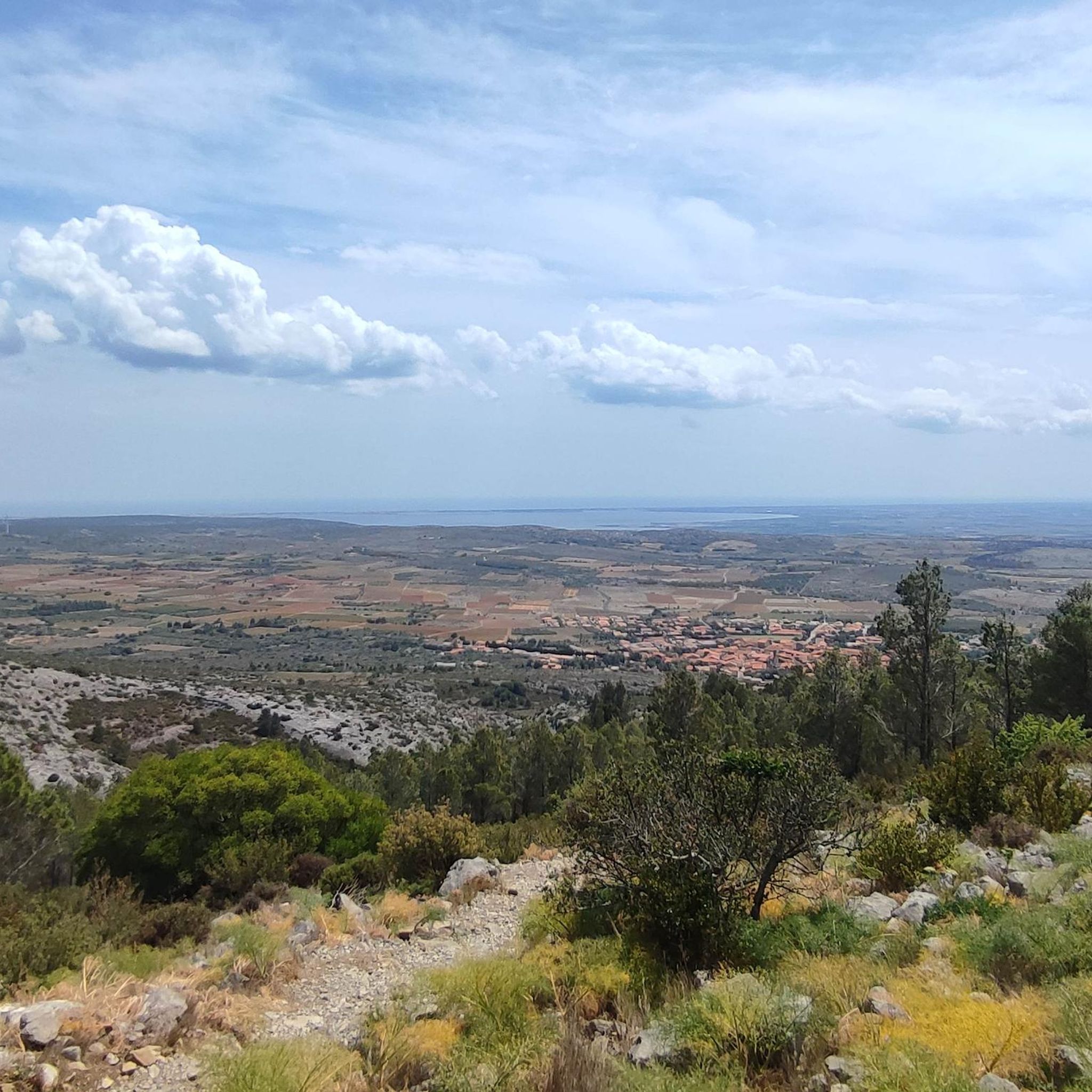
At Etang de Leucate, you’ll have stunning views of a vast coastal lagoon framed by the rugged Corbières Mountains and the Mediterranean Sea. This serene saltwater lake, which covers over 50 square kilometres, is a birdwatcher’s paradise, with flamingos and herons to be spotted. Around the lake, you’ll also find vineyards, dunes and ancient Roman saltworks. There’s no doubt that you’ll enjoy the tranquility of this lake and its magnificent scenery.
1
0

Superb fortress whose history is little-known and interesting. The included guided tour is a must!
1
1

A building worth seeing, there is an entrance fee.
1
0

Frequently Asked Questions
What historical landmarks can I explore in Opoul-Périllos?
Opoul-Périllos is rich in history. You can visit the impressive ruins of Opoul Castle (Château de Salveterra), an 11th-century border post offering panoramic views. The Hamlet of Périllos, often called a 'ghost village,' provides a unique glimpse into an abandoned community, including its Romanesque church and the Chapel of Saint Barbara. Additionally, the Saint-Laurent Romanesque Church in Opoul features 18th-century decor and significant furnishings.
Are there any natural features or landscapes worth visiting in the area?
Absolutely. The region is characterized by its garrigue landscape. You can explore the Karst Plateau of Périllos and the Aven des Amandiers, a significant sinkhole. The Montoliu de Perellós peak offers expansive views, and you might also find the multi-centennial Juniper Tree and the mysterious Grotte de La Caune interesting.
What outdoor activities are available around Opoul-Périllos?
The garrigue landscape and nearby areas are excellent for outdoor activities. You can find numerous trails for cycling, gravel biking, and mountain biking. For example, there are MTB trails like the 'Le Trou de la Caune – Sainte-Barbe Chapel loop' or 'Sainte-Barbe Chapel – Abandoned village of Périllos loop'. You can also explore cycling routes that take you past landmarks like Salses Fortress.
Are there any family-friendly attractions near Opoul-Périllos?
Yes, the region offers attractions suitable for families. The Salses Fortress is a fascinating historical site with impressive architecture that can captivate visitors of all ages. Exploring the unique atmosphere of the abandoned Hamlet of Périllos can also be an intriguing experience for families.
What is the best time of year to visit Opoul-Périllos?
The region's Mediterranean climate makes spring and autumn ideal for visiting, offering pleasant temperatures for exploring historical sites and engaging in outdoor activities like hiking and cycling. Summers can be hot, while winters are generally mild.
What is the Leucate Lagoon and what can I do there?
The Leucate Lagoon is a vast coastal lake offering stunning views framed by the Corbières Mountains and the Mediterranean Sea. It's a haven for birdwatchers, where you can spot flamingos and herons. The surrounding area also features vineyards, dunes, and ancient Roman saltworks, perfect for tranquil walks and enjoying the scenery.
Can I find prehistoric sites in the Opoul-Périllos area?
Yes, the region has a rich prehistoric past. The surroundings of Opoul-Périllos are dotted with numerous prehistoric caves and rock shelters, offering insights into millennia of human presence. These sites are particularly interesting for archaeology enthusiasts.
What is the significance of Montoliu de Perellós?
Montoliu de Perellós is the highest point in the commune, standing at 707 or 709 meters. It holds geographical significance as the northernmost point in Catalan-speaking countries. From its summit, you can enjoy expansive views of the Roussillon plain and observe a meteorological radar.
What do visitors enjoy most about the attractions around Opoul-Périllos?
Visitors particularly appreciate the blend of historical depth and natural beauty. The impressive defensive architecture of Salses Fortress and the unique, abandoned atmosphere of the Hamlet of Périllos are often highlighted. The tranquil scenery and diverse birdlife at Leucate Lagoon also receive high praise.
Are there any notable religious buildings to visit?
Yes, Opoul-Périllos features several significant religious buildings. In Opoul, you can visit the Saint-Laurent Romanesque Church with its 18th-century decor and altarpieces. The village also has two small, well-maintained chapels: the Chapel of Vall d'Oriala and the Chapel of the Virgin. In the Hamlet of Périllos, the former parish church and the Chapel of Saint Barbara are also points of interest.
What kind of cycling routes can I find near Opoul-Périllos?
The area offers a variety of cycling routes, from moderate to difficult. You can find cycling tours that take you along the coast or through the Corbières region. Routes like 'Salses Fortress – Le Lydia (Le Barcarès) loop' or 'Gouleyrous Gorge – Caune de L'Arago loop' provide diverse terrain and scenic views.
Is there a 'ghost village' in the area, and what is it like to visit?
Yes, the Hamlet of Périllos is often referred to as a 'ghost village' because it has been virtually deserted since the end of World War II. Visiting offers a unique, atmospheric experience as you wander through abandoned stone buildings, including its Romanesque church. Volunteers are currently working on restoration efforts, preserving its historical essence.
Most popular routes around Opoul-Périllos
Most popular attractions around Opoul-Périllos

Get inspired with the komoot mobile app


Explore more
Still not found the Highlight you’re looking for? See guides of the top attractions in other regions:
