The best cycling routes around Barraute-Camu
4.3
(78)
512
riders
73
rides
Touring cycling around Barraute-Camu, located in France's Pyrénées-Atlantiques department, offers access to a diverse landscape of rolling hills and river valleys. The region features the gentle foothills of the Pyrenees, providing a scenic backdrop for cycling. Terrain varies from well-paved surfaces suitable for relaxed rides to more challenging, undulating country roads. This area serves as a base for exploring established cycling networks, including routes near historic towns.
Best touring cycling routes around Barraute-Camu
- The most popular touring cycling route is…
Last updated: July 17, 2026
3.6
(5)
17
riders
39.3km
02:30
450m
450m
Moderate bike ride. Good fitness required. Mostly paved surfaces. Suitable for all skill levels.
4.3
(12)
79
riders
Moderate bike ride. Good fitness required. Mostly paved surfaces. Suitable for all skill levels.

Sign up for free
4.6
(5)
22
riders
73.8km
04:46
820m
820m
Hard bike ride. Very good fitness required. Mostly paved surfaces. Suitable for all skill levels.
4.0
(2)
15
riders
43.3km
02:35
260m
260m
Moderate bike ride. Good fitness required. Mostly paved surfaces. Suitable for all skill levels.
4.3
(3)
17
riders
24.5km
01:27
70m
70m
Easy bike ride. Great for any fitness level. Mostly paved surfaces. Suitable for all skill levels.
Get access to more routes and recommendations from other explorers.
Sign up for free
Already have an account?
Our route recommendations are based on thousands of hikes, rides, and runs completed by other people on komoot.
Start today with a free account
Your next adventure awaits.
Login or Signup
Tips from the Community

Very beautiful greenway, very pleasant
0
0

Considered the little Béarn Venice, Salies-de-Béarn is mainly known for its saltwater spring. The town reveals an old centre with narrow streets and atypical houses.
0
0

## The tunnel The tunnel, located between the Puyoô and Salies-de-Béarn stations, is one of the significant structures on line n° 662.000 connecting Puyoô to Mauléon. It is a single-track tunnel 848.5 m long and 5.00 m wide between the abutments. The height under the crown is 6.00 m. It is a multi-radius arch. The structure is generally oriented North-South, with a curve of R400 m for the first 250 meters on the North side, then a straight section to the South end. The longitudinal profile has a constant gradient of 0.01 m/m from the North. A central aqueduct equips the structure along its entire route. The maximum cover is 49 m. The tunnel is built in the Campanian flysch (Upper Cretaceous). The construction of the tunnel (1879-1883) was carried out from two headings via shafts approximately 35 m deep, located at PM219 and PM632. The shafts were retained as ventilation shafts. The masonry thicknesses (limestone rubble set in lime mortar) vary from 0.50 m to 1.20 m. The length of the tunnel, initially projected at 400 m, was increased to 787 m following the decision to lower the profile (from 20‰ to 16‰). During construction, ground instabilities encountered during the excavation of access trenches led to a further extension of the structure, which finally reached a length of 848.5 m. Numerous ground instabilities (landslides) caused significant delays in the progress of the work. The tunnel was electrified in 1930 and the overhead line equipment was removed in 1971.
0
0


A really beautiful cycle path on an old railway line. It is completely asphalted and is therefore a wonderful ride and there are one or two bridge highlights to admire along the way.
2
0

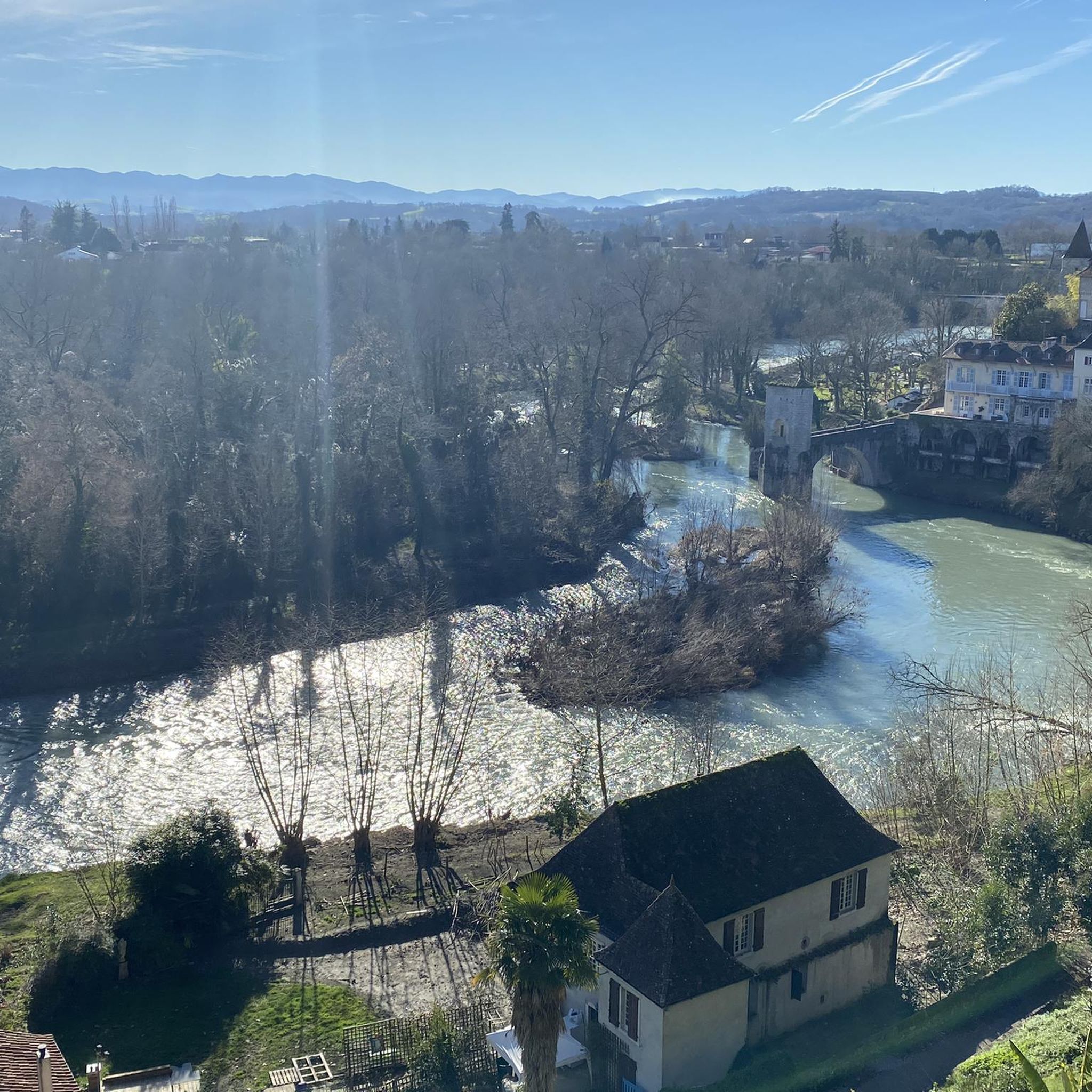
Absolute recommendation (except during floods:-) with the opportunity to swim in the river and a view of the famous bridge!
0
0
Frequently Asked Questions
How many touring cycling routes are available around Barraute-Camu?
There are over 70 touring cycling routes available around Barraute-Camu, catering to various skill levels. You'll find a good mix, with about 10 easy routes, 35 moderate routes, and 27 more challenging options.
What kind of terrain can I expect on touring cycling routes near Barraute-Camu?
The terrain around Barraute-Camu is quite varied, characterized by rolling hills, river valleys, and the gentle foothills of the Pyrenees. You'll encounter well-paved surfaces suitable for relaxed rides, as well as more challenging, undulating segments on country roads that require good fitness.
What is the best time of year for touring cycling in Barraute-Camu?
The region generally offers pleasant cycling conditions for much of the year. Spring and autumn are often ideal, with milder temperatures and beautiful scenery. Summer can also be great, though it's wise to plan rides for cooler parts of the day.
Are there easy touring cycling routes suitable for beginners around Barraute-Camu?
Yes, there are several easy routes perfect for beginners or those looking for a relaxed ride. One popular option is the Bastion of Echoes – Navarrenx loop from Laàs, an easy 15.4-mile (24.7 km) trail with low elevation gain that passes near the historic town of Navarrenx.
Can I find longer touring cycling routes near Barraute-Camu?
Absolutely. For a longer ride, consider the Maison de la Principauté – Navarrenx loop from Sauveterre-de-Béarn. This moderate 44.5-mile (71.6 km) route offers varied terrain and connects historic sites around Sauveterre-de-Béarn and Navarrenx. The broader Pyrénées-Atlantiques department is also traversed by the Vélosud (V81) cycle route, offering even longer distance options along the Pyrenean foothills.
Are there circular touring cycling routes available?
Many of the touring cycling routes around Barraute-Camu are designed as loops, allowing you to start and end in the same location. Examples include the Bastion of Echoes – Navarrenx loop from Laàs and the Maison de La Tour – Maison de la Principauté loop from Sauveterre-de-Béarn.
Are there family-friendly touring cycling routes near Barraute-Camu?
Yes, the region offers routes suitable for families, especially those with lower elevation gain and well-paved surfaces. The easy routes, such as the Bastion of Echoes – Navarrenx loop from Laàs, are generally good choices for a family outing.
Are touring cycling routes around Barraute-Camu dog-friendly?
While specific routes aren't designated 'dog-friendly,' many touring cycling paths in the countryside are suitable for cycling with a well-behaved dog, especially if they can run alongside or be carried in a trailer. Always ensure your dog is comfortable with the distance and terrain, and respect local regulations regarding dogs on paths and in towns.
What historical towns and landmarks can I explore while cycling near Barraute-Camu?
The region is rich in history. You can cycle to nearby medieval towns like Sauveterre-de-Béarn, just 3 km away, known for its historic church and views from the terrace. Laas, 4 km distant, features a castle and a Roman-style church. Salies-de-Béarn, about 10 km away, is famous for its thermal baths and salt production. Other notable towns include Navarrenx, a fortified bastide, and Orthez with its 13th-century stone bridge. You can also visit landmarks like the The Bridge of the Legend or the Church and Pilgrim Statue of L'Hôpital-d'Orion.
Are there any specific natural features or scenic views to look out for on touring cycling routes?
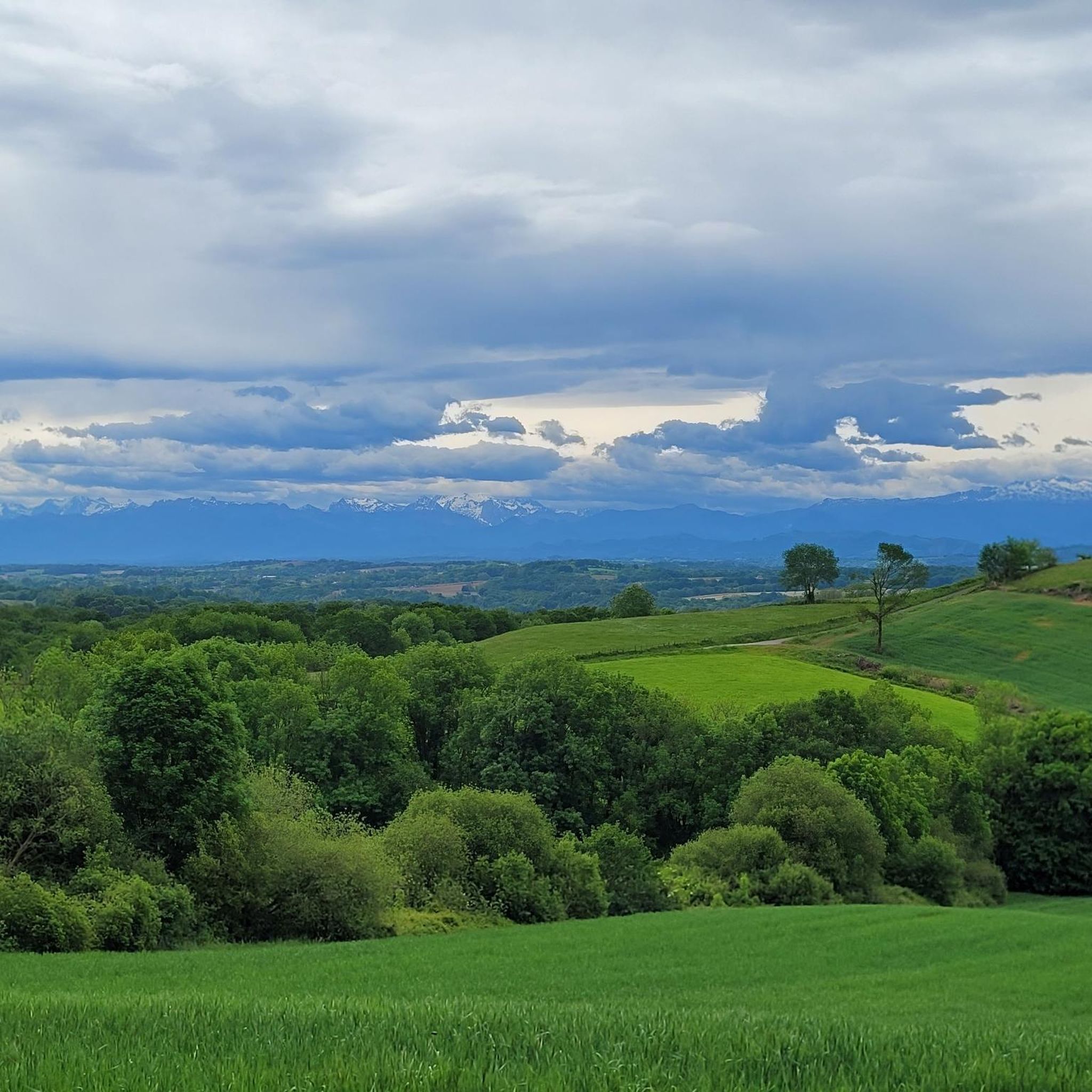
Absolutely. The routes often wind through picturesque river valleys, such as those between the Gaves de Pau and Oloron, offering beautiful riverside scenery. You'll also enjoy panoramic views of the Pyrenean foothills, especially from routes like the First view of the Pyrenees – View point loop from Sauveterre-de-Béarn. The Vélosud (V81) cycle route, accessible nearby, also provides stunning vistas along the mountain range.
Is parking available near the touring cycling routes in Barraute-Camu?
Yes, parking is generally available in the towns and villages that serve as starting points for many routes, such as Sauveterre-de-Béarn, Laàs, and Salies-de-Béarn. Look for designated public parking areas within these communities.
Can I access touring cycling routes using public transport with my bike?
While specific public transport options directly to Barraute-Camu with bike carriage might be limited, major towns in the Pyrénées-Atlantiques department often have better connections. It's advisable to check local bus or train services for their bike policies if you plan to use public transport to reach a starting point further afield. For example, the Vélosud (V81) route is a significant regional network that might have better public transport access points.
What do other touring cyclists enjoy the most about touring cycling in Barraute-Camu?
The area is highly rated by the komoot community, with an average score of 4.3 stars from over 70 reviews. Reviewers often praise the diverse landscape, the blend of easy and challenging routes, and the opportunity to explore historic towns and scenic river valleys. The well-maintained paths and stunning views of the Pyrenees are frequently highlighted.
Most popular attractions around Barraute-Camu

Get inspired with the komoot mobile app


Explore more
Browse the best Cycling routes in other regions.
