Attractions and Places To See around Saint-Julien - Top 20
Best attractions and places to see around Saint-Julien offer a diverse landscape of historical sites and natural wonders. This region features ancient Roman roads, medieval villages, and significant religious architecture. Visitors can explore impressive natural formations like caves and waterfalls. The area provides opportunities to discover both cultural heritage and scenic outdoor environments.
Best attractions and places to see around Saint-Julien
- The most popular attractions is Ox Cave, a natural monument and cave. The entrance to this cave is…
Last updated: May 4, 2026
Church of Saint-Hymetière
Highlight • Religious Site
Translated by Google •
Tip by

Cuiseaux
Highlight • Settlement
Translated by Google •
Tip by

Sign up now to discover places like this
Get recommendations on the best single tracks, peaks, & plenty of other exciting outdoor places.
Sign up for free
Ancient Roman Road of Montagna
Highlight (Segment) • Other
Translated by Google •
Tip by

Quinquenouille Waterfall
Highlight • Waterfall
Translated by Google •
Tip by

Ox Cave
Highlight • Forest
Translated by Google •
Tip by
Sign up for free to discover even more attractions around Saint-Julien.
Sign up for free
Already have an account?
Start today with a free account
Your next adventure awaits.
Login or Signup

Tips from the Community

worth cycling past
0
0

Beautiful little old town. There is an excellent gas-fired pizza place in town that we like to visit when we pass through. Everything is fresh and prepared on site. 🍕🍕🍕
2
0

The pretty medieval village of Cuiseaux is an ideal place for a stroll along its narrow streets and its walkway. Its remains dating from the Middle Ages testify to its past: 12th century fortified gate known as the "orchard gate", Renaissance houses with mullioned windows, castle of the Princes of Orange, watchtower house, washhouse, Saint-Thomas church with remarkable wooden stalls and its black Madonna, winegrowers' houses...
0
0
The Roman roads of Revermont make it possible to make the connection between various cities and nearby ancient agglomerations (Bourg-en-Bresse, Coligny, Lons-le-Saunier). Difficult to date and little studied, this building was the subject of a vast restoration campaign in the 1980s carried out by volunteers, which today allows us to walk in the footsteps of our ancestors. You can discover the traces left by the passage of wheels in the cobblestones and enjoy the shaded path that leads to the Montagna belvedere.
0
0

A fantastic waterfall full of interest. The water falling on the limestone indeed creates a stalagmite at the bottom and one can even make your way behind the water for a quite remarkable view. It is worth taking a detour on your journey.
2
0
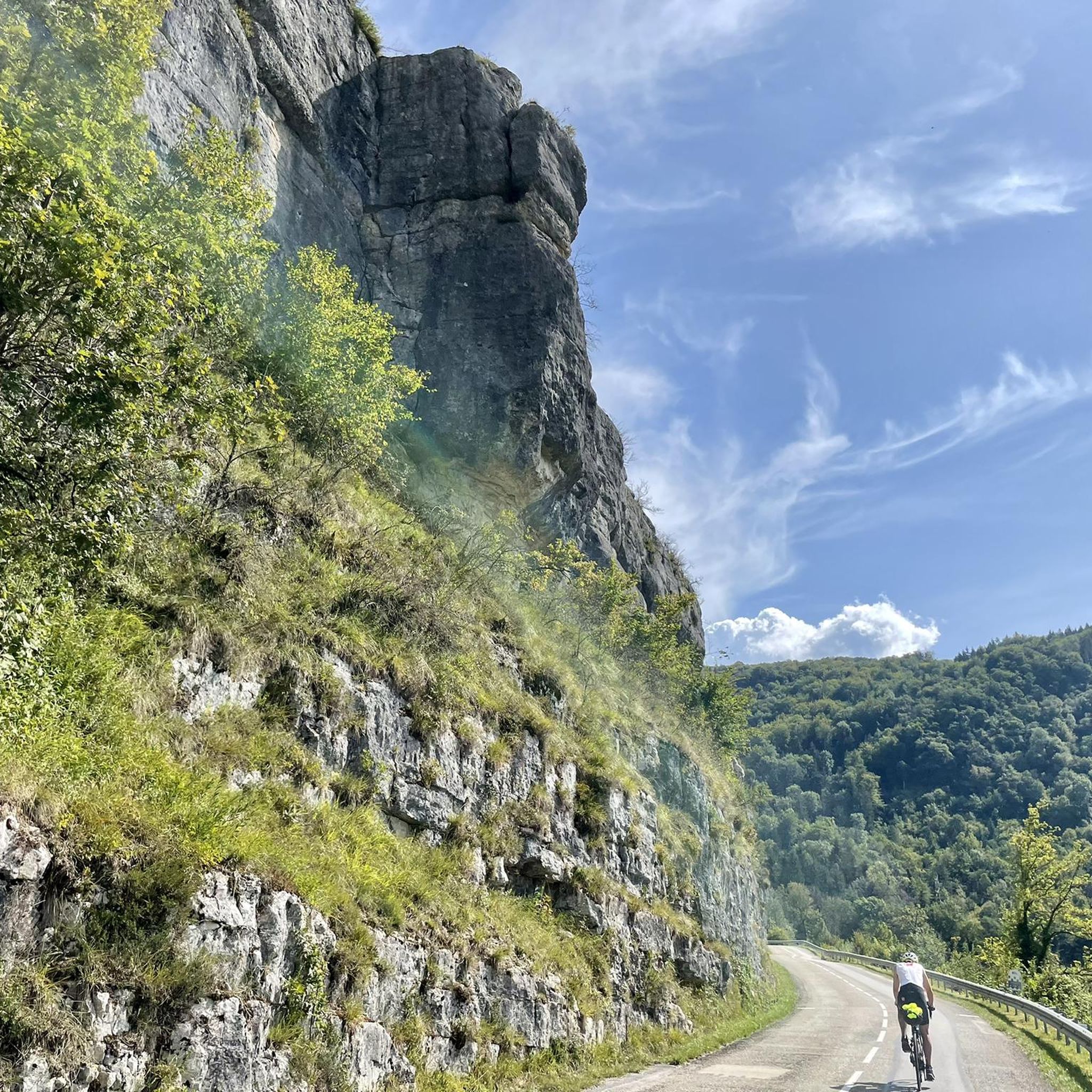
The entrance to this cave is perhaps one of the grandest. Its 20 meter high overhang is reminiscent of a grand palace.
2
0
A fantastic waterfall full of interest. The water falling on the limestone indeed creates a stalagmite at the bottom and one can even make your way behind the water for a quite remarkable view.
2
1

Built in the middle of the 11th century on a priory founded in the 6th century by a certain Ymeterius, a hermit from Saint-Claude, this church is isolated in the fields (the medieval village which surrounded it was burned down in 1477 and the dwellings were rebuilt away). This gives an incredible charm to this elegant building which was completely rehabilitated in 2011. Saint-Hymetière offers a fine example of rural monastic churches from the first Romanesque age. However, it is distinguished by its vaulted nave from the outset, semi-circular and unstructured.
0
0
Frequently Asked Questions
What natural attractions can I explore around Saint-Julien?
The region around Saint-Julien offers several natural wonders. You can visit the impressive Ox Cave, known for its grand 20-meter high overhang. Another must-see is the Quinquenouille Waterfall, where water falling on limestone creates stalagmites, and you can even walk behind the cascade for a unique view.
Are there any historical or cultural sites worth visiting near Saint-Julien?
Yes, the area is rich in history. The Church of Saint-Hymetière, built in the 11th century, is a fine example of rural monastic architecture with a vaulted nave. You can also explore the Ancient Roman Road of Montagna, where you can still see traces left by ancient wheels. The medieval village of Cuiseaux also offers a glimpse into the past with its fortified gate and Renaissance houses.
What kind of outdoor activities can I do near Saint-Julien?
Beyond exploring attractions, Saint-Julien is a great base for outdoor activities. You can find numerous hiking and cycling routes. For hiking, consider trails like the 'Wells – Cliffside View of the Valley loop' or the 'Andelot Castle loop'. Cyclists can enjoy routes such as 'Along Lake Coiselet – View of Lac de Vouglans loop' or 'Saint-Julien – Montfleur loop'. You can find more details on these and other routes in the Hiking around Saint-Julien and Cycling around Saint-Julien guides.
Are there family-friendly attractions in the Saint-Julien area?
Yes, several attractions are suitable for families. The Church of Saint-Hymetière and the medieval village of Cuiseaux are listed as family-friendly, offering historical exploration in charming settings. Natural sites like the Ox Cave and Quinquenouille Waterfall also provide engaging experiences for all ages.
Where can I find hiking trails around Saint-Julien?
There are many hiking opportunities around Saint-Julien. Popular trails include the 'Wells – Cliffside View of the Valley loop' (moderate, 8.3 km) and the 'Andelot Castle loop' (moderate, 11.3 km). For an easier option, try the 'Campsite loop' (easy, 2.9 km). You can explore more options and detailed maps in the Hiking around Saint-Julien guide.
Are there cycling routes available near Saint-Julien's attractions?
Absolutely. The region offers a variety of cycling routes for different skill levels. For touring cyclists, options include the 'Along Lake Coiselet – View of Lac de Vouglans loop' (difficult, 55.6 km) or the 'Saint-Julien – Montfleur loop' (moderate, 23.4 km). Road cyclists might enjoy the 'Thoirette on the Ain River – Arinthod loop' (difficult, 64.2 km). Discover more routes in the Cycling around Saint-Julien and Road Cycling Routes around Saint-Julien guides.
What is unique about the Church of Saint-Hymetière?
The Church of Saint-Hymetière is unique for its well-preserved rural monastic architecture from the 11th century. It stands isolated in the fields, offering an incredible charm, and is distinguished by its vaulted nave, which was built from the outset in a semi-circular and unstructured style. It was completely rehabilitated in 2011.
What makes Cuiseaux a notable place to visit?
Cuiseaux is a charming medieval village known for its narrow streets and historical remnants. Visitors can explore a 12th-century fortified gate, Renaissance houses with mullioned windows, and the Saint-Thomas church with its remarkable wooden stalls and black Madonna. It's an ideal place for a leisurely stroll through history.
Can I find any ancient historical structures in the area?
Yes, the Ancient Roman Road of Montagna is a significant historical structure. This road, part of the Roman network in Revermont, allows you to walk in the footsteps of ancestors and observe the traces left by the passage of wheels in the cobblestones. It was extensively restored in the 1980s.
What do visitors enjoy most about the attractions around Saint-Julien?
Visitors particularly enjoy the blend of historical and natural beauty. The Ox Cave is praised for its grand entrance, while the Quinquenouille Waterfall is loved for its unique stalagmite formations and the ability to walk behind the water. The medieval charm of Cuiseaux and the historical significance of the Church of Saint-Hymetière also receive high appreciation from the komoot community.
Are there any viewpoints or scenic spots to enjoy the landscape?
Yes, the Quinquenouille Waterfall is also considered a viewpoint, offering a remarkable perspective. Additionally, the Ox Cave is noted for its impressive natural formation, providing a scenic experience. The Ancient Roman Road of Montagna leads to the Montagna belvedere, offering shaded paths and views.
What is the best time to visit Saint-Julien's attractions?
The region's attractions, including historical sites and natural monuments, are generally enjoyable throughout the warmer months, from spring to autumn, when the weather is pleasant for outdoor exploration and hiking. The Quinquenouille Waterfall would be particularly impressive after rainfall, while the Ox Cave and historical villages like Cuiseaux can be visited year-round.
Most popular attractions around Saint-Julien

Get inspired with the komoot mobile app


Explore more
Still not found the Highlight you’re looking for? See guides of the top attractions in other regions:
