Attractions and Places To See around Louvigné - Top 20
Attractions and places to see around Louvigné-du-Désert, a commune in Brittany, France, encompass a range of historical landmarks, cultural sites, and natural features. The region offers opportunities to explore centuries-old structures and significant religious buildings. Visitors can also experience the natural beauty of local forests and enjoy viewpoints.
Best attractions and places to see around Louvigné
- The most popular attraction is Laval, a settlement that serves as the economic and historical center of the Mayenne department. It is a…
Last updated: July 14, 2026
Laval
Highlight • Settlement
Translated by Google •
Tip by

Catholic Church - Saints Cyr and Julitte of Argentré ⛪️✨🙏🏻
Highlight • Other
Translated by Google •
Tip by

Sign up now to discover places like this
Get recommendations on the best single tracks, peaks, & plenty of other exciting outdoor places.
Sign up for free
Cathedral of the Holy Trinity
Highlight • Religious Site
Translated by Google •
Tip by

Saint-Siméon Church of L'Huisserie
Highlight • Religious Site
Translated by Google •
Tip by

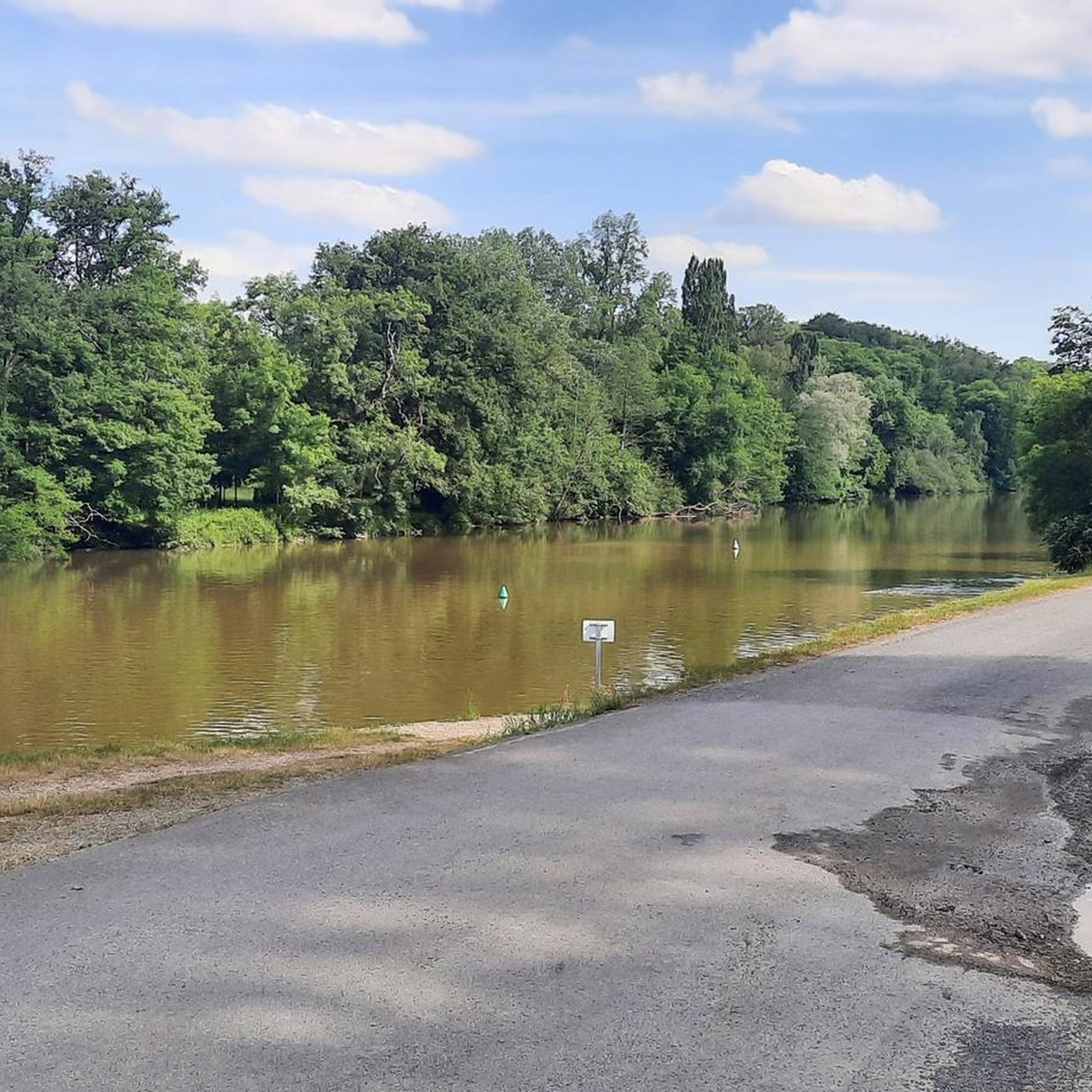
Belle-Poule Lock
Highlight • Structure
Translated by Google •
Tip by
Sign up for free to discover even more attractions around Louvigné.
Sign up for free
Already have an account?
Start today with a free account
Your next adventure awaits.
Login or Signup



Tips from the Community

The patronage of this church has been entrusted to Saint Simeon, who is mentioned in the New Testament. According to the biblical account by Luke, he and the prophetess Anna were the two people present in the Temple in Jerusalem forty days after the birth of Jesus Christ, when Mary and Joseph—following Jewish custom—entered the Temple with their firstborn son and an offering (two doves). The Evangelist records the following prayer on the occasion of this encounter between the elderly Simeon and Jesus as the promised Messiah: "Now, Lord, you are releasing your servant in peace, according to your word. For my eyes have seen your salvation, which you have prepared in the presence of all nations: a light for revelation to the Gentiles, and the glory of your people Israel." (Luke 2:29-32)
0
0
The cathedral (i.e., a bishop's church) in Laval was not dedicated to one of the many people we venerate as saints, but rather, the ONE God in THREE Persons – God the Father, God the Son (Jesus Christ), and God's Holy Spirit – was chosen as its patron saint. Father Reinhard Körner writes about the mystery of the Holy Trinity: + "Among the great prayer-givers in the history of Christianity... I found prayer texts in which each of the divine Three was explicitly addressed – in the same prayer. When I tried to recite the texts, I could sense that these people had not only individually envisioned God the Father, Jesus Christ, and the Holy Spirit – they were addressing a divine community. And it seemed to me that they could only do this in their written prayers because they also did so otherwise, quietly in their hearts."
0
0
This church was not dedicated to one of the many people who died as martyrs (witnesses to their faith) for their Christian beliefs, or whom we venerate as blessed or saints because of their exemplary lives. Rather, this parish has chosen God himself – in the "Holy Trinity" – as its patron saint. According to Christian doctrine, we believe in ONE God, who exists in THREE persons – God the Father, God the Son (Jesus Christ), and the Holy Spirit. The following description can be found on the EKD (Evangelical Church in Germany) website: + “The word attempts to express the seemingly impossible, namely that God is simultaneously three and one. To understand this, it helps to consider how people have experienced God throughout history: as a Creator who loves his world and humanity like a father loves his children. As a God who himself became human in Jesus Christ, his Son, and shared human life. And finally, as a God who is still present and alive among people in the Holy Spirit.”
0
0

The Catholic Church - Saints Cyr and Julitte d'Argentré dates from Roman times and is dedicated to Saint Cyr and Saint Julitte, two martyrs of the early Christian church. You can admire the fresco in the vault above the main altar, which features geometric patterns from the 12th century. You can also admire the marble altarpieces from the 17th and 18th centuries, the clock from 1875, the paintings and stained glass windows from the 20th century. The church is open to visitors during Heritage Days which take place every year in September.
2
0

Simeon is an old man from the time of Jesus Christ who was told by God that he would not die until he saw the Messiah. Imagine the anguish he had seeing himself aging day after day. But one day, in front of the Temple of Jerusalem, he saw Mary and Joseph bringing their son Jesus, to fulfill the Law of Moses, like good practitioners. Then Simeon took the child: "Now Lord, you may let your servant go in peace according to your word, for my eyes have seen the Savior whom you are preparing, Light to enlighten the Greeks, and Glory of your chosen people." Simeon's canticle is also called the "Nunc Dimitis". It is sung every night before going to sleep by all the priests and all the men and women religious of the Catholic Church throughout the world.
1
0
This cathedral deploys a certain pedagogy to express and give life to the dogma of the Trinity.
0
0
Cyr and Julitte are figures of saints who have marked Christianity for more than a millennium. Cyr is a 5-year-old child, very mature for his age, who lived in Tarsus, near Antioch (in present-day Turkey), in the 3rd century AD, when the Roman Empire massacred Christians en masse. . During one of those horrific trials where Christians were sentenced to death, Cyr snuck into court running and shouting "I'm a Christian too!". When the judge caught him, he smashed his head against a wall. His mother, Juliette, was also martyred. The horror of their treatment and the heroic hope they demonstrated made them popular as far away as Gaul, especially around Versailles and Nevers. 42 villages bear the name of "Saint-Cyr". see https://nominis.cef.fr/contenus/saint/1329/Saints-Cyr-et-Julitte.html
0
0

The cathedral is worth a visit.
2
0
Frequently Asked Questions
What historical landmarks can I visit in and around Louvigné-du-Désert?
The region offers a rich history. You can explore the 17th-century Church of Notre-Dame-des-Champs and the centuries-old Château de la Verte within Louvigné-du-Désert itself. Further afield, consider visiting Laval, a city known for its architectural heritage including a castle, medieval houses, and churches. Another significant historical site is the Belle-Poule Lock, a man-made structure crucial for the Mayenne river's operation since 1853.
Are there any significant religious buildings to see near Louvigné-du-Désert?
Yes, several notable religious buildings are in the area. The Cathedral of the Holy Trinity is highly regarded for its theological expression. You can also visit the Catholic Church - Saints Cyr and Julitte of Argentré, which dates from Roman times and features a 12th-century fresco and 17th-18th century marble altarpieces. The Saint-Siméon Church of L'Huisserie is another religious site with a rich biblical history. Additionally, the Abbey of Saint-Melaine is located nearby.
What natural attractions are there near Louvigné-du-Désert?
Nature enthusiasts can explore the Forest of Averon, an important nature reserve perfect for walking or cycling. The Forest of Fougères is another beautiful natural setting, home to the mystical Cordon des Druides, a megalithic alignment of quartzite blocks.
Is there a place to see Mont Saint-Michel from near Louvigné-du-Désert?
Yes, from the small village of Montjoie-Saint-Martin, perched on a hill at 168m altitude, you can enjoy one of the first distant views of Mont Saint-Michel, approximately 20 km away. The best viewpoint is marked and located behind the church.
What outdoor activities are available around Louvigné-du-Désert?
The area offers various outdoor activities. You can find numerous running trails, such as the 'Alleux Pond loop' or 'Grottes de Montroux loop'. For cyclists, there are road cycling routes like the 'On the Pont Vieux in Laval' loop, and mountain biking trails including the 'Briacé lock – Port-Rhingeard Lock loop'. You can find more details on these activities and routes in the dedicated guides for running, road cycling, and MTB around Louvigné.
Are there family-friendly attractions in the area?
Yes, several attractions are suitable for families. The Cathedral of the Holy Trinity and the Belle-Poule Lock are listed as family-friendly. Exploring the Forests of Averon and Fougères, particularly the Cordon des Druides, can also be an engaging activity for families.
What do visitors enjoy most about the attractions around Louvigné-du-Désert?
Visitors appreciate the blend of historical significance and natural beauty. For instance, Laval is loved for its rich architectural heritage, including its castle and medieval structures, offering many 'Instagrammable sites'. The Cathedral of the Holy Trinity is noted for its unique theological expression, and the Catholic Church - Saints Cyr and Julitte of Argentré is admired for its ancient frescoes and marble altarpieces. The overall appeal is reflected in the 23 photos and 141 upvotes from the komoot community for these attractions.
Can I find ancient or megalithic sites near Louvigné-du-Désert?
Yes, within the Forest of Fougères, you can discover the Cordon des Druides. This unique megalithic alignment features three series of parallel quartzite blocks, offering a mystical atmosphere for walks and a glimpse into ancient history.
What is there to see in the nearby city of Laval?
Laval is a city of art and history, serving as the economic and historical center of the Mayenne department. It boasts a significant architectural heritage, including a prominent castle, medieval houses, old bridges, and churches. It's also the birthplace of the famous Naïve painter Henri Rousseau, with a museum dedicated to him and other Naïve artists.
Are there any specific events or times when certain historical sites are accessible?
The Catholic Church - Saints Cyr and Julitte of Argentré is typically open to visitors during Heritage Days, which take place every year in September. It's advisable to check local listings for specific dates and times for this and other historical sites.
What kind of forests can be explored in the region?
The region features two notable forests: the Forest of Averon, which is an important nature reserve, and the Forest of Fougères. Both offer opportunities for exploration on foot or by bicycle, with the Forest of Fougères also housing the Cordon des Druides.
Most popular routes around Louvigné

Get inspired with the komoot mobile app


Explore more
Still not found the Highlight you’re looking for? See guides of the top attractions in other regions:
